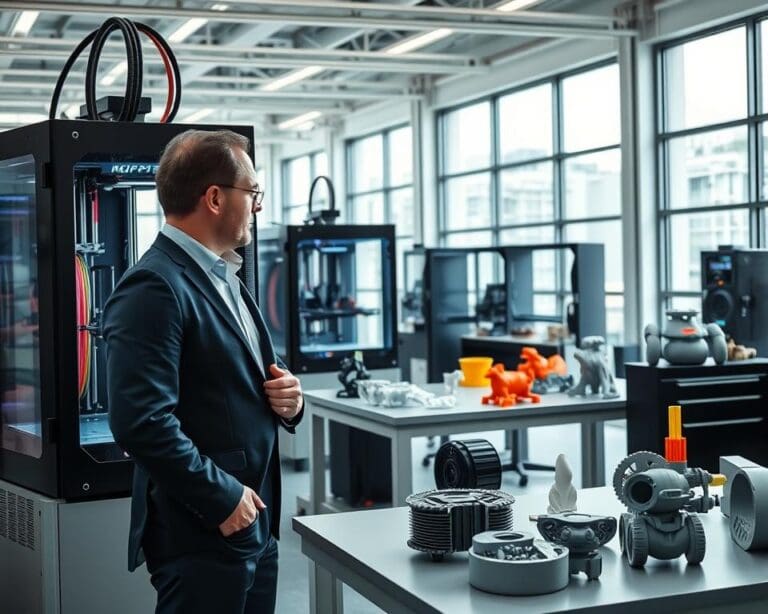
Which careers combine hardware and software is the question many graduates and technologists ask as they pick a path. Hybrid tech careers bring together physical electronics — sensors, circuits, PCBs and actuators — with firmware, embedded code, cloud services and control algorithms.
These hardware and software careers UK are growing fast because connected devices and Industry 4.0 demand system-level optimisation. Tight integration shortens development cycles and raises product quality, from medical devices to consumer gadgets.
Clusters in Cambridge, Oxford, Manchester, Bristol and London are fuelling hiring, with investment from government and firms such as Rolls‑Royce and BAE Systems, alongside ambitious scale-ups and startups. Careers bridging electronics and code therefore offer roles in automotive, aerospace, healthcare, manufacturing and consumer tech.
This article will take a product-review-style tour of embedded systems, robotics, IoT, firmware and FPGA/ASIC co‑design. It is aimed at graduates, early-career engineers, career-changers and technologists seeking hybrid tech careers that combine hands-on hardware work with software design.
The rewards are clear: creative problem solving, direct impact on real products and strong market value for professionals who can work across domains. If you want a role where code touches metal, this guide will help you find the right direction.
What careers combine hardware and software?
Careers that bridge electronics and code are reshaping UK industry. Engineers who can select components, write firmware and integrate cloud services unlock new product possibilities. The mix of practical hardware know‑how and software fluency is now a sought‑after asset.
Overview of hybrid tech roles
Common job titles include embedded systems engineer, firmware engineer, robotics engineer, IoT developer, systems engineer, FPGA/ASIC engineer and mechatronics engineer.
The typical remit spans from component choice and PCB design to firmware development, communication stacks and cloud integration. Teams often expect end‑to‑end responsibility during prototypes and production runs.
Cross‑functional collaboration is vital. Engineers work with mechanical teams, UX designers, test engineers and product managers to ensure systems perform as intended.
Why cross-disciplinary skills are in demand in the UK
The UK focus on advanced manufacturing, autonomous systems and medtech drives demand for candidates who understand both circuits and software. Firms value people who reduce integration risk by speaking both languages.
SMEs and startups prize multi‑skilled engineers for flexibility during scale‑up. Large companies prize specialists who can bridge departments and speed delivery of complex systems.
Public funding shapes hiring. Programmes from UK Research and Innovation and Innovate UK support projects that blend hardware and software, creating roles in R&D and commercialisation.
How these careers drive innovation in product development
Tight hardware‑software coupling yields gains in latency, power efficiency, and compactness. Teams tune firmware and hardware together to lower costs and improve user experience.
Examples include smarter medical devices with on‑device analytics, industrial controllers that enable predictive maintenance and consumer products that offer seamless cloud services.
The development cycle is iterative. Rapid prototyping with microcontrollers and FPGAs, user testing, field updates via firmware‑over‑the‑air and continual optimisation shorten time‑to‑market for product development hardware software.
Embedded systems engineer career path and responsibilities
An embedded systems engineer career blends precise hardware work with elegant software. Roles vary from hobbyist boards to safety-critical products in aerospace and automotive. This path rewards engineers who can move from schematic to firmware while keeping customer needs in mind.
Typical duties and project lifecycle
Day-to-day tasks include designing and testing microcontroller-based systems and writing firmware in C or C++. Engineers configure peripherals such as GPIO, ADC, UART, SPI and I2C while performing hardware–software integration and system validation.
Projects start with requirement capture and architecture design. Early prototyping often uses STM32 Nucleo boards or Arduino kits before handing PCB designs to hardware teams. Integration testing leads to certification for CE and UKCA, then deployment and ongoing maintenance.
Responsibilities often cover power management, real-time constraints and interfacing sensors and actuators. Clear technical documentation and traceability are vital across the lifecycle.
Essential technical skills: microcontrollers, RTOS, low-level programming
Experience with ARM Cortex‑M from STMicroelectronics, AVR or Microchip PIC families gives a firm base. Understanding peripherals and low‑power modes helps when building robust products.
RTOS skills matter for time-critical systems. Familiarity with FreeRTOS, Zephyr or ThreadX helps engineers manage task scheduling, interrupts, concurrency and timing determinism.
Low-level programming proficiency defines success. Mastery of C and C++ with strong memory management, pointer arithmetic and bitwise operations is essential. Knowledge of linker scripts and optimisation for size and speed improves product performance.
- Electronics fundamentals and schematic reading
- Use of oscilloscopes and logic analysers
- Unit testing and continuous integration for embedded code
Education, certifications and career progression
Typical entry routes include BEng or MEng in Electronic Engineering, Computer Engineering or related fields. HND and HNC qualifications suit technician-level roles and offer practical grounding.
Certifications such as ARM Accredited Engineer and vendor training from STMicroelectronics or Microchip strengthen a CV. Online courses on embedded systems and vendor RTOS training provide targeted upskilling.
Career progression moves from junior embedded engineer to embedded engineer, then senior or lead roles. Experienced engineers may become principal systems engineers, firmware architects or technical managers. Those in the microcontroller engineer UK market often find accelerated demand in sectors like automotive and aerospace.
An embedded C career path can branch into product management or R&D for specialists. Salaries rise with domain expertise and with roles that require safety-critical experience.
Robotics engineer: blending mechanics, electronics and code
A robotics engineer builds systems that sense, move and think. This role sits at the junction of mechanical design, power electronics and software control. Aspiring candidates should aim for strong control systems skills and a working knowledge of embedded hardware alongside software design.
Core competencies centre on sensors and actuators. Engineers must work with IMUs, LiDAR, ultrasonic sensors, cameras and encoders. They also handle sensor fusion to improve situational awareness for mobile robots and manipulators.
Actuator knowledge covers DC motors, servos, stepper motors and hydraulic or pneumatic drives. Familiarity with motor drivers, power electronics and safe actuation is vital when developing reliable systems for real environments.
Control algorithms are the backbone of motion and autonomy. Expect to use PID and state-space controllers, Kalman filters for estimation, path-planning methods and SLAM for mapping and localisation. These areas test and grow practical control systems skills.
Systems thinking matters. Mechatronics integration, real-time control loops and latency handling keep robots stable and safe. Effective engineers design with redundancy and safety standards in mind to reduce operational risk.
Common tools include ROS and ROS2 for modular middleware and simulation. Many roles seek a ROS developer who can build nodes, manage topics and integrate sensors with control stacks.
Programming tends to split between C++ for performance-critical control and Python for rapid prototyping and scripting. Simulation and modelling often use Gazebo, MATLAB/Simulink and SolidWorks to create digital twins and verify designs before hardware tests.
Hardware platforms range from microcontrollers to embedded systems such as NVIDIA Jetson for vision-heavy applications. Practical experience with motor drivers, servo controllers and debugging hardware accelerates development cycles.
Industries hiring in the UK are diverse. Manufacturing and automation teams deploy cobots and AGVs across factory floors. Autonomous vehicle and drone groups in Oxford, Cambridge and Bristol focus on perception and autonomy.
Medtech and assistive robotics attract startups and NHS collaborations working on rehabilitation and surgical aids. Defence and aerospace employers such as BAE Systems and Rolls‑Royce recruit engineers for autonomy and control projects.
University labs and spinouts offer research-driven roles, often supported by Innovate UK funding. These positions provide chances to translate cutting-edge research into commercial products and shape emerging robotics careers.
IoT developer roles that bridge hardware and cloud software
Engineers who join circuits to cloud platforms shape the future of connected products. An IoT developer UK professional must balance chip choice, power budgets and cloud APIs to turn concepts into reliable devices.
Designing connected devices: hardware selection and firmware
Choosing the right MCU and radio is a practical skill. Candidates often pick ESP32 for Wi‑Fi and Bluetooth or Nordic nRF52 for low-power BLE. Designers factor sensor accuracy, battery life and the physical form when moving from Raspberry Pi or Arduino prototypes to custom PCBs.
Firmware is where product promise meets field reality. Efficient sleep modes, robust bootloaders and OTA update systems keep devices useful over years. Skilled developers write energy-aware code and work with contract manufacturers to scale production.
Connectivity, security and edge-to-cloud integration
Connectivity choices depend on range and power. Teams choose Bluetooth LE for short-range consumer products, LoRaWAN for long-range sensors and NB‑IoT or LTE‑M for wide-area deployments. Protocols such as MQTT and HTTP move data from edge to cloud.
Security sits at the core of trust. Good practice includes secure boot, hardware roots of trust like secure elements, TLS/DTLS and GDPR-compliant data handling for UK deployments. An IoT developer UK must know these controls and how they fit into enterprise systems.
Edge-to-cloud integration uses preprocessing and digital twins to reduce latency and sharpen analytics. Platforms from Amazon Web Services, Microsoft Azure and Google Cloud often host the backend, while engineers design reliable pipelines from sensor to dashboard.
Commercial applications: smart homes, industry 4.0 and healthcare
Smart device development fuels everyday convenience. Connected thermostats, security systems and energy monitors link to voice assistants and mobile apps to deliver smooth user experiences.
Industry 4.0 projects use sensors for predictive maintenance and asset tracking. Businesses achieve ROI through reduced downtime and smarter operations when edge analytics feed cloud-based models.
Healthcare demands rigorous standards. Wearables and remote monitoring systems must meet clinical safety, strong IoT security and UK regulations such as MHRA guidance when used in patient care.
- Prototyping: Raspberry Pi and Arduino for fast iteration.
- Production: custom PCBs and supplier partnerships for scale.
- Stack: MQTT, TLS, secure elements and cloud integrations for robust systems.
Firmware engineer: the intersection of hardware constraints and software design
Firmware sits where silicon meets software. A firmware engineer in the UK shapes the behaviour of devices by managing peripherals, power states and protocol stacks to meet real-world needs.
Understanding hardware interfaces and timing
Firmware controls SPI, I2C, UART, CAN bus and USB, and must handle interrupts, DMA and ADC sampling with care. In real-time systems the difference between hard and soft real-time defines acceptable failure modes.
Designers focus on jitter control and deterministic behaviour. Tasks such as motor control, audio processing and network stacks need precise timing-critical code to avoid glitches.
Debugging workflows and embedded tools
Practical embedded debugging techniques reduce mean time to resolution. Engineers use SEGGER J-Link, SWD/JTAG, Saleae logic analysers and oscilloscopes to inspect signals and timing.
Development workflows pair Git with unit tests, hardware regression suites and CI systems tuned for boards. Static analysers like Coverity and clang-tidy catch defects early. Field diagnostics use telemetry, crash dumps and secure OTA to maintain devices in service.
Products that depend on expert firmware
Consumer gadgets such as wearable fitness trackers and smartwatches rely on tight power management and sensor fusion driven by optimised firmware examples.
In automotive, ECUs and ADAS require deterministic control and conformity with standards such as ISO 26262. Medical devices like infusion pumps demand fail-safe firmware for regulatory approval.
Industrial controllers and motion systems run firmware that enforces timing, safety interlocks and networked coordination across factories.
Hardware-software co-design and FPGA/ASIC engineering
Combining hardware and software yields systems that meet tight limits on latency, power and cost. Designers weigh whether to push a function into silicon for throughput or keep it in software for flexibility. Thoughtful hardware-software co-design shapes those trade-offs and speeds time-to-market.
Principles of co-design begin with clear constraints: thermal limits, bill of materials, verification scope and manufacturability. Teams select targets that match volume and performance needs. A prototype on FPGA can validate algorithms before committing to an ASIC, lowering risk and shortening development cycles.
Using FPGAs is common for rapid iteration and production acceleration. Vendors such as AMD (Xilinx) and Intel (Altera) supply toolchains that support complex designs. Engineers rely on VHDL Verilog skills for RTL work and SystemVerilog or HLS for higher abstraction.
Verification practices protect schedules. Testbenches, simulation, formal checks and timing closure are vital steps. These tasks reveal corner cases early and keep the path to tape-out predictable.
Career paths start with roles that focus on implementation and validation. An FPGA engineer UK often works on prototypes, acceleration and integration with software stacks. Early experience builds the VHDL Verilog skills employers seek.
Progression leads to senior RTL or verification engineer roles. Candidates may become architecture leads or move into ASIC design careers that handle tape-out and silicon bring-up. Cross-functional moves into systems architect or product roles are common for those who master both domains.
- Entry: FPGA developer, RTL engineer, verification engineer
- Mid: lead RTL engineer, integration lead
- Senior: tape-out engineer, ASIC design engineer, systems architect
Product review perspective: choosing a career that merges hardware and software
Think of choosing a career hardware software as testing a range of products. Compare use cases, skills, growth and the investment needed. Embedded systems feel like compact gadgets: they demand low‑level programming, real‑time thinking and power optimisation. Robotics reads like a suite for motion and perception, suited to people who enjoy mechanics and control. IoT roles bridge firmware and cloud, so they reward developers who like end‑to‑end systems and security.
Set clear personal criteria before you decide. Ask whether you prefer hands‑on soldering and lab benches or architecting large software platforms. Consider field deployment versus lab research, and your tolerance for regulatory complexity in sectors such as medical devices or automotive. That self‑assessment helps when comparing the best hybrid tech careers UK has to offer.
For a practical career review embedded robotics IoT, weigh pros and cons: firmware engineers excel at optimising constrained systems and ensuring reliability in safety‑critical products; FPGA and ASIC designers focus on silicon‑level performance and verification; IoT developers need cloud and connectivity skills; robotics engineers work across perception, planning and actuation. Build a portfolio with electronics prototypes and GitHub projects, take courses on edX or Coursera, and join meetups like London Robotics or Cambridge IoT groups to gain traction.
View your career as a product you can iterate. Monitor UK sectors such as advanced manufacturing, medtech, automotive suppliers and deep‑tech startups in Cambridge and Oxford. Keep learning RTOS, ROS2, cloud IoT services and hardware toolchains, and consider part‑time MSc or professional certificates for specialisation. The reward is tangible: creating devices and systems people use every day, and the chance to shape practical innovation with lasting impact.