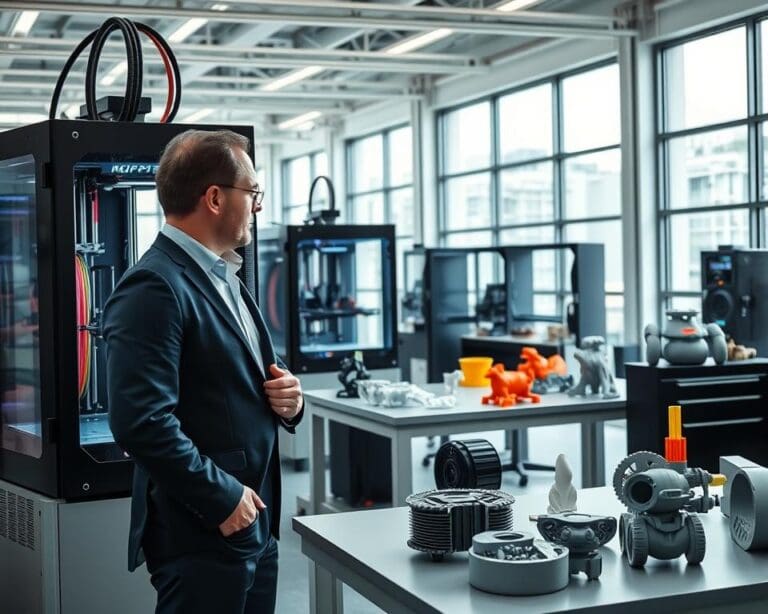
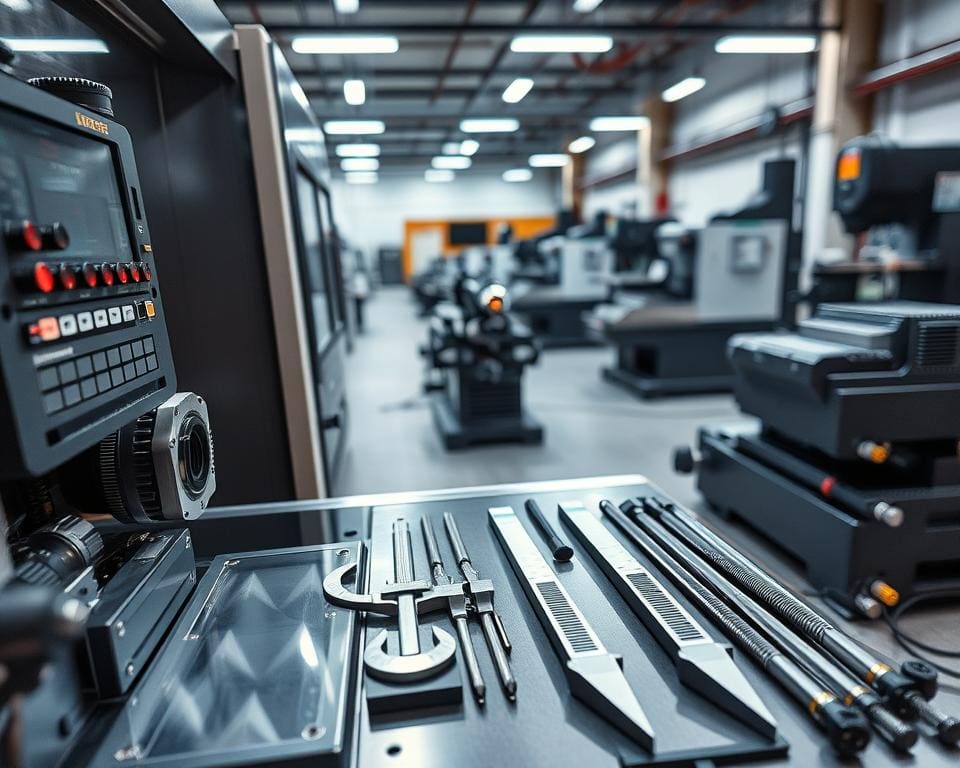
Precision engineering devices span a clear range of equipment: machine tools, metrology instruments, additive manufacturing systems, robotics, optical and laser devices, and laboratory or environmental control equipment. This opening section defines that scope and sets the scene for a product review style survey of leading precision tools and precision manufacturing equipment used across UK precision engineering.
The article is written as a practical product review. Its intent is to guide design engineers, production managers, quality engineers and procurement teams through what devices support precision engineering, with an emphasis on accuracy, repeatability and productivity. We assess device performance, real‑world applications and integration rather than attempting an exhaustive price comparison.
UK relevance runs through the review. Expect references to British names such as Renishaw, to engineering heritage like Dyson, and to industrial users such as Rolls‑Royce. We will also note regulatory and quality frameworks common in the United Kingdom, including ISO 9001 and ISO 13485 for medical device production, to show how device choice aligns with certification and audit readiness.
Readers will gain a clear structure: an overview of device categories, the key specifications that matter, exemplar brands and models to consider, integration and workflow tips, and the environmental controls that underpin true precision. The aim is to inspire practical decisions for manufacturers seeking reliable precision tools and precision engineering devices for aerospace, medical, electronics and general manufacturing sectors.
What devices support precision engineering?
Precision engineering draws on a range of tools that shape modern manufacturing. The right mix of machines, measurement tools and control systems defines outcomes in aerospace, medical and automotive work. Choosing devices with suitable performance prevents rework and lifts manufacturing productivity.
Overview of device categories that exemplify precision engineering
Core precision device categories include CNC machine tools such as milling, turning and electrical discharge machines. Coordinate measuring machines and metrology tools supply dimensional verification. Industrial additive systems cover SLA, SLS and DMLS/EBM processes. Robotics and motion systems provide micro‑assembly and repeatable handling. Optical and laser systems serve cutting, interferometry and high‑resolution measurement. Laboratory and environmental systems manage clean rooms, temperature and vibration control.
Measurement instruments range from calipers and micrometres to laser trackers and surface profilometers. Visual inspection uses borescopes and high‑resolution cameras. Smart tooling, IoT sensors and AI platforms feed real‑time feedback into control loops. Practical examples of inspection benefits and measurable outcomes are described in a helpful article on inspection tools that explains technical accuracy improvements.
Why device choice matters for accuracy, repeatability and productivity
Accuracy reflects how close a part comes to its true dimensions. It affects interchangeability and final function. Repeatability measures whether the same result can be produced cycle after cycle. High repeatability supports statistical process control and consistent yields.
Productivity depends on cycle times, uptime and how well devices integrate with CAD/CAM and MES systems. Device selection criteria should balance upfront cost against total cost of ownership, including service, calibration and downtime. Hybrid workflows, such as using additive manufacture for speed followed by finish machining for tolerance, often strike the best trade‑off between throughput and precision.
Key performance indicators used to evaluate precision devices
KPI selection guides procurement and process design. Typical KPIs precision engineering teams monitor include tolerance and geometric dimensioning, repeatability at micrometre levels and resolution of movement or measurement.
- Thermal stability and compensation capability, such as thermal drift and expansion coefficients.
- Spindle power, speed and torque for machining accuracy and material removal rates.
- Probe accuracy, measurement uncertainty and build resolution for additive processes.
- Mean time between failures, maintenance intervals and calibration frequency.
- Integration capability via open APIs and standards like MTConnect or OPC UA.
Using these KPIs precision engineering teams can set clear device selection criteria and monitor improvements over time. Regular calibration, targeted training and predictive maintenance help preserve accuracy repeatability and sustain higher manufacturing productivity.
High-precision CNC machines for metal and composite fabrication
The choice of machine shapes the craft. High-precision CNC systems bring consistency, speed and fine surface finish to metal and composite work. UK shops rely on these platforms to meet tight specs and demanding lead times.
Explore common CNC machine types used in precision engineering. 3‑axis centres suit many prismatic parts. 4‑ and 5‑axis vertical and horizontal machining centres unlock complex contours and reduce setups. Swiss‑type lathes serve small, turned components with exceptional concentricity. Multi‑axis simultaneous machines sculpt compound surfaces in composites. Electrical discharge machining handles intricate cavities and hardened alloys. Gantry mills cover large, stable workpieces for aerospace and energy sectors.
Critical specifications separate good machines from great ones. Modern high-precision CNC platforms deliver repeatability and positional accuracy in the single‑digit micrometre range, often ±5 µm or better on premium models. Spindle speed matters for surface quality and cutting tool choice; small‑tool work demands spindles running 20,000–60,000 rpm, while heavy cuts require high torque at lower rpm. Thermal stability governs long‑run accuracy. Manufacturers use mineral cast beds, thermal shields, liquid cooling and active compensation to minimise drift and preserve machining tolerances.
Feed rates, acceleration and drive design affect cycle time and finish. Direct‑drive motors, linear motors and high‑precision ball screws reduce backlash and improve responsiveness. Buyers compare spindle speed, torque curves and service networks when evaluating machines from brands like DMG MORI, Mazak, Okuma and Haas in the UK market.
Use cases show how capability translates into parts. Aerospace CNC cells produce turbine blades, aerofoils and structural components from titanium and Inconel where tight machining tolerances are non‑negotiable. Medical device machining yields implants, surgical instruments and dental prosthetics that demand biocompatible materials, mirror finishes and traceable processes. Automotive workshops turn out engine and transmission components where repeatability and cycle time drive cost efficiency.
Spec sheets matter, yet real performance is proven on the shop floor. Compare models across torque, spindle speed range, thermal stability and the availability of multi‑axis kinematics. Strong service and local support in the United Kingdom shorten downtime and protect precision investments.
Advanced coordinate measuring machines (CMMs) and metrology tools
The world of precision measurement blends robust mechanics with smart software to ensure parts meet design intent. CMMs and related metrology tools let engineers verify complex geometries, control production quality and reduce costly rework on the shopfloor.
How CMMs capture dimensional accuracy
Bridge, gantry and horizontal arm machines form the backbone of high‑accuracy inspection. These coordinate measuring machines use tactile probes for discrete point checks and scanning probes for continuous surface capture. Discrete probing suits feature‑based inspection, while continuous scanning maps freeform surfaces for full‑profile comparison.
Portable probes, optical scanners and contact sensors
Portable arms such as the Hexagon Absolute Arm and laser trackers from Faro or Leica let teams measure large assemblies in situ. Optical scanners, using structured light or laser line techniques, offer non‑contact digitisation that protects delicate finishes. Contact sensors from Renishaw remain the reference for the finest tactile accuracy and feature measurement.
Integration with quality control workflows and software
Linking measurement results to CAD models enables automated first‑article inspection and GD&T comparison. Software suites like PC‑DMIS, PolyWorks and Verisurf drive routines, generate traceable reports and support SPC. Inline metrology gives real‑time feedback for closed‑loop correction of CNC and milling machines, cutting scrap and boosting throughput.
- Calibration to ISO 10360 and ASME B89 controls measurement uncertainty and keeps records auditable.
- Choose between fixed CMM accuracy and the flexibility of portable optical scanners based on part size and environment.
- Consider shopfloor conditions, calibration support and quality control integration when selecting metrology tools.
Precision additive manufacturing devices: industrial 3D printers
Industrial 3D printers have reshaped how engineers think about bespoke parts and repeatable production. These machines sit at the intersection of material science and precise motion control, making precision additive manufacturing a practical choice for aerospace, medical and tooling applications.
Materials and processes that deliver tight tolerances
Stereolithography and digital light processing excel where fine surface finish matters. SLA tolerances can reach ±0.05 mm or better on small features, making them ideal for high‑detail polymer components.
Metal powder bed fusion methods such as direct metal laser melting and selective laser melting offer dense metal parts with mechanical strength close to wrought alloys. DMLS workflows, when paired with correct powder selection and thermal cycles, reduce porosity and improve part reliability.
Material jetting and binder jetting allow multi‑material builds and high fidelity for complex prototypes. Typical metal PBF tolerances sit in the ±0.1–0.3 mm bracket before post‑processing; final accuracy depends on heat treatment and finishing steps.
Multi-axis and hybrid printers for complex geometries
Multi‑axis systems print on tilted planes to cut down on supports and produce smoother surfaces. Five‑axis heads and rotary tables enable overhangs to be built with less intervention, speeding up production and reducing waste.
Hybrid printers combine additive layers with in‑situ subtractive CNC passes. This approach delivers tight form and finish in a single setup, which is useful for aerospace parts and precision tooling where dimensional conformity is critical.
When choosing a machine, consider brands such as EOS, Renishaw, 3D Systems and Stratasys for mature ecosystems and UK service networks that support certification needs.
Post-processing and inspection to achieve final precision
Heat treatment, including stress relief and hot isostatic pressing, improves density and mechanical properties for metal builds. Surface work like CNC finishing, grinding and polishing brings parts to target tolerances and surface specification.
Post-processing inspection ties the workflow together. CMMs and high‑resolution optical scanners verify geometry before and after finishing. Rigorous post-processing inspection ensures compliance with standards for aerospace NADCAP and medical device traceability.
Balance machine resolution, material qualification and expected volumes when specifying systems. That approach helps unlock the full potential of precision additive manufacturing while meeting regulatory and production demands.
Robotics and motion systems for micro-assembly and automation
Small-scale manufacturing thrives when motion and sensing work as one. Precision robotics combine fine-positioning hardware with adaptive control to meet the tight demands of micro-assembly. The right blend of components reduces variation, speeds cycle times and lifts yield for industries that cannot tolerate compromise.
Precision servo motors and high-resolution encoders deliver the sub-micrometre moves needed for accurate placement. Direct-drive motors and modern servo motors minimise backlash and vibration. When paired with ball screws, air bearings and trusted suppliers such as THK, Bosch Rexroth or PI (Physik Instrumente), they form the backbone of stable motion systems.
Precision servo motors, stages and linear guides
Linear stages and multi-axis micro-positioners offer repeatability across thousands of cycles. Choosing linear stages with low friction and high stiffness preserves alignment during micro-assembly. Indexing tables and precision jigs speed set-up while maintaining micron-level fidelity.
Vision-guided robotics and closed-loop control systems
Vision-guided robots bring part recognition and fiducial alignment into the loop. Systems from Cognex and Keyence are common choices for accurate pick-and-place and inspection. Closed-loop control uses feedback from force sensors, encoders and cameras to correct errors in real time, keeping processes on tolerance despite variation in parts or fixturing.
Applications in electronics assembly and medical device production
Electronics assembly relies on micron-level alignment for PCB handling, component placement and micro-soldering. Vision-guided robots paired with precise servo motors and linear stages reduce mispicks and rework. In medical device production, traceability, cleanliness and fine joins are critical for catheters, stents and implantable parts.
When assessing systems, weigh payload, repeatability and integration with MES and vision platforms. Collaborative robots from Universal Robots, ABB and Fanuc can offer safe, flexible automation if end-of-arm tooling meets the precision target. Thoughtful selection of motion components and closed-loop control unlocks scalable, high-quality micro-assembly solutions.
Optical and laser-based devices for fine machining and measurement
Precision in modern manufacturing often relies on light. Laser systems bring speed and fine control to cutting, marking and material removal. Optical metrology gives the numbers that prove a part meets its specification.
The choice between a fibre laser and an ultrafast femtosecond source shapes outcomes in micro-machining. Ultrafast lasers reduce the heat-affected zone, so delicate electronics, medical stents and microfluidic channels retain their integrity. CO2 and fibre lasers remain vital for sheet metal and composite cutting where edge quality matters.
Laser engraving and precision marking systems add traceability to implants and aerospace components without compromising strength. When assessing a system, examine pulse characteristics, beam quality (M2) and manufacturer support to secure consistent results on the shop floor.
Interferometry underpins sub-nanometre surface and wavefront assessment in optics and semiconductor work. White light interferometers and phase-shifting instruments capture tiny deviations that affect lens performance and wafer flatness.
-
Laser trackers and photogrammetry systems by Leica and Faro enable large-scale alignment with millimetre to sub-millimetre accuracy across metres of assembly.
-
Surface profilometers, both contact and optical, quantify roughness (Ra, Rz) and waviness. These readings inform sealing, bearing and tribological performance.
Non-contact measurement prevents probe-induced deformation of soft polymers, thin foils and fragile electronic assemblies. Optical methods offer rapid scanning and full-field data for surface characterisation and closed-loop process control.
High-speed confocal microscopy and white light interferometry produce dense datasets that aid traceability when tactile probing is impractical. For metrology purchases, prioritise declared measurement uncertainty and software compatibility with existing inspection workflows.
When precision demands meet delicate materials, pairing advanced laser machining with robust optical metrology creates a workflow that protects form and function while keeping production efficient.
Precision laboratory instruments and environmental control systems
Precision laboratory instruments deliver repeatable results only when the surrounding environment is controlled. Environmental control systems that provide temperature stability and managed humidity prevent micrometre‑scale drift in metrology and micro‑machining. Active temperature chambers and thermal cycling cabinets validate designs and help engineers confirm performance across expected conditions.
Clean rooms and laminar flow benches minimise particulate contamination for electronics and medical device production. Adopting ISO 14644 classifications guides facility decisions, while vibration isolation tables and active damping systems from suppliers such as TMC and Newport protect interferometers and coordinate measuring machines from building and floor vibrations.
Complementary instruments—high‑precision balances, micro‑scales and controlled dispensing systems—ensure accurate material deposition during assembly. Calibration artefacts like gauge blocks and optical flats, together with services from UKAS‑accredited calibration laboratories, maintain traceability and support audit readiness for regulatory inspections.
Facility planning matters: stable power, filtered compressed air and chilled water provision reduce process variability. Scheduled calibration, preventative maintenance and local service contracts preserve capability. When selecting equipment, assess the marginal gain of a higher‑spec machine against the readiness of environmental control systems and operational procedures to realise that potential.