Cairo sits on the banks of the Nile as Egypt’s vast capital, where layers of history meet modern bustle. This travel Cairo guide begins by asking a simple question: which landmarks define Cairo? The answer spans Pharaonic monuments, Islamic and Coptic heritage, lively markets and bold contemporary projects.
From the pyramids Cairo visitors picture at Giza to the alleys of Khan el-Khalili, Cairo landmarks tell the story of a city shaped over millennia. These iconic Cairo sights reveal how ancient faiths, trade and modern renewal combine to form a unique urban identity.
This article reads like a product-style review of the city’s must-see places. Each section assesses authenticity, accessibility and the visitor experience, helping UK travellers decide which sites match their interests and time. Expect practical notes on access, the cultural significance of each site and tips to plan meaningful visits.
Key themes include ancient wonders such as the Giza Plateau and the Sphinx, Islamic and Coptic religious heritage, the living commerce of markets, modern landmarks like the Cairo Tower and the Grand Egyptian Museum, plus the Nile, parks and conservation efforts.
The piece is organised in eight clear sections. You will find an exploration of the Giza Plateau, a survey of Historic Islamic Cairo, a look at Coptic sites, coverage of modern architecture and urban renewal, green spaces and the Nile, plus museums and practical visiting advice. Each section builds on the last to give a rounded travel Cairo guide for cultural travellers, students of history and architecture enthusiasts from the United Kingdom.
Which landmarks define Cairo?
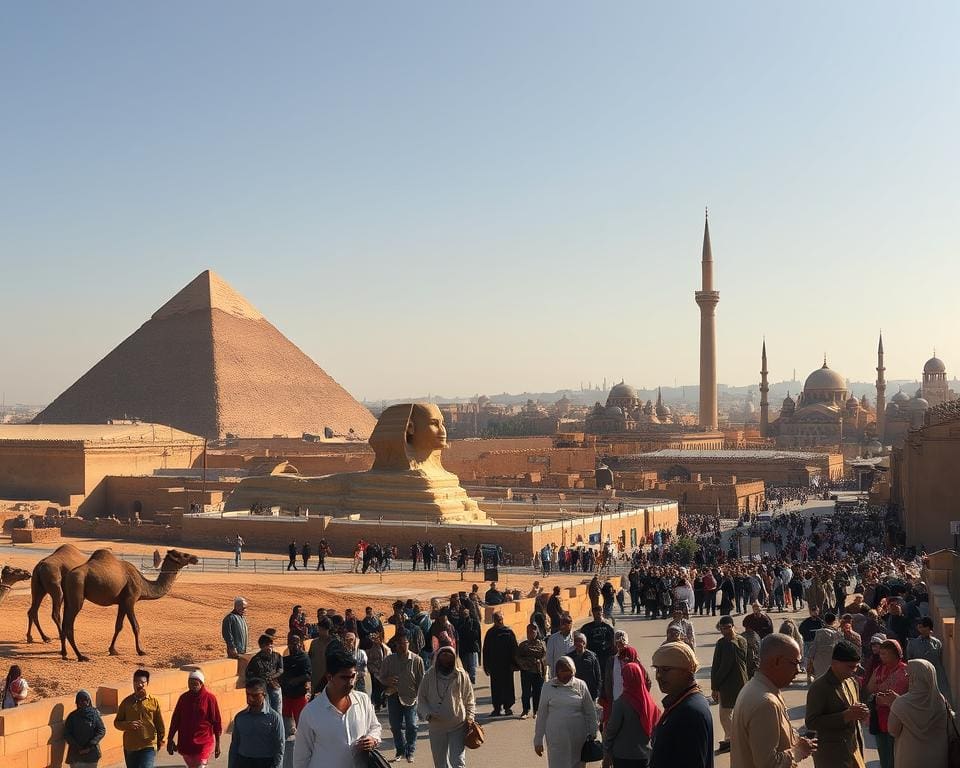
The city of Cairo sits where modern life meets echoes of deep time. Visitors often first notice the skyline to the west, where the Giza Plateau rises from the desert and frames views that feel both timeless and immediate.
The Giza Plateau and the Great Pyramids
The plateau is home to the Great Pyramid of Khufu, the pyramids of Khafre and Menkaure, structures from the Fourth Dynasty built around 2600–2500 BCE. A Great Pyramids review should note the scale and the sense of human achievement that survives millennia.
Best visiting times are early morning or late afternoon to avoid heat and crowds. Panorama points offer classic photo opportunities. Limited tickets allow entry to the Great Pyramid for those fit enough to climb narrow passageways. Respectful clothing and hydration are sensible precautions.
Conservation work addresses erosion and visitor impact. On-site signage and guided tours help visitors understand research findings and restoration choices. These measures aim to balance access with protection of Egyptian antiquities.
The Sphinx: guardian of millennia
The Great Sphinx of Giza sits near the pyramids and is widely linked to Khafre’s reign. Sphinx history tells of a limestone guardian that has watched the plateau for thousands of years, a potent symbol in myth and national identity.
Restoration in the twentieth century and ongoing conservation tackle erosion and past repairs. Close access is limited to preserve fragile stone. Visitors are guided to the best viewing angles and encouraged to follow photo etiquette.
Experiencing the Sphinx in situ brings an emotional response that complements any factual account. The surrounding environment shows both careful preservation and pressures from the nearby city.
How ancient monuments shape Cairo’s identity
The relationship between Cairo’s sprawl and its ancient sites creates a striking contrast. A living, modern metropolis grows beside landmarks that anchor national memory and the tourism economy.
Museums, guided tours and interpretive panels connect visitors to broader narratives of pharaonic life, archaeology and contemporary research. That context helps people see these monuments not only as relics but as active elements of cultural life.
For many, the Giza Plateau, the Sphinx and related Egyptian antiquities form the most enduring images of Cairo. They shape how scholars, residents and travellers imagine the city and its place in world history.
Historic Islamic Cairo: mosques, markets and madrasas
Historic Islamic Cairo rises from the Fatimid foundation of al-Qahira in 969 CE. Narrow lanes, domes and minarets trace a thousand years of faith, learning and trade. The Old City holds Mamluk and Ottoman layers that shape daily life and the visitor’s route.
Al-Azhar Mosque began as a Fatimid foundation in 970–972 CE and grew into one of the world’s oldest universities. The complex blends prayer halls, classrooms and courtyards. A guided visit reveals its role in Sunni learning and the rhythms of worship. Respectful dress and quiet observation enhance the experience. A visitor review should weigh authenticity, educational value and the calm spiritual ambience around Al-Azhar Mosque.
The Sultan Hassan Mosque-Madrasa is a high point of Mamluk ambition. Built around 1356–1363, it displays monumental portals, soaring iwans and precise stone carving. Its four-madrasah plan once taught the main Sunni schools. Photographers find dramatic light and shadow outside, while interior access may be limited. A balanced assessment notes the building’s scale, preservation and how the site communicates medieval urban culture through its architecture.
Khan el-Khalili evolved from a 14th-century trade district into a bustling bazaar beside historic mosques. Shoppers encounter metalwork, glassware, textiles and spices, plus the famed coffeehouse el-Fishawi. Expect bargaining, packed alleys and lively storefronts. A thoughtful Khan el-Khalili review should consider craft authenticity versus tourist goods, the value of cultural immersion and practices that support local artisans.
Historic Islamic Cairo offers a compact journey through Islamic architecture Cairo, from teaching institutions to markets that still hum with life. Each monument and souq contributes to a textured urban heritage that invites careful exploration and respectful engagement.
Coptic Cairo and religious heritage
Coptic Cairo sits within the old heart of the city, a pocket of narrow lanes and ancient stones that keeps stories from late antiquity. Visitors come for its sense of continuity, the living churches and the quiet courtyards that recall centuries of worship. This neighbourhood reveals how Christian sites Cairo survived alongside Islamic and Pharaonic layers to form a rare urban palimpsest.
The Hanging Church stands above a gatehouse of the Babylon Fortress and greets travellers with a striking timber nave and ornate icons. Originating in late antiquity, the Hanging Church has seen multiple restorations while keeping its medieval character. Pilgrims value the sacred ambience, the carved screens and the nearby relics, while guides point out the church’s role in Coptic liturgy and local festivals.
The area around the church hosts other early Christian landmarks that reward a slow walk. Small chapels, monastic cells and the Church of St Sergius sit close by and provide context for the Hanging Church Cairo. Signage and modest visitor facilities help travellers appreciate the sites without disturbing active worship.
Ben Ezra Synagogue lies a short stroll away and brings a different strand of history into view. Medieval accounts link this spot with the story of Moses; later centuries made the synagogue a centre for Cairo’s Jewish community. The site is known for its architectural features and historic manuscripts that underscore the city’s interfaith past.
Visitors to the Ben Ezra Synagogue find interpretive displays and an atmosphere of careful preservation. The synagogue complements walking routes through Coptic Cairo, inviting reflection on how Jewish, Christian and Muslim lives intersected here over time.
Coptic sites contribute to Cairo’s cultural mosaic by keeping ritual, craft and memory alive in daily life. Active congregations mark their calendar with feasts and processions, while local artisans maintain icon painting and woodwork traditions. These practices make the area a living chapter of multi-faith heritage Egypt.
For visitors seeking depth beyond monuments, Coptic Cairo offers layered narratives that connect to museums, eateries and nearby Islamic landmarks. A short itinerary might pair the Hanging Church and Ben Ezra Synagogue with the Coptic Museum to reveal a fuller picture of Cairo’s plural history.
Modern landmarks and contemporary architecture
The city skyline of Cairo carries layers of history. Nineteenth‑century projects, colonial-era planning, and post‑independence modernism meet recent regeneration efforts to produce a varied urban fabric. These Modern Cairo landmarks act as bridges between daily life and the city’s international image for visitors.
Cairo Tower on Gezira Island stands as a clear example of mid‑century ambition. Built in the late 1950s and 1960s from reinforced concrete, its observation deck offers sweeping views across the Nile and Greater Cairo. A Cairo Tower review should note the panoramic vantage points, the rotating restaurant when it is operating, and practical details such as ticketing and opening hours.
Visitors praise the vistas at sunset and the photographic opportunities. Accessibility varies by season and crowd levels. A focused review ought to assess view quality, visitor facilities and the best times to go for light and comfort.
Recent cultural investment has brought museum modernisation across the city. Distinguish the Grand Egyptian Museum from other projects: the new National Museum initiatives aim to renovate exhibition spaces and boost conservation. These developments improve display techniques, interpretive programmes and international collaboration.
Expect enhanced accessibility and more engaging educational offers. From a review perspective, upgraded museums reshape how artefacts speak to contemporary audiences. Their role in cultural renewal projects extends beyond displays to training and community outreach.
The Nile Corniche development frames daily life along the river. The Corniche links Zamalek, downtown Tahrir and other districts with promenades, cafes and bridges. Urban planners must balance traffic, air quality and floodplain management with heritage protection when shaping these riverfront spaces.
For visitors, the Corniche provides pleasant stretches for walking and strong river views. A practical assessment of modern urban planning looks at how comfortable and navigable these routes are for tourists exploring Cairo’s landmarks.
- Key modern sites to note: Cairo Tower, revamped museums, and riverside promenades.
- What to check before visiting: opening hours, accessibility features and peak times.
- How contemporary architecture Cairo links past and present through design choices.
Parks, public spaces and the Nile’s influence
Green lungs and riverside promenades shape how Cairo feels. Open spaces provide calm in a city of ancient stone and busy streets. Visitors and residents find respite where gardens, cafés and the Nile meet.
Al-Azhar Park grew from a bold restoration project into one of Cairo’s most loved urban refuges. The Aga Khan Trust for Culture led work that transformed a former rubbish dump into landscaped terraces. Families picnic on lawns, photographers capture the Citadel at sunset and small restaurants line the paths.
An Al-Azhar Park review often praises the maintenance, the sweeping views over Historic Cairo and the balance between leisure and heritage. Admission is modest. Late afternoon into evening offers the best light and liveliest atmosphere. Guided walks explain the site’s regeneration and its role in Cairo’s wider conservation story.
Zamalek sits on Gezira Island and feels like a different city within Cairo. Tree-lined avenues, embassies and galleries give Zamalek Cairo a leafy, cultured air. The island’s sporting clubs and riverside cafés invite slow, unhurried days away from the tourist bustle.
Gezira Island makes an ideal base for longer stays. Art venues such as the Townhouse Gallery and intimate eateries reward curiosity. Accessibility from central Cairo is straightforward by taxi or bridge, making Gezira Island a peaceful complement to the city’s monuments.
The Nile itself remains a moving, living landmark. Nile felucca rides offer a sensory way to see Cairo from the water. Small sailboats glide past bridges and riverbanks, best at sunset when the light softens buildings and minarets.
When planning Nile felucca rides, decide between organised trips and private hires. Negotiate fares clearly and allow time for gentle drifting. Routes often connect Zamalek, Old Cairo and downstream stretches, giving a varied portrait of waterfront life.
Public spaces Cairo-wide play a civic role. Parks and quays host festivals, daily commutes and quiet moments. These places knit together neighbourhoods, invite social exchange and let history breathe alongside modern leisure.
Museums and collections that define Egypt’s story
Museums in Cairo give context to objects that once lived in temples and tombs. They care for fragile artefacts, support research and invite visitors to learn through well-crafted displays. A balanced museums Cairo guide helps travellers plan visits that mix flagship sites with quieter gems.
The Egyptian Museum in Tahrir remains a must-see for first-time visitors. Opened in 1902, it houses an extraordinary range of Pharaonic material, from the Tutankhamun collection to the Narmer Palette and statuary spanning millennia.
Expect an atmospheric, historic setting with rooms that can feel crowded. Interpretive labels vary in style, so guided tours help unpack the stories. Note that many high-profile items are being transferred as part of the wider Egyptian Museum Tahrir review, so check what remains on display before you go.
Grand Egyptian Museum near Giza aims to present antiquities in a modern, climate-controlled environment. The GEM promises immersive galleries for Tutankhamun, large statuary and digital interpretation designed for school groups and specialist visitors.
Planned facilities include conservation labs, education centres and expansive forecourts with views of the pyramids. For museum professionals and tourists alike, the Grand Egyptian Museum represents a shift in how Egyptian collections will be displayed and studied.
Smaller museums and private collections offer concentrated experiences. The Museum of Islamic Art presents decorative arts and manuscripts. The Coptic Museum charts Christian heritage. Gayer-Anderson House provides a domestic glimpse into Ottoman-era Cairo.
These institutions tend to be less crowded and reward slow visits. Combine a visit to a major museum with one or two smaller sites for greater depth. Check ticketing options, opening hours and any combined passes when planning your itinerary.
- Plan: mix the Egyptian Museum Tahrir review findings with a GEM visit.
- Focus: choose a few Egyptian collections to explore in depth.
- Balance: use this museums Cairo guide to pair flagship and specialist museums.
Visiting tips, accessibility and preserving Cairo’s landmarks
Plan visits in the cooler months, October to April, and aim for early mornings or late afternoons to avoid heat and crowds. For sensible visiting Cairo tips, carry sun protection, water and comfortable walking shoes for uneven ground around the Giza Plateau and medieval streets. Modest dress is advisable at mosques and churches, and an accredited guide can turn travel advice Cairo into richer insights about each site.
Cairo accessibility varies widely. Modern museums such as the Grand Egyptian Museum and major parks now offer ramps and lifts, but many ancient sites have steps and rough terrain that limit wheelchair access. Confirm mobility assistance with venues in advance, use registered taxis, ride‑hailing apps or organised tours for easier transfers, and consider the metro for parts of the city when planning your route.
Responsible tourism Egypt matters for the long‑term health of monuments. Do not touch artefacts or climb structures, follow steward instructions and avoid purchasing antiquities of uncertain provenance. Support preservation by choosing tour operators that fund conservation, visiting Al‑Azhar Park and accredited museums, and buying crafts from reputable local artisans rather than unverified sellers.
For a short stay, combine the Giza Plateau and Sphinx with Historic Islamic Cairo and Khan el‑Khalili, then add Coptic sites or a felucca on the Nile. Longer trips can include Saqqara and Memphis or relaxed time in Zamalek. Treat Cairo as a living city where care and curiosity help safeguard its past for future visitors—small choices now make a big difference in preserving Cairo landmarks.