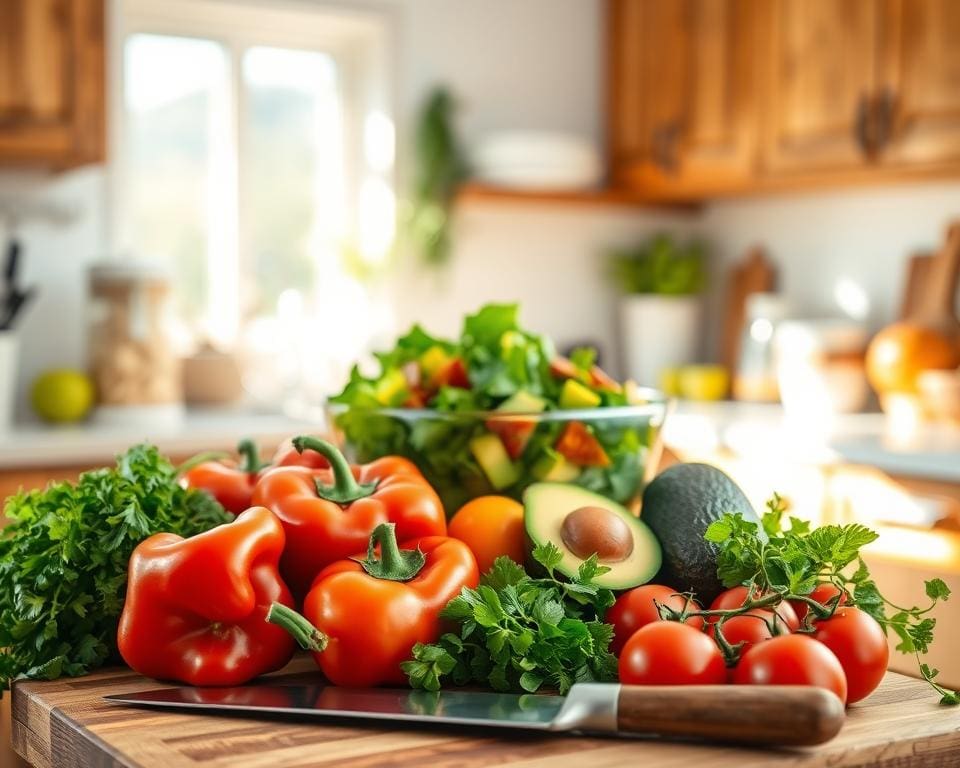
Freshness is not just a culinary cliché; it is the difference between a good meal and a memorable one. When parsley, basil or coriander are freshly cut, their aroma is sharper and their oils release more readily. Recently harvested tomatoes and a squeeze of unwaxed lemon bring a brightness that canned or aged produce rarely match.
Chefs and home cooks across the UK—from farmers’ market vendors in Cornwall to kitchen teams at Borough Market—say that fresh produce cooking reduces the need for heavy sauces. A simply grilled seabass or a salad with day-fresh rocket shows how freshness and flavour let natural character lead. Textural clarity in spinach or crispness in cucumbers also improves plating and perceived quality.
Think of freshness as a product to be reviewed. Key criteria are aroma intensity, firmness, vivid colour, taste clarity, clear provenance and a sense of nutritional value. This section sets the scene: we will examine fresh ingredients benefits and the measurable ways freshness affects sensory appeal, nutrition and cooking performance—especially when using UK seasonal produce.
Why do fresh ingredients make such a difference in cooking?
Fresh ingredients hit the plate with a clarity that transforms a dish. Bright colour, clear aromas and lively texture give immediate clues about quality. Chefs and home cooks rely on these cues when selecting produce for salads, salsas and finishing touches.
Immediate sensory impact
When you slice a vine-ripened tomato from Riverford or a market stall, the perfume that rises tells you more than its size or price. That quick burst is part of the sensory impact of fresh ingredients.
Colour and scent set expectations. A crisp apple or snap pea invites you to taste, while muted tones warn of loss of flavour. Restaurants and food writers use these signals to judge produce before a mouthful is taken.
Freshness and aromatic compound retention
Many aromatic compounds are volatile molecules such as terpenes, aldehydes and esters. They evaporate or break down after harvest, so basil bunches often smell far more intense than supermarket tubs.
Breaks in the cold chain and long storage accelerate loss of these molecules. That explains why home-grown herbs or market-picked leaves deliver stronger freshness tasting notes than pre-cut supermarket salads.
How texture and mouthfeel change with freshness
Cell turgour keeps leaves crisp and fruit juicy. As internal water pressure falls, vegetables go limp and tomatoes turn mealy. This shift alters texture and mouthfeel in salads and garnishes.
Fresh fish and meat display a clean, firm bite and better water-holding capacity. Ageing can improve tenderness for specific cuts, but spoilage brings off-odours that spoil the eating experience.
Flavour science: how freshness affects taste and aroma
Fresh ingredients shape what we taste and smell at the table. Modern flavour science freshness research shows that aroma, texture and taste are deeply linked to how recently produce was harvested and how it was stored. Small shifts in chemistry change a meal from ordinary to memorable.
Volatile compounds and why they matter
Many flavours come from volatile compounds that evaporate and reach our nose. Linalool in basil, hexanal in green apples and methyl salicylate in some herbs are familiar examples. These molecules form the aromatic fingerprint of an ingredient and declare its freshness.
Studies show volatile profiles change fast after harvest. Chopping or storing at room temperature increases oxidation and loss. Controlled cool storage preserves more of the bouquet, which is why a vine-ripened tomato often smells and tastes superior.
Enzymatic activity in fresh produce
Enzymes stay active after harvest and can alter flavour in minutes or weeks. Polyphenol oxidase causes browning in apples and aubergines when cut. That change is mainly cosmetic, yet some enzymatic pathways improve taste, like the conversion of starch to sugar during ripening.
Proper storage can harness beneficial enzymatic reactions produce sweeter root vegetables such as parsnips. Left unchecked, enzymes break down desirable compounds and leave bland or off notes.
Effects of age and storage on umami, sweetness and acidity
Age and storage shift the balance of umami, sweetness and acidity. Fresh tomatoes picked at peak ripeness usually show higher sugar-to-acid ratios and stronger glutamate levels than fruit picked early and stored for weeks. That is why vine-ripened fruit often tastes fuller.
Cold storage slows respiration and can preserve sugars, yet it may blunt volatile synthesis. A refrigerated ripe tomato can keep its sweetness but lose aroma, producing a bland impression despite retained sugars.
For proteins, buy from trusted suppliers such as day-boat fish merchants or reputable butchers who manage time-to-plate carefully. To balance safety and flavour when cooking fresh foods, consult guidance on correct temperatures from reliable sources like this temperature and cooking guide.
Nutritional advantages of using fresh ingredients
Choosing fresh produce brings clear nutritional benefits fresh ingredients offer that older or processed foods cannot match. Vitamins and delicate phytochemicals are at their peak soon after harvest, giving meals a real health boost and brighter flavour.
Vitamins and minerals lost over time
Water-soluble vitamins such as vitamin C and many B vitamins decline quickly after picking. Chill and use brassica like broccoli within days to avoid noticeable vitamin loss storage effects. Minerals tend to be more stable, yet processing and long storage can reduce bioavailability and lower the overall nutrient quality.
Phytochemicals and antioxidants in freshly harvested foods
Freshly harvested fruits and vegetables contain higher levels of phytochemicals such as flavonoids and carotenoids. Dark berries, leafy greens and colourful veg deliver strong antioxidant activity that helps protect cells from oxidative stress. Bruising, light and heat accelerate losses, so handling matters.
For guidance on picking high-antioxidant choices, see a practical guide that highlights seasonal, antioxidant-rich options and simple swaps to increase intake for wellness.
Practical tips for preserving nutrients during cooking
- Use minimal water and short cook times; steaming or quick blanching helps preserve water-soluble vitamins and limits vitamin loss storage causes.
- Choose methods that retain or reuse juices, such as stir-frying and making stocks, to preserve nutrients cooking leached into liquids.
- Add herbs, citrus and delicate leaves at the end of cooking to conserve volatile antioxidants and vitamin C.
- Use a little olive oil to help release fat-soluble compounds like carotenoids while keeping texture and flavour vibrant.
- When possible, favour fresh whole foods—seasonal apples, new potatoes and British berries often outperform canned or overprocessed alternatives in nutrient integrity.
Small changes in shopping and kitchen practice amplify the nutritional benefits fresh ingredients provide and help you serve meals rich in antioxidants fresh produce and essential vitamins.
Cooking techniques that showcase fresh ingredients
Fresh produce sings when treated with respect. Choose methods that keep brightness, texture and aroma at the fore. Below are practical approaches to lift flavours and show off seasonal bounty.
Raw preparations like salads, carpaccio and ceviche highlight pure taste. Use sustainably sourced UK-caught fish for ceviche and dress it lightly so natural oils and acids shine. Quick blanch-and-shock keeps colour and bite in peas, beans and broad beans.
Light, brief heat treats preserve delicate notes. A few minutes of steaming, a swift pan-sear of asparagus or courgette, or a hot griddle char on peppers delivers texture and gentle caramelisation without dulling aromatics.
Finishing techniques bring freshness back to the plate. A scatter of lemon or orange zest releases volatile oils that lift an entire dish. A drizzle of high-quality extra virgin olive oil and a pinch of Maldon or Cornish Sea Salt add shine and contrast.
Simple emulsions and dressings ensure flavour clings to every mouthful. Vinaigrettes and beurre blanc coat ingredients so volatile aromatics reach the palate evenly, while micro herbs and finishing salts supply texture and scent.
Ingredient pairing relies on balance and contrast. Pair ripe tomato with torn basil and extra virgin olive oil for a classic harmony. Try apple with British cheddar or roasted beetroot with horseradish and dill for depth.
Think beyond taste. Match creamy burrata with crisp radicchio for texture contrast. Use temperature differences to surprise the palate. Assess combinations by how much fresh ingredients improve a dish compared with processed substitutes.
- Use raw preparations to showcase seasonal produce.
- Apply short, high heat for delicate vegetables and herbs.
- Finish dishes with zest, quality oil and finishing salts.
- Select ingredient pairing that balances flavour, texture and temperature.
Seasonality and sourcing: choosing the freshest produce in the UK
Choosing produce by season makes a clear difference to flavour and freshness. Seasonal harvests reach peak ripeness and need less storage and long transport. British asparagus in spring, Norfolk strawberries in early summer and English apples in autumn show how seasonality UK produce can elevate aroma, texture and nutrition.
Off-season items often travel from afar and are picked early to survive transit. That practice reduces volatile aromas and can dull sweetness. Look for items with recent harvest dates to avoid fruit and vegetables that were ripened artificially.
Where you buy matters as much as what you buy.
Visiting local markets farm shops gives a chance to inspect produce for firmness and scent. Farmers’ markets and farm shops such as Daylesford let you ask growers about harvest timing and methods. Box schemes UK, including Riverford and Abel & Cole, curate seasonal boxes that shorten the farm-to-kitchen window and make planning meals around peak produce easier.
Community-supported schemes and veg box suppliers often list harvest dates and the name of the farm. Those details help you trust the supply chain and judge freshness before you cook. Small-scale producers tend to deliver crop-specific tips that improve storage and flavour retention at home.
Labels tell a story about origin and ethics.
Provenance labels and clear signage can show farm names, growing region and certifications like the Soil Association. For seafood, look for Marine Stewardship Council marks or ask about catch date and method, such as day-boat or line-caught, to assess freshness and sustainability.
When reading provenance labels, favour explicit UK claims such as “grown in Kent” or “British salad leaves”. Those clues indicate shorter supply chains and generally fresher arrivals. Use that information to choose produce that will deliver the most flavour in your kitchen.
Practical tips for buying, storing and using fresh ingredients
When buying fresh ingredients, shop seasonally and favour local sources such as farmers’ markets, farm shops and trusted box schemes. Inspect produce for bright colour, firm texture and a fresh aroma; for fish and meat, ask butchers or fishmongers about date of catch or slaughter. A simple freshness checklist UK shoppers can use: look, smell, feel and check provenance before you buy.
Storing fresh produce correctly extends life and preserves flavour. Chill berries and lettuce, but keep tomatoes, potatoes and onions at a cool room temperature and apart to avoid off-flavours or sprouting. Use breathable packaging for mushrooms and paper bags for bananas; place cut items in airtight containers and slow browning with a squeeze of lemon or a drizzle of oil.
Follow cold-chain best practice for proteins: keep meat and fish below 4°C and use within supplier guidance, or freeze promptly using methods that limit ice-crystal damage. For storing fresh produce long term, blanch and freeze vegetables, quick-pickle surplus, preserve garlic in oil or make compotes and sauces to capture peak-season flavour.
Know how to use fresh ingredients to best effect. Reserve delicate herbs, salad leaves and microgreens for raw or finishing touches, add citrus and herbs at the end of cooking, and use heartier veg for stews and braises. These buying fresh ingredients tips and storing fresh produce habits will lift texture, flavour and nutrition in everyday meals and special-occasion dishes alike.