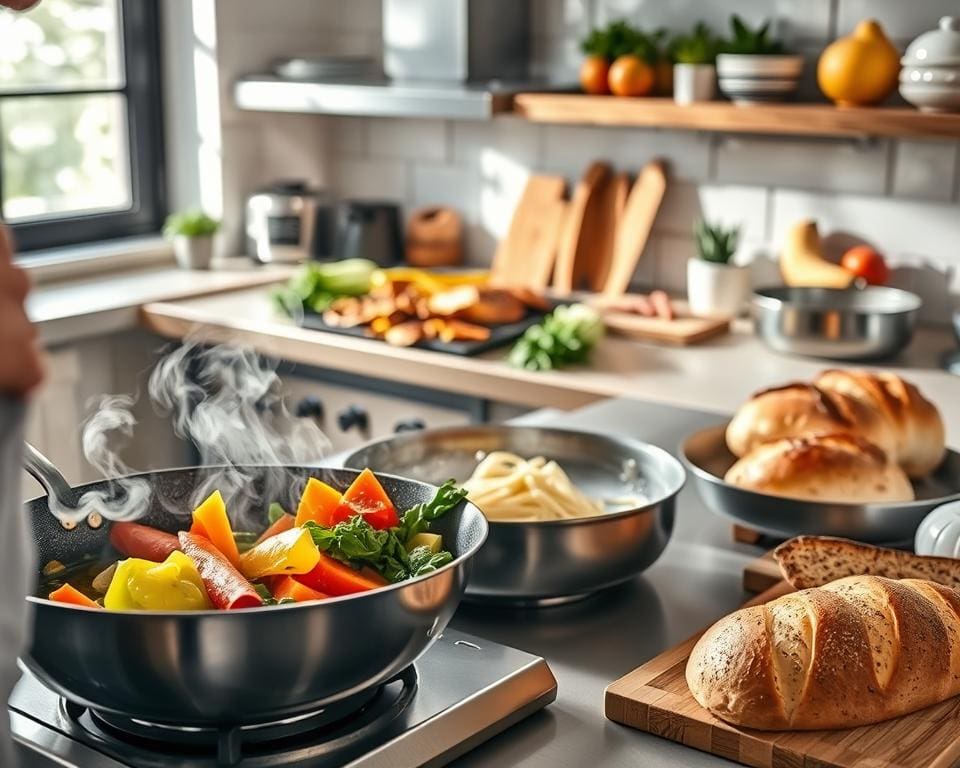
Cooking techniques shape what we taste and what we absorb. Taste refers to sweet, sour, salty, bitter and umami, while flavour combines those tastes with aroma. Nutrition covers macronutrients, vitamins and phytonutrients. Understanding how cooking techniques affect taste and nutrition helps home cooks in the United Kingdom make meals that are both delicious and healthful.
Culinary science links heat and chemical reactions to flavour development and nutrient change. Peer‑reviewed food science shows that Maillard browning and caramelisation create complex aromas, while heat can degrade some vitamins. Guidance from Public Health England and the NHS also stresses methods that preserve nutrients and ensure food safety.
Real-world effects are clear: better tasting vegetables lead to higher vegetable intake, and proper cooking kills pathogens to protect health. Practical choices about cooking methods and health influence meal satisfaction and dietary quality across households.
This article takes an inspirational, product‑aware approach. It will explore cooking techniques taste nutrition, review tools from steamers to cast‑iron skillets, and explain how the right method and appliance can optimise vitamins, preserve texture and reduce harmful by‑products.
How do cooking techniques affect taste and nutrition?
Cooking is a form of transformation. Heat alters cell structure, denatures proteins, gelatinises starches and breaks down plant cell walls. Those changes release aroma compounds, shift texture and alter the bioavailability of nutrients. This cooking techniques overview sets the scene for the methods that follow in the article.
Broad categories shape our choices in the kitchen. Gentle moist-heat methods such as steaming, poaching and sous-vide protect delicate vitamins and preserve texture. High-heat dry techniques like frying, grilling and roasting create strong browning and deep flavour. Mixed approaches — braising, stewing and casseroles — marry tenderness with concentrated taste. Minimal-processing options such as raw preparations, marinating and quick pickling retain freshness and bright acids.
Different nutrients respond in predictable ways. Water-soluble vitamins, notably vitamin C and many B vitamins, are heat-sensitive and may leach into cooking liquid. Fat-soluble vitamins — A, D, E and K — are more stable and can become more available when paired with fat. Some phytochemicals, for example lycopene and carotenoids in tomatoes and carrots, increase in availability after gentle cooking.
The impact of cooking methods creates trade-offs chefs and home cooks must weigh. Techniques that maximise flavour through browning and caramelisation often produce more intense aromas. Those same techniques can form unwanted compounds such as acrylamide or heterocyclic amines if applied poorly. Understanding these taste vs nutrition trade-offs helps you choose the right approach for each ingredient.
Equipment and technique matter as much as the method itself. A controlled oven from Bosch or a reliable sous-vide from Anova lets you manage temperature precisely. Simple actions — shorter cook times, reduced water contact and using lids — cut nutrient loss without dulling flavour. In the context of culinary techniques UK, choosing appropriate tools supports both taste and health goals.
Use this cooking techniques overview as a guide rather than a rulebook. Each recipe and ingredient asks for a tailored approach. Balancing the impact of cooking methods with an awareness of taste vs nutrition trade-offs brings better meals and healthier results.
Understanding heat transfer and flavour development
Cooking is a conversation between heat and food. Grasping how heat moves and how molecules change helps any cook shape taste and nutrition with intention. This short guide looks at the chemistry of browning, the physics of heat transfer cooking and the practical dance between temperature time texture.
Maillard reaction explained
The Maillard reaction is a non-enzymatic browning that occurs when amino acids meet reducing sugars, producing hundreds of volatile compounds that deliver roasted, savoury and nutty notes. It usually appears between 140–165°C and shows in seared beef, toasted bread and roasted coffee.
Caramelisation differs by chemistry and aroma. It is the thermal decomposition of sugars that yields sweet, toffee-like and burnt-sugar scents at higher temperatures. You see it in caramelised onions and a brûléed sugar crust.
pH, surface moisture and dryness steer these reactions. Aim for a dry, hot surface to favour Maillard browning. Low moisture delays browning, while a raised pH can speed the reaction and deepen colour.
Conduction, convection and radiation in the kitchen
Conduction is direct contact heat transfer. A cast-iron skillet sends focused heat into meat and gives rapid, local browning. Convection moves heat through air or liquid; fan-assisted ovens and boiling water provide even cooking.
Radiation delivers infrared energy from broilers and grills, producing intense surface sear and char. Appliance choice alters how quickly food reaches target temperatures and how crusts form.
These differences shape taste and nutrient retention. Faster browning limits time for heat-sensitive vitamins to leach away, while slow, even heat can reduce surface caramelisation but preserve interior moisture.
How temperature and time shape texture and aroma
Proteins set at relatively low temperatures. Collagen converts to gelatin between roughly 70–90°C given time and moisture, which yields tender, silky textures in slow-cooked meats.
Prolonged high heat can dry proteins and toughen tissue. A brief, intense sear locks flavour and gives crispness. Low-and-slow cooking produces deep, integrated flavours without aggressive surface charring.
Balance time and temperature to achieve the desired result. Use quick, high-heat techniques for bold surface flavour and crisp texture. Choose lower temperatures and longer durations when you want tenderness and sustained aroma development.
Methods that preserve nutrients: steaming, poaching and sous-vide
Gentle, moist-heat cooking lets flavours sing while keeping vitamins intact. Steaming, poaching and sous-vide rely on lower temperatures and limited water contact to protect vitamin C and B-group nutrients. These approaches reduce leaching and thermal breakdown so food stays bright, tender and more nutritious.
Why gentle, moist-heat techniques retain vitamins
Steaming limits direct contact with water. Tests show steaming preserves more vitamin C than boiling, since juices remain with the food rather than draining away. That makes steaming an excellent choice for peppers, broccoli and other delicate vegetables.
Poaching uses low temperatures in a flavourful liquid. Poaching nutrition benefits come from gentle heat and short cook times, which cut oxidation and nutrient loss. Fish and eggs respond well to poaching, keeping texture and subtle aromas.
Sous-vide seals food in a vacuum bag and cooks at precise low temperatures, often between 50–65°C for proteins. This method reduces oxidation and thermal degradation, preserving texture and volatile flavour compounds. The result is consistent doneness with minimal nutrient loss.
Practical product review notes: best steamers and sous-vide devices for home use
When choosing a steamer, consider bamboo steamers for dim sum and delicate items, or electric multi-tier steamers from Panasonic and Russell Hobbs for versatile vegetable cooking. Look for sturdy construction and easy cleaning in a steamers product review.
For sous-vide, immersion circulators from Anova and Breville Joule are popular in the UK. They offer precise temperature control, app-guided recipes and reliable after-sales support. Compare temperature accuracy, build material and capacity when evaluating sous-vide devices.
Key features to weigh include temperature accuracy within ±0.1–0.5°C, stainless steel build, safety cut-offs and whether the unit fits your kitchen pot or container. Think about bench space, power draw and how each device integrates with your existing cookware.
Tips for maximizing nutrient retention when using these methods
- Minimise water contact and shorten cook times where safe to do so. Use steaming trays or shallow poaching liquids to cut leaching.
- Reclaim cooking juices. Use poaching stock or steaming drips in sauces to recover soluble nutrients and flavour.
- Vacuum-seal properly for sous-vide to reduce oxidation. Follow recommended times and temperatures to balance food safety and nutrient preservation.
- Finish with a quick, high-heat sear to add colour and aroma without prolonged exposure to heat.
- Consult reputable cookbooks and apps for precise timings; they help protect nutrients while ensuring safe, delicious results.
High-heat techniques: frying, grilling and roasting — flavour vs nutrition
High heat unlocks deep, savoury flavours that few other methods achieve. Dry-heat cooking triggers browning reactions that create crusts, sears and caramelised edges. Those textures give dishes a compelling contrast between a crisp exterior and a tender interior when done with care.
How high heat enhances flavour through browning
When proteins and sugars meet intense heat, the Maillard reaction and caramelisation produce nutty, roasted and umami notes that our brains find rewarding. A pan-seared steak, roast vegetables with charred edges and a grilled fillet of sea bass all show how surface browning concentrates flavour without drying the centre.
To get the best results, start with a pre-heated pan and dry surfaces. Use fats with high smoke points like rapeseed or sunflower oil. Rest cooked meat on a board so juices redistribute. These simple steps boost flavour while reducing the risk of overcooking.
Health considerations: fats, acrylamide and char
Frying can raise the fat content of foods. Deep frying usually adds more oil than shallow frying. Saturated fats are a public health concern, so choose oils with healthier profiles and keep temperatures steady to limit oil absorption.
Acrylamide forms in starchy foods at high temperatures, which is why chips and toast brownier than golden carry greater risk. Charred meat may contain heterocyclic amines and polycyclic aromatic hydrocarbons. Public health advice suggests favouring golden browning, trimming burnt sections and avoiding excessive charring to lower exposure to these compounds.
Practical habits reduce harm: use moderate portions, avoid reusing cooking oil repeatedly and try marinades to cut formation of harmful compounds. These choices balance indulgence with care for long-term health.
Equipment review pointers: air fryers, cast-iron skillets and BBQ grills
Air fryers mimic deep frying by circulating hot air. For British kitchens, look for adjustable temperature, roomy baskets and easy cleaning. Models from Philips and Ninja often score well in tests as contenders for the best air fryer UK, saving oil while still delivering crisp results.
Cast-iron pans excel at searing because they hold heat evenly. Brands such as Lodge and Le Creuset make durable options. A proper cast-iron skillet review will note seasoning upkeep, weight and whether the pan works on induction hobs. Good maintenance keeps performance high for decades.
BBQ grills offer a range of flavour profiles. Gas gives instant control and predictable temperatures. Charcoal adds smoky depth but needs careful management to avoid flare-ups and excess char. Weber remains a popular choice among UK cooks for reliable gas and charcoal models. Always use a thermometer, clean grates after use and choose accessories that help control flare and smoke.
- Use oils with high smoke points to protect flavour and limit oil uptake.
- Cook starchy items to a golden colour rather than dark brown to reduce acrylamide cooking risks.
- Consider an air fryer if you want crisp texture with less oil; check best air fryer UK lists for proven models.
- Invest in a cast-iron skillet for superior searing; follow a cast-iron skillet review and care guide before purchase.
Moist-heat versus dry-heat: balancing taste, texture and health
Choosing between moist-heat and dry-heat methods shapes the taste and nutrition of a meal. This short guide helps you weigh braising, stewing and casseroles against roasting and baking so you can pick the right approach for flavour and health.
Comparing stews, braises and casseroles with roasting and baking
Stews, braises and casseroles use liquid and low heat for long periods. They break down connective tissue, concentrate flavour in a sauce and often increase nutrient extraction into the cooking liquid.
Roasting and baking rely on dry heat to form a crust and caramelise surfaces. Roasted root vegetables gain deep flavour from Maillard reaction without adding liquid.
Use braising for tougher cuts that need tenderising. Choose roasting for crisp edges and intense browning. Casseroles work well for one-pot meals that conserve casseroles nutrition by keeping juices and stock in the dish.
When to choose moist heat to protect delicate nutrients
Moist heat suits fragile foods such as leafy greens, delicate fish and vitamin C–rich veg. Short steaming or gentle poaching preserves colour, texture and vitamins better than high, dry heat.
Slow, gentle cooking helps retain collagen and releases flavour compounds in meat, making it easier to digest without relying on intense surface browning. For sensitive produce use lower temperatures and shorter times.
Decide by priority: if you want nutrient retention and tenderness, opt for moist techniques. If you want crispness and bold browning, pick dry heat or combine methods such as roasting then finishing with a quick sear to balance outcomes.
Recipe-style product notes: best cookware for mixed-technique dishes
For mixed-technique cooking, choose versatile pieces. A good Dutch oven performs stove-to-oven braising and holds heat evenly. Look for Le Creuset or Staub in reviews to compare weight and enamel quality in a Dutch oven review.
Use heavy stainless-steel pans for browning then deglazing. Roasting tins with racks help airflow for even roasting. When shopping in the UK, check best cookware UK lists for value and durability.
Seek even heat distribution, tight-fitting lids for moisture retention and non-reactive surfaces for acidic braises. Maintain cast iron by seasoning and avoid thermal shock for enameled pots to extend life. Pair cookware choice with technique to get the best taste and healthier results.
Minimal-processing techniques: raw, marinating and quick pickling
Eating raw keeps heat-sensitive vitamins and many enzymes intact, which boosts raw food nutrition in salads, ceviche and fresh salsas. Some compounds, such as lycopene, become more available after cooking, so balance is key. Use fresh, seasonal produce to amplify flavour and nutrient density.
Dressings that balance acid, salt and oil lift simple raw dishes and improve absorption of fat-soluble vitamins. A drizzle of olive oil on ripe tomatoes increases carotenoid uptake. Try flavour infusion marinades for vegetables to add depth without heat.
Nutrient preservation and flavour infusion in raw preparations
Keep raw preparations bright by handling produce gently and cutting close to service time. Acidic elements like lemon or vinegar brighten taste and lightly “cook” textures in ceviche. For guidance on timing and ingredient pairing, see a practical overview at what turns simple meals into nourishing.
When raw dishes include fish or meat, follow Food Standards Agency advice on sourcing and hygiene. Only use quality, well-chilled ingredients and keep surfaces and hands immaculate to reduce risk.
How marinades enhance taste and can reduce harmful compounds during cooking
Marinades tenderise and infuse flavour through acidic, enzymatic or oil-based components. Pineapple and papaya enzymes break down fibres, while rapeseed or olive oil carries herbs and spices into the meat.
Research shows antioxidant-rich mixes with garlic, lemon and rosemary can lower formation of heterocyclic amines and polycyclic aromatic hydrocarbons when food is grilled. Note that marinating reduces HCAs most effectively with short contact times for fish and longer periods for tougher cuts.
- Proportion tip: aim for roughly one part acid to three parts oil for balanced flavour.
- Timing tip: fish 15–30 minutes, chicken 1–4 hours, red meat up to 24 hours.
- Safety tip: discard used marinade that touched raw meat or boil before using as a sauce.
Practical advice on safe home pickling and storage
Quick pickling uses a vinegar brine and refrigeration for short-term storage. Typical ratios start at one part vinegar to one part water with 1–2% salt by weight, adjusted with sugar or spices to taste.
For longer shelf life you must use heat-processing canning methods. For fridge pickles, cool the brine before sealing jars and store in glass jars with tight lids. Label jars with the date and consume within the recommended timeframe.
- Use pasteurised vinegar and clean, sterilised glass jars.
- To keep veg crisp, try a grape leaf or a quick salt soak before pickling.
- Follow Food Standards Agency guidance for acidity levels to ensure safe pickling UK practices.
With careful sourcing, simple techniques and mindful storage you can enjoy vibrant flavours and benefit from raw food nutrition, flavour infusion marinades, marinating reduces HCAs and smart quick pickling recipe storage while keeping safety central.
Practical buying guide: choosing tools and appliances that optimise taste and nutrition
Start by grouping purchases by priority. Essentials include a reliable food thermometer (probe or instant-read), a heavy-based frying pan in stainless steel or cast iron, and a saucepan with a tight-fitting lid. These cover searing, simmering and safe temperature checks so you get flavour and food safety from the outset.
For a step up, consider a sous-vide immersion circulator from trusted makers such as Anova or Breville Joule, a multi-tier electric steamer or bamboo steamers and a Dutch oven from Le Creuset or Staub. These items make it easier to follow precise temperature and time guidance that preserves nutrients and enhances texture. If you need a reference for safe internal temperatures, see this handy guide on temperature benchmarks.
When choosing, look for accuracy and build quality. For precision devices like sous-vide and steamers check temperature accuracy, warranty and app support. For pans assess thermal conductivity, weight, induction compatibility and non-reactive surfaces. For grilling and frying appliances prioritise a wide temperature range, drip and grease management and simple controls to avoid excessive charring.
Balance budget and sustainability: invest in durable pieces such as a cast-iron pan or Dutch oven rather than replacing cheap cookware often. Energy-efficient appliances can reduce oil use and waste, making them cost-effective over time. Shop from John Lewis, Lakeland, Amazon UK or specialist kitchen shops to test items in person, and use reviews and after-sales support to guide final choices. Prioritise a small set of versatile tools to master the best cookware for nutrition and best cookware mixed techniques, and learn when to choose sous-vide immersion circulator or the best steamer UK to get the most from your cooking.