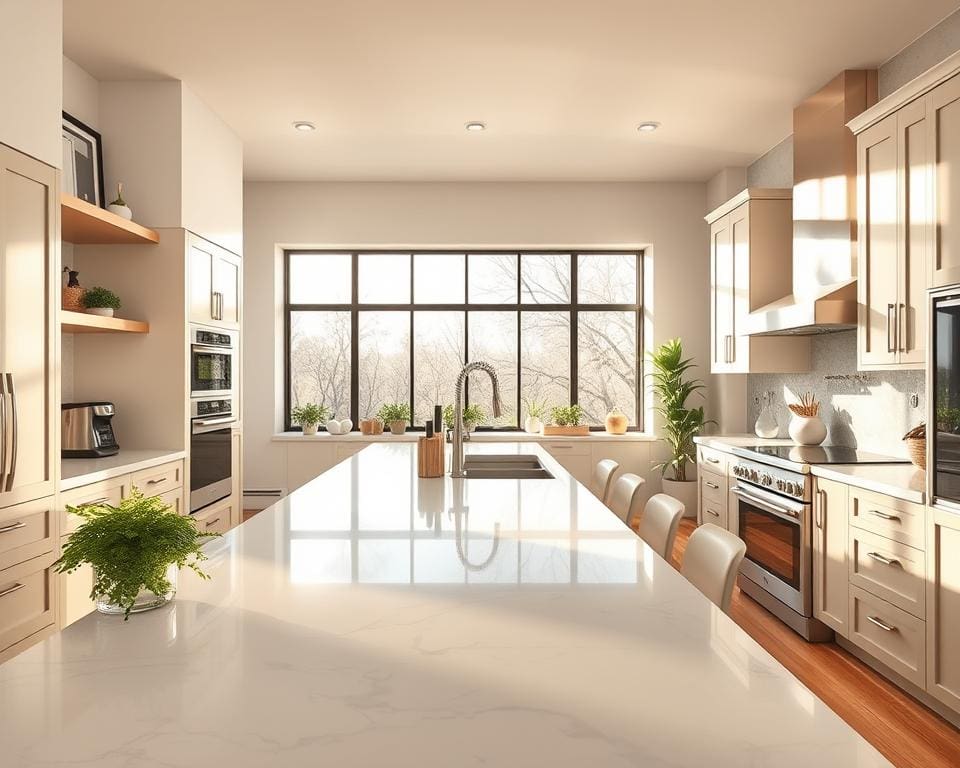
A kitchen renovation delivers immediate lifestyle gains and clear financial upside. Upgrading a tired layout, swapping laminated worktops for Caesarstone or Silestone, and fitting reliable appliances from Bosch or Neff can transform daily life while increasing kitchen investment value at sale.
In the UK market the kitchen is routinely one of the top three selling points on Rightmove and in estate agent briefings. A modern, well-specified kitchen can shorten time on market and often attracts higher offers, so the kitchen remodelling UK decision is as strategic as it is sentimental.
This article assesses kitchen renovation benefits across practical and resale criteria. We review cabinetry choices such as Howdens, durable finishes, appliances, and sensible layout changes. The aim is to give readers realistic kitchen upgrade ROI expectations and guidance on design moves that boost both comfort and resale appeal.
Our conclusions draw on Nationwide and Rightmove trend data, guidance from the Chartered Institute of Building and the Federation of Master Builders, plus product performance from Bosch, Neff, Howdens, Silestone and Caesarstone to ensure robust, evidence-based advice.
Why is kitchen renovation a smart home investment?
Investing in a kitchen can change how a property performs on the market and how it feels to live in. Targeted updates boost presentation and utility, which often speed up sales and lift offers. Use sensible choices to balance upfront cost with future upside.
Boosting property value in the UK market
UK estate agents and surveys repeatedly place kitchens near the top of interior improvements that add value. Typical uplifts quoted in market reports show modern kitchens can increase asking prices and shorten time on market. In busy areas such as inner London or commuter belts, absolute gains can be larger, though costs rise too. In northern and suburban markets, practical, value-focused refurbishments often deliver the strongest net benefit.
Comparable sales on portals like Rightmove and Zoopla respond to visible kitchen upgrades. A refreshed space can nudge a home into a higher comparative bracket, which improves online positioning and buyer interest. Thoughtful, neutral styling helps ensure the kitchen value UK is realised across a broad audience.
Return on investment: realistic expectations
Expectations for kitchen ROI should be pragmatic. Small refurbs—new doors, handles, a fresh coat of paint—often recoup a high percentage of their cost. Mid-range full refits commonly return a substantial portion, while bespoke luxury projects seldom return 100% but can attract premium buyers prepared to pay more.
There are diminishing returns from over-personalised choices. Durable mid-to-high-end materials typically yield the best balance of appeal and cost-effectiveness. Timing matters too; renovations completed shortly before marketing can boost perceived value immediately, whereas long-term owners reap lifestyle benefits and energy savings over years.
How renovations influence buyer perception
Kitchens feature first in many viewings and photos. An immaculate, well-lit kitchen gives the impression of a well-maintained home and reassures viewers about overall condition. This first impression strongly affects kitchen influence on buyers.
Functional upgrades send clear signals. Integrated appliances, better heating, clever storage and improved flow suggest fewer follow-on works for the buyer. These practical changes make a property feel ready to move into and can reduce negotiation on price.
Emotional appeal is vital. Contemporary finishes, neutral palettes and quality fittings attract more viewers and support a higher resale kitchen improvements profile. Avoid bold personalisation that narrows the market; broad appeal preserves the kitchen upgrade property price advantage across buyer types.
Design choices that maximise resale value and everyday comfort
Thoughtful design lifts both the joy of daily use and the resale appeal of a home. In the kitchen design UK market, buyers value rooms that feel practical, durable and in tune with the property’s era. Small, well-chosen upgrades offer strong returns when they match the house and the likely purchaser.
Popular kitchen styles for British homes
Timeless choices work best across the market. Contemporary shaker cabinetry suits period terraces, while handleless modern units fit new-build flats. Transitional schemes blend classic mouldings with contemporary hardware to appeal to a broad audience.
Match style to property type. Period homes benefit from painted cabinetry and traditional brassware, while urban apartments suit integrated appliances from Bosch or Neff and slick handleless doors. Use neutral palettes — warm greys, off-whites and muted blues — and reserve bold colours for accessories that are simple to change.
Durable materials and finishes that add long-term value
Choose finishes that withstand daily wear. For best worktops UK, quartz options like Caesarstone and Silestone score highly for low maintenance and durability. Granite offers prestige; solid timber brings warmth but needs care for scratches and heat.
For cabinetry, solid-core doors or well-built MDF with quality veneers last longer and protect perceived value. Brands such as Howdens give value-focused results; bespoke joiners can raise returns in higher-end homes. Select resilient flooring — porcelain, engineered oak or LVT — to handle moisture and heavy use.
Invest in quality ironmongery. Long-lasting taps from Grohe or Hansgrohe, soft-close drawers and robust hinges reduce future problems and sustain the kitchen’s reputation for quality.
Layout improvements that improve functionality and appeal
Good kitchen layout ideas centre on efficient workflow. The classic kitchen triangle — hob, sink and fridge — cuts unnecessary steps and speeds routine cooking tasks.
Open-plan layouts often attract modern buyers when a non-structural wall can be removed, creating a kitchen-diner that feels social and spacious. Be cautious about losing defined rooms in homes where buyers prize separate living spaces.
Prioritise storage and multifunctional solutions. Integrated pantries, pull-out organisers and island units with seating add everyday practicality. Layered lighting and reliable extraction improve comfort and demonstrate attention to detail to prospective buyers.
Cost considerations and budgeting for a profitable renovation
Planning a kitchen refit begins with clear figures and realistic choices. Use a simple budget to map likely spends, timescales and buffers. That clarity makes decisions easier when tradespeople or suppliers like IKEA, B&Q or Howdens present options.
Typical kitchen renovation cost UK brackets help set expectations. A basic facelift often spans £3,000–£8,000 and includes new doors, paint and minor appliance swaps. A mid-range full refit usually sits between £8,000–£20,000 and covers new cabinetry, worktops, appliances and rewiring. High-end bespoke projects from £20,000 up add luxury worktops, custom cabinetry and designer appliances.
Prioritise durable worktops, trusted appliances from Bosch or Neff, solid cabinetry construction and essential plumbing and electrics. Save on decorative finishes, replaceable hardware and entry-level lighting where sensible. Labour can amount to a large portion of costs. Obtain multiple quotes and consult trade bodies such as the Federation of Master Builders to reduce the risk of overpaying.
Financing options and tax considerations in the UK
Common routes to finance kitchen refit include savings, remortgaging, home improvement loans and personal loans. Some suppliers offer 0% credit deals for set terms. Choose the option that matches your repayment capacity and the project scale.
Renovation costs are generally not tax-deductible for private homeowners. Capital improvements may affect capital gains calculations when you sell, so retain invoices and seek professional tax advice if unsure. VAT on renovations applies to many goods and services; eligibility for reduced rates depends on the work type and property status. Grants for energy-efficiency upgrades are available in some areas for measures such as insulation or new boilers, but eligibility varies by scheme and locale.
Project timelines and avoiding common budget overruns
Expect simple facelifts to take around 1–2 weeks, mid-range refits roughly 4–8 weeks and major renovations with structural work eight weeks or more. These are guides; bespoke elements can extend lead times.
Typical delays arise from supply-chain issues for bespoke items, unforeseen structural or damp problems and planning or building-control hold-ups. Mitigate risks with confirmed lead times, written contracts and a contingency fund of 10–20% of the budget. Insist on clear written estimates, insurance cover such as public liability and employer’s liability where needed, and product guarantees for appliances and worktops.
Keeping the kitchen project timeline visible and the budget under review ensures a smoother rebuild. Regular updates from your contractor and staged payments tied to milestones protect both parties and help deliver a profitable, well-timed renovation.
Practical benefits beyond resale: lifestyle, efficiency and sustainability
An updated kitchen transforms daily life. Improved layouts, clever storage and modern appliances make cooking quicker and less stressful. Islands and open-plan arrangements create social hubs where families gather and guests linger, so lifestyle benefits kitchen renovation extend beyond mere aesthetics.
Health and hygiene improve with better ventilation, non-porous worktops and easy-clean surfaces. Choosing sustainable kitchen materials such as FSC-certified timber or recycled-content worktops reduces chemical exposure and supports long-term wellbeing. Eco-friendly kitchen upgrades also include low-VOC paints and adhesives, which keep indoor air fresher.
Efficiency gains cut both bills and hassle. Energy-efficient appliances from brands like Bosch and Neff, inverter motors and low-flow taps boost kitchen energy efficiency and water savings. Durable fittings lower maintenance and replacement costs, improving total cost of ownership over years rather than months.
Waste reduction and future-proofing matter too. Plan responsible disposal of old units via recycling centres, Freecycle or Freegle, or take advantage of trade-in schemes from reputable suppliers. Adding smart LED lighting, programmable appliances and smart thermostats enhances performance and appeal. Beyond an uplift in asking price, a thoughtful refurbishment improves everyday comfort, reduces running costs and aligns the home with modern sustainability expectations.