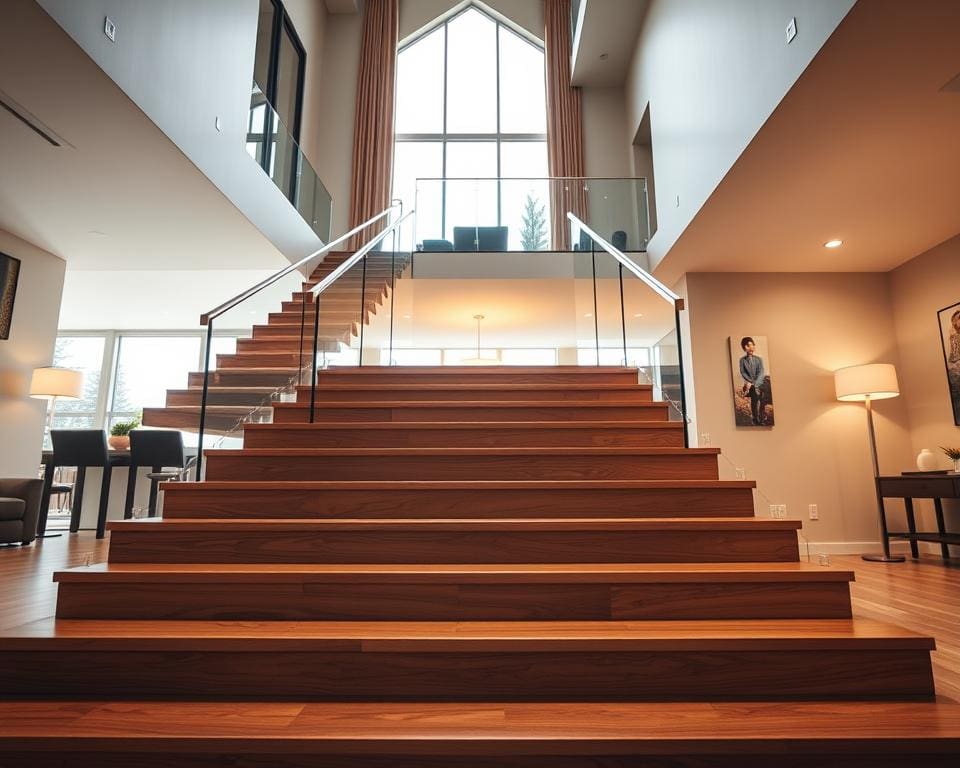
The staircase has moved from a purely practical element to a central design statement in many UK homes. With open-plan living, a renewed focus on artisan craft and high-end developments across London and Manchester, contemporary staircase trends appear in show homes and design awards more often than before.
Architectural staircases now serve as sculptural anchors. Homeowners influenced by programmes on Channel 4 and inspirational feeds on Instagram and Pinterest expect more than steps; they want an arrival moment. This shift helps explain why bespoke pieces—floating treads, glass balustrades and timber-clad wing staircases—are increasingly specified by architects and interior designers in high-value projects.
There are a few clear reasons staircases command attention: sculptural form, material contrasts, the interplay of light and sightlines, and how circulation can shape an interior. For architects, interior designers, homeowners and developers, modern staircases present an opportunity to elevate everyday movement into a curated experience.
This article explores those themes in detail. Section 2 examines visual impact and materials, Section 3 covers design principles that balance beauty and safety, and Section 4 addresses practical matters such as cost, sustainability and UK regulations relevant to statement staircases UK and other architectural staircases.
Why are modern staircases a design focal point?
Modern staircases can anchor a room with presence and purpose. A well-proportioned stair shapes movement, frames views and invites touch. Designers treat the flight as a piece of furniture, where form and material meet practical use.
Visual impact and sculptural form
Clean lines, sweeping curves and cantilevered treads give immediate drama. A cantilevered oak run fixed to a load-bearing wall reads as a sculptural staircase rather than a functional afterthought. Spiral metal flights in double-height halls become centrepieces that draw the eye upward.
Proportion matters. Careful rise and run, open risers and the gap beneath a stair create negative space in interiors, turning a mass into an airy object. Sculpted stringers, floating tread assemblies and helical forms all use that void to define shape.
Feature landings can double as seating or display platforms. Such moments break the ascent into purposeful, photo-ready pauses that add personality to circulation routes.
Materials and finish choices that elevate interiors
Material choice sets tone. Clear glass balustrade promotes transparency and a minimalist feel. Stainless or powder-coated steel gives an industrial crispness. Warm timbers such as oak or walnut add tactile luxury while stone or terrazzo conveys permanence.
Finishes signal craft. Book-matched veneers, brushed metal, hand-finished oil on timber and precision-welded joints communicate attention to detail. Mitred handrails and concealed fixings keep sightlines clean.
Mixing materials yields depth. Pairing raw steel with soft European oak or placing a glass balustrade against honed stone treads creates layered texture and visual balance that reads as intentional design.
Interaction with light and sightlines
Light shapes perception. A glass balustrade lets daylight flow through, while open risers and spaced treads cast moving shadows that animate the stair over the day. Reflective metalwork fragments light and adds sparkle to interiors.
Artificial lighting enhances form. Recessed LED strips beneath treads, triangular uplighting on walls and pendant clusters in double-height voids work with the stair’s rhythm to reveal edges and steps.
Placement controls experience. A centrally placed flight organises social zones around it. An offset stair can frame views to a garden or atrium, guiding circulation and directing attention to key vistas.
Design principles that make staircases focal elements
Well-considered staircase design principles turn a climb between floors into a purposeful experience. A staircase must meet safety and regulatory needs while shaping the visual language of a room. Careful decisions on proportion, materials and position help a stair read as a deliberate architectural gesture rather than a leftover connector.
Balance between form and function
Start with the rulebook. Compliance with building regulations staircase UK is non-negotiable. Approved Document K sets standards for guarding, handrail heights and protection from falling. Designers must also factor fire egress and accessibility where required.
Ergonomic stairs reduce strain and accidents. Aim for consistent riser heights around 150–170mm and adequate tread depth. Nosing details, continuous handrails and suitable handrail diameter keep movement safe and intuitive. Consistent geometry cuts trip risk.
Marry safety with style by choosing details that satisfy both aims. Slimline steel stringers can hide fixings, glass balustrades can be laminated for safety, and polished treads can have subtle non-slip inserts. Integrated lighting improves visibility while highlighting form.
Integration with architectural style
Match the stair to the building’s character. Staircase styles contemporary minimal industrial Scandinavian each offer distinct cues. Contemporary minimal stairs favour thin profiles and translucent elements.
Industrial approaches celebrate structural steel and visible fixings. Scandinavian designs use pale timbers and simple detailing for warmth. Each choice changes how the stair anchors the interior.
Decide between bespoke and modular. A bespoke fabricated staircase lets you tailor geometry, finish and structure to a tight site. High-quality modular systems speed delivery and control cost. Weigh visual impact against budget and build constraints.
In period homes, reinterpret traditional materials. A Victorian townhouse might use oak with modern joinery for a fresh take. Loft conversions benefit from exposed metal treads and glass to preserve openness.
Spatial storytelling and circulation planning
Think of the stair as a device that choreographs movement. Good circulation planning frames arrival moments, reveals vistas and creates pauses at landings. A well-placed half-landing can become a moment of calm between floors.
Use sightline studies, 3D models and VR walkthroughs to test how the stair reads from key viewpoints. These tools reveal how proportions and balustrade choices affect perception of space.
Co-ordinate the stair with lighting, flooring and joinery so it feels integrated. Consider how furniture and adjacent elements will frame the route. When the stair links spaces with intent, it shapes the story of the home.
Practical considerations for designing a standout staircase
A standout staircase balances aesthetic ambition with pragmatic decisions about cost, sustainability and longevity. Think of staircase cost vs value: bespoke fabrication, structural engineering and premium materials such as solid oak, stainless steel or laminated glass drive budgets upwards. For many London and UK buyers, a dramatic central stair can appear in listings and editorial features, so a mid-to-high investment often yields a noticeable uplift in perceived property value and marketability.
Prioritise where the money matters most. Invest in handrail and balustrade detailing, quality joinery visible from reception rooms, and durable treads that cope with daily wear. If budgets are tighter, consider cost-saving swaps: engineered timber or veneered treads instead of solid hardwood, powder-coated steel rather than stainless, or modular components with bespoke cladding to mimic a bespoke look at lower cost.
Sustainable staircase materials should be chosen for both environmental credentials and longevity. Use FSC or PEFC-certified English oak or European ash, low‑VOC finishes and recyclable metals such as aluminium or steel with recycled content. Reclaimed timbers add character and reduce embodied carbon, while powder-coated finishes and low-formaldehyde laminates extend service life and reduce maintenance cycles.
Early collaboration between architect, structural engineer and specialist stair fabricator is essential. Engage reputable stair fabricators UK and timber joiners early, share BIM models and detailed shop drawings, and arrange full‑scale templates or mock-ups to avoid costly on-site problems. Verify building regulations planning permission stairs requirements at the outset; internal changes usually need building‑regulations approval, while listed buildings and external alterations require additional consents.
Plan for site realities and long-term care. Anticipate tight access for large components, tolerance issues in older structures and the need for temporary propping during installation. Specify robust fixings, accessible service points and easily replaceable components to future-proof the installation. Clear guidance on staircase maintenance — differences between oiled and lacquered timber, glass care, and corrosion protection for metals — will keep the stair looking remarkable for years.