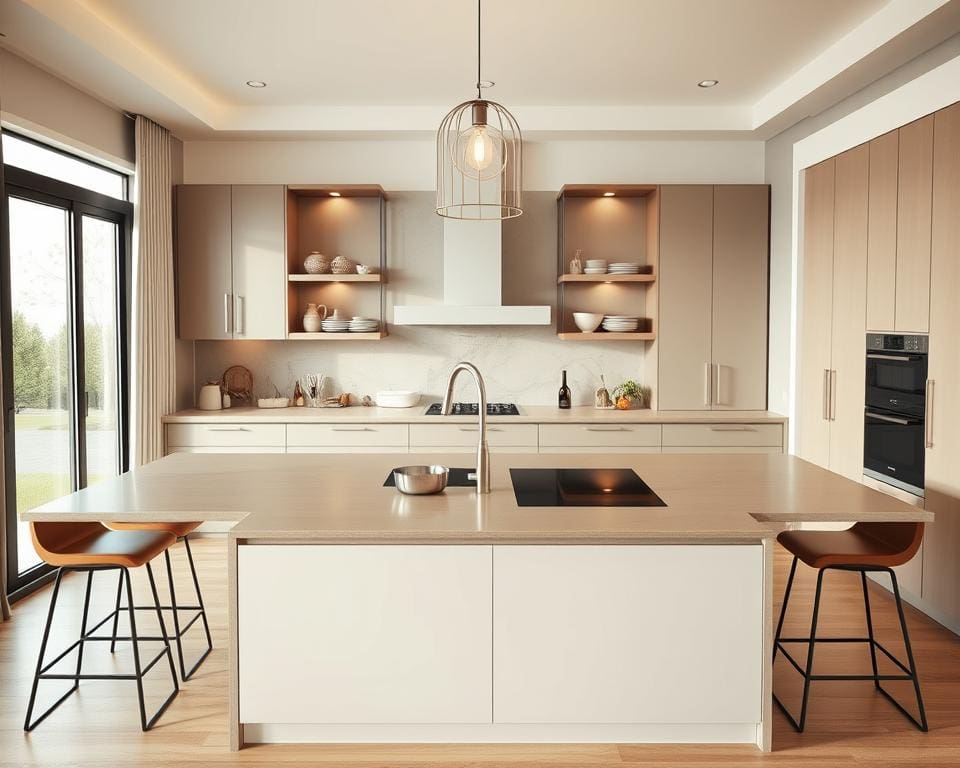
Kitchen islands have moved from a decorative extra to the heart of modern British homes. As open-plan living grows in popularity across the United Kingdom, islands bridge kitchen, dining and living areas and deliver clear island kitchen advantages.
Beyond looks, the benefits of kitchen islands are practical. A well sized island adds work surface for meal preparation and creates central cooking and cleanup zones that improve kitchen workflow for families and keen cooks alike.
Storage is another key gain. Drawers and cupboards under an island reduce clutter and keep utensils to hand, while integrated seating turns the unit into a casual dining spot or homework hub.
Design also follows ergonomics: a single-cook work aisle should allow 1000–1200 mm clearance, while standard worktop heights sit near 900 mm and breakfast bars at 1000–1100 mm. These measures show how kitchen island ideas UK can be tailored to fit both compact flats and larger family kitchens.
Ultimately, the kitchen island is a versatile hub for cooking, socialising and organisation. Its functionality can improve daily routines, raise a property’s appeal and offer a flexible space for gatherings, study and culinary experiments.
How can kitchen islands enhance functionality?
A well-planned kitchen island transforms a room into a practical, social and efficient hub. It extends food preparation surfaces, defines work zones and brings appliances and storage together in ways that sharpen the cooking workflow. Careful choices about materials, appliance siting and drawer layouts make an island both beautiful and highly usable in UK homes.
Creating versatile workspaces for cooking and prep
An island expands continuous worktop area so you can set separate zones for chopping, mixing and plating. Durable options such as quartz, granite, stainless steel and sealed oak suit different needs. Quartz is low-maintenance and stain resistant. Granite copes well with heat. Stainless steel stands up to heavy use. Oak brings warmth but needs sealing and care.
Ergonomic design matters. Locating a sink or hob on the island reduces back-and-forth and keeps the cooking workflow compact. This requires planning for ventilation and plumbing early in the design. Apply the work triangle and work zone concepts so the island can act as a dedicated prep or cooking node, cutting travel between fridge, sink and hob.
Think about UK layouts. Smaller urban kitchens often use a kitchen prep island as a slim prep and breakfast bar. Suburban houses can accommodate larger islands that host full cooking stations and generous food preparation surfaces.
Integrating appliances to boost efficiency
Islands can host a range of appliances: hob units with downdraft or overhead extraction, secondary ovens, microwave drawers, dishwashers, wine fridges and undercounter freezers. Induction hobs offer speed and safety. Extraction choices include ducted systems and modern recirculating units for flats without external vents.
Size matters in British kitchens. Standard 600 mm widths suit many appliances, while 450 mm compact units work well in narrower islands. Plan electrical circuits for induction and ovens, pipework for sinks and dishwashers, and consult a Gas Safe engineer for gas hobs. Comply with Building Regulations and use qualified tradespeople for safe installation.
Smart features raise functionality. Pop-up sockets, integrated USB ports and wireless charging stations keep gadgets powered and support multifunctional use of the island. Island appliance integration turns a simple work surface into a connected station for cooking and casual living.
Combining storage solutions with accessibility
Effective kitchen island storage balances depth with reach. Deep drawers for pots and pans, pull-out larders, spice drawers and waste segregation units keep essentials where they are needed. Open shelving showcases cookbooks and ceramics. Hidden appliance garages tidy small machines away.
Design inclusively. Lower pull-out drawers, toe-kick storage and accessible shelving help users with limited mobility. Use soft-close runners and internal organisers to improve access. Organise by task: keep utensils near the prep area and bakeware close to ovens to streamline the cooking workflow.
UK manufacturers offer flexible solutions at many price points. Bespoke cabinetry from Howdens or modular fittings using Häfele components can be combined to maximise functionality within a chosen budget. Thoughtful planning links kitchen island storage to the overall workflow, making daily cooking smoother and more enjoyable.
Design features that transform islands into multifunctional hubs
A well designed island can be a centrepiece that blends style with purpose. Thoughtful choices in seating, lighting and modularity turn a simple worktop into a hub for family life, socialising and food preparation. Below are practical ideas to guide a multifunctional kitchen design that suits British homes.
Seating and social zones for dining and entertaining
Comfort starts with correct dimensions. For counter dining, allow a 300–400 mm overhang and plan 600–800 mm per seat. Match stool heights to counters: worktop stools at about 650 mm suit a 900 mm height, while bar stools of 750–800 mm fit raised surfaces.
Design options range from full-height breakfast bars to lowered dining extensions for family meals. Multi-level islands combine prep and seating surfaces. Integrated benches create a banquette effect that supports entertaining in kitchen spaces and casual dining.
Choose durable, easy-clean seating materials for daily life. Wipeable leather, performance fabrics and treated hardwoods such as teak resist wear in wet areas. Islands encourage sociable cooking where guests chat with the cook and children do homework while meals are prepared.
Lighting and materials to enhance usability
A layered lighting strategy improves visibility and mood. Use task lighting like pendant lights and under-counter strip LEDs above work zones. Adjustable pendants over seating and recessed or strip lights over prep areas deliver focused illumination.
When planning island lighting ideas, follow UK guidance on kitchen zones and IP ratings near sinks. Choose fixtures that are dimmable for flexible ambience and brighter for food preparation.
Material selection must balance looks with practicality. Matt surfaces hide fingerprints and anti-bacterial laminates help hygiene. Select heat-resistant finishes near hobs and textured stone for slip resistance. Consider contrast between island finish and surrounding units to create a focal point without losing cohesion.
Colour trends in the UK favour two-tone kitchens, natural stone tops and smoked oak for warm, contemporary schemes that pair well with varied lighting and functional surfaces.
Flexible layouts and modular elements
Modular kitchen islands offer adaptability for changing needs. Mobile islands on castors, fold-away extensions and pull-out tables suit renters or hosts who rearrange space for entertaining in kitchen settings. Modular cabinetry can be reconfigured as family life evolves.
Layout choices depend on room size. Central freestanding islands work well in open-plan spaces. Peninsula islands suit tighter footprints. L-shaped islands help zone cooking, dining and prep. Keep clear circulation space around the island to preserve flow and safety.
- Compact plan: island with a built-in drawer dishwasher and seating for two.
- Mid-size plan: integrated hob, pop-up extractor and seating for four.
- Flexible plan: modular island with a detachable butcher’s block for heavy-duty prep.
Practical considerations for installing a functional kitchen island
Start with careful kitchen island planning. Measure the available footprint and leave clear circulation space so the island does not block traffic. For flat conversions, check party wall agreements and leasehold rules early. If you are thinking of removing walls to create an open-plan layout, engage a structural engineer and secure the necessary approvals before work begins.
Building Regulations and safety are non-negotiable. Any electrical work must be carried out by a NICEIC-registered electrician and gas work by a Gas Safe registered engineer. Consider island ventilation from the outset: ducted extraction is usually preferred where a hob sits on the island, while recirculating units with charcoal filters can be an alternative when ducting is impractical. Ask trades for evidence of compliance and final certificates.
Be realistic about kitchen island cost and timelines. Simple freestanding or flat-pack islands can start from a few hundred pounds, while bespoke islands with built-in appliances and plumbing commonly range from £3,000 to £12,000 or more depending on materials and services. Allow for plumbing, electrical and ventilation work and possible structural changes. Typical schedules include design and planning (1–4 weeks), ordering (2–8 weeks depending on customisation) and installation (1–3 weeks), though unseen issues such as old wiring or uneven floors can extend this.
Work with professionals and plan for upkeep. Obtain multiple quotes, view portfolios from reputable suppliers such as Howdens or Wren Kitchens, and check warranties and lead times. Ensure contracts specify the scope of work and snagging procedures. Choose finishes that are easy to clean, include waste and recycling units, and leave spare electrical capacity for future appliances. Before handing over, test all integrated appliances, verify extraction performance and obtain compliance certificates. A well-planned island not only streamlines daily tasks but becomes the heart of a home, enhancing cooking, dining and social life for years to come.