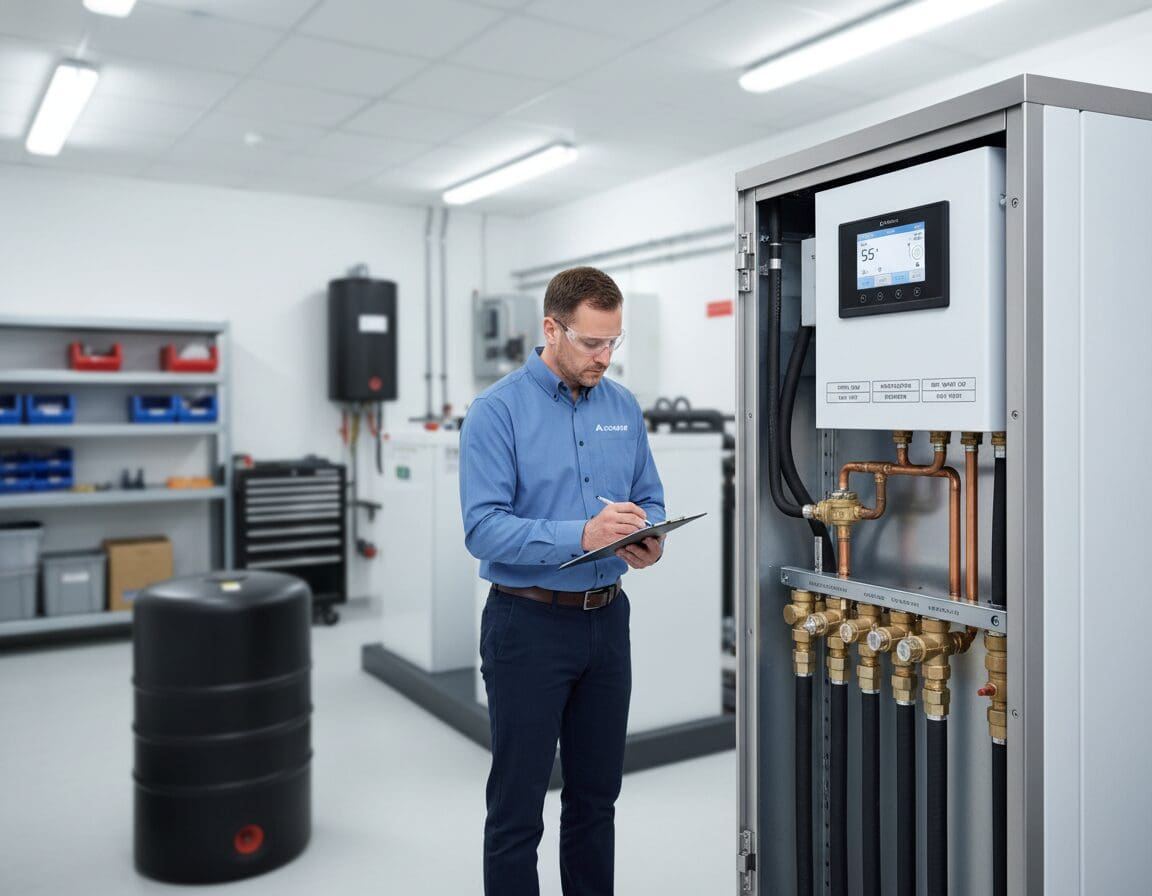
A heat interface unit, or HIU, is a compact, packaged device that transfers heat from a communal primary heating network to an individual dwelling’s heating and domestic hot water (DHW) circuits. In plain terms, a plate heat exchanger or similar heat-transfer method inside the unit separates the primary system—district heating or a communal plantroom—from the secondary side that serves radiators, underfloor heating and hot taps.
The core function of an Evinox HIU is to decouple the primary distribution system from tenants’ internal systems so each household can control temperature independently. This decoupling prevents cross-contamination, helps manage pressure differences and stabilises domestic water temperatures, while supporting accurate metering and individual billing.
Typical applications across the UK include apartment blocks, multi-occupancy developments, student accommodation and care homes, as well as retrofit projects that connect to centralised generation such as boilers, CHP or heat pumps. Where communal plantrooms supply energy, Evinox HIU systems provide the interface that makes resident-level control and billing possible.
Energy is measured within the HIU using internal heat meters or dedicated energy meters, giving landlords and energy services companies precise consumption data for billing and management. This metering function is central to understanding performance and costs in communal heating schemes.
Maintenance is a critical part of reliable operation. Evinox HIU maintenance preserves efficiency, maintains occupant comfort and supports regulatory compliance. This article will cover routine service tasks, recommended intervals, fault diagnosis and optimisation for Evinox HIU systems, drawing on Evinox product literature, UK district heating guidance and building services engineering references.
Evinox HIU overview: What a heat interface unit does for communal heating
The heat interface unit sits between a building’s central plant and each individual flat. A technical definition describes an HIU as a device that transfers thermal energy from a communal supply into a property’s heating and domestic hot water circuits using heat exchangers, pumps, valves and controls while providing isolation and metering. In practice this means temperature control, flow balancing, frost protection and prevention of primary/secondary mixing, with integrated meters enabling fair billing in communal heating HIU systems.
Definition and role of an HIU in communal heating systems
Instantaneous DHW HIUs use a plate heat exchanger to deliver hot water on demand. Storage-style HIUs use a small cylinder for short-term buffering and suit sites with peak demand or lower primary temperatures. Both types isolate the primary network from secondary circuits so residents get stable temperatures and operators minimise heat losses on shared plantroom supplies from gas boilers, biomass, CHP and heat pumps.
Introduction to Evinox as a manufacturer and the ModuSat unit
Evinox Energy is a UK specialist in heat network technology. The company’s portfolio centres on modular HIU designs that suit modern residential developments. The compact, wall-mounted Evinox ModuSat unit is aimed at flats and houses where space is limited. Key features include a plate heat exchanger for instantaneous DHW, an integrated pump and controls, metering-ready arrangements and configurable options for different flow and temperature needs.
Benefits of using Evinox HIU systems in the UK housing sector
Evinox HIU systems bring improved occupant comfort through steady hot water and heating control. Individual metering supports accurate billing and helps reduce disputes. Localised units cut plantroom complexity and lower heat losses compared with central hot water distribution. These gains often translate into better energy efficiency and lower running costs for landlords and residents alike.
Evinox’s product support, spare-part availability and documentation help property managers and HIU engineers keep systems running. The Evinox ModuSat heat interface unit performance is noted for responsive DHW delivery and straightforward serviceability, which suits busy maintenance teams in the UK housing market. Regulatory drivers such as building regulations and decarbonisation strategies mean adoption of HIU heating interface units UK is rising, with Evinox well placed to meet those shifts.
Evinox HIU maintenance
Regular care keeps communal heating reliable and efficient. Evinox HIU maintenance focuses on checks that protect comfort, control costs and meet UK compliance. The guidance below outlines routine tasks, service intervals and common wear items for the Evinox ModuSat unit and similar models.
Routine service tasks for Evinox ModuSat unit and similar models
Begin with a visual inspection for leaks, corrosion and loose connections. Check pressure relief devices and confirm supply and return temperatures and flows match design setpoints.
Clean strainers and filters. If the plate heat exchanger shows fouling, descaling or replacement may be needed to restore performance. Test the circulating pump for correct operation and replace seals or bearings when worn.
Inspect valves, including zone, diverter and thermostatic valves. Verify thermostat operation and adjust setpoints where required. Validate heat meter operation and calibration and confirm flow and temperature sensor accuracy.
Review control logic, setpoints and wiring. Test the user interface, check lockout modes and confirm out-of-hours settings. Where units provide domestic hot water, ensure DHW setpoints and flushing routines follow legionella control best practice.
Log readings, fault codes and parts replaced. Keep a service record for compliance, billing accuracy and asset management.
Recommended service intervals and legislative considerations in the UK
Annual servicing is standard practice for HIUs to preserve safety and efficiency. Properties in hard-water areas or with high use may need more frequent visits.
Relate services to UK building regulations and HSE guidance on legionella control. Accurate metering used for billing should be calibrated in line with manufacturer advice and measurement regulations.
Manufacturer warranties and insurance policies often require evidence of regular maintenance by accredited engineers. Using qualified teams helps preserve warranty cover and ensures proper Evinox HIU service and maintenance.
Common wear items and preventative measures to extend unit life
Frequent wear items include pump seals and bearings, valve seats, O-rings, thermostatic elements and plate heat exchanger gaskets. Sensors and heat meter components can drift and lose accuracy over time.
Prevent damage by fitting strainers and filters and by monitoring primary water quality. In hard-water districts, consider water softening or inline scale inhibitors to protect the Evinox ModuSat unit and heat exchangers.
Introduce regular flushing programmes for low-use circuits and keep setpoints correct to avoid overworking pumps and exchangers. Retain records of HIU repairs and fault diagnosis Evinox to spot trends and plan replacements before failures occur.
Engage qualified engineers, such as experienced R&B London HIU Engineers, for routine service and HIU repairs and fault diagnosis Evinox. Skilled technicians familiar with Evinox HIU components and controls will preserve performance and maintain manufacturer support.
How an Evinox ModuSat heat interface unit works and key components
The Evinox ModuSat combines compact engineering with clear control logic to deliver reliable hot water and heating HIU solutions in communal schemes. This section outlines the main parts, how they interact and what shapes overall Evinox ModuSat heat interface unit performance.
The plate heat exchanger is the heart of the unit. It provides instantaneous domestic hot water and space heating transfer by running primary and secondary flows in a counterflow arrangement. Plates are commonly stainless steel; titanium options are available for aggressive water chemistry or low-oxygen networks. Counterflow layout boosts thermal exchange and reduces required primary temperatures.
The circulator pump maintains secondary flow and meets heating demand. Pumps can be fixed-speed or variable-speed EC types. Variable-speed pumps reduce electrical use and improve match to load. Correct pump selection affects response time, flow capacity and the unit’s overall efficiency.
Integrated control modules coordinate thermostat inputs, setpoints, diverter valves and safety interlocks. Typical sensors include primary supply and return, secondary supply and return, plus a DHW outlet sensor for temperature feedback. Metering equipment measures flow and temperature differential for billing and energy accounting. Where needed, water meters track DHW consumption.
Control logic
Control algorithms hold setpoint temperatures by modulating pumps and valves. When DHW demand appears, a motorised diverter valve prioritises hot water over space heating to keep taps stable. Modulation helps reduce overshoot and short cycling.
User interfaces range from simple dials to digital displays that show fault codes, temperatures and consumption. Lockout modes allow communal management to limit local adjustments. Remote telemetry links units to building systems or manufacturer cloud services for monitoring and updates.
Built-in routines protect systems from frost and manage anti-legionella cycles. These safety and hygiene functions can be scheduled or triggered by sensor inputs to meet regulatory expectations in the UK.
Performance characteristics and influencing factors
Key indicators are response time, temperature stability, flow capacity, pressure drop across the heat exchanger and metering accuracy. Each metric shapes perceived quality of hot water and heating HIU solutions.
Performance depends on primary network temperature and flow, fouling or scaling in the heat exchanger, pump sizing, control setpoints and the commissioning quality of the communal system. Poor water quality or neglected cleaning reduces heat transfer and undermines HIU efficiency and system optimisation.
Optimisation steps include correct commissioning, specifying variable-speed pumps, using low-resistance heat exchangers and scheduling cleaning or chemical treatment. These measures improve Evinox ModuSat heat interface unit performance and extend service life.
Integration with building systems
Evinox ModuSat units link to communal plantroom controls so operators can manage network flows and temperatures centrally while preserving tenant-level control. This architecture supports scalable HIU heating interface units UK deployments.
Metering output feeds billing systems and energy audits. Accurate, secure data transmission is critical for occupant billing and regulatory compliance. HIU meters and pulse outputs integrate into telemetry platforms to provide transparent consumption records.
BMS integration allows alarms, remote parameter adjustment and proactive maintenance. Industry practice sees HIUs communicate via BACnet, Modbus or manufacturer-specific protocols to enable centralised fault detection and system optimisation. Proper integration raises HIU efficiency and system optimisation across a development.
Servicing, fault diagnosis and optimisation of Evinox HIU systems
Planned preventive maintenance is the cornerstone of reliable communal heating HIU systems. A professional Evinox HIU service and maintenance workflow starts with document review, then on-site inspection and testing, parts replacement where needed, and finishes with performance checks and a clear report. Using accredited engineers such as R&B London HIU Engineers ensures product-specific procedures are followed, warranties are maintained and compliance is demonstrable.
For HIU repairs and fault diagnosis Evinox owners commonly see symptoms like no hot water, low flow or temperature, persistent leaks, metering errors and control fault codes. Triage begins by verifying primary network supply and pressures, confirming electrical power, reading fault codes from the unit display and measuring flow and temperatures with calibrated instruments. Inspect strainers and the plate heat exchanger, test pump operation and valve actuation, and always isolate and de-pressurise where required while following manufacturer guidance and wearing PPE.
Optimising HIU efficiency and system optimisation reduces complaints and energy use. Proper commissioning with correct setpoints, flow balancing and metering calibration is essential, alongside controls tuning such as weather compensation and variable-speed pumps. Regular water treatment, strainers and scheduled flushing protect plate heat exchangers, while remote telemetry supports predictive maintenance and early fault detection.
Keep common spares on hand — pumps, diverter valves, thermostatic cartridges, gaskets and sensors — and liaise with Evinox for genuine parts and firmware updates. Annual servicing is the minimum recommendation, with more frequent checks in hard-water or high-use buildings. Housing managers should engage specialist providers; Evinox HIU services by R&B London HIU Engineers offer comprehensive support for repairs, fault diagnosis and long-term optimisation to protect comfort, efficiency and asset value in UK developments.