Designing a kitchen that looks great and works for daily life is achievable in any UK home. Whether you live in a Victorian terrace, a new‑build flat or a compact apartment, good kitchen design UK blends workflow, storage and durable finishes with inviting styling.
This article offers practical, style‑led guidance and kitchen renovation tips to help you plan. Expect clear principles for layout and styling, plus actionable advice on storage systems like pull‑out larders and soft‑close drawers from suppliers such as Howdens and Wren Kitchens.
We will cover kitchen layout inspiration and functional kitchen design that supports cooking, socialising and family life. You’ll also find tips on benchtops from Caesarstone and Silestone, appliance choices for efficiency, and lighting strategies using LED task and dimmable ambient systems.
Read on to learn how to balance where to invest and where to save, include sustainable choices, and future‑proof your space so your stylish kitchen ideas last for years.
Principles of modern kitchen styling and layout
Good kitchen styling principles start with a clear idea of how the space should feel and work. Think about the home’s period, the household’s routines and practical limits such as plumbing and ventilation. A coherent plan makes later choices about fittings and finishes much easier.
Defining your aesthetic: from classic to contemporary
UK homes favour a handful of dominant looks. Classic shaker and period kitchens suit Victorian and Georgian properties. For contemporary flats, minimalist slab-front designs work well. Transitional schemes blend traditional joinery with modern materials. Industrial and farmhouse trends suit open-plan or rustic homes.
Match door styles, handle finishes and splashbacks to existing features such as sash windows, cornices or exposed brick. Practical examples include painted timber or MDF shaker doors from Howdens or Neptune, matt lacquered or high-gloss slab doors from Wren Kitchens or Magnet, and metal-framed shelving for an industrial edge.
Choose one dominant style and echo it in lighting, taps and hardware to create cohesion. These small repetitions keep kitchen aesthetic ideas feeling intentional rather than piecemeal.
Balancing form and function: choosing finishes and colour palettes
Durability matters in busy homes. Engineered quartz brands like Caesarstone and Silestone, compact laminate from Wilsonart or Formica, and porcelain surfaces such as Neolith offer resilience with style.
Use a considered kitchen colour palette to improve perception of space. Lighter tones open small UK kitchens. Two-tone cabinetry, with darker bases and lighter uppers, adds depth without crowding the room.
Think about maintenance when selecting gloss or matt. Matt paint hides smudges yet can show grease. Gloss wipes clean easily but can reveal scratches. Anti-fingerprint stainless and hard-wearing paints, such as Farrow & Ball modern emulsion, reduce visible wear. Choose low-VOC paints and sustainably sourced timber where possible to support longevity and the environment.
Space planning essentials: flow, zones and the work triangle
The classic work triangle links sink, hob and fridge. Aim for unobstructed routes and sensible distances so movement feels natural. Modern kitchen layout often adapts this rule around islands and open-plan living.
Plan clear zones for preparation, cooking, washing, storage and social use. An island can combine prep and seating but must preserve workflow and circulation.
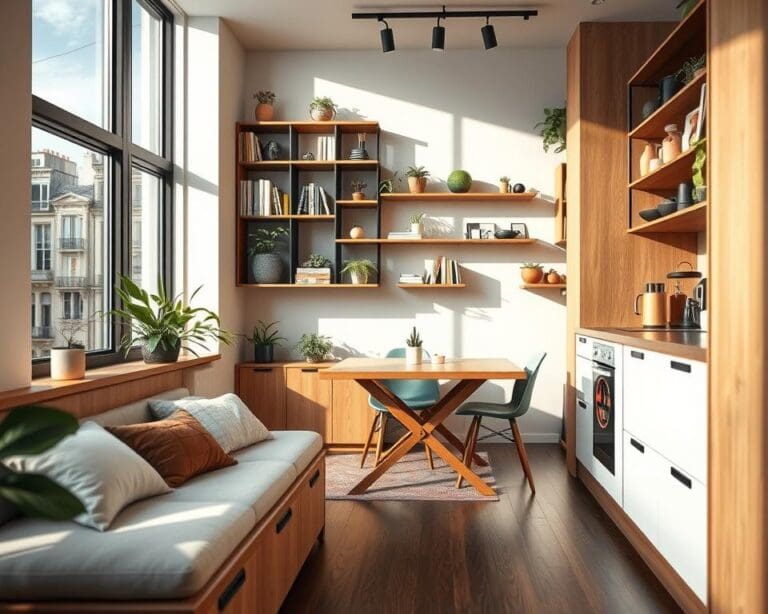
Small kitchens commonly use galley or L-shaped plans, integrated appliances and pocket doors to maximise flow. Group related appliances to cut movement. Work with plumbing and structural limits by relocating services where feasible or choosing downdraft extractors when ceiling ducting is impractical.
Lighting as design: ambient, task and accent lighting strategies
Layered lighting creates mood and function. Start with ambient sources such as ceiling LEDs or downlights. Add task illumination like under-cabinet LED strips for worktops and pendant lights over islands. Finish with accent options: toe-kick lights, in-cabinet lighting and splashback illumination.
Use warm-to-neutral LED temperatures (2700K–4000K) to set the desired ambience. Choose lamps with a high CRI (90+) so food and surfaces render accurately. Install dimmers and scene controls for flexibility. Sensor-controlled under-cabinet lights add convenience.
Comply with safety and ventilation rules and position fittings to avoid glare on work surfaces and hobs. Careful kitchen lighting strategies ensure the space works well at any hour and enhances every design decision.
functional kitchen design: practical elements that enhance everyday use
Good design turns daily chores into simple rituals. A functional kitchen design blends storage, surfaces and appliances so the room feels calm and efficient. Small choices add up; the right layout saves time, reduces clutter and makes cooking more enjoyable.
Optimising storage
High-impact kitchen storage solutions reclaim space and speed up tasks. Full-extension drawers with internal organisers keep cutlery and utensils neat. Deep pan drawers make pots and lids easy to reach without stacking.
Pull-out larders and tall pantry units fit jars and bulk goods while keeping sightlines tidy. Corner problems can be solved with LeMans swing-out units or carousel carousels to use awkward angles. Tambour doors create compact appliance garages that hide toasters and mixers.
Choose soft-close runners from Blum or Häfele and consider Blum Aventos for lift-up wall units to combine smooth motion with longevity. For small kitchens, use drawer dividers, magnetic knife strips, hanging rails and under-shelf baskets to exploit vertical space. Slimline broom cupboards and integrated bin solutions keep recycling discreet.
For durability, prefer stainless-steel or solid-wood organisers. Keep the pantry efficient by labelling containers and decluttering periodically.
Work surfaces and durability
Benchtop choice affects look and maintenance. Quartz is low-maintenance and stain-resistant. Granite wears well but needs sealing. Solid timber adds warmth and suits breakfast bars with regular oiling. Laminate covers a wide range of finishes at lower cost. Porcelain resists heat and scratches.
UK family kitchens benefit from quartz or porcelain for busy use. Butcher-block timber suits casual dining if you commit to oiling. Avoid untreated timber near sinks to prevent swelling and hygiene problems.
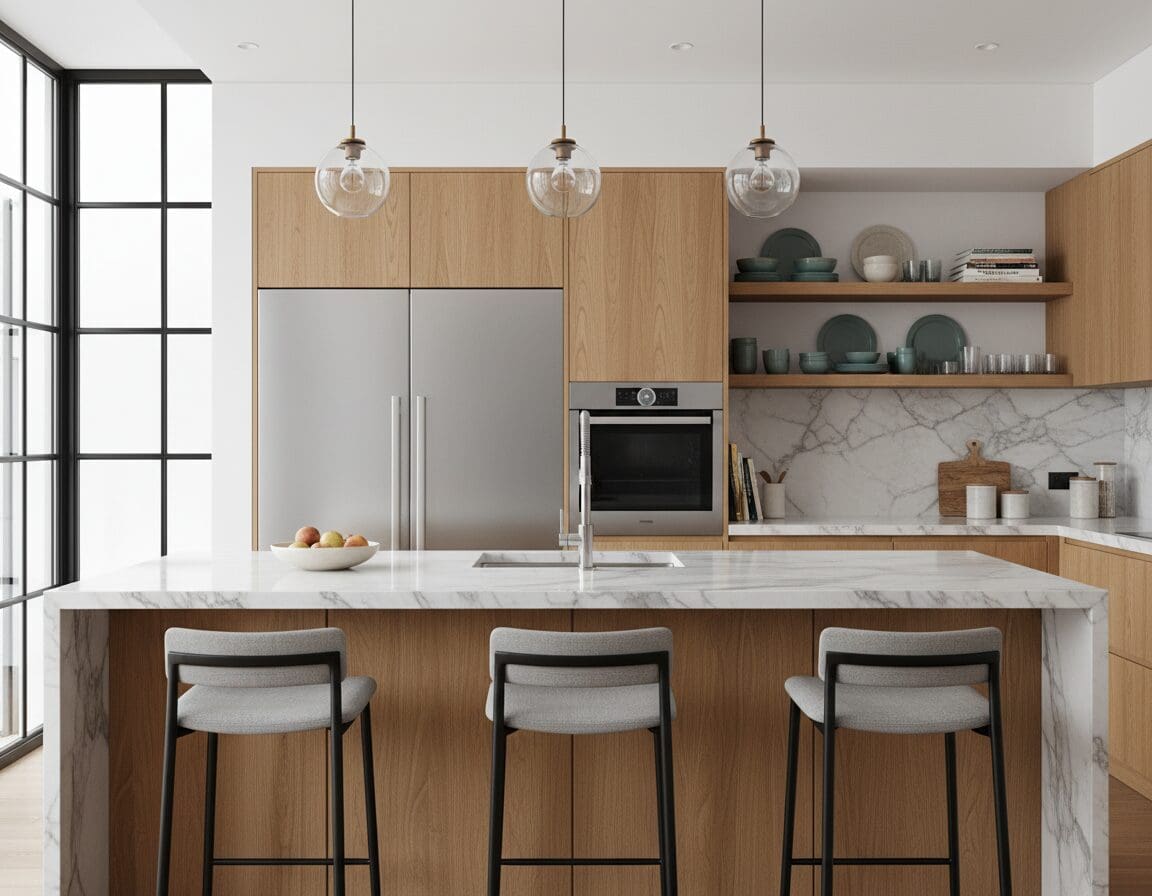
Edge detail matters. Thicker or waterfall edges make a statement on islands. Eased edges reduce chipping risk. Ensure joins and fittings prevent water ingress and are sealed to maintain hygiene. Non-porous surfaces are best for food prep; natural stone must be sealed and maintained on a schedule.
Appliance selection and placement for efficiency
Choose appliances that fit your routine and space. Integrated tall fridge/freezers keep lines clean. Double ovens suit keen bakers. Induction hobs heat quickly and are safer around children. Place dishwashers near sinks to shorten plumbing runs.
Check Energy Rating labels and favour highly rated models to cut running costs. Induction combined with suitable pans reduces energy use. Position heavy-use items within the main work triangle to shorten movement between sink, hob and fridge.
Set microwaves at eye level if frequent, or place them under-counter to free counterspace. Match extractor capacity to hob output and room size for effective ventilation. Smart ovens and fridges offer inventory and remote control; select models with reliable UK service and repair support.
Accessibility and future-proofing
Design so the kitchen works for all ages and abilities. Consider adjustable-height worktops and knee space for seated users. Fit lever taps and easy-grip handles for better ergonomics. Aim for clear circulation of 900–1200 mm where possible to allow wheelchair movement.
Plan for future adaptations by running extra wiring for sensor taps, reinforcing walls for grab rails and leaving scope to lower units later. Induction hobs reduce residual heat risk. Position oven controls away from young children and install thermostatic mixer valves for anti-scald protection.
Look into local council support and Disabled Facilities Grants for major changes. For significant accessibility projects, consult a registered kitchen designer or an occupational therapist to ensure practical, safe outcomes.
Styling details and finishing touches to personalise your kitchen
Small details change a kitchen’s mood. Swap cabinet handles and taps to update the look without a full refit. Brass, brushed steel and black matt finishes each set a distinct tone; match tap and lighting finishes for cohesion, or contrast handles for a contemporary edge. Thoughtful kitchen hardware choices are an efficient way to personalise kitchen style while keeping costs down.
Decorative splashbacks and wall finishes offer big visual impact. Glass gives a sleek, reflective surface; ceramic subway or herringbone tiles add texture; stainless steel suits an industrial scheme; porcelain is hard-wearing. Use darker grout in high-use zones to hide marks, and place patterned tiles as a focal point behind the hob or sink to draw the eye.
Flooring must balance style and function for UK homes. Porcelain tile, engineered oak, luxury vinyl tile (LVT) and sealed concrete each perform well. Consider slip resistance, underfloor heating compatibility and ease of cleaning in damp weather. Layer colour and texture with textiles, open shelving and small accessories so the palette remains restrained but warm.
Personal touches complete the scheme. Add washable runners, bar stools, plants and artisan chopping boards to soften hard surfaces. Choose reclaimed timber shelving, low‑VOC sealants and LED lighting to keep the design greener, and look for FSC or EU Ecolabel certification when sourcing materials. For major elements like worktops and gas appliances, hire professionals, get at least two quotes and check warranties and lead times. Start with a durable, usable layout, then introduce trends through replaceable finishing touches kitchen pieces to keep the space timeless and truly yours.