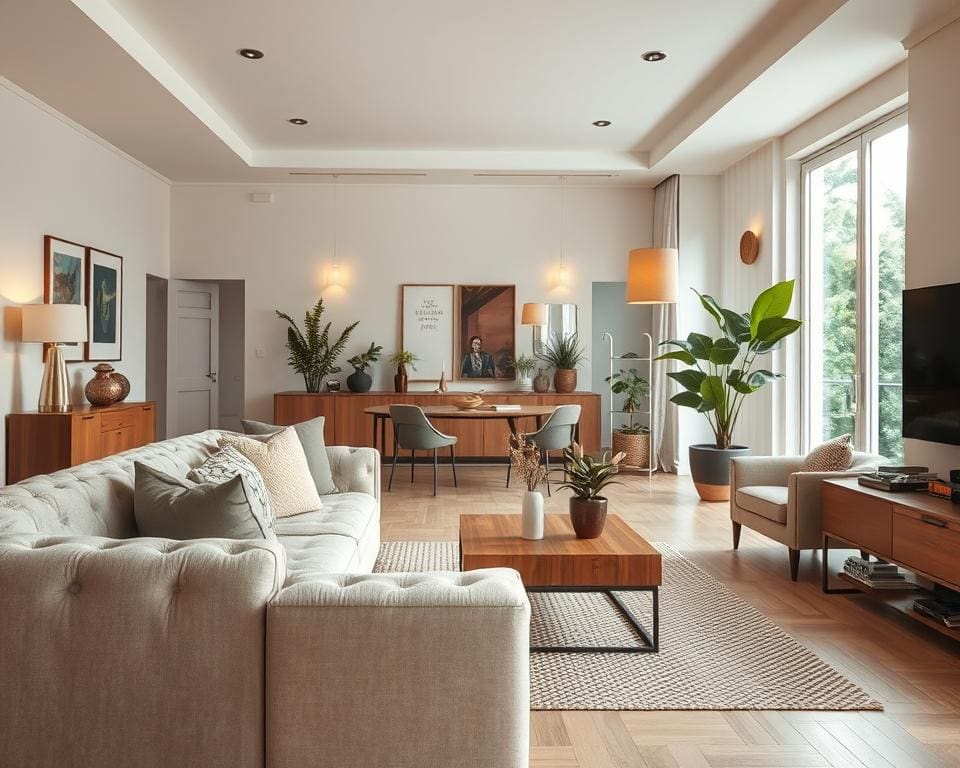
This article offers practical living room design ideas to help you craft a stylish living room that feels like a sanctuary. Thoughtful design improves everyday comfort, boosts property appeal and creates a flexible space for relaxing, entertaining and working from home.
We look at defining your style direction, choosing a versatile colour palette, selecting furniture for comfort and style, and lighting schemes that enhance atmosphere. You will also find tips on textiles, statement pieces, layout and storage solutions, plus finishing touches to complete the look.
Expect inspiration drawn from current British living room trends and familiar retailers such as Habitat, John Lewis & Partners, Made.com and Heal’s. The suggestions suit a range of budgets and home types, from compact flats with period features to open‑plan family homes.
Throughout, the focus is on modern living room design that balances beauty with function. These stylish living room ideas are scalable and actionable, so you can adapt them to your space and personal taste.
Living room design ideas to transform your space
Start by defining your style so every choice feels intentional. A clear direction helps with living room style ideas and makes selecting furniture, colour and accessories straightforward. Collect images from Pinterest, Instagram and Houzz, note recurring details and pin down two or three core design principles to guide decisions over time.
Define your style direction
Consider contemporary minimalism for clean lines, Scandi simplicity for light and texture, mid‑century modern for curved silhouettes, or a modern take on traditional British style. Respect period features such as cornicing and sash windows when they exist, or soften open-plan spaces with layered fabrics. Commit to simple rules like warm woods, layered textiles or pared-back geometry to avoid mixed messages.
Choosing a versatile colour palette
Colour sets the mood. Neutral colour schemes and pastels calm, bold hues energise, while dark tones bring drama and cosiness. Build a colour palette living room around a main neutral — warm white, greige or soft grey — a secondary tone such as muted blue, sage or terracotta, and one or two accent colours for cushions and accessories.
Test paint in large swatches across the day. North‑facing rooms look cooler; south‑facing rooms read warmer. For UK homes, use matt emulsion to hide wall imperfections, washable eggshells in busy areas, and gloss for skirtings and trim. Try timeless pairings like charcoal with brass, dusty pink with sage, or deep navy with natural oak to follow British interior colour trends.
Furniture selection for comfort and style
Start with comfort-first choices. For sofa selection UK buyers should consider depth, seat firmness and supportive cushions to match family life or frequent hosting. Measure the room and allow circulation space — aim for 50–60cm behind sofas where possible and 30–45cm around coffee tables.
Choose materials to suit use: performance fabrics such as treated linen, Crypton options for family homes, leather for longevity or velvet for a luxe finish. Mix eras and scales by pairing a contemporary sofa with a vintage side table. Invest in design-led furniture for key pieces and seek sustainable furniture brands, British upholstery specialists and FSC-certified timber for longer life.
Lighting schemes that enhance atmosphere
Good living room lighting ideas rely on layered lighting: ambient overhead light, task lamps for reading and accent lights to highlight art. Use dimmer switches to control mood and save energy in long UK evenings. Statement lighting such as pendants or chandeliers creates a focal point; size it to room scale and ceiling height.
Include adjustable floor lamps and directional wall lights by seating areas for practical task lighting. Choose LEDs with adjustable colour temperature so evenings feel warm and tasks stay crisp. Consider finishes like brass, matte black or glass to reinforce the room’s aesthetic and follow current UK lighting trends.
Textiles and soft furnishings to add warmth
Layering living room textiles softens sound and adds comfort. Mix rugs for living room areas with different pile heights and patterns to define zones. Arrange rugs so the front legs of sofas and chairs sit on the rug to anchor seating.
Balance curtains vs blinds by using floor-length curtains for height and Roman blinds for a neat finish, adding thermal linings for insulation. Mix wool, boucle, linen and velvet in cushions and throws to create tactile contrast while keeping a coherent colour story. Source British fabrics from brands such as Laura Ashley or Designers Guild for heritage quality.
Incorporating statement pieces and focal points
A living room focal point could be a fireplace, a media wall or a large artwork. Use statement furniture sparingly so each piece reads as intentional. Consider mantel styling with paired candlesticks, a mirror or sculptural objects to add balance.
Feature wall ideas include dramatic wallpaper, painted panelling or textured limewash in period properties. Hang art to scale — centre pieces at eye level — or create a curated gallery that complements the room’s function. Make sure focal choices integrate with storage and wiring so the space remains practical as well as striking.
Practical layout and storage solutions for stylish living rooms
Good layout choices make a living room feel calm and useful. Use living room layout ideas that focus on conversation clusters and clear paths. Think about traffic flow living room needs and the way people move during daily life and when you entertain.
Arranging furniture for conversation and flow
Start by creating a conversation layout with seating grouped around a focal point, such as a fireplace or media wall. Place sofas and chairs to face each other while leaving 45–60cm between seats and a coffee table for easy reach.
Keep at least 75–90cm for main walkways in high‑traffic areas. For rectangular rooms, set the sofa facing the focal point with side seating beside it. Square rooms suit symmetrical arrangements. Long rooms work best when zoned into seating and dining bands.
Multi-functional furniture for smaller spaces
Small living room ideas often begin with multi-functional furniture. Choose sofa beds from reputable makers that pull out smoothly for daily use. Storage ottomans and nesting tables give flexibility for guests and parties.
Extendable tables and slimline consoles turn a compact space into a living room dining zone when needed. Lightweight chairs and stools are easy to move, letting you change the arrangement for events or for family life with children and pets.
Smart storage: built‑ins, shelving and hidden solutions
Built-in shelving can echo period panelling or create sleek modern lines while hiding clutter. Mix open shelving with closed cupboards to balance display and tidy living room storage ideas. Add baskets and boxes for neatness.
Use hidden storage solutions such as underseat compartments, window‑seat boxes and media storage with ventilated cabinets to conceal cables and equipment. For budget options consider IKEA or John Lewis modular systems, or upcycle a vintage cabinet to add character.
Zoning open‑plan living areas with rugs and furniture
Open-plan living ideas depend on clear zones. Zoning with rugs helps define a seating area and a dining area without building walls. Position a sofa so its back acts as a gentle barrier between a lounge and a living room dining zone.
Use low shelving or backless seating as unobtrusive room dividers. Distinguish zones with different but harmonious colours and textures. Coordinate sightlines and circulation to keep the whole space connected and easy to use.
Styling tips, accessories and finishing touches
Start by editing thoughtfully: group objects in odd numbers, mix heights and materials, and leave breathing space so displays feel considered rather than cluttered. These living room styling tips help create rhythm and focus; a trio of ceramics on a mantel or a pair of tall candlesticks beside a low vase reads as intentional. Keep accessories for living room surfaces purposeful—co‑ordinated trays for remotes and a curated stack of coffee‑table books make everyday life neater and more stylish.
Introduce greenery to add life and improve air quality. Low‑maintenance houseplants such as snake plant, pothos and phalaenopsis orchids suit busy households and British interiors alike. Use British‑grown blooms or dried arrangements for seasonal interest, and place plants at varied heights to complement layered lighting and the room’s focal points.
Layer metallics with natural materials to bring texture and warmth. Brass or bronze lighting works beautifully with walnut or oak furniture and hand‑made ceramics. Mirrors are a practical finishing touches tool: position one over a mantel or opposite a window to reflect light and create depth in smaller rooms. Rugs with a pad underneath protect floors and anchor seating zones.
Personalise subtly: display curated books, travel finds and family photos in consistent frames, and rotate objects with the seasons to keep the scheme fresh. Practical finishing touches such as washable slipcovers and slip‑on cushion covers safeguard family life without sacrificing style. Live with the choices for a few weeks and make small tweaks — a cushion swap, a new lamp or repositioned artwork — to refine the look without costly changes.