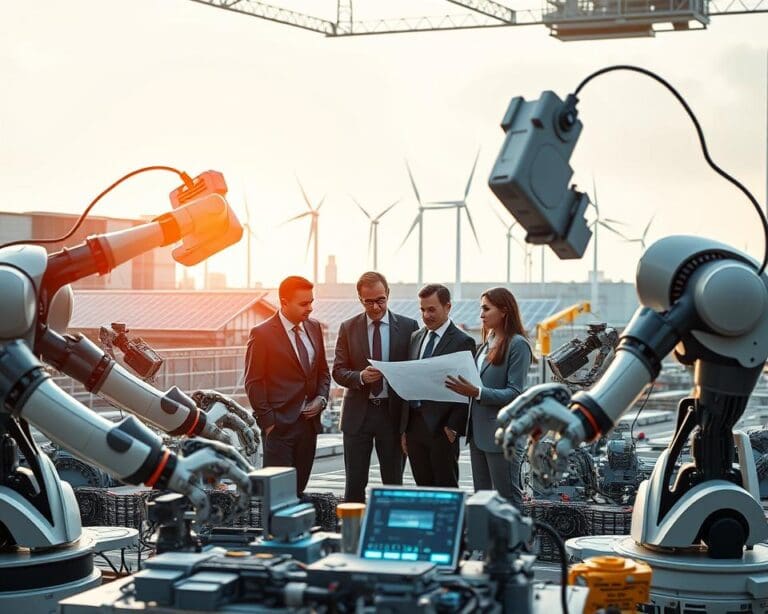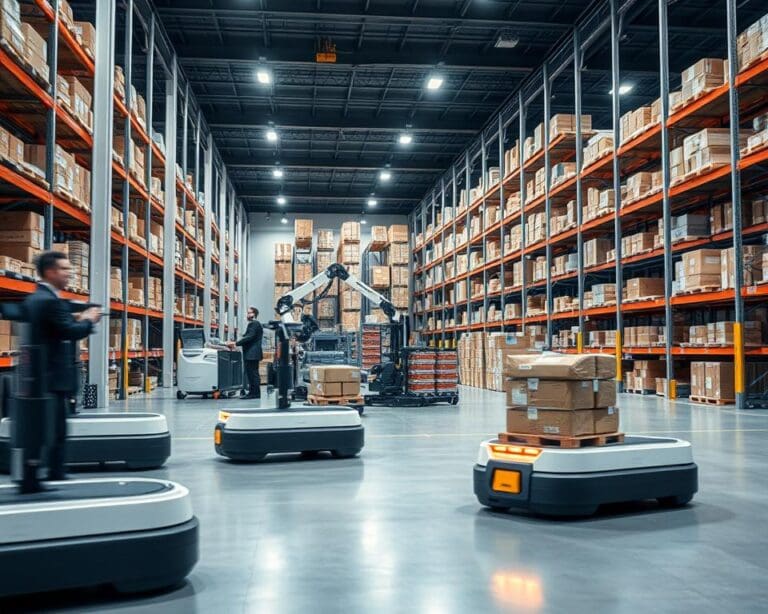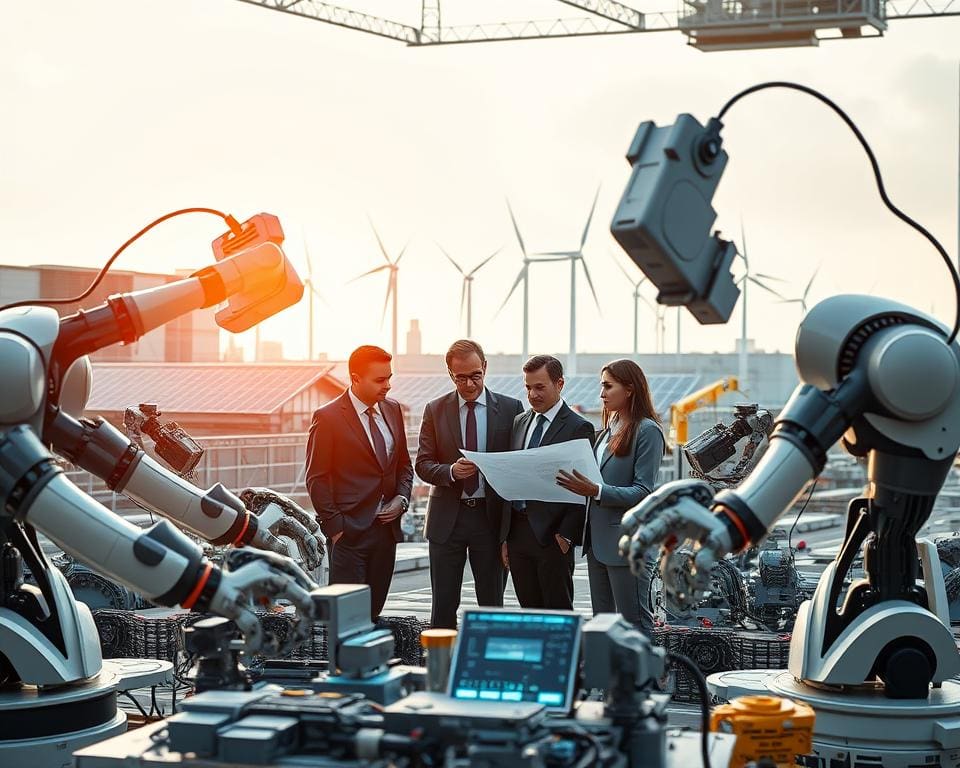
You are navigating a landscape where industrial technology is redefining competitiveness for UK firms and global manufacturers alike.
Industrial innovation spans hardware, software, processes and systems — from automation and the Industrial Internet of Things to advanced materials and artificial intelligence. This convergence, often described under Industry 4.0 and smart manufacturing, blends cyber‑physical systems, connectivity, data analytics and human factors to create more responsive factories.
Standards, interoperability and a mix of edge and cloud computing make scalable deployments possible for both small workshops and large plants. Microsoft and IBM lead many cloud initiatives that help businesses modernise data handling and support secure, flexible manufacturing technology.
Pressure on costs, skills shortages, tighter UK and EU emissions and safety rules, customer demand for customisation and supply‑chain volatility are compelling reasons to adopt new industrial technology. You will see adoption driven as much by commercial necessity as by innovation ambition.
The measurable benefits include higher equipment utilisation, faster time‑to‑market, reduced energy intensity, better product quality, less downtime and improved traceability. Risks you should consider are cybersecurity, change management and the capital planning needed for major upgrades.
This article will examine technologies that improve operational efficiency, sustainability and supply‑chain resilience, and the role of data, AI and people in transformation. Start by assessing your current technology stack and prioritising use‑cases before selecting solutions; a good primer on these topics is available at what is the tech.
industrial technology driving operational efficiency
You will find that targeted technology upgrades on the shop floor deliver measurable gains in operational efficiency. The smart factory blends equipment, software and people so you can run production with fewer stoppages and better quality. Below are practical areas where you can focus investment and change.
Suppliers such as ABB, FANUC and KUKA power heavy‑duty tasks, while Universal Robots leads in collaborative robots that work safely alongside staff. These systems take on repetitive, hazardous or high‑precision jobs and let you scale to 24/7 operations without the same labour constraints.
Programmable logic controllers, distributed control systems and modern PACs tie robots into production lines. You should consider modular, reconfigurable cells when you need mass customisation and quick changeovers.
Practical deployment requires attention to safety standards like ISO 10218 and ISO/TS 15066 for cobots, realistic integration budgets, and a plan for workforce reskilling. Case examples show robotics raising throughput and cutting defect rates, which shortens ROI timelines.
IIoT for real‑time monitoring
IIoT architectures connect sensors, gateways, edge compute and cloud services such as Microsoft Azure IoT or AWS IoT so you can view operations in real time. Typical sensors include vibration, temperature, flow, pressure and current.
Use cases range from asset tracking and process monitoring to quality and environment checks. Real‑time monitoring dashboards and alerts speed decision making and reduce scrap by flagging issues before they escalate.
Pay attention to data quality, latency and security. Standards such as OPC UA and MQTT help with interoperability. Start with a focused pilot, validate data flows, then scale from a single line to a plant‑wide roll‑out.
Predictive maintenance and condition‑based maintenance
You can move from time‑based or reactive maintenance to predictive maintenance by using vibration analysis, thermal imaging, acoustic sensing and machine‑learning models trained on failure histories. This approach targets work when assets actually need it.
Companies such as Siemens and SKF provide integrated PdM stacks combining sensors, edge analytics and cloud tools. Key performance indicators to monitor include reductions in unplanned downtime, maintenance cost savings and extended asset life.
Implement PdM by building an asset inventory, choosing suitable sensors, collecting historical data and validating models. Integrate outputs into your CMMS or EAM and foster cultural change so your team plans maintenance from data rather than habit.
Emerging technologies transforming sustainability and supply chains
You can use new technologies to cut environmental impact and boost resilience across your operations. The focus is on practical tools that support sustainability goals, enable a circular economy and improve transparency in procurement and logistics.
Advanced materials and additive manufacturing
Advanced materials such as high‑performance polymers, carbon‑fibre composites and lightweight alloys let you reduce part mass and extend service life. These materials drive efficiency gains and lower waste across product lifecycles.
Additive manufacturing and 3D printing methods like fused deposition modelling, selective laser sintering and electron beam melting support complex geometries and part consolidation. Firms in aerospace and automotive use these techniques for tooling, spare parts and rapid prototyping to cut inventory and speed time to market.
Standards from ISO and ASTM guide certification and quality control for additive manufacturing. That helps you set up decentralised production hubs, shorten transport distances and speed up iteration while managing supply chain technology implications.
Decarbonisation technologies and energy management
Energy efficiency measures such as heat recovery, variable‑speed drives and LED lighting deliver immediate reductions in consumption. You should combine these with electrification, renewable electricity procurement and on‑site generation like solar paired with battery storage.
Industrial options for deep decarbonisation include green hydrogen for high‑temperature process heat, carbon capture and storage for point sources and electrified heating with heat pumps. UK incentives and policy frameworks influence capital planning and adoption timing for these solutions.
Energy management systems aligned to ISO 50001, smart meters and demand‑side response platforms let you monitor performance and shift loads. Energy analytics help you cut Scope 1 and 2 emissions, reduce costs and improve reporting for regulators and stakeholders.
Digital supply chain and blockchain traceability
Cloud‑based transport and warehouse management systems, real‑time tracking and AI‑driven forecasting improve lead‑time visibility and inventory efficiency. These tools form the backbone of modern supply chain technology.
Blockchain traceability and distributed ledgers offer tamper‑evident provenance for regulated or ethically sensitive goods. Enterprises use platforms such as Hyperledger and IBM Blockchain to verify origin, certification and chain‑of‑custody for consumers and auditors.
Implementing these systems raises challenges in data governance, supplier onboarding and integration with legacy ERPs like SAP and Oracle. Running focused pilots, defining governance and showing recall and compliance benefits help you scale solutions across a circular economy supply network.
Data, AI and human factors shaping industrial transformation
To turn technology into measurable value you need a clear data strategy and governance. Establish master data management, reliable data pipelines and labelled datasets for supervised learning. A governance framework should cover data quality, lineage and GDPR compliance for employee data so your analytics and industrial AI projects rest on trusted inputs.
Practical industrial AI use cases include process optimisation, computer vision for quality inspection, anomaly detection for predictive maintenance and demand forecasting. Use familiar tools such as Python, TensorFlow, PyTorch, Microsoft Azure AI and AWS SageMaker, and consider edge AI for low‑latency inference on the factory floor.
Workforce transformation is central: invest in apprenticeships, vocational training and partnerships with universities and UK catapult centres to build digital skills. Promote human‑machine collaboration by defining hybrid roles and blending operator judgment with decision‑support systems. Use change management—stakeholder engagement and clear KPIs—to drive adoption and sustain benefits.
Cybersecurity in industry must be baked into every step. Apply network segmentation, secure OT/IT integration, rigorous patch management and incident response plans, aligned to NIST or UK National Cyber Security Centre guidance. Measure success with KPIs such as OEE, energy intensity per unit, mean time between failures and on‑time delivery, then run small experiments, refine and scale.
Begin with strategic priorities, pilot high‑value use cases, build the data and integration foundations, develop workforce capability and enforce governance and security. That balanced approach—combining data analytics, machine learning, robust cybersecurity and human‑centred change—will deliver sustainable industrial transformation you can measure and trust. For further practical advice, see this workplace technology overview at how technology is changing the modern.