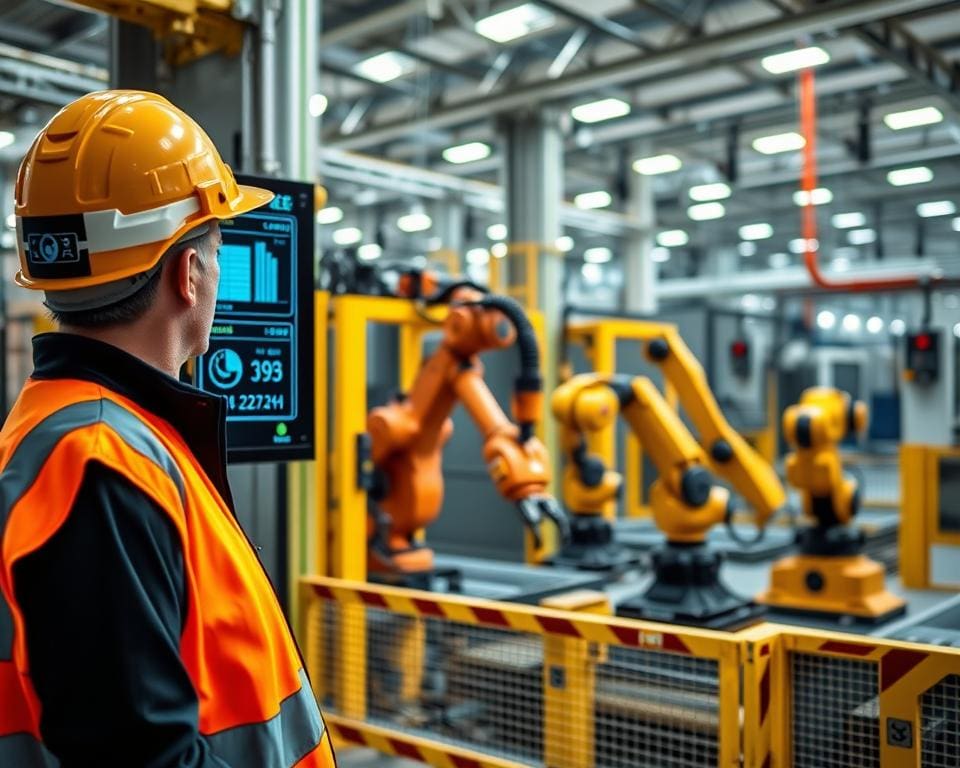
Industrial safety technology combines connected hardware, software and automated systems. It helps you identify hazards, protect workers and respond to incidents with greater speed and accuracy.
Useful tools include wearable devices, environmental sensors, machine safety systems, robotics and artificial intelligence. Digital safety platforms can also bring inspections, incident reports and compliance records into one clear view. You can explore an overview of workplace safety technology and its practical uses across industry.
These solutions support manufacturing plants, warehouses, construction sites, energy facilities and chemical environments. They are valuable where people may face moving machinery, vehicles, hazardous substances, heat, dust, noise, vibration, confined spaces or work at height.
Technology should support established health and safety controls, not replace them. You should follow the hierarchy of controls by removing hazards first, then using engineering and organisational measures before relying on personal protective equipment.
The right industrial safety systems depend on your risk assessment, workplace conditions, workforce and equipment. Factory safety technology may suit one site, while worker protection technology may be more useful in another.
For UK industrial safety, your approach must reflect the Health and Safety at Work etc. Act 1974 and relevant Health and Safety Executive guidance. Reliable equipment, staff training, planned maintenance, data protection and clear procedures are essential. Regular reviews will show whether the technology is reducing risk in practice.
How industrial safety technology reduces workplace risks
Connected safety systems link sensors, machinery, wearable devices, control panels and digital platforms. They give you a wider view of workplace conditions than isolated inspections or paper records. You can monitor equipment status, worker location, air quality, access permissions, maintenance needs and reported incidents in one place.
A central dashboard helps supervisors review alerts across several sites or production areas. You can spot repeated faults, compare response times and give priority to urgent risks. This creates a stronger basis for real-time risk management during busy shifts and changing conditions.
Digital tools support suitable and sufficient risk assessments, but they cannot replace them. You must identify hazards, decide who may be harmed, assess the level of risk, introduce controls and review those controls when work changes. Good industrial risk assessment technology helps you apply this process in a clear and consistent way.
Digital assessment forms can standardise inspections, assign corrective actions and record the person responsible for each task. They create an auditable history of completed work. Mobile reporting tools let workers record near misses, unsafe conditions, equipment defects and incidents with photographs, location data and notes.
These records may help you demonstrate inspections, training, maintenance and corrective actions. Relevant duties can include the Provision and Use of Work Equipment Regulations 1998, the Control of Substances Hazardous to Health Regulations 2002, and the Control of Noise at Work Regulations 2005. The Control of Vibration at Work Regulations 2005 and RIDDOR 2013 may apply in specific circumstances.
Safety compliance software can organise this evidence and show overdue actions. It does not make a workplace compliant by itself. You must select suitable systems, configure them correctly, maintain them and ensure competent people use them. This approach supports practical HSE compliance technology without replacing sound safety leadership.
Automated alerts support proactive hazard prevention. A system can flag unusual temperature changes, gas levels, machine behaviour, vehicle movements or access events before they lead to injury, a release or equipment failure. Predictive maintenance can identify wear, overheating, excess vibration and abnormal performance, giving you time to plan an intervention.
Useful workplace safety data includes near misses, alarm frequency, inspection results, response times, equipment faults, exposure levels, training completion and recurring incident locations. Leading indicators, such as completed inspections and resolved hazards, help you manage risk before harm occurs. Lagging indicators, such as injuries and equipment damage, show what has already gone wrong.
Data needs clear governance. You should define access rights, retention periods, alert checks and the handling of personal information under UK data protection requirements. Combine digital records with worker consultation, site observations and professional judgement. Technology should guide decisions, not narrow attention to risks that are easiest to measure.
Connected platforms can strengthen communication between workers, supervisors and safety teams. Practical examples of technology in industrial safety show how automated alerts, data analysis and linked devices can support faster action when conditions change.
Wearable devices, sensors and automated monitoring systems
Connected devices can give you a clearer view of risks as work takes place. They bring information from people, vehicles, machines and work areas into one safety process. This helps you act sooner when conditions change.
Wearable safety technology should support your existing risk controls, not replace them. Consult workers before deployment, explain what data is collected and check that each device does not cause distraction, false alarms or interference with personal protective equipment.
Wearable safety technology for industrial workers
Industrial workers’ wearables can include connected badges, smart helmets, location tags, personal gas detectors, biometric devices and wearable communication equipment. Body-worn cameras may support communication, incident reviews and compliance checks. Clear privacy and monitoring policies are needed before cameras or biometric tools are introduced.
Lone-worker devices are useful for maintenance workers, security staff and people working in isolated areas. Check-in functions, fall detection, man-down alerts, emergency buttons and two-way communication can help you raise an alarm when a worker cannot call for help.
Location-aware systems can show whether a worker enters a restricted zone, approaches a moving vehicle or remains in a hazardous area for too long. Proximity alerts can warn pedestrians and vehicle operators when they are too close. You should use these alerts with traffic plans, physical segregation, speed controls and clear visibility measures.
Some wearables track heat exposure, fatigue indicators or physical exertion. Treat this information with care. It should prompt supportive controls, work-rest arrangements or further assessment, rather than an automatic judgement about individual performance.
Practical checks matter before rollout. Review battery life, comfort, durability, charging, cleaning and compatibility with existing systems. Confirm that the equipment suits explosive or contaminated areas and does not reduce the protection provided by other safety gear.
Industrial sensors for detecting hazards
Workplace hazard sensors can identify oxygen deficiency, toxic gases, flammable gases, heat, noise and poor air quality. Personal gas monitors need the correct sensor type for each substance. You should set calibration periods, carry out bump testing and maintain every device as the manufacturer requires.
Workers need clear training on alarms, readings, storage and basic checks. A sensor is not a complete control if its alarm is ignored or its battery is flat. Environmental monitoring systems can provide wider coverage across workshops, storage areas and confined spaces.
IoT devices can share readings from machinery and work areas in real time. This supports safer machine operation by helping you spot changes in temperature, pressure or air quality before they become serious hazards.
Automated monitoring and real-time safety alerts
Automated safety monitoring gathers data from sensors, cameras, wearables and connected machinery. Software can compare readings with safe limits and send real-time industrial alerts to a supervisor, control room or worker. The alert should be clear, timely and linked to a defined response.
These systems can reveal repeated patterns, such as rising machine temperatures, frequent restricted-zone entries or long exposure to heat. You can use the data to improve inspections, maintenance and work planning. Alerts must be reviewed to reduce nuisance signals and prevent alarm fatigue.
Reliable deployment depends on good network coverage, secure data handling and regular system testing. You should set backup procedures for lost signals, device faults and power cuts. Workers need to know what each alert means and which action is expected.
Robotics, artificial intelligence and digital safety management
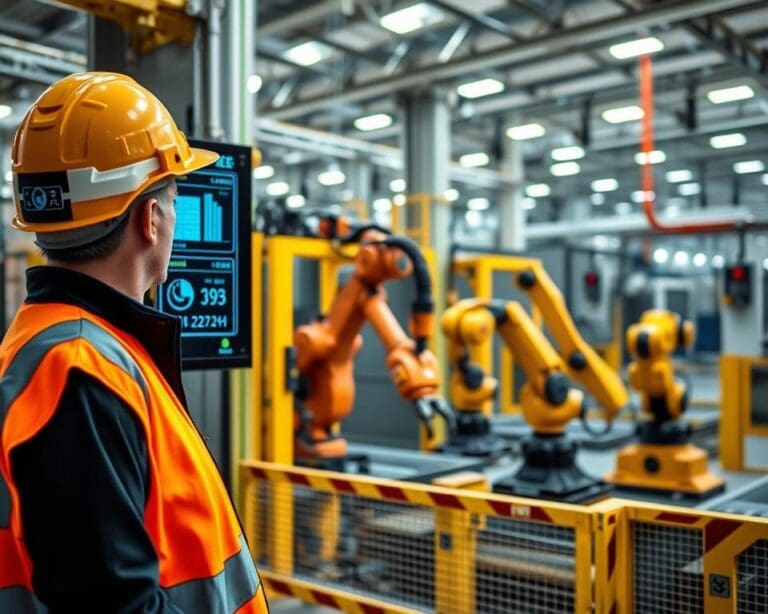
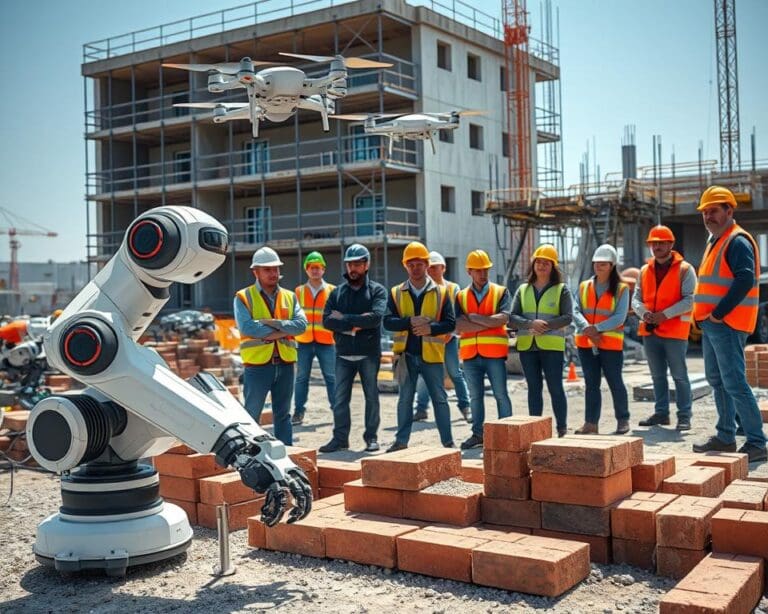
Industrial safety robotics can remove people from dangerous, repetitive or heavy work. Robots may handle materials, inspect equipment, load machines or enter confined spaces. Remote-controlled vehicles can also manage hazardous substances, heat, radiation, sharp materials and moving machinery. Yet robots bring new risks, including unexpected movement, stored energy, programming faults and unsafe maintenance.
Collaborative robots, or cobots, can work near people in controlled tasks. You still need a suitable risk assessment before use. This should consider speed, force, tooling, access, safeguarding and foreseeable misuse. Guards, protective devices, isolation procedures, emergency stops and maintenance controls remain vital. The Lifting Operations and Lifting Equipment Regulations 1998 may apply to robotic lifting systems.
Artificial intelligence in workplace safety can study incident records, detect unusual equipment behaviour and analyse images. Predictive safety analytics may help you prioritise inspections before a failure occurs. However, results depend on reliable data. You should test the system, track false alerts and ensure competent people review important recommendations. AI should support decisions, not replace human judgement during emergencies or major changes to risk controls.
Digital safety management platforms can link risk assessments, inspections, permits, training, maintenance, incidents and corrective actions. They can support consistent digital safety inspections and improve traceability when connected to maintenance, access control and operational systems. Secure authentication, updates, backups and network separation are essential, as a cyber attack could disrupt alarms or alter machine settings. For smart manufacturing safety, consult workers, update procedures, provide training and check controls in practice. Strong automated safety systems combine technology with competent people, clear processes and continual improvement.