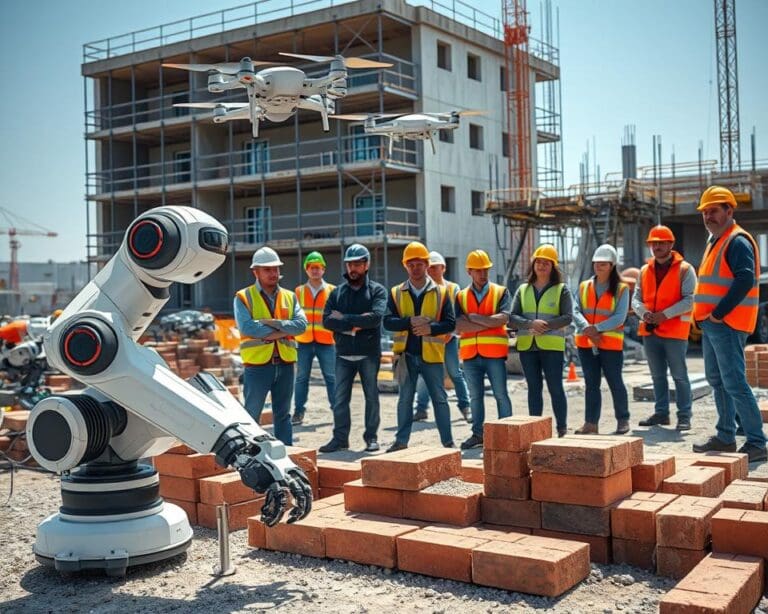
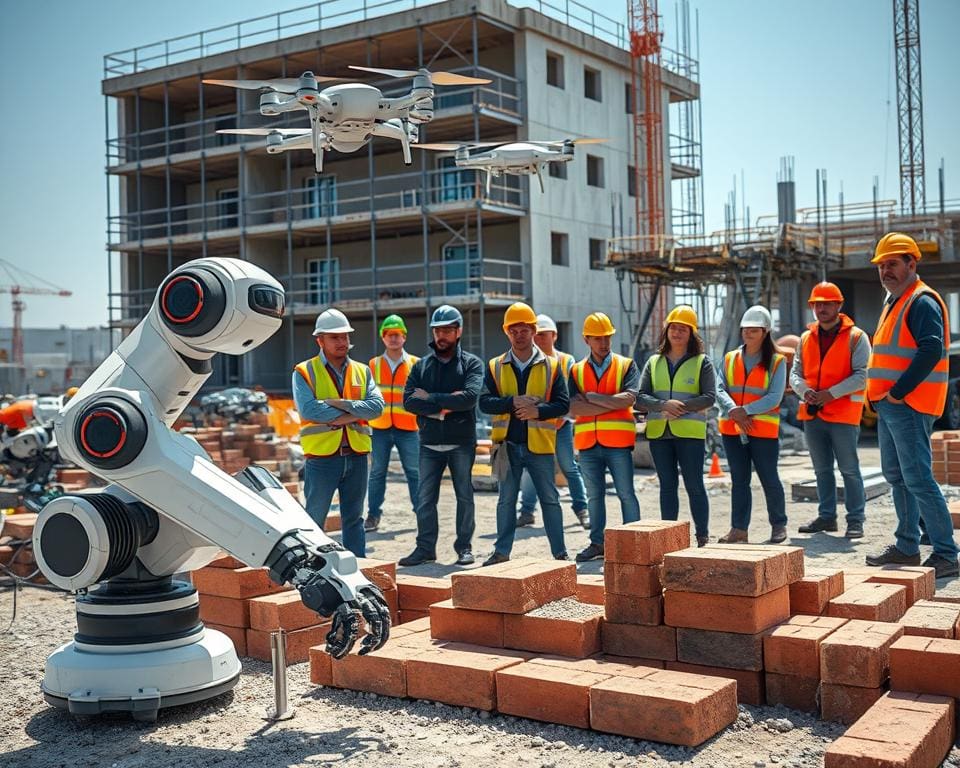
Construction robots are machines that carry out, support or automate physical and digital tasks on building sites. You may see semi-automated bricklaying systems, robotic total stations, layout machines and scanning platforms. Some projects also use 3D-printing systems and quadruped robots such as Boston Dynamics’ Spot.
Most robots on construction sites do not replace the whole workforce. Instead, they handle repetitive, heavy, hazardous or highly precise work. Skilled workers still supervise operations, interpret data, install components and check quality.
Common uses include automated masonry, robotic surveying and site mapping. You may also find robotic systems for drilling, material handling, inspection and 3D printing. These tools can collect data for building information modelling (BIM) and track progress across a project.
Robotics in construction is becoming more relevant in the UK as firms face labour shortages, rising costs and demanding schedules. UK construction technology can help improve productivity while reducing exposure to health and safety risks. Autonomous construction equipment and robotic building systems may also support more consistent work.
However, construction automation is not suitable for every site. Its value depends on the project type, ground conditions, equipment access, operator training and BIM integration. It works best when tasks are repetitive, measurable and performed in a predictable setting.
The following sections examine how these systems are used on UK building sites. You will then see how they affect safety, accuracy and productivity, before exploring the challenges and future of robotics.
How construction robots are transforming UK building sites
Across the UK, digital plans and robotic construction equipment are changing how teams build, survey and prepare sites. These tools support skilled workers with repeatable tasks, while people remain responsible for planning, judgement and quality control. This approach is helping contractors test construction automation UK methods on real projects.
Automated bricklaying and masonry
Modern bricklaying robots use digital drawings, positioning technology, robotic arms, conveyors and specialist grippers. The system receives a programmed design and places bricks or blocks along a planned wall line. Sensors help track position, height and alignment during each pass.
FBR’s Hadrian X is built to automate masonry placement rather than manage a fully autonomous construction project. Site preparation, material supply, design checks, mortar systems and final finishing still need human control. Construction Robotics’ SAM100 takes a similar support role. It can handle repeated placement work while masons oversee mortar, alignment, detailing and difficult areas.
For you, the benefits can include more even joints, less manual handling and fewer repeated reaching movements. A system may keep a steady output during labour shortages. It can suit long, straight wall runs and create useful records of daily productivity. These records support decisions about labour, materials and project timing.
Performance depends on the site. Brick size, mortar conditions, corners, openings, scaffolding and access routes can limit production. Rain, wind and design changes may slow the process. A robot can work well on a clear wall but prove less useful on a tight site with complex masonry.
Skilled tradespeople remain central to automated masonry. Workers set up the machine, feed materials, check interfaces with other trades and inspect the finished work. They complete corners, intricate patterns and sections that the equipment cannot safely reach.
Robotic systems for surveying and site mapping
Robotic surveying combines scanners, cameras, GPS and digital site plans. A mobile unit can record ground levels, building positions and access routes with less need for repeated manual measurements. The data can feed a shared model, helping you compare progress with the approved design.
These systems support automated building sites by finding level changes, service locations and possible clashes early. They can reduce errors in setting out and make progress checks more consistent. Robotic surveying is useful on large developments where conditions change across several work zones.
People still need to verify readings and judge what the data means. Surveyors check control points, review unusual results and confirm that the digital model matches site conditions. The wider use of digital tools in skilled trades works best when teams receive clear training and retain control of key decisions.
3D-printing robots for construction
3D printing construction methods turn digital designs into physical parts. Desktop machines such as Prusa and Ultimaker can produce templates, jigs, fittings and bespoke brackets. Larger industrial printers can create prototypes, architectural models and selected concrete or geopolymer elements on site.
A printed replacement part may reduce waiting time for a small repair. Custom components can match unusual dimensions without long mould-making processes. Robotic arms and CNC equipment can support repeatable fabrication, while composite materials open new options for lightweight panels and specialist building parts.
Before wider investment, UK firms often test equipment through FabLabs, university workshops or partnerships with suppliers such as Renishaw and Stratasys. Teams can measure time saved, error rates, margins and customer satisfaction. This measured approach helps you select tasks where 3D printing construction offers a clear practical benefit.>
How robots improve construction safety, accuracy and productivity
Construction safety robots can take on tasks that expose people to falls, heavy loads, dust and vibration. They can drill overhead, place masonry, inspect confined spaces and collect data near moving plant. This supports safer construction technology by reducing direct exposure to hazards.
Removing a person from a task does not remove every risk. A robot may make unexpected movements, collide with workers, trap clothing or drop materials. Battery charging, software faults and lost communication need careful control. You must assess how the machine will interact with other site activities.
Good planning keeps automated site safety within your wider health and safety system. Your team should use risk assessments, method statements, exclusion zones and emergency stops. Operators need suitable training, while maintenance checks must follow the maker’s guidance.
- Set clear routes and working boundaries for the robot.
- Tell the wider site team when the machine is active.
- Check sensors, tools, batteries and communication links before use.
- Provide competent supervision and suitable personal protective equipment.
This approach follows the hierarchy of control. Robotics can help eliminate, substitute or engineer out a specific hazard. You still need good design, safe systems of work and clear supervision. Workers must understand both the equipment and the hazards around it.
Robots can improve construction accuracy when they use reliable survey data. Robotic total stations and scanners can position work from coordinated digital information. Layout robots can mark walls, service routes and penetrations. Drilling systems can follow set points from a digital model.
The link between robotics and BIM gives teams a stronger way to compare planned and installed work. Repeated scans can show small differences before they affect later trades. Automated placement can deliver steady spacing and alignment on suitable tasks.
Early checks support a reduction of construction rework. They can limit wasted materials, programme delays and disputes. The result depends on sound BIM data, survey control and sensor calibration. Data exchange must work correctly, with human checks at key stages.
Robotic construction productivity is not measured by speed alone. Robots can repeat dull work for extended periods, produce consistent results and provide regular progress data. This information can help you plan labour, deliveries and materials with greater confidence. Automation research shows how these gains can support output in several industries.
There can be extra work at the start. Mobilisation, programming, site preparation and operator training may add time and cost. Maintenance and fault finding need resources, too. The strongest case often appears when one process is repeated across a large project or several sites.
Robotics can create new roles in operation, digital engineering, surveying and BIM coordination. Your workforce may need skills in data analysis, maintenance and systems integration. Practical training should cover safe robot use, emergency action and communication with nearby trades.
Challenges and the future of robotics in construction
The future of construction robots is promising, but wider use still faces clear barriers. Buying, leasing, integrating and maintaining a robot can be costly. The return may also be uncertain on short projects or sites with changing work. Uneven ground, limited space and poor access can restrict autonomous construction equipment. Moving a machine between floors or work areas may create further delays.
UK sites often sit in crowded urban areas, with tight access, design changes, several subcontractors and older digital systems. This makes construction automation challenges greater than in a controlled factory. Robots also need reliable power, connectivity and accurate digital models. Hardware and software from different manufacturers may not work well together. Staff need robotic workforce training, while some teams may resist changes to familiar methods.
Safety and legal duties remain with the contractor. You must define who controls the robot, checks its results, maintains it and responds if it fails. Systems may collect images, location data, designs and work records, so you need strong access controls, device security and update procedures. Clear procurement standards for data formats, performance, insurance, inspection and liability can support robotics adoption UK. Good links with BIM platforms and common data environments are also vital.
Future systems will use better navigation, obstacle detection, machine vision and artificial intelligence in construction. Robots may inspect work, monitor progress, detect defects, set out layouts, drill, move materials and complete finishes. Off-site robotic manufacturing could also support faster on-site assembly. Yet most machines will remain supervised or semi-autonomous because sites are unpredictable. Start with one repetitive task, test it through a controlled pilot and measure safety, quality, downtime, labour and whole-life cost. Compare buying, hiring and specialist support before making further construction technology investment. With skilled people, reliable data and sound planning, robots should become more common across UK building sites, but adoption will be gradual.