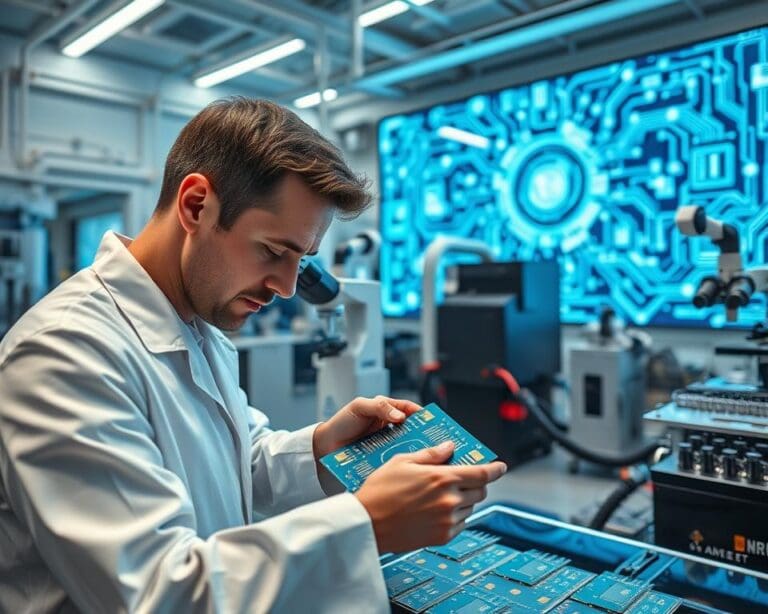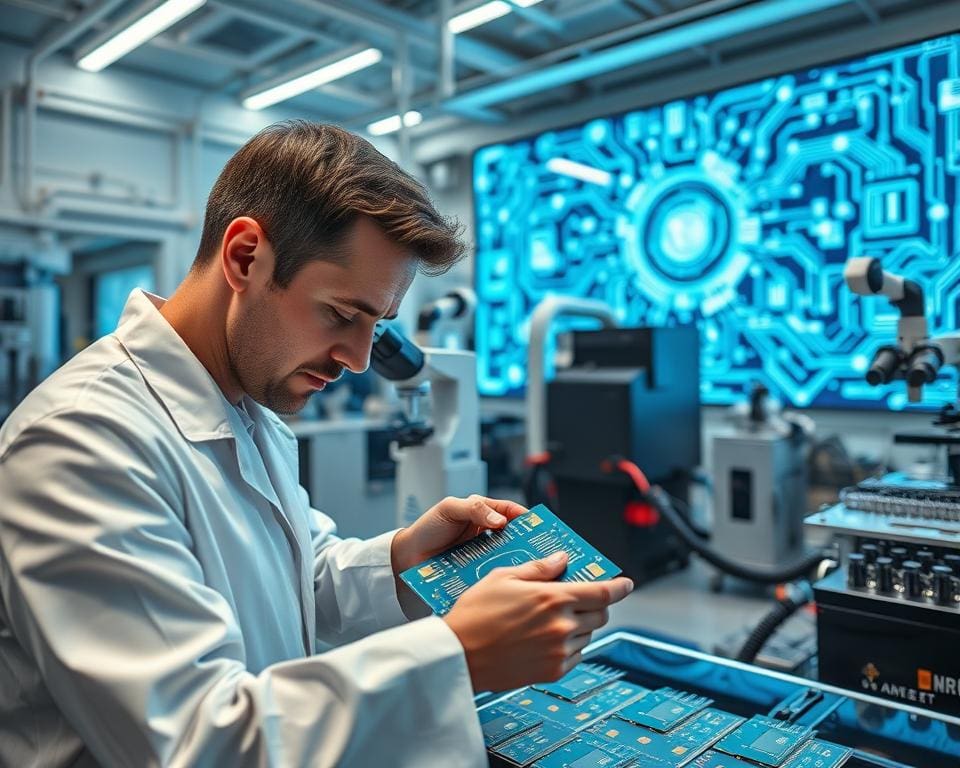
Semiconductor technology forms the foundation of much of the digital infrastructure you use each day. Materials such as silicon control electrical current, allowing engineers to build transistors, diodes, sensors and integrated circuits.
Billions of transistors can fit on one microchip. They process information, store data, manage power and control electronic systems. You find these chips in smartphones, computers, vehicles, medical equipment, factory machines and household appliances.
Your phone brings several chip functions together. Processors run applications, memory stores information, wireless chips connect to networks and image sensors capture photographs. Cloud services also depend on specialised chips in large data centres.
This connected technology shows why the modern connected world needs more than internet access. Hardware must capture data, process information, send signals and protect digital communications.
Semiconductor innovation covers chip design, materials, manufacturing, packaging, sensors, power management and communication systems. As these areas improve, electronic devices can become faster, smaller, more efficient and more capable. The following sections explore how chip technology improves computing, enables smarter devices and supports secure connectivity.
How semiconductor technology enables faster computing and digital performance
When you stream a film, join a video call or open a web page, semiconductor processors carry out the work behind the screen. These tiny devices contain billions of switches and move data at great speed. Their design shapes your daily computer performance, from quick loading times to smooth image rendering.
The role of microchips in modern processors and data centres
Modern microchips are integrated circuits with transistors arranged to perform logical operations, calculations and instructions. A central processing unit handles general tasks, such as running software and managing files. Graphics processing units perform many calculations in parallel, which suits games, video work and scientific models.
Several cores let one processor manage different workloads at the same time. Cache memory keeps frequently used data close to the processing elements, reducing delays. Data centre chips support servers that run websites, online payments, streaming platforms, business tools and artificial intelligence services.
Large facilities use more than processors. Memory chips, storage controllers, networking processors and power-management components work together within cloud computing infrastructure. This wider system forms a key part of modern data centre technology.
How advanced semiconductor design improves speed and energy efficiency
Clock speed is only one part of semiconductor performance. Chip architecture, memory bandwidth, software optimisation, cooling and connections between components can change how quickly a task is completed. Workload design matters too, since some programs benefit from parallel processing while others need fast single-core performance.
Advanced chip design can place specialised components beside general processors. Application-specific integrated circuits are built for focused tasks, such as encryption, video processing or data analysis. This approach can improve speed while supporting power efficiency.
Energy-efficient semiconductors reduce the electricity needed for each operation. New transistor technology, improved materials and advanced packaging can help more computing power fit into a smaller space. High-bandwidth memory gives demanding processors faster access to large volumes of data.
Why semiconductor manufacturing supports artificial intelligence and cloud computing
Semiconductor manufacturing supplies the hardware used in artificial intelligence chips and machine learning hardware. AI accelerators process large groups of calculations at once, helping systems recognise images, understand speech and generate useful predictions.
Cloud providers use specialised processors to deliver these services at scale. Their data centres must handle millions of requests while controlling heat and electricity use. Better manufacturing methods can increase the work completed by each chip, which supports lower operating costs and steadier service.
For you, these improvements can mean faster online searches, clearer video calls and more responsive applications. They can improve image rendering on personal devices, too. Every gain depends on the combined work of semiconductor processors, memory, software and the systems that connect them.
Smarter devices powered by connected semiconductor technology
Semiconductors give your smart devices the speed, sensing and wireless links they need. They connect phones, homes, vehicles and factories through a shared Internet of Things network. This growth in connected electronics depends on reliable chips, efficient software and strong IoT infrastructure.
Each product needs a balance between performance, size, battery life and security. The work behind these products brings together chip design, firmware, cloud services and careful testing. You can explore how engineers work with IoT devices to see how these parts fit into a full development process.
How semiconductors support smartphones, wearables and smart home devices
Modern smartphone semiconductors form a complete computing system. An application processor runs your operating system and apps, while mobile processors manage graphics, photography, artificial intelligence, audio and communications. Memory, storage, camera sensors, power-management circuits and security hardware support each task.
These chips enable 4G and 5G, Wi-Fi, Bluetooth, satellite positioning and near-field communication. Your phone can exchange data with networks, accessories, vehicles and payment terminals. Efficient design helps manufacturers create thinner products with longer battery life.
Low-power chips are vital in wearable technology. A smartwatch or fitness tracker must collect readings, process them and maintain a wireless link from a small battery. Semiconductor sensors measure movement, heart rate, temperature and location without adding much weight.
Smart home technology uses microcontrollers, wireless chips, power controls and Internet of Things sensors. Connected lights, thermostats, cameras, doorbells and speakers can detect changes, respond to commands and share data with an app or home hub.
The importance of sensors in connected cars and industrial equipment
In connected cars, automotive semiconductors help vehicle electronics monitor speed, position, pressure and battery health. Radar sensors support driver assistance by detecting nearby vehicles and objects. Other semiconductor sensors help control braking, steering, lighting and energy use.
Factories use similar technology for industrial automation. Machines can report vibration, heat and operating load before a fault causes downtime. Connected devices send this information through wired or wireless networks, helping teams plan maintenance and improve safety.
Sensor quality matters in every setting. Engineers must assess accuracy, calibration, operating temperature and long-term drift. A strong design links the sensor, firmware and data service so that each reading has a clear purpose.
How edge computing brings faster responses to your everyday devices
Edge computing allows a device or nearby gateway to analyse data close to where it is created. This local data processing reduces the need to send every reading to a remote server. It supports low-latency technology when a quick response matters.
A camera can identify movement, a thermostat can adjust heating and a vehicle can react to an obstacle through real-time computing. Edge AI lets connected devices run selected models on local chips. This approach can reduce network use and limit the amount of personal data sent away from your home or vehicle.
Cloud platforms still support wider analysis, updates and device management. A balanced design shares tasks between edge hardware and cloud services. Efficient firmware, secure updates and well-designed apps help every part of the Internet of Things work as one system.
Secure connectivity and the future of semiconductor innovation
Connected devices exchange valuable data, so semiconductor security must begin inside the chip. Hardware security works below the operating system, where software controls may be easier to bypass. Secure boot checks that approved code runs first, while hardware-based encryption protects data and keys. Trusted execution environments isolate sensitive tasks. Physically unclonable functions and tamper-resistant elements can also confirm device identity and reveal interference. These safeguards support secure connectivity across smartphones, payment cards, identity documents, vehicles, industrial systems and data-centre servers.
Strong design is only the starting point. You still need regular firmware and software updates because new weaknesses can appear during a product’s life. Manufacturers and service providers must find, patch and manage these risks quickly. This approach supports trusted computing and protects payments, authentication, communications and stored information. Semiconductor research is also making chips more efficient. Sustainable chips can reduce energy use in homes and data centres, while better packaging, materials management and recycling can lower environmental pressure.
The future semiconductor technology landscape includes advanced chiplets, three-dimensional integration, specialised artificial intelligence processors, photonic links and neuromorphic designs. New materials may improve speed while using less power. Quantum computing could add new capabilities for selected problems, but it will not replace every conventional system. It may require specialist control chips, cryogenic electronics and supporting infrastructure. Quantum methods such as key distribution and entanglement could improve data protection, while Shor’s algorithm shows why classical encryption needs quantum-safe alternatives. You can explore quantum technology and secure communications to see how this field is developing.
Progress also depends on resilient supply chains. Reliable access to factories, equipment, raw materials, design tools and skilled workers helps keep connected services available. Qubits remain sensitive to their surroundings, so stable quantum hardware and dependable communications still require major research. For you, the wider direction is clear: semiconductor technology brings together computing power, intelligent devices and protected communications. The best results will combine higher performance with responsible energy use, reliable manufacturing and stronger protection for every connected system.