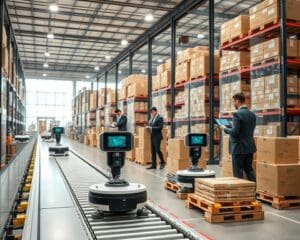
How is automation transforming warehousing?
The convergence of digital platforms, robotics and advanced data tools is reshaping how goods move through distribution centres in the United Kingdom and beyond. Warehouse

The convergence of digital platforms, robotics and advanced data tools is reshaping how goods move through distribution centres in the United Kingdom and beyond. Warehouse

Disruptive technology success begins with a clear definition: innovations that create new markets or value networks and, over time, displace established leaders. Clayton Christensen’s theory

Technology and work are reshaping where, when and how people labour across the United Kingdom. Cloud platforms such as Microsoft Azure and Google Cloud, collaboration

AI-powered analytics turns scattered data into clear AI data insights that teams can trust. Machine learning, natural language processing and robust statistical models work together

Technology enables scalable growth by letting organisations expand without a matching rise in costs. Cloud scaling from Microsoft Azure and Amazon Web Services introduces elasticity:

Digital ecosystems describe interconnected platforms, services, devices and people that share data and create joined-up experiences. Analysts at McKinsey and Deloitte frame these platform ecosystems

Organisations across the United Kingdom and globally are turning to AI decision intelligence to make faster, clearer and more consistent choices. The fusion of data,

Smart manufacturing blends digital tools with factory floor practice. It links IIoT sensors, automation, AI and digital twins to traditional processes to boost efficiency, quality

Innovation shapes national competitiveness by changing what countries can produce and sell. Organisations such as the OECD and the World Intellectual Property Organization define innovation

Robotics breakthroughs 2026 are reshaping how machines move, sense and decide. Recent progress spans novel hardware, embodied intelligence and field-ready deployments that matter to industry