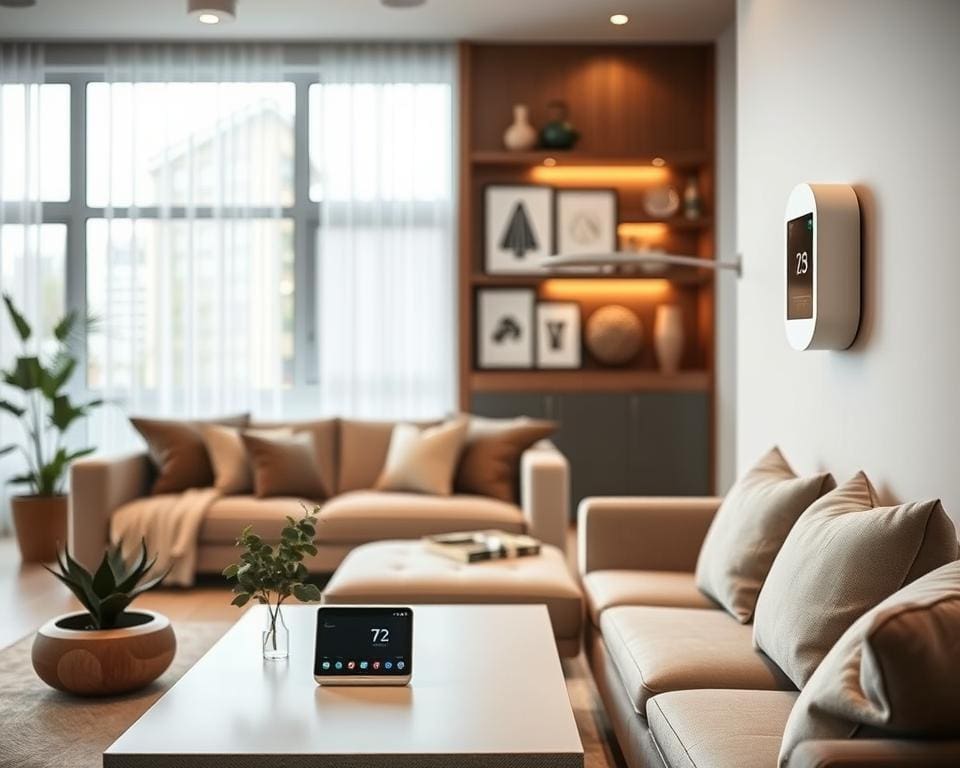
Smart thermostats are no longer just functional boxes on a wall; they can be part of considered smart home décor. In UK homes, good thermostat placement and thoughtful thermostat aesthetics lift both comfort and style. This section frames how a device can be invisible and efficient or become a deliberate design feature that complements a room.
Leading brands available in the UK market—Google Nest, Hive by British Gas, Tado, Honeywell Home (Resideo) and ecobee—offer varied form factors, finishes and screen sizes. Choice of brand affects options for integration: a matte bezel might suit a period terrace while a compact, glass-front model fits a new-build flat.
Think of thermostats as part of the room’s user experience. Modern units pair touchscreen or minimalist displays with app and voice control, so physical controls can be subtle. Intuitive temperature control and reliable responsiveness help a device feel like an asset rather than an intrusion.
Practical constraints in home heating design UK—such as listed-building rules, narrow hallways and mixed heating systems like radiators or underfloor heating—mean placement and wiring influence the final look. Careful planning ensures the technology works well with the interior without compromising aesthetics.
This article will explore design aesthetics and visual strategies, then cover wiring, placement and compatibility, and finish with creative styling and pro tips for harmonising smart thermostats with interiors.
How can smart thermostats integrate with interior design?
Smart thermostats no longer need to look like functional afterthoughts. Manufacturers such as Google Nest, Honeywell Home and tado° offer a range of thermostat styles and finishes that bring design intent to the wall. Choose rounded metal-look bezels, slim rectangular panels or matte white units to echo taps, sockets and skirtings for a coherent look.
Blending form and function: choosing designs that complement decor
Selecting a unit begins with context. In a Victorian drawing room a cream or white bezel can be concealed behind a slim frame. In a Scandi open-plan space a black glass device makes a subtle statement.
Think about thermostat placement strategies before fixing the plate. Hallways and circulation zones work well for usability. Mount at around 1.5m for easy reading, and check sight lines so the device neither dominates nor hides behind furniture.
Decide whether the thermostat should blend or stand out. Use recessed niches or flush mounts for a discreet thermostat design in period or minimalist schemes. Pick a premium designer unit as an accent in industrial or tech-forward interiors.
Customisable interfaces and visual themes
Screen tone and standby options shape how a device sits against patterned paper. Use smart thermostat display customisation to test colours and brightness against sample wallpaper. Choose low-light modes or simple ambient screens to avoid visual clashes with intricate coverings.
Rely on schedules, geofencing and app control to keep displays off most of the time. A pared-back clock or subtle temperature readout reduces visual noise and supports calm interiors.
Where voice control is available, consider handing common interactions to Amazon Alexa or Google Assistant. This keeps the wall unit minimal while preserving full smart-home convenience.
- Match finishes to room metals: chrome or brushed steel for taps and sockets.
- Group thermostats with light switches or place them on a feature wall for coherence.
- Request manufacturer finish samples when possible to check real-world colour and texture.
Wallpaper integration thermostat choices matter. Pick models with adjustable themes and test displays in situ. That way the device complements wallpaper and paint rather than competing with them.
Practical integration: wiring, placement and smart home compatibility
Thoughtful installation makes a thermostat feel like part of the room rather than an add‑on. Check power requirements first; many smart thermostats need a common (C) wire or a neutral. Battery models and dedicated power adaptors suit homes without a C wire.
For neatness, choose wall plates and backboxes that match skirting and paintwork. Flush mounts, recessed backboxes and cable conduits conceal wiring and create a streamlined finish. Magnetic or low‑profile brackets allow easy removal without exposing cables.
Installation considerations for seamless aesthetics
In period homes, retrofit thermostat period property work must respect original fabric. Surface‑mount conduits and using existing backplates where safe reduce intervention. Seek electricians who know older wiring and consult conservation officers when required.
Use wireless room sensors to avoid invasive routing in listed buildings. Paintable wall plates and discreet mounting keep the device subtle while preserving historic features.
Compatibility with lighting, HVAC and home automation systems
Check vendor wiring diagrams before fitting; Nest, Tado and Honeywell Home each have distinct needs. Confirm thermostat wiring UK details to match your boiler and wiring layout.
Smart home interoperability Matter is changing how devices talk to each other. Zigbee and Z‑Wave remain common for hubs, while Matter aims to simplify cross‑brand connections. Choose a thermostat that supports the protocols used by your hub.
Thermostat and smart lighting integration lets you create cohesive scenes. Use platforms such as Apple HomeKit, Google Home or Samsung SmartThings to sync heating with Philips Hue or similar ecosystems for a unified ambience.
Energy efficiency benefits that influence design decisions
Zoned heating design transforms how rooms are used. Multiple thermostats and motorised valves allow separate schedules, freeing up radiators and enabling varied furniture layouts. This tailoring can reduce wasted heat and improve comfort.
Position thermostats away from drafts, direct sun and radiators to ensure accurate readings. Remote sensors help in open‑plan spaces where a single location won’t reflect the whole room.
Visible energy reports and eco suggestions engage eco‑conscious homeowners. Features such as usage trends and automatic insights can guide insulation and radiator valve upgrades, tying design choices to measurable savings.
Creative styling ideas and practical tips to harmonise smart thermostats with interiors
Use decorative frames, slim timber surrounds or metal bezels to make a thermostat a designed object rather than an afterthought. A decorative frames thermostat or inset recess can create a neat vignette; bespoke joinery allows a control to sit alongside a light switch, post box or shelf niche for a considered finish. Keep surrounds slim so displays remain clear and sensors are not blocked.
For discreet solutions, consider thermostat camouflage with hinged art frames or slide-away panels that allow easy access while keeping walls calm. Ensure any cover allows airflow and does not sit flush over a sensor. In bathrooms and wet rooms pick models with appropriate IP ratings and choose black glass or gloss finishes only where the device is rated for that location.
Match thermostat finishes timber brass or complementary metals to nearby fittings for a cohesive look. Brass-look bezels suit traditional kitchens with brass taps, while timber-effect surrounds work in Scandinavian schemes. Coordinate bezels with switch plates and sockets in stainless steel, white plastic or brass; replacing plates in one job gives a consistent result and a cleaner aesthetic.
Room type matters: modern, minimalist spaces benefit from low-profile mounts and reliance on app or voice control to keep walls visually calm. In listed or period homes use wireless sensors, surface-mounted covers or work with conservation officers and specialist electricians to preserve fabric. For open-plan living prioritise sensor placement away from kitchens and large windows and brief an interior designer early so wiring, backboxes and finishes are planned with joinery and decorators. Seek thermostat installer recommendations UK from heating engineers experienced in high-spec interiors and leave spare conduits for future upgrades to avoid disruptive redecorating.