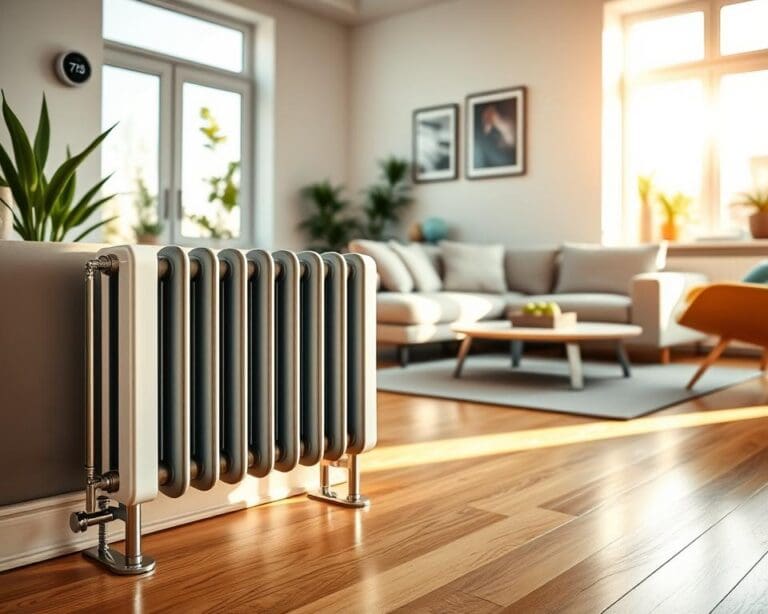
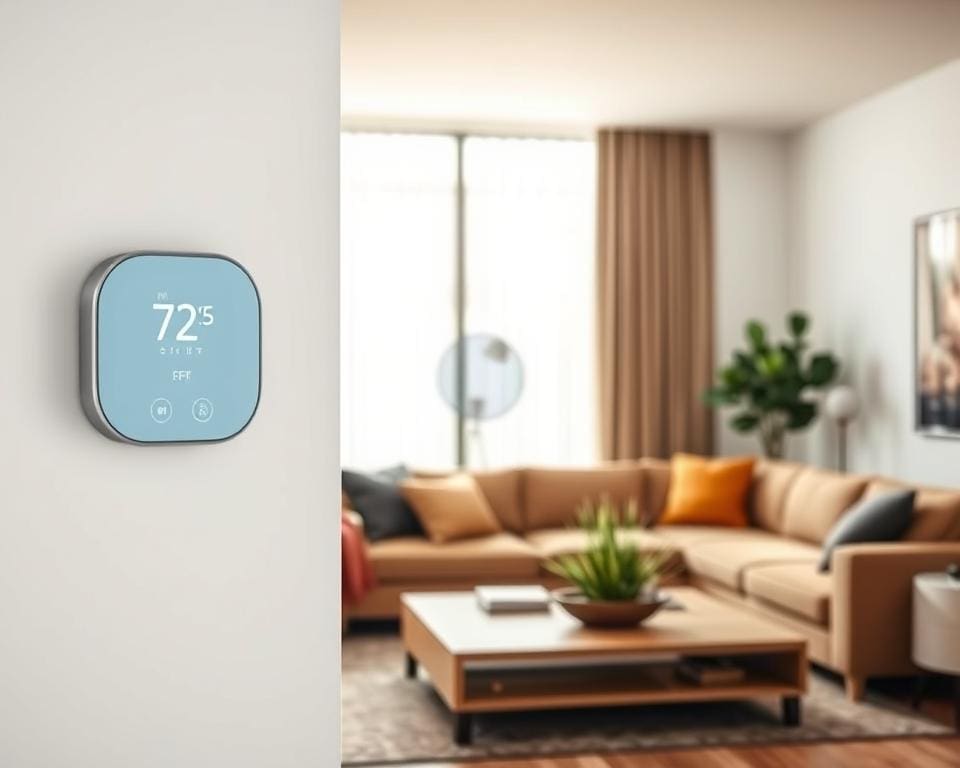
Smart thermostats replace conventional controls and bring sensors, connectivity and software into everyday heating. Devices from Google Nest, Hive by British Gas, Tado, Honeywell Home and ecobee monitor temperature, learn habits and allow remote control via smartphone apps. This combination helps homeowners in the UK make heating efficiency gains without complex upgrades.
Core functions such as geofencing, adaptive scheduling and occupancy sensing let a smart thermostat optimise heating systems by delivering warmth when it’s needed and reducing output when rooms are empty. Integration with local weather forecasts and utility signals refines decisions in real time, improving performance beyond what a standard programmable thermostat can achieve.
For many UK households, where cooler weather and reliance on gas boilers increase demand, the shift to smart heating UK offers clear benefits: lower bills, greater comfort and a smaller carbon footprint. Before installing, check compatibility with boilers or heat pumps, and consider wiring centres or relays where required to meet safety and building standards.
As an accessible step towards energy-efficient heating, a smart thermostat combines simple user controls with advanced learning and remote diagnostics. The result is a practical upgrade that boosts heating efficiency while keeping cost and installation disruption to a minimum.
How can smart thermostats optimise heating systems?
Smart thermostats change how households control warmth. They combine sensors, cloud data and intuitive interfaces to cut waste and raise comfort. This section explains the practical features that steer effective heating optimisation in UK homes.
Adaptive scheduling and learning algorithms
Devices such as Google Nest and ecobee use adaptive scheduling to learn daily routines. A learning thermostat picks up on wake, leave and return times by analysing sensor signals and user adjustments.
Smart algorithms create an auto‑schedule, make early‑on preheating choices and apply setback strategies to save energy while protecting pipes. Local weather feeds and internal humidity readings refine those decisions.
There is an initial learning period, after which manual override remains simple. Owners can reset or fine‑tune settings to match changing routines and preferences.
Optimising temperature zoning
Temperature zoning splits a property into controllable areas so heating targets match actual use. When paired with room sensors and radiator valves, zoning reduces wasted heat in unused rooms.
Occupancy detection helps decide which zones need warmth and which can be set back. This targeted control keeps living areas cosy while lowering energy draw in bedrooms and seldom‑used spaces.
Data-driven efficiency improvements
Smart algorithms turn usage and sensor data into actionable insights. Regular reports show where schedules or zones can be adjusted to cut excess consumption.
Over time, small changes guided by analytics add up to meaningful savings. Homeowners see how adaptive scheduling and occupancy detection combine to streamline performance and improve comfort.
Energy savings and cost benefits for UK households
Smart thermostats can change the way households use heat. Small upgrades to controls often lead to meaningful energy savings and lower bills. Estimates vary, yet many studies and manufacturers report typical smart thermostat savings of 10–20% on heating energy when the device is used well. In optimised homes with good insulation and zoning, figures reported can reach nearer 30%.
Typical savings estimates and case studies
Independent trials and product data give a useful range for planning. A detached home with older boiler technology will see different results to a mid-terrace with a modern condensing boiler. A realistic payback period for many buyers sits between two and five years, depending on purchase price, any installation costs and current gas prices.
Real-world case study examples from UK households show reductions in gas use when users combine scheduling, room zoning and adaptive controls. These examples highlight that baseline home fabric, thermostat placement and occupancy patterns are crucial variables that change the final figure for heating cost savings UK owners can expect.
Behavioural change versus automated optimisation
Manual habits still matter. Simple actions such as lowering setpoints or closing doors produce immediate savings. Automated features cut the need to remember these tasks and deliver steady smart thermostat savings by learning routines and adjusting temperatures when rooms are empty.
Behavioural change and automation work best together. When occupants accept small changes to their routine, automated systems amplify the benefit. The largest gains occur where technology compensates for inconsistent human behaviour and maintains comfort with less wasted energy.
Incentives, grants and compatibility with UK energy initiatives
Several UK programmes can reduce the upfront cost of efficiency upgrades. Energy efficiency grants and schemes such as the ECO scheme and the Boiler Upgrade Scheme help eligible households access insulation, new boilers or heat pumps. Combining a smart thermostat with these measures often improves overall performance and enlarges heating cost savings UK residents see.
Before applying, check eligibility for specific grants and consider professional advice on compatibility. A smart thermostat paired with a modern, efficient boiler or heat pump will usually deliver stronger returns than one attached to an old, inefficient system.
Integrating smart thermostats with heating systems and smart homes
Smart thermostats transform heating into a responsive, energy‑aware system. Choosing the right device means checking boiler compatibility, matching heat pump controls and adding smart TRVs where room‑by‑room comfort matters. The end result should be a cohesive setup that works with existing hardware and a broader smart home.
Compatibility with boilers and heat pumps
Most thermostats work with conventional gas, combi and system boilers, but some units ask for a common wire or a relay for 230 V systems. For air‑source and ground‑source heat pumps, look for models offering heat‑pump‑specific algorithms. These adjust flow temperatures to boost COP and cut running costs.
Radiators and smart TRVs
Smart TRVs from brands such as Tado, Honeywell and Drayton make true zoning possible. Fitting valves can require bleeding radiators and balancing flow to avoid cold spots. In zoned systems and underfloor heating, add a wiring centre or gateway where needed to keep controls reliable.
Connectivity and smart home ecosystems
Decide which protocol suits your house. Zigbee and Z‑Wave offer robust mesh networks for battery devices. A Wi‑Fi thermostat gives direct cloud access and works well with voice assistants. Check Nest compatibility if you use Google Home and Hive integration if you rely on British smart heating services.
Installation, commissioning and the role of an installer
A competent installer makes the difference for complex setups and older two‑wire systems. DIY fits are possible for simple combi boilers and many Wi‑Fi thermostat models. Professional commissioning ensures correct wiring, reliable heat pump controls and optimised schedules.
Planning the upgrade
- Audit your existing boiler and heating layout before buying a thermostat.
- Match device protocols to your hub or choose a universal bridge if needed.
- Factor in smart TRVs for rooms where occupancy varies.
- Book an installer for zoned systems, underfloor heating or legacy wiring.
Careful planning guarantees smooth integration between boiler compatibility, heat pump controls and your smart home. The right mix of smart TRVs, Zigbee or Z‑Wave devices and a suitable Wi‑Fi thermostat delivers comfort, control and lasting efficiency.
Improving comfort, control and environmental impact
Smart heating delivers clearer home comfort by keeping temperatures steady and predictable. Precise temperature control and multi‑sensor setups reduce cold spots, while remote access lets you preheat rooms before you arrive. That level of heating control helps households balance different preferences without wasting energy.
Convenience features such as geofencing, voice control and tailored schedules mean the system adapts to real life, not the other way round. Geofencing switches to away or home modes automatically, voice assistants enable hands‑free changes and smart routines align warmth with daily habits. These smart heating benefits make living easier for busy families and those caring for elderly relatives.
There are also clear accessibility advantages: remote operation gives carers and family members the power to adjust settings for mobility‑limited occupants. Simple interfaces on phones or tablets reduce friction and help maintain dignity and independence, while reliable automation limits the need for manual intervention.
Beyond comfort, intelligent control reduces wasted energy and supports emissions reduction targets. By heating rooms only when needed and optimising schedules, smart thermostats contribute to lower carbon footprint outcomes for sustainable homes UK. That twin benefit — improved comfort and a smaller environmental impact — is why smart heating merits serious consideration in modern British homes.