Modernising your home with smart upgrades brings everyday convenience and comfort without the upheaval of a full renovation. From a single smart bulb to a connected hub that controls lighting, heating and security, incremental home automation changes can feel like adding modern luxury to familiar rooms.
The smart home UK market is expanding fast. Better broadband, lower device costs and growing demand have driven uptake. Brands such as Amazon Echo with Alexa, Google Nest with Assistant, Philips Hue, Samsung SmartThings and Apple HomeKit now shape the landscape, each offering different levels of interoperability.
Practical benefits are clear: automated routines for lighting and heating, remote control via smartphone apps, voice control and energy monitoring. These smart home technology gains can improve comfort, boost energy efficiency and even increase property appeal, while allowing homeowners to stage upgrades to suit budget and skill.
This approach suits busy families, tech enthusiasts, owners of older properties seeking modern convenience and anyone focused on security or savings. Decide your priorities—comfort, security, energy or entertainment—before choosing devices for a connected home.
Read on for a structured walkthrough: why choose smart home upgrades, which devices to consider and how to plan, install and future-proof your smart home in the UK.
Why choose smart home upgrades for modern living
Connected living weaves devices and systems into a single, manageable home network. Devices communicate via Wi‑Fi, Zigbee, Z‑Wave, Thread or Bluetooth to automate tasks and deliver central control. Examples include automated lighting scenes, presence‑based heating control, smart doorbells and fridge notifications that alert you when supplies run low.
The benefits of connected living extend beyond novelty. Routines become effortless: lights that come on at dusk, thermostats that learn occupancy patterns and timed blinds that lower at sunset. Voice control through Amazon Alexa, Google Assistant or Apple Siri makes hands‑free operation simple. These smart home benefits free time and reduce daily friction.
The benefits of connected living
Personalisation is central to modern upgrades. You can create lighting scenes for work or rest, set thermostats per room and enable accessibility aids for older or disabled household members. Automated doors, voice commands and remote home monitoring add practical support for independent living.
Data from devices offers useful insights. Smart meters and energy reports, such as those from Nest and other platforms, show usage trends. That information helps households change behaviour and cut waste. Connected home advantages include clearer decision making and better household planning.
Energy efficiency and long-term savings
Smart heating and insulation interfaces bring measurable gains. Thermostats from Nest, Hive and Tado optimise schedules, use geofencing and tune usage to match occupancy. They work with combi and conventional boilers common in UK homes to deliver smart thermostats savings and reduce wasted heat.
Lighting and appliance upgrades make a difference. LED smart lighting like Philips Hue and LIFX, together with smart plugs, reduce standby draw and allow scheduling. Energy‑efficient appliances from Bosch, Samsung and Miele can run on off‑peak tariffs for further gains. Low energy home upgrades stack up over time.
Smart meters and third‑party monitors provide real‑time readings. Energy monitoring UK devices reveal peak use and help you shift loads. Pairing these tools with automated schedules gives clear paths to lower bills. Home automation benefits UK consumers who want long‑term value and greener homes.
Improved security and peace of mind
Smart home security covers a wide set of devices. Video doorbells from Ring and Google Nest Hello, indoor and outdoor cameras such as Arlo and Hikvision, and smart locks from Yale, August and Nuki all plug into apps for instant alerts. Integrated alarm systems add professional monitoring where required.
Visible cameras and smart lighting deter intruders and provide recorded evidence if an incident occurs. Features like motion detection, night vision and two‑way audio improve response. Remote control lets you lock or unlock doors for guests, check live streams and receive notifications while away.
Privacy and legal considerations matter. Adjust device settings, follow UK laws on recording and check insurance terms. Some insurers offer discounts for monitored systems or validated devices, which may improve protection and reduce premiums.
smart home upgrades: practical devices and systems to consider
Smart upgrades lift everyday living with clear, practical choices. Pick devices that match your routines and home layout to get the best from smart lighting UK, smart heating and linked security. Small steps can deliver visible gains in comfort, convenience and safety.
Smart lighting and climate control
Start with bulb-based systems such as Hue or LIFX for dimming, colour temperature changes and preset scenes. Choose a Hue Bridge for robust Zigbee control or Wi‑Fi bulbs for simple app-only setups.
Smart switches and dimmers from Lutron or TP‑Link allow whole-house control without replacing every lamp. Link lights to presence sensors, sunrise/sunset schedules or security events to simulate occupancy and cut wasted use.
For heating, consider a smart thermostat like Nest, Hive or Tado and pair with smart radiator valves such as Danfoss Ally or Ember for room-by-room comfort. These systems use geofencing, learning algorithms and hot‑water scheduling to reduce waste and improve efficiency.
Security cameras, smart locks and alarm integration
Video doorbells and cameras from Ring, Google Nest and Arlo offer person detection, package alerts and various storage options. Check subscription models and local storage possibilities if you prefer direct control of footage.
For access, Yale smart lock and Nuki or August provide Bluetooth or Wi‑Fi entry, temporary guest codes and intercom integration. Professional fitting helps meet security and insurance requirements.
Hybrid alarm setups combine smart sensors with professional monitoring from firms like Verisure or ADT. Integrate alarms with a smart home hub to arm systems automatically when the last person leaves.
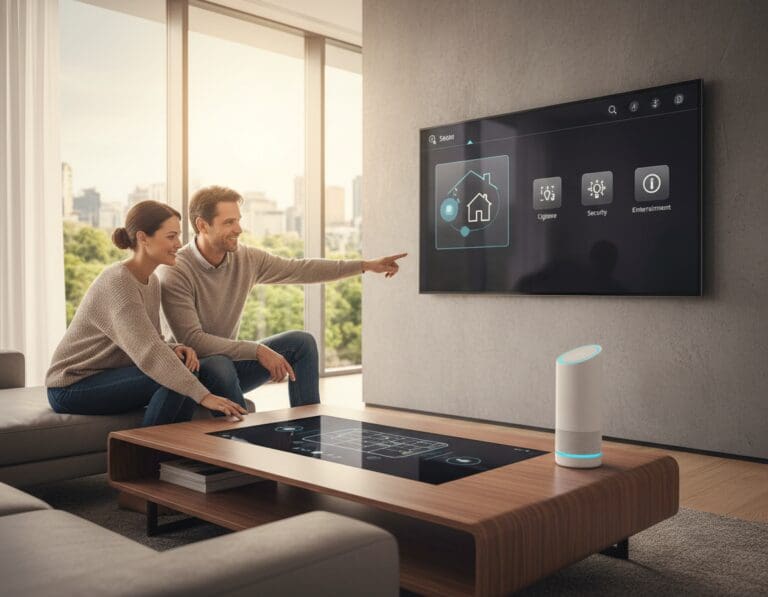
Voice assistants and centralised control hubs
Choose voice assistant UK options such as Amazon Alexa, Google Assistant or Apple HomeKit based on device compatibility and privacy preferences. Each ecosystem has its strengths for speaker choice, routines and voice services in the UK.
A smart home hub like Samsung SmartThings, Home Assistant or Hubitat links Zigbee, Z‑Wave and Thread devices and runs automation beyond simple app rules. Matter support eases cross‑vendor integration and reduces vendor lock‑in.
Use voice and hub features to create multi‑user profiles, routines and hands‑free controls that simplify daily tasks and improve accessibility.
Smart appliances for the kitchen and laundry
Smart appliances UK include connected fridge models, smart ovens and dishwashers from Samsung and Bosch Home Connect that offer remote monitoring and recipe integration. Smart fridges alert you to stock changes and let you check settings from your phone.
Smart washing machine and tumble dryer options allow remote start, cycle monitoring and energy‑saving scheduling. App alerts tell you when cycles finish and help plan runs for off‑peak tariffs.
Prioritise high‑use appliances for smart upgrades to balance cost and convenience. Verify firmware update policies and after‑sales support to avoid losing core functions if smart services change.
Home entertainment and multi-room audio
Multi-room audio UK systems from Sonos or using Apple AirPlay deliver synced playback and group control for whole‑home audio. Wired Ethernet or strong mesh Wi‑Fi improves stability for high‑quality streaming.
Smart TV integration with Chromecast, Apple TV and modern smart TVs brings voice search and automated scenes, such as dimming lights when a film starts. Upgrading AV receivers or soundbars completes the home cinema experience.
Ensure your router and broadband can handle multiple HD streams. Use Quality of Service settings to prioritise audio and video traffic for reliable playback across the house.
Planning, installation and future-proofing your smart home
Begin by assessing needs room by room. Decide whether security, heating or entertainment takes priority and set a phased budget and timeline. Start with high-impact, low-effort upgrades such as smart bulbs, smart plugs and a smart speaker, then move to integrated systems to help you plan smart home growth without overspending.
Ensure robust connectivity before major installs. A modern router, reliable broadband and a Wi‑Fi mesh system will keep cameras and streaming devices stable across a UK home. Use ethernet backhaul for hubs and fixed devices where possible, create a guest network to isolate IoT kit, and size bandwidth for multiple simultaneous video streams to support smart home installation UK needs.
Choose devices for compatibility and longevity. Understand protocols like Zigbee, Z‑Wave, Thread, Wi‑Fi and Bluetooth, and favour kit adopting the Matter standard to ease cross‑vendor interoperability. Pick products with regular firmware updates and active developer communities to future‑proof smart home setups and maintain strong smart home security.
Decide between DIY and professional installation. Small, low‑voltage additions can suit confident DIYers, but use NICEIC‑registered electricians or accredited installers for mains wiring, smart locks and alarm integration. Proper tradespeople ensure compliance with UK regulations and reduce risk during smart home installation UK projects.
Protect privacy and keep systems maintained. Change default passwords, enable two‑factor authentication, update firmware promptly, and review app permissions. Segregate IoT devices on a separate network and consider a VPN for remote access to strengthen smart home security and resilience.
Plan for scale and resale value. Leave spare network capacity, document wiring and automations, and keep user accounts and recovery steps clear for future owners. A well‑documented, functional smart system can be a strong selling point in the UK housing market and helps future‑proof smart home investments.
Manage costs with smart priorities and incentives. Focus on devices with clear ROI, such as smart thermostats and heating controls, compare monitored versus self‑monitored alarms, and look for energy‑saving grants or supplier schemes. Finish with a checklist mapping devices and hubs, confirming coverage, testing automations and backup procedures before full launch.