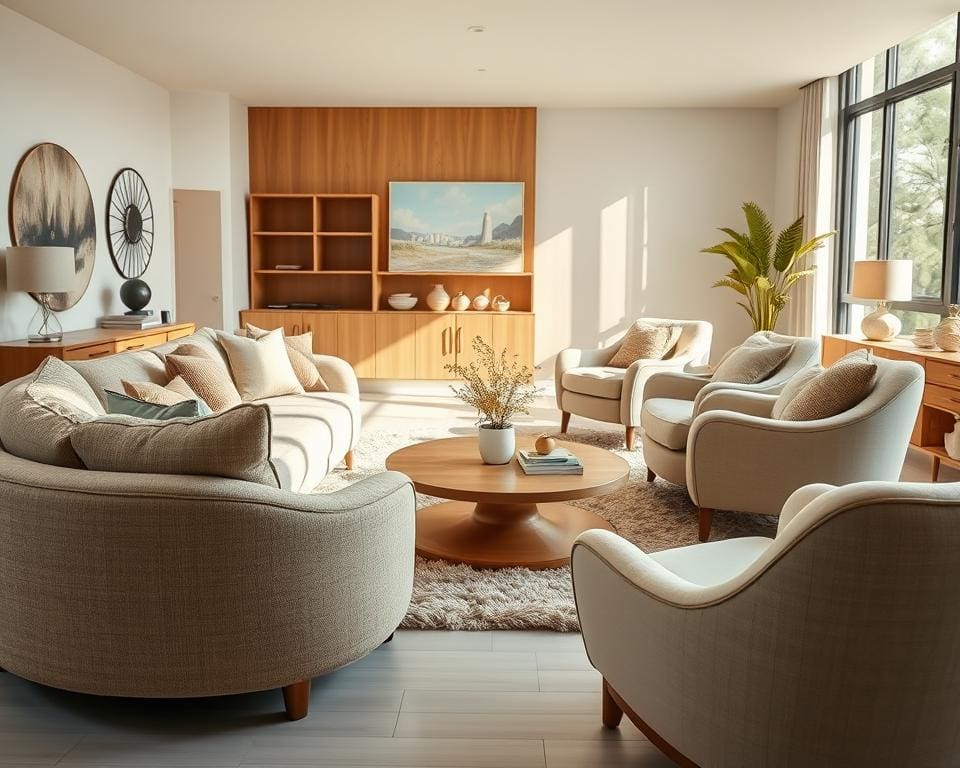
Curved furniture brings an instant sense of warmth and welcome to a room. This introduction explains how curved furniture shapes soften interiors and why designers and homeowners across the UK are choosing organic furniture shapes to create calmer, more human-centred spaces.
Curves have returned to popularity after waves of mid-century modern and Art Deco influence. Designers such as Eileen Gray and British brands like G-Plan and Habitat helped popularise softer silhouettes in past decades. Today retailers including Made.com, Heal’s and Barker and Stonehouse show a renewed appetite for rounded forms, from the curved sofa UK buyers seek to compact accent chairs and circular coffee tables.
There are clear curved furniture benefits. Rounded pieces deliver visual softness, reduce perceived clutter, improve circulation and encourage sociable layouts. They also add tactile comfort and can break up the rigidity of Victorian terraces, Georgian townhouses, modern flats and new-build apartments.
This article is aimed at UK homeowners, renters and interior enthusiasts looking for practical inspiration and buying guidance. The following sections explore the psychological impact of curves, how curves influence movement and flow, design principles for integrating curves into British homes, and practical styling and purchasing tips to turn softening interiors with curves into reality.
How do curved furniture shapes soften interiors?
Curved furniture can change how a room feels. Soft lines calm the eye, invite touch and make spaces feel lived-in. The psychological effects of curved furniture are rooted in perceptual science and design psychology. People tend to respond more positively to curvilinear forms because they read as safe and approachable.
Psychological impact of curves
Research from cognitive neuroscience and architecture shows a bias for rounded shapes. Curves reduce perceived threat and lower formality. That produces a quieter, warmer atmosphere that encourages relaxation.
Curved seating can change social dynamics. Crescent sofas and circular banquettes nudge people toward face-to-face interaction. These arrangements boost conversation and make lounges and dining areas feel intimate.
How curves influence movement and flow in a room
Rounded edges and flowing silhouettes smooth circulation. People move more naturally around rounded furniture, which reduces abrupt sightlines and accidental bumps in busy homes.
In open-plan living, curves create visual continuity. They guide the eye across zones without sharp breaks, improving the flow and movement in interiors. This approach can make compact rooms feel more expansive.
When a room has angular architecture, curvilinear pieces act as counterpoints. They soften the geometry and bring a sense of balance between rigid features and organic forms.
Examples of curved pieces that immediately soften a space
- Rounded sofas: A curved or crescent sofa quickly establishes a warm focal point. Rounded sofas reduce visual heaviness compared with blocky designs and create grouped seating that feels inviting.
- Tub and club chairs: Tub chairs with enveloping backs add tactile softness. Retailers such as Heal’s and Sofa.com offer tub and club options that fit small and large schemes.
- Circular dining tables and banquettes: Circular or oval tables and curved banquettes remove sharp sightlines and promote convivial layouts. Circular dining tables UK are ideal for narrow-terrace dining nooks and kitchen-diners.
- Consoles, ottomans and coffee tables: Rounded consoles and pouffes soften corridors and offer flexible seating. These pieces work well in hallways and as adaptable extras in living rooms.
- Large architectural pieces: Curved bookcases, arch-headboards and rounded room dividers introduce continuity at scale. They shift the feel of a room from rigid to organic without major structural change.
Thoughtful use of curves transforms rooms into calmer, more sociable places. By choosing curved furniture examples that suit scale and use, you can shape mood, movement and memory within the home.
Design principles for incorporating curved furniture into UK homes
Curved furniture brings warmth and motion to interiors when used with intention. Start by learning basic curved furniture design principles so each piece reads as part of a thoughtful scheme rather than a random accent.
Balancing scale and proportion with existing architecture
Measure carefully before you buy. Note door widths, stair turns and corridor depths in period terraces and modern flats. Small errors can mean a curved sofa will not fit through a narrow stairwell.
Choose curves in proportion to ceiling height and room volume. Low, wide pieces suit lower ceilings while taller curved backs work well in rooms with generous height. Anchor larger items with a rug or pendant light so visual weight feels balanced.
Respect original features such as cornices or bay windows by matching the scale. A gently curved settee in a Victorian bay can complement mouldings without overwhelming them.
Mixing curves with linear elements for visual harmony
Pair flowing sofas with linear shelving or angular side tables to create contrast and balance. This approach lets you mix curves and lines so a room feels composed and intentional.
Echo curves in smaller details — round mirrors, arched frames and curved lampshades — to build rhythm. Use stripes or geometric rugs to ground the space and stop it feeling overly soft.
Choosing materials and finishes that enhance softness
Select tactile upholstery like velvet, boucle or wool blends to amplify the gentle shape of curved pieces. Consider stain-resistant treatments and abrasion ratings for busy UK households.
Warm timber tones such as oak or walnut, and brushed brass fittings, add depth without cold reflections. Matt paints and satin metal finishes will keep the look soft and durable.
Think about provenance and sustainability. Retailers such as Heal’s and Furniture Village list material sourcing for many ranges, while independent British makers often share production details.
Practical layout tips for small and open-plan living
Pick compact curved sofas and nesting tables for tight flats and small Victorian rooms. Moveable ottomans and nesting pieces offer flexibility for changing needs.
Use a curved sofa or rug to zone open-plan spaces without screens. Position back-to-back seating to form distinct areas while maintaining sightlines and flow.
Keep clear circulation paths. Aim for sensible walkways around pieces and opt for lightweight pouffes or castor-mounted furniture to adapt layouts easily.
Place lighting to emphasise curves — uplighters and pendant clusters work well. Avoid blocking window views or focal points with bulky curved items so the room remains airy and connected.
Stylistic inspiration and practical buying tips
Curved furniture lends a soft, lived-in feel to many styles. For Scandi-minimal schemes, choose rounded sofas in pale wool or linen. Mediterranean-inspired rooms sing with arched headboards, terracotta accents and gently curving benches. Mid-century modern reinterpretations favour organic wooden frames and tapered legs, while contemporary luxury uses plush boucle and jewel tones for drama. For visual reference, consult Elle Decoration UK, Homes & Gardens and The Modern House, and look at styled examples from Heal’s and Made.com for curved furniture inspiration.
Think room by room. In living areas, crescent sofas around low coffee tables create conversation hubs. Dining rooms benefit from oval tables and curved benches that ease circulation. Bedrooms gain warmth from arched headboards and rounded bedside tables, and hallways feel welcoming with curved consoles and pouffes. These simple choices show how shape alone can alter mood without major renovation.
When shopping, try-before-you-buy: visit showrooms such as Heal’s, Barker and Stonehouse or Sofa.com to test comfort and scale, and always request swatches to view fabrics in your light. For practical curved furniture buying tips UK shoppers should measure access points and factor in delivery options; many retailers offer white-glove services for large items. Consider price bands from high-street finds to bespoke British makers, and ask about expected lifespan and warranty details before committing.
Second-hand and vintage routes can yield unique mid-century pieces; check auction houses, Gumtree and eBay and be prepared to commission reupholstery. Before purchase, follow a short checklist: measure the intended space, test comfort, order swatches, confirm access and check the warranty and return policy. For personalised advice and upholsterers, visit local showrooms and design consultancies to bring your curved furniture vision to life in Britain.