
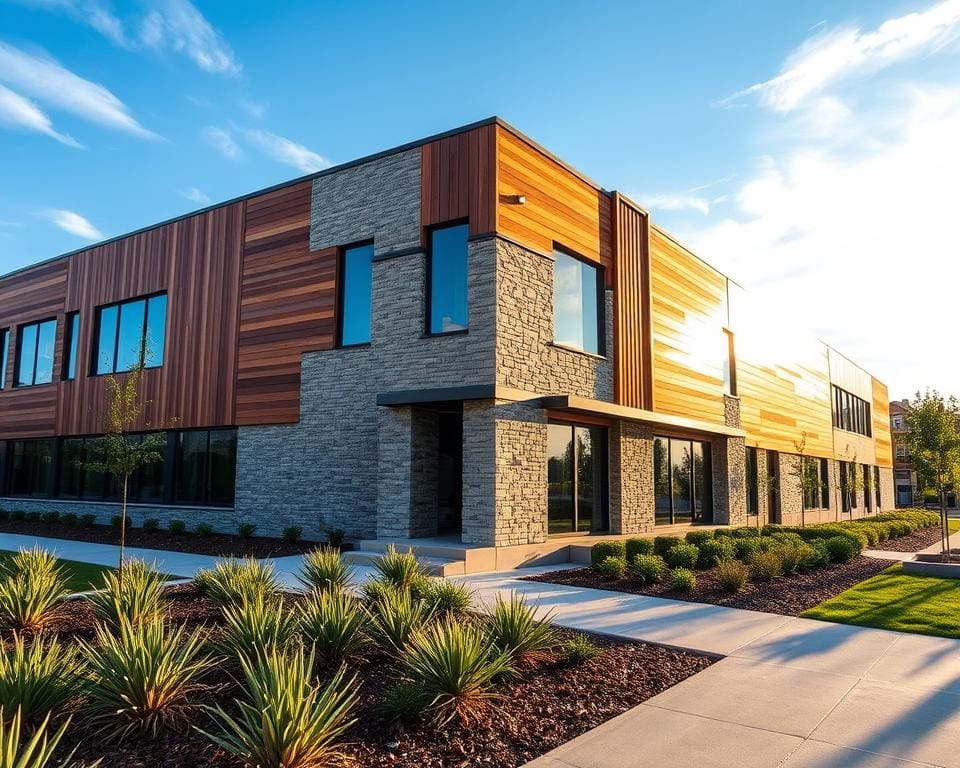
Exterior cladding is the visible, non‑structural skin fixed to a building envelope. It shields walls from weather, helps with thermal performance and sets the tone for cladding aesthetics. Common systems in the UK include timber cladding, brick slips, fibre cement, Alucobond aluminium composite panels, natural stone, terracotta rainscreen and HPL panels such as Trespa.
Beyond protection, cladding delivers clear exterior cladding benefits that improve building appearance. Colour, texture and pattern create a façade transformation that can revitalise tired terraces or give new apartment blocks a contemporary identity. The right material choice supports building visual enhancement while reflecting the client’s design intent.
Cladding also has practical performance to match its looks. Systems contribute to weatherproofing, insulation and acoustic improvement, and must be specified with regard to Building Regulations—Part B for fire safety and Part L for conservation of fuel and power—so UK cladding design balances aesthetics with safety and longevity.
This article will show how material, colour and detailing drive visual change, outline design considerations that preserve appearance over time, and explore stylistic trends, sustainability and the value uplift that well‑chosen cladding can deliver.
How does exterior cladding improve building appearance?
Exterior cladding transforms a building’s face by making deliberate choices about material, colour and detailing. Thoughtful selection brings cohesion between form and function. This short section explores how material choice, cladding colour options, façade texture and precise architectural detailing shape perception and character.
Visual transformation through material choice
Different cladding materials convey distinct aesthetic languages. Timber cladding UK offers warmth and visible grain that suits both traditional cottages and crisp contemporary façades. Natural stone reads as permanence and luxury. Terracotta provides depth and a rhythmic pattern that references historic urban streets.
Metal systems such as aluminium composite panels from Alucobond or Alpolic create sleek, modern surfaces in large formats. High‑pressure laminate from Trespa gives vibrant colours and durable faces. Brick slips replicate masonry bonds without full loadbearing walls. Fibre cement and Swisspearl panels deliver a versatile, cost effective option for many projects.
Scale and module matter. Large format panels yield a monolithic, minimalist look. Narrow horizontal timber battens produce elongated, contemporary lines. Brick slips allow traditional patterning at a lighter build-up. Rainscreen cladding systems from Kingspan give the installer a clean outer skin while meeting thermal and ventilation needs.
Compatibility with context guides choice. Conservation areas often favour stone or brick. Mixed‑use and commercial schemes may prefer terracotta or metal rainscreen to signal modernity and resilience.
Colour, texture and finish options
Cladding colour options change how a façade is perceived. Light tones enlarge and brighten. Dark tones add drama and depth. Metallic or pearlescent coatings pick up daylight and animate the elevation as the sun moves.
Surface treatment creates façade texture. Wood grain, sandblasted stone and pleated metal introduce shadow and tactility. These textures alter with weather and time of day, giving the building a dynamic presence.
Durable colour technologies protect the chosen palette. PVDF and polyester powder coatings keep aluminium panels vibrant. HPL uses UV‑stable pigments. Timber benefits from Durashell and weatherproof stains, though painted timber will need re‑coating at intervals.
Weathering can be a design tool. Materials such as untreated zinc or copper patinate naturally. Other engineered cladding is selected to resist staining and fading when a stable appearance is required.
Architectural detailing and visual lines
Precise architectural detailing refines a façade’s rhythm and proportion. Joints, reveals and shadow gaps create measured lines that read as quality. Concealed rail systems and careful rainscreen fixings allow uninterrupted planes where intended.
Alignment with windows and entrances matters. Continuous horizontal bands through spandrel panels can widen a building visually. Vertical fins or mullions accentuate height and lend formality.
High quality fixings and tight tolerances lift perception. Mitred edges on metal, consistent reveal widths and reputable hardware from suppliers such as Hilti and SFS all contribute to a refined finish. Integrated lighting and signage, detailed with the cladding, enhance night‑time character and support brand identity on commercial buildings.
Design considerations and practical benefits that enhance appearance
A successful façade starts with clear cladding design considerations that respond to scale, context and daily use. Good early decisions reduce costly changes later and help the building read as a single, confident composition.
Proportion, scale and visual balance
Match cladding module to building scale. Large panels suit high‑rise façades while finer modules fit domestic terraces. This preserves human scale and avoids visual discord.
Use repetition and symmetry to create cohesion. Apply asymmetry carefully to achieve a dynamic, contemporary effect without breaking harmony.
Decide vertical or horizontal emphasis by slat widths, joint spacing and panel aspect ratios. These choices shape the façade proportion and help a building sit within its neighbourhood.
In conservation areas, respect cornice lines and floor heights. Preserving these cues lets new cladding integrate with historic terraces and maintains streetscape rhythm.
Integration with windows, entrances and landscaping
Align cladding with openings so reveals, sills and shuttering read as precise details. Crisp junctions lift perceived quality and avoid awkward transitions that distract the eye.
Use material change, colour contrast or a simple canopy to make entrances legible. Thoughtful entry treatment improves street appeal and helps wayfinding.
Coordinate cladding with paving, planting and boundary treatments. Warm timber pairs well with soft planting, while stone cladding suits formal hedging for a coherent exterior composition.
Design technical junctions carefully at curtain wall systems, window flashings and thresholds. Working with manufacturers such as Kawneer, Reynaers and Schüco can help integrate systems and preserve aesthetic continuity.
Durability and long-term visual performance
Specify materials with an eye to maintenance and lifespan. Treated timber may last 20–30 years with upkeep; aluminium composite panels can exceed 25 years with proper coating.
Natural stone can endure for decades or centuries. Fibre cement often performs for 20–40 years. Choose substrates and finishes that support the intended service life.
Post‑Grenfell regulations influence material selection. Non‑combustible substrates and fire‑resistant cores protect safety and reputation while shaping visual choices.
Prefer breathable rainscreen systems to manage moisture and reduce staining in UK climates. Proper detailing limits biological growth and pollution marking, preserving long-term cladding performance.
Warranties, manufacturer support and skilled installers matter. Follow fixing and maintenance instructions to secure durable cladding and retain the façade’s original intent.
Stylistic trends, sustainability and value uplift through cladding
Current cladding trends UK favour warm, natural materials paired with minimalist metal accents. Timber and terracotta are appearing alongside engineered brick slips and stone veneers to create depth without heavy structure. Designers also layer materials—stone, brick slips and metal—to add rhythm, while vertical green façades and living walls bring biophilic texture to modern façades.
Colour palettes now lean to muted earth tones, deep charcoals and green‑blue shades, with bold feature panels used sparingly to draw the eye. Exposed rainscreen systems celebrate structural lines, and mixed‑material façades allow subtle contrast that suits both heritage refurbishments and new build schemes. These modern façade trends give architects flexibility to balance tradition and contemporary expression.
Sustainable cladding is more than a trend; it is a performance decision. Products such as Kingspan and ROCKWOOL external wall insulation, when correctly specified, improve thermal performance and support compliance with Part L of Building Regulations, reducing operational carbon. Choosing low‑embodied carbon options—FSC or PEFC‑certified timber, reclaimed stone, recyclable aluminium or modular panels—helps lower lifecycle impacts and simplifies future disassembly.
Green façades and photovoltaic integration are practical ways to combine aesthetics and function. Living walls boost biodiversity and microclimate but need irrigation and maintenance planning. Building‑integrated photovoltaics and PV‑cladding deliver energy generation while contributing to an energy efficient cladding strategy for the whole building.
High‑quality cladding brings measurable value uplift through improved kerb appeal, higher rents and stronger sale prices. Refurbished façades often deliver a premium by signalling quality and reducing running costs. For commercial projects, bespoke cladding supports brand identity and placemaking, helping developments stand out in regeneration schemes.
For best results, involve the architect, façade engineer and manufacturer early. Seek robust warranties, assess whole‑life cost rather than initial price, and ensure planning and regulatory alignment. These steps protect appearance and investment, and help projects capture both the aesthetic benefits of modern façade trends and the long‑term gains of sustainable cladding.