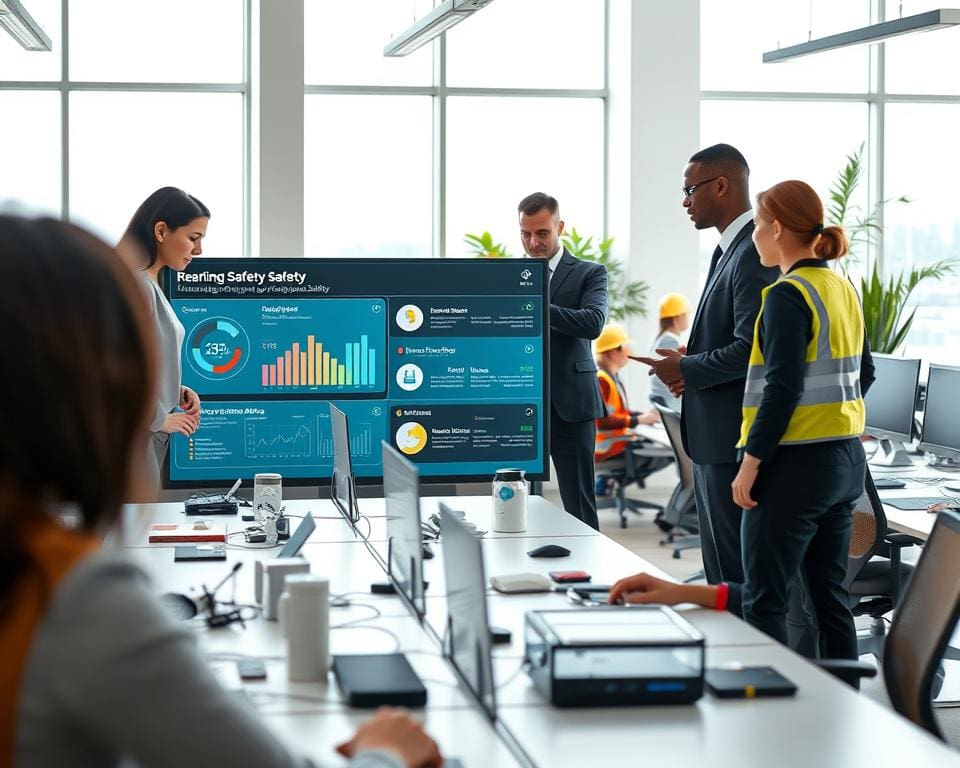
Technology is reshaping how UK employers protect people at work. Rising HSE scrutiny, insurer demands and wellbeing strategies have accelerated investment in workplace safety technology across construction, manufacturing and logistics.
This article reviews safety innovation and employee wellbeing technology, showing practical gains from wearables, automation, IoT sensors, and digital reporting tools. It draws on HSE guidance, industry bodies such as CITB and Make UK, and product evidence from vendors including Honeywell, Dräger, Microsoft and IBM.
Readers will find a pragmatic view of effectiveness, integration hurdles and cost trade-offs. The goal is to equip health and safety managers, operations directors and procurement teams with the facts to pilot or scale safety tech UK solutions that cut incidents and boost morale.
How does technology improve workplace safety?
Technology is changing how organisations in the UK think about safety. It moves practice from reacting after an incident to preventing harm before it happens. Digital safety adoption brings tools that let managers spot risks early and involve workers in safer ways.
Overview of technological impact on safety culture
Tools such as mobile reporting apps, wearable sensors and real‑time dashboards give teams clear, shared information. That visibility builds accountability across frontline staff and leaders. When workers see data on hazards and near misses, they tend to report issues more readily and take part in safety improvements.
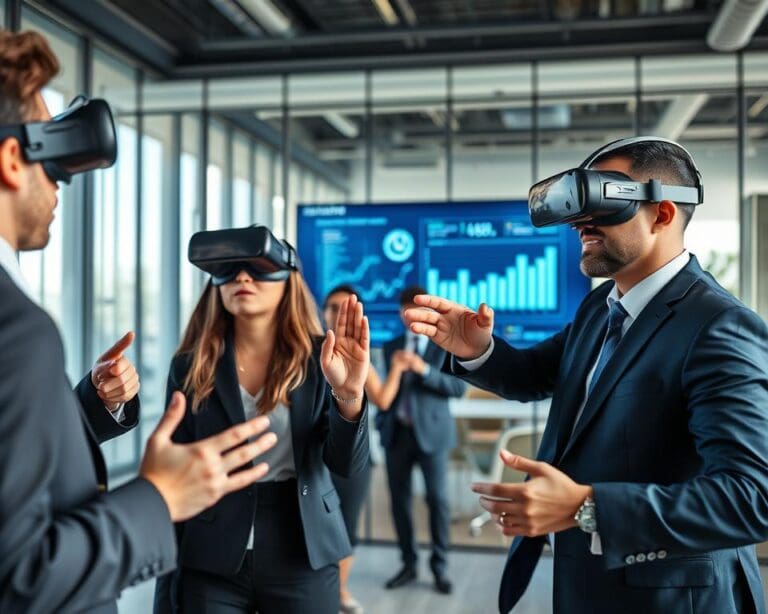
Interactive training with VR and AR makes learning practical and memorable. Greater engagement helps transform attitudes, turning safety into a collective habit rather than a set of rules. Organisations that plan digital safety adoption with consultation and transparent policies reduce fears about privacy and surveillance.
Statistics and evidence from UK industries
HSE statistics show a long‑term decline in workplace fatalities and major injuries. Risks remain high in sectors like construction, manufacturing and agriculture. Industry surveys from bodies such as CITB and Make UK point to rising investment in safety culture technology UK, especially among larger firms.
Insurers now recognise the value of remote monitoring and telemetry. Firms that adopt these measures often see lower premiums because claims fall in frequency and severity. Smaller companies are beginning to adopt cost‑effective tools such as mobile incident reporting and basic wearables.
Link between technology adoption and reduced incident rates
Data from case studies in construction and manufacturing link incident reduction technology to tangible drops in accidents. Reported improvements range from modest to substantial when employers use predictive maintenance, proximity sensors and environmental monitoring.
- Track metrics like LTIFR and near‑miss reports to measure return on investment.
- Monitor equipment downtime and first‑aid incidents to assess impact of sensors and alerts.
- Use training completion and engagement rates to gauge cultural change after digital safety adoption.
When platforms integrate reporting, IoT feeds and analytics, workplaces gain a clearer picture of risk. That clarity helps teams act faster and reduce harm, showing a direct connection between technology and safer outcomes.
Wearable safety devices and personal protective technology
Wearable safety devices are changing how teams manage risk on site. Small sensors woven into helmets, vests and footwear give real‑time data on impacts, posture and temperature. This creates new layers of protection for people working alone or in crowded, high‑risk environments.
Types of wearables: sensors, smart PPE and location trackers
Smart PPE UK offerings from Honeywell and Dräger embed gas detection and impact sensors into traditional kit. Physiological sensors track heart rate and fatigue to spot heat stress or cardiac warning signs early. Location trackers from Zebra Technologies and Caterpillar products supply live positioning, geofencing and fall alerts.
Bluetooth beacons and wearable tags support proximity detection to reduce vehicle collisions. Exoskeletons from Ottobock and Levitate ease repetitive strain in manufacturing. Battery life, IP ratings and comms integration shape which devices suit each role.
Benefits for lone workers and high-risk roles
Wearables improve lone worker protection by offering automatic fall detection and panic alerts that speed emergency response. Continuous monitoring shortens exposure to gas, noise or extreme temperatures so harm is limited and recovery is faster.
Data from devices helps firms meet duty of care obligations and demonstrate proactive safety measures to insurers and regulators. Faster response times reduce injury severity and strengthen site resilience.
Case studies from construction and manufacturing sectors
Construction wearables such as smart high‑visibility vests with proximity alarms have cut near‑misses by alerting plant operators and pedestrians. Tagging systems on site plant lower vehicle‑pedestrian collisions and improve traffic control.
In manufacturing, posture sensors and passive exoskeletons have reduced musculoskeletal complaints and absenteeism. Field teams in utilities and telecoms using SoloProtect and Blackline Safety style lone‑worker trackers report better check‑in compliance and shorter rescue times.
- Choose rugged devices with long battery life for outdoor sites.
- Ensure integration with site communications and incident systems.
- Set clear data privacy policies to protect worker information.
Automation and robotics reducing human exposure to hazards
Automation reshapes risky work by putting machines where people once stood. Robots and automated systems take on tasks that involve heavy lifting, high temperatures or confined spaces. This change boosts automation workplace safety and frees staff for higher‑value roles.
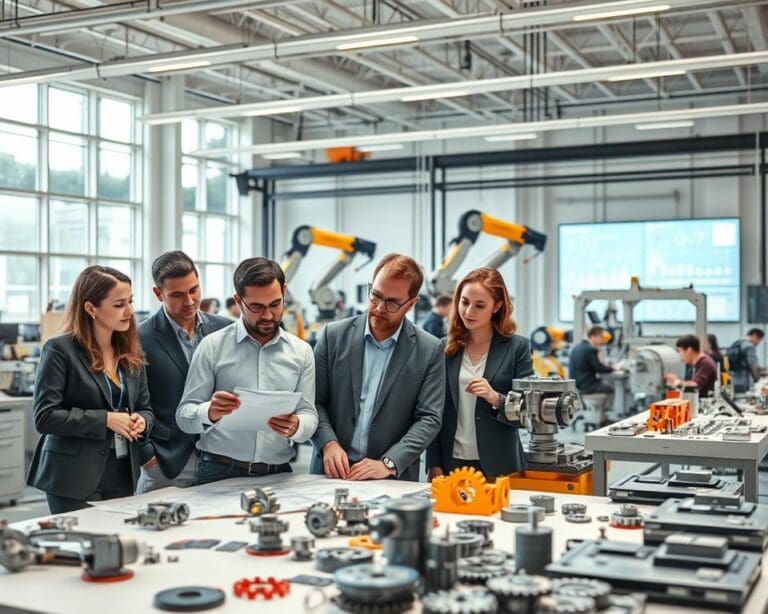
Examples on the factory floor include collaborative robots from Universal Robots and FANUC that work beside operators for machine tending, welding and palletising. Automated guided vehicles and autonomous mobile robots used by Ocado Technology and Amazon Robotics move stock across warehouses, cutting manual handling injuries. Robotic arms and mechanised demolition tools remove people from hazardous zones and illustrate practical robotics for hazardous tasks.
Robots reduce repetitive strain by taking over monotonous, forceful or awkward motions that cause musculoskeletal disorders. Precision and consistency in automated work lower the chance of errors that lead to incidents. When machines handle toxic atmospheres or extreme heat, worker exposure falls and long‑term health risks shrink.
Planning for cobots safety means combining technology with safe design. Use safety‑rated monitored stops, light curtains, fencing and speed‑limited modes. Ensure machinery meets BS EN ISO 12100 and holds appropriate CE or UKCA marking. Carry out thorough risk assessments before machines enter production lines.
Workforce transition automation must match human needs. Successful programmes retrain staff for supervision, maintenance and programming roles through partnerships with CITB, local colleges and vendors. Phased deployment and redeployment strategies reduce disruption and balance economic and ethical concerns.
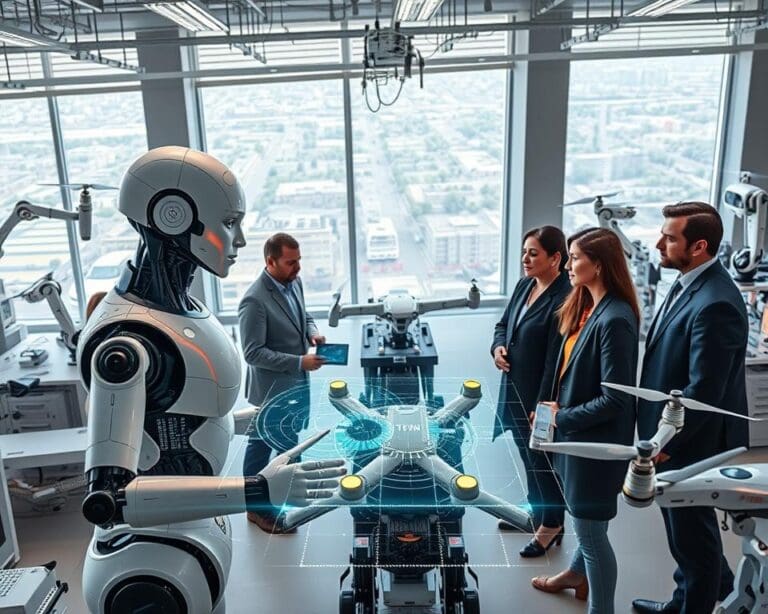
Engage trade unions and safety representatives when designing systems so that collaborative robots UK projects gain trust and deliver durable safety gains. With careful integration, cobots safety and broader robotics for hazardous tasks become tools for lasting workplace improvement and stronger protection for people.
Connected sites: IoT, sensors and real‑time monitoring
Smart sites bring together devices, people and data to make workplaces safer and more responsive. Using connected sites IoT UK deployments, organisations can spot hazards early and support fast decisions on site. This short guide outlines how sensors, asset monitoring and clear safety dashboards create a practical safety layer for teams.
Environmental sensors in the workplace track air quality, noise and vibration round the clock. Fixed units from vendors such as Siemens, Honeywell and ABB measure PM2.5, VOCs, CO and NO2 so employers can manage respiratory risks and meet COSHH duties.
Portable monitors help supervisors check hotspots during high‑risk tasks. Noise dosimeters and vibration sensors reveal exposures that lead to hearing loss or hand‑arm vibration syndrome so employers can adjust rotas or fit engineering controls.
Asset monitoring keeps equipment healthy and prevents sudden failures. Techniques such as vibration analysis, thermal imaging and oil testing detect wear early. Tools from SKF and Fluke are common in UK plants for condition monitoring and predictive maintenance.
Linking crane and lift telemetry to higher‑level platforms reduces unexpected breakdowns that might cause accidents. Integrating PLC and SCADA feeds gives safety teams a cross‑checked picture of anomalies before they escalate.
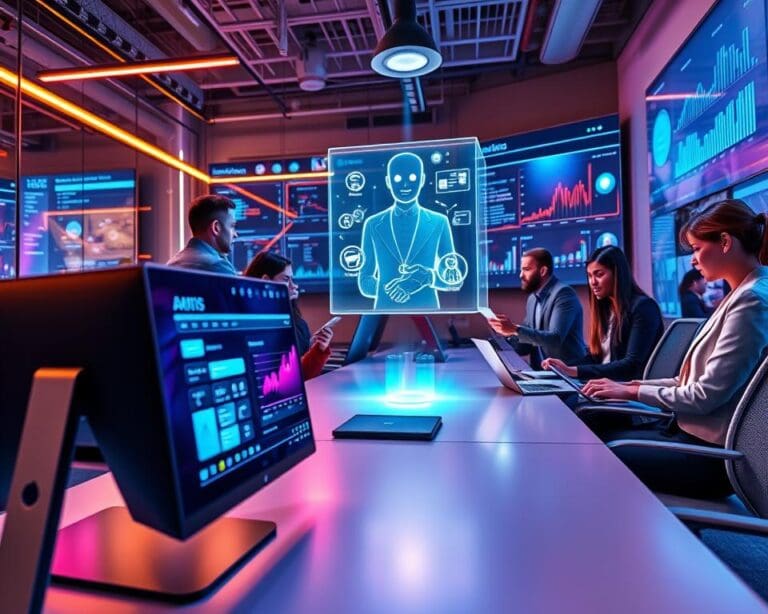
Real‑time safety monitoring comes alive through centralised dashboards that merge sensor feeds, wearable alerts and maintenance data. Systems like Microsoft Power BI or vendor dashboards present priority items for supervisors and emergency responders.
Automated alerts by SMS, email or push notification speed up escalation when thresholds are breached. Design choices such as role‑based access and false‑alarm tuning keep messages relevant and usable on mobile devices.
Good implementations balance responsiveness with privacy and governance. GDPR‑compatible retention, clear thresholds and audit trails make sure safety dashboards deliver reliable insight without creating data burdens for teams.
Software solutions: incident reporting, training and compliance
Digital systems are reshaping how organisations capture incidents, train staff and prove compliance. Mobile forms, timed workflows and searchable records turn anecdote into evidence. That shift helps teams act faster and learn more from every near miss.
Digital incident reporting platforms and root-cause analysis
Modern tools such as iAuditor by SafetyCulture and Intelex let workers submit reports with photos, GPS and timestamps. These platforms speed up investigation and improve accuracy when compared with paper logs.
Structured modules for digital root-cause analysis, from 5 Whys to TapRooT-style workflows, keep investigations consistent and track corrective actions to closure. Better records reassure insurers and make audits simpler.
E‑learning, VR and AR for immersive safety training
Online courses provide consistent induction and refresher training across sites. Blended approaches pair e‑learning with practical checks to confirm competence.
Immersive safety e-learning VR AR experiences from providers such as Strivr and Microsoft HoloLens let learners rehearse high‑risk scenarios without exposure. Evidence shows VR boosts hazard recognition and retention, which helps teams respond under pressure.
A mixed delivery of modules, simulations and on‑site practice creates measurable skill gains and higher engagement.
Compliance management and audit trails for UK regulations
Centralised compliance management HSE software stores risk assessments, COSHH records and inspection schedules in one place. Automated reminders reduce missed tasks and support continuous compliance.
Audit trails record edits, approvals and document history to show due diligence during HSE inspections. Access controls and retention policies help align records with GDPR and company rules.
For organisations wanting to connect these capabilities with sensor data, real‑time monitoring and cybersecurity guidance, further reading explains how modern tech shapes safety practice: modern technology and industrial safety.
Data analytics and AI for predictive safety and continuous improvement
Machine learning workplace safety tools pull together incident reports, sensor feeds, shift patterns and maintenance logs to forecast high‑risk conditions. These predictive models guide targeted interventions so teams can act before faults become accidents. Practical use of predictive safety AI also includes predictive maintenance safety routines from platforms such as IBM Maximo and GE Predix, which spot subtle wear and reduce failure‑related incidents and downtime.
Behavioural analytics add another layer by analysing near‑miss trends and signs of worker fatigue to suggest shift changes or retraining. In the UK, safety analytics UK practices enable firms to prioritise actions where predicted risk and potential harm are greatest, delivering measurable reductions in lost‑time incidents and insurance claims. Demonstrating these outcomes helps when engaging insurers and regulators.
Effective deployment depends on quality data and transparent models. Organisations must invest in data engineering to harmonise inputs from wearables, IoT sensors and HR systems, while ensuring explainability so staff trust recommendations. Privacy and GDPR compliance are essential: anonymise personal data where possible and be clear about retention policies to maintain consent and confidence.
Start small with focused pilots—such as predictive maintenance on a critical asset—then scale based on clear ROI and continuous safety improvement metrics. Choose solutions that integrate with existing systems, offer vendor support for training, and align with BS, ISO and HSE guidance to create a human‑centred, sustainable safety programme. Learn more about how technology supports safer operation here.