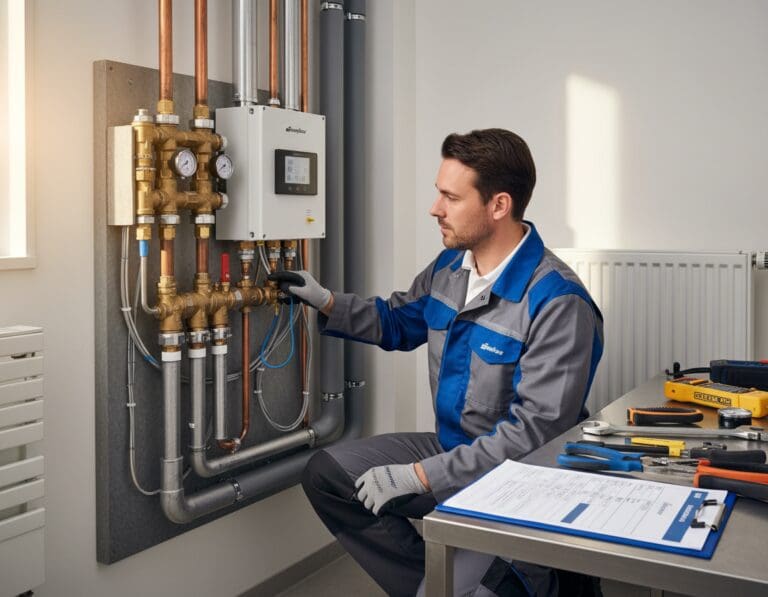
This article explains common Danfoss HIU problems and solutions for homeowners, leaseholders and building managers across the United Kingdom. A heat interface unit, or HIU, transfers heat from a communal or district heating network into individual flats or homes, providing central heating and domestic hot water while keeping primary and secondary water circuits separate.
Danfoss is a leading manufacturer of control valves, pumps and complete HIU modules used widely in UK communal heating systems. The piece outlines Danfoss HIU service and maintenance, improving HIU efficiency and system performance, and Danfoss HIU repairs and fault diagnosis in clear, practical terms.
We will cover the typical fault groups you are likely to meet: no heating or hot water, fault codes and electronic errors, circulation and pressure problems, heat exchanger blockages, leaking valves or pipework, pump failures and sub‑optimal performance that raises energy use and tenant complaints.
Swift diagnosis and safe action matter. Small faults can escalate into building‑wide losses of service or costly replacements. Immediate user checks and correct isolation procedures limit damage until a qualified engineer attends.
The article sets out user‑level checks, routine servicing and cleaning, component inspection priorities for heat exchangers, strainers and valves, and performance optimisation steps. It also guides readers on Danfoss HIU repairs and fault diagnosis and where to find professional Danfoss HIU engineers in London, including specialist providers such as R&B London HIU Engineers, for onsite support.
Readers should be aware this guidance complements — but does not replace — manufacturer manuals, statutory safety rules or building regulations. The target audience includes homeowners, site engineers, building managers and contracted maintenance companies responsible for communal heating systems and Danfoss HIU service and maintenance.
Danfoss HIU problems: typical faults, causes and immediate checks
Recognising faults early helps prevent larger failures and speeds up Danfoss HIU repairs and fault diagnosis. This section outlines typical symptom patterns, common fault codes and simple initial user checks to complete before calling an engineer. The advice supports building managers and occupants preparing for HIU servicing for heating and hot water systems.
Recognising no heating or hot water symptoms
Lack of hot water while radiators remain warm can point to a blocked heat exchanger or valve fault. The reverse — no heating but hot water OK — often means a circulation pump failure or a stuck thermostatic valve. Low flow and poor hot water temperature suggest scale, debris in strainers or low primary flow from the central plant.
Intermittent heat, noisy operation and radiators colder at the top than the bottom are useful indicators. Cold at the top and warm at the bottom often means airlocked radiators or partial blockage. Fluctuating hot water temperature commonly links to thermostatic control or sensor issues.
Common fault codes and what they indicate
Modern Danfoss HIUs include electronic controllers that display fault codes. Typical categories include sensor faults (NTC open or short), pump fault or no flow, communication errors with the building BMS, over-temperature or safety trips, and valve position errors.
Interpretation depends on the specific Danfoss controller model. Consult the unit manual or Danfoss technical guide for exact code-to-fault mapping. Some codes demand immediate isolation and engineer attendance, for example over-temperature faults.
Initial user checks before calling an engineer
Follow a short checklist to isolate communal problems from individual faults. First, confirm whether neighbouring flats are affected. Next, read the HIU display for visible errors and check the fused spur and electrical supply.
- Ensure room thermostats and TRVs are set correctly.
- Inspect tap strainers and flow restrictors for blockages.
- Look for visible leaks on exposed pipework.
- Attempt a controlled reset only if building policy permits and the manual allows.
Carry out safety-related quick checks with care. Feel pipe temperatures cautiously. Do not remove covers or tamper with sealed components. Only qualified engineers should work on primary-side components or gas appliances; check credentials such as Gas Safe where appropriate.
When to isolate the HIU and report to building management
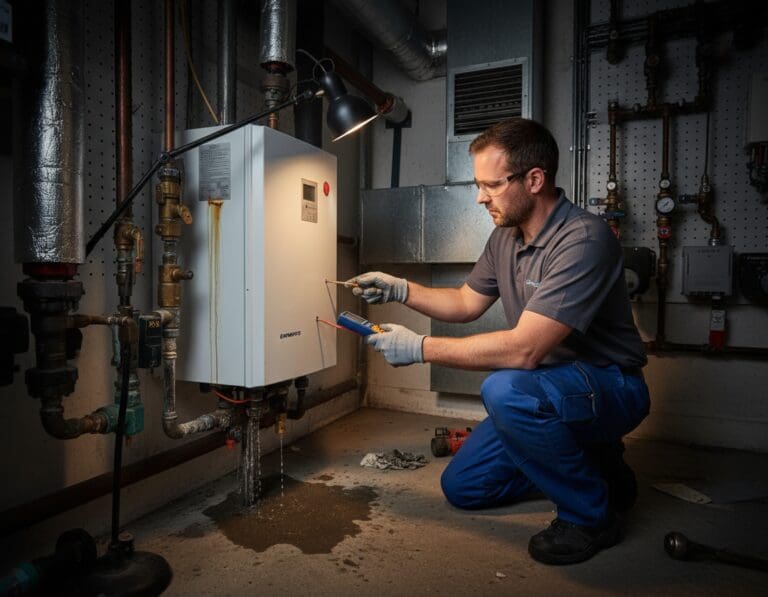
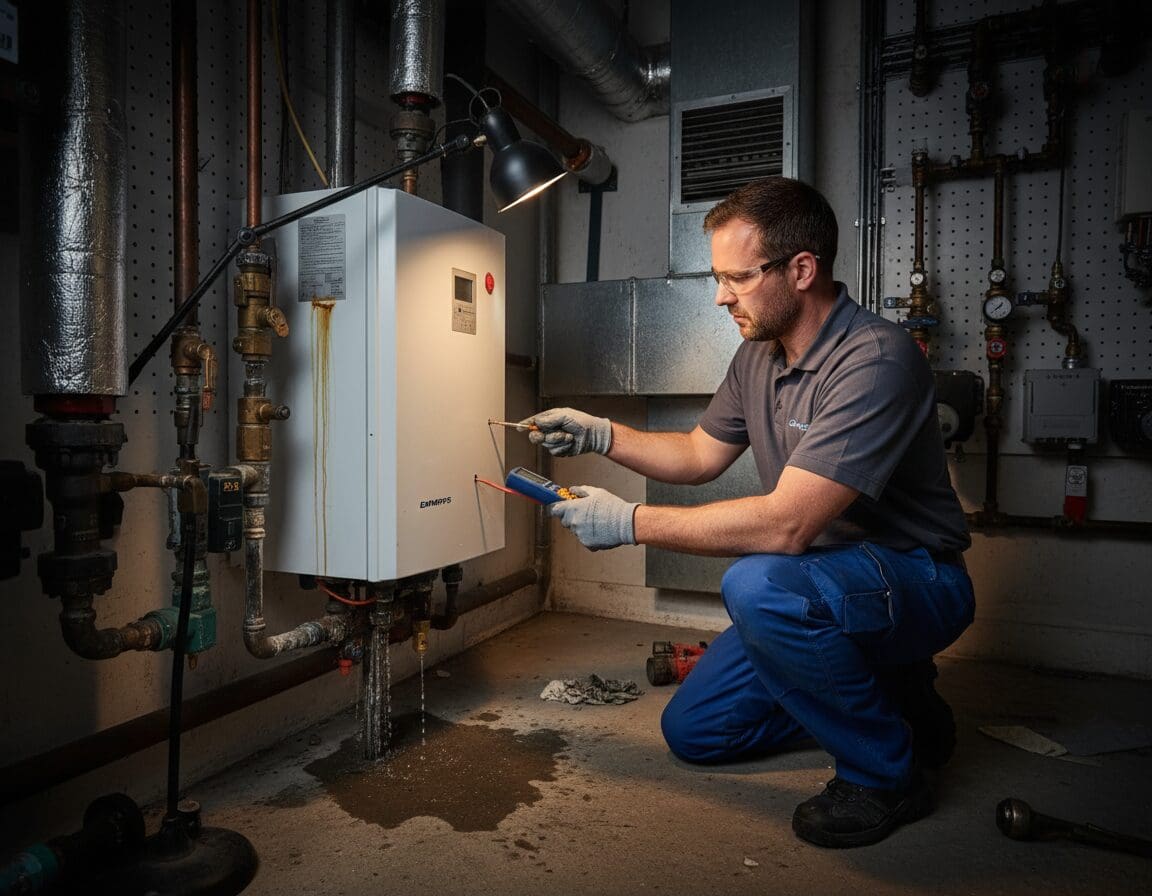
Isolate the HIU when there are visible leaks, water escaping under pressure, persistent over-temperature, strong burning smells or fault codes that require isolation. If authorised, close the HIU isolation valves on primary and secondary supplies. If not authorised, switch off the electrical supply and report straight away.
Communal systems need co-ordination with the central plant operator to avoid imbalance. When reporting, provide fault codes, clear symptom descriptions, photos if possible, tenancy details and access instructions. Log the issue via the building’s maintenance portal and request a response timeframe. These steps make Danfoss HIU repairs and fault diagnosis smoother and help plan HIU servicing for heating and hot water systems.
HIU servicing for heating and hot water systems — maintenance, inspection and cleaning
Regular care keeps heat interface units working at their best. Danfoss HIU service and maintenance protects performance, extends component life and reduces tenant complaints. A short, planned visit before winter can prevent many common issues and lower long-term costs.
Recommended service intervals for Danfoss HIUs
Most communal installations benefit from an annual service as best practice. High-use flats or problem-prone systems may need checks every six months. Always follow Danfoss guidance and any warranty conditions, as some terms require specific intervals.
Regular servicing preserves pumps, actuators and heat exchangers. Seasonal checks before peak demand reduce emergency call-outs and improve occupant comfort.
Component inspection and cleaning: heat exchanger, strainers and valves
Inspect the plate or coil heat exchanger for scaling, fouling or corrosion. Measure temperature differentials and flow to spot reduced heat transfer. Chemical cleaning or descaling should be carried out only by qualified engineers and with reference to Danfoss HIU component inspection and cleaning guidance and local water authority rules.
- Strainers and filters: clean strainers on primary and secondary circuits; remove debris that can block valves and pumps.
- Valves and actuators: check motorised valves, thermostatic mixing valves and non-return valves for correct operation and signs of leakage. Replace valve seats, seals or actuators where worn.
- Circulation pumps: inspect bearings, run current checks, confirm correct rotation and replace if needed. Verify pump speed settings and system balancing.
- Sensors and controls: test temperature sensors, controllers and BMS links for correct readings and cable integrity.
Follow safe procedures: isolate primary flow, depressurise circuits where necessary and use inhibitors as recommended. Proper safety keeps staff and residents safe during work.
Performance optimisation and efficiency tips during servicing
Measure delta-T across the heat exchanger and adjust flow to hit target values. Small changes to flow and balance can yield big savings. HIU performance optimisation and efficiency relies on correct hydraulic balancing and the fitting of thermostatic radiator valves where needed.
Consider water treatment and inhibitors for closed secondary circuits to limit corrosion and fouling. Check expansion vessel condition and pressure settings to avoid frequent top-ups and pump cavitation.
Upgrade controls and consider variable-speed pumps or motorised valve improvements to lower electricity use. Review control schedules and enable weather compensation where supported.
HIU maintenance for communal heating systems: responsibilities and documentation
Roles must be clear. Freeholders or managing agents usually maintain primary plant and communal infrastructure. Leaseholders or tenants may be responsible for the HIU inside a flat, depending on lease terms. Always check the lease and service contracts.
Keep detailed records: service logs, inspection checklists, fault reports and test certificates. Log parts replaced, including any HIU heat exchanger and valve replacement, and record chemical treatments and warranty claims.
Planned maintenance supports compliance with building regulations, reduces emergencies and improves occupant satisfaction. Proactive asset management protects value and performance across the estate.
Danfoss HIU repairs and fault diagnosis plus professional support options
Common repair tasks for Danfoss HIU repairs and fault diagnosis include replacing circulation pumps, servicing or replacing plate heat exchangers, renewing thermostatic mixing valves and clearing strainers. Engineers also replace sensors and control boards, mend leaking pipework, unions and seals, and carry out HIU heat exchanger and valve replacement when corrosion or blockages are severe. These interventions target improving HIU efficiency and system performance while restoring reliable heating and hot water.
Professional diagnostic workflows start with reviewing fault codes and event logs, then measuring temperatures and pressures on primary and secondary circuits. Engineers perform flow checks, pump current measurements and test sensors and actuators, alongside visual inspection for corrosion or leaks. This systematic approach underpins accurate Danfoss HIU repairs and fault diagnosis and reduces repeat call-outs.
Call a qualified engineer for persistent fault codes, over-temperature trips, suspected primary-side faults, pump failures or blocked heat exchangers. A typical service visit by professional Danfoss HIU engineers in London follows staged procedures: pre-visit fault triage, on-site safety checks and isolation, diagnostic testing, component replacement or cleaning, commissioning and handover with test results and paperwork. Look for manufacturer-trained technicians, appropriate public liability insurance and adherence to health and safety procedures.
Replacement parts such as Danfoss heat exchangers, pumps, valves and controllers are available through official distributors; using OEM or approved parts preserves warranties. For readers in the capital, specialist firms offering Danfoss HIU service by R&B London HIU Engineers deliver routine servicing, emergency repairs, HIU heat exchanger and valve replacement and planned preventative maintenance. Log symptoms and fault codes, keep service records and confirm whether repair work sits with your building management. Timely maintenance by accredited engineers is the most effective way of improving HIU efficiency and system performance and extending asset life.