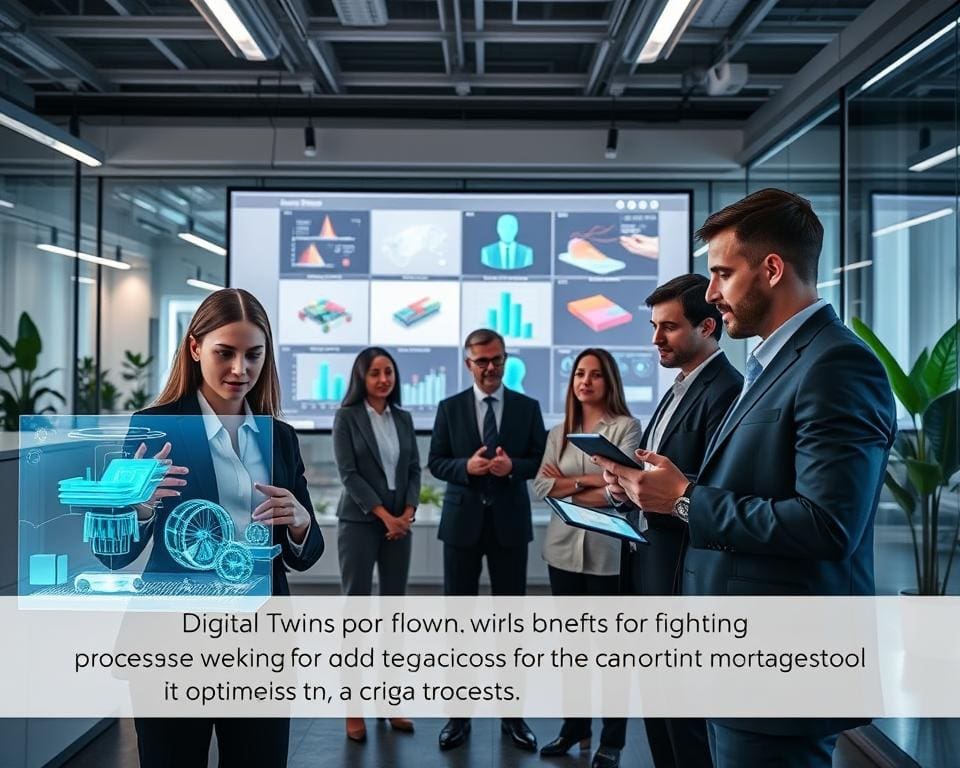
A digital twin is a dynamic virtual replica of a physical asset, system, process or person. It uses real‑time data, simulation and machine learning to mirror and predict behaviour, turning raw sensors and telemetry into actionable insight.
Leading vendors such as Siemens, General Electric and Dassault Systèmes offer platforms that combine IoT connectivity, analytics and model‑based simulation. These solutions show how digital twin technology can close the loop between design, operation and maintenance.
Across sectors — from manufacturing and energy to the built environment and healthcare — digital twin applications drive measurable gains. Companies use them for predictive maintenance, faster product iteration and better asset utilisation, which together deliver clear virtual replica advantages.
Adoption is accelerating thanks to low‑cost sensors, edge computing, 5G and cloud‑native simulation tools. In the UK, initiatives like the Digital Twin Hub and Innovate UK support Industry 4.0 UK ambitions, helping organisations reap economic and societal benefits while navigating integration, data governance and cyber security challenges.
How digital twins accelerate product design and innovation
Digital twin design rewrites the rules of product development. Teams move from guesswork to data-driven decisions. This shift fuels rapid product innovation and encourages bold experimentation at lower cost.
Virtual prototyping to reduce time-to-market
High-fidelity virtual prototyping lets engineers validate form, fit and function before any metal is cut. Platforms from Dassault Systèmes and Siemens NX let designers test multiple variants in hours rather than weeks.
Simulating thermal, structural and aerodynamic loads cuts the need for repeat physical tests. Automotive teams iterate on chassis and drivetrain concepts faster, which helps reduce time-to-market and trims R&D spend.
Iterative testing and rapid optimisation
Sensor data from test rigs and pilot builds feeds back into the model in near real time. That loop improves fidelity and unlocks rapid optimisation based on evidence, not intuition.
Techniques such as multi‑objective optimisation and generative design explore trade-offs across weight, cost and durability. The result is lighter, stronger products produced through a cycle of continuous improvement.
Cross-disciplinary collaboration and knowledge sharing
Digital twins act as a single source of truth for design engineers, software teams, manufacturing planners and service crews. Cloud platforms support collaborative engineering and let distributed teams work on the same model concurrently.
Version control and contextual data capture preserve institutional knowledge and speed onboarding. When product know‑how is shared, organisations scale innovation more reliably and sustain rapid product innovation.
Why is preventive healthcare essential?
The shift from treating illness to preventing it changes lives and eases pressure on the NHS. Preventive healthcare supports healthier populations, fewer emergency admissions and better use of clinical resources. The NHS prevention strategy frames this shift as vital to long-term sustainability.
Personalised simulation for early disease detection uses detailed models to spot risk before symptoms appear. Healthcare digital twins combine genomic data, wearable sensors and clinical records to create an ongoing view of an individual’s physiology. Cardiac and oncology simulations can reveal subtle changes in heart function or tumour growth, giving clinicians time to act.
Predictive modelling to plan interventions helps clinicians and services make informed choices. Predictive healthcare tools forecast disease trajectories and likely responses to treatment, so care can be tailored through lifestyle advice, medication or adjusted screening. Population-level models help health planners test scenarios for vaccination, capacity and targeted public-health measures.
Reducing long-term healthcare costs and improving outcomes is a central aim. Early, targeted prevention lowers the chance of expensive late-stage treatment and reduces chronic disease prevalence. Personalised medicine driven by digital twins often boosts quality-adjusted life years and patient satisfaction while easing demand on primary and secondary care.
Ethical and data-protection considerations in healthcare digital twins must sit at the heart of deployment. Consent, data minimisation and secure storage are legal and moral requirements under the Data Protection Act and GDPR. Transparent governance, bias checks and clinical explainability preserve equity and trust when simulation outputs inform care.
Practical adoption hinges on solving interoperability and skills gaps. Shared standards, NHS partnerships with universities and industry pilots can bridge fragmented records and demonstrate clinical value. When technology is paired with sound governance, preventive healthcare becomes a practical route to better population health.
Operational efficiency and cost savings across industries
Organisations across manufacturing, transport and energy are turning to digital twins to unlock more efficient operations and lower costs. By pairing virtual models with live data, leaders can make faster decisions that protect assets and preserve margins. The promise is clear: better visibility leads to measurable gains in operational efficiency and agility.
Real-time monitoring and predictive maintenance
Digital twins ingest sensor feeds to flag anomalies and assess remaining useful life. Platforms from Siemens, GE and Hitachi show how condition-aware models enable predictive maintenance that cuts unplanned downtime. For heavy industries and public transport, this approach extends asset life and reduces emergency repair costs.
Resource optimisation and energy savings
Building and production twins combine BIM or process models with operational data to tune HVAC, lighting and machine cycles. This yields both comfort and lower energy use. In factories, process simulation reduces scrap and improves yield. Grid operators use asset twins to balance loads and integrate renewables, driving resource optimisation and an energy savings digital twin mindset.
Supply-chain resilience and reduced downtime
Supply-chain twins map suppliers, inventory and logistics to anticipate bottlenecks and reroute flows. Scenario testing helps procurement weigh cost against lead time and prepare contingency plans. Aerospace and automotive firms use this visibility to sustain production through component shortages and demand swings.
- Measured outcomes include reduced maintenance spend and lower energy bills.
- Fewer stoppages and improved OEE boost competitiveness.
- Cross-functional teams, clear KPIs and investment in data infrastructure make deployments stick.
Sustainability, resilience and strategic decision-making
Digital twins are proving essential to sustainability digital twin strategies by offering precise measurement of energy use, material flows and emissions across assets and supply chains. Organisations can run decarbonisation scenarios to compare investments in energy efficiency, electrification and renewable integration. This data-led approach supports net-zero planning with clear metrics that inform capital allocation and operational change.
Urban and infrastructure twins help local authorities model transport flows, energy demand and land use so that policy choices reduce emissions and improve liveability. In the UK, initiatives such as the National Digital Twin programme and the Digital Twin Hub encourage standardised data sharing, which strengthens resilience planning at city and regional scales. Planners can test interventions such as low-emission zones, active travel schemes and heat-network rollouts before committing to costly works.
Infrastructure twins also enable climate adaptation by simulating extreme weather impacts and testing adaptation measures like flood defences and improved drainage. Utilities and transport operators use these models to maintain service continuity and speed recovery after incidents. The ability to quantify risks makes strategic decision-making more robust and helps prioritise actions by cost–benefit and social impact.
When combined with healthcare and industrial efficiency gains, digital twins deliver a broader societal benefit: lower lifecycle carbon, reduced waste and better public services. For executives and policymakers, aggregated twin insights underpin long-term planning, M&A due diligence and contingency exercises. The result is a pragmatic, data-driven path to climate adaptation, resilience planning and net-zero planning that aligns commercial goals with public value.