Modern garden design blends clean lines and practical planting to create outdoor living spaces that suit life in the UK. It pairs contemporary garden ideas with climate-smart choices so gardens look great and work well through changeable weather.
Key principles are simplicity, functionality and year-round interest. Emphasise low-maintenance beds, clear geometry and a flow that links house and garden. Sustainability matters too: water efficiency, native planting and durable materials reduce upkeep and support biodiversity.
There are real benefits to these garden design ideas. You gain versatile spaces for relaxing and entertaining, cut maintenance time, boost property value and invite wildlife with pollinator-friendly planting. Thoughtful layouts also make the most of small urban plots and varied soil types across the UK.
Start by assessing the site: note sunlight, aspect, soil and drainage, then set a budget. Create a mood board using Pinterest, Houzz or Garden Design magazines and consider hiring a landscape designer. Consult Royal Horticultural Society guidance and exhibitors from the Chelsea Flower Show for plant-led inspiration.
For further reading, use RHS plant directories, the National Trust’s garden resources and the Garden Designers Association for trusted UK garden trends and practical contractor advice. These sources help turn contemporary ideas into a durable, well-loved garden.
garden design ideas for contemporary outdoor living
Turn a garden into an easy extension of the home with simple, practical moves. Focus on flexible layouts that swap between lively parties and quiet family time. Small changes can create a strong indoor-outdoor flow while keeping the space useful through the year.
Creating versatile entertaining zones
Divide areas with level changes, planting, screens or low walls to form dining, lounge and play spaces. Plan modular furniture so a single layout adapts for children’s games or evening drinks. In narrow urban gardens use folding tables, stackable seating and planters that double as benches to save space.
Arrange seating around a focal point such as a firepit, water feature or view. Keep clear circulation paths so guests move easily between zones and the house. Consider lightweight screens for temporary privacy at gatherings.
Integrating comfortable, weatherproof furniture
Choose durable materials that suit the UK climate: aluminium frames, teak, high-grade synthetic wicker and rattan alternatives. Look at John Lewis & Partners, Arighi Bianchi and Garden Trading for robust ranges of outdoor furniture UK buyers trust.
Pick quick-dry foam and breathable Sunbrella or Perennials fabrics for cushions. Use fitted covers and storage benches to protect soft furnishings during long wet spells. Keep a waterproof shed or crate for off-season storage.
Outdoor kitchens, firepits and dining areas
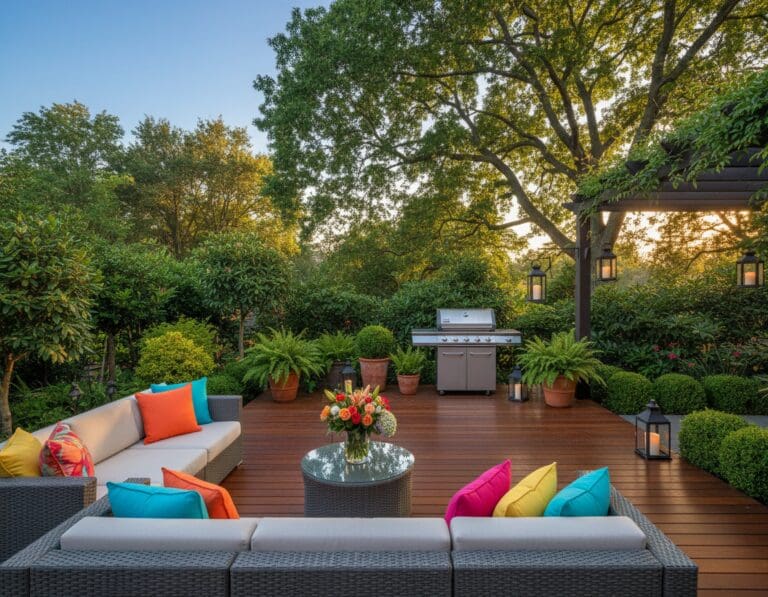
Fit weatherproof cabinets, granite or stainless-steel worktops and gas or electric burners to create practical garden kitchen ideas. Brands such as AGA, Weber and Boretti offer reliable barbecue and outdoor cooking options for UK gardens.
Decide between fixed or portable firepits, minding safety distances from plants and structures. Where smoke causes concern choose LPG or gel-fuelled options. For dining, pick a sturdy table with parasol or pergola shelter and layer ambient lighting for nights outdoors.
Blurring indoor-outdoor transitions with sliding doors and patios
Install bi-fold or sliding aluminium doors to open rooms directly onto the garden and boost indoor-outdoor flow. Specify good U-values and weather seals to suit British weather and reduce heat loss.
Create level thresholds or use matching flooring to carry interior tones outside. For patios, choose porcelain slabs, sawn sandstone or timber decking with good drainage and anti-slip finishes for wet conditions. Check planning rules and building regulations before adding fixed kitchens, pergolas or large doors and consult a chartered architect if unsure.
Low-maintenance planting and eco-friendly landscaping
Designing a garden that feels relaxed and alive need not demand hours of upkeep. Focus on resilient planting, thoughtful soil care and water-wise systems to create an attractive, low-effort landscape that supports wildlife and reduces resource use.
Choosing drought-tolerant and native plants for the UK climate
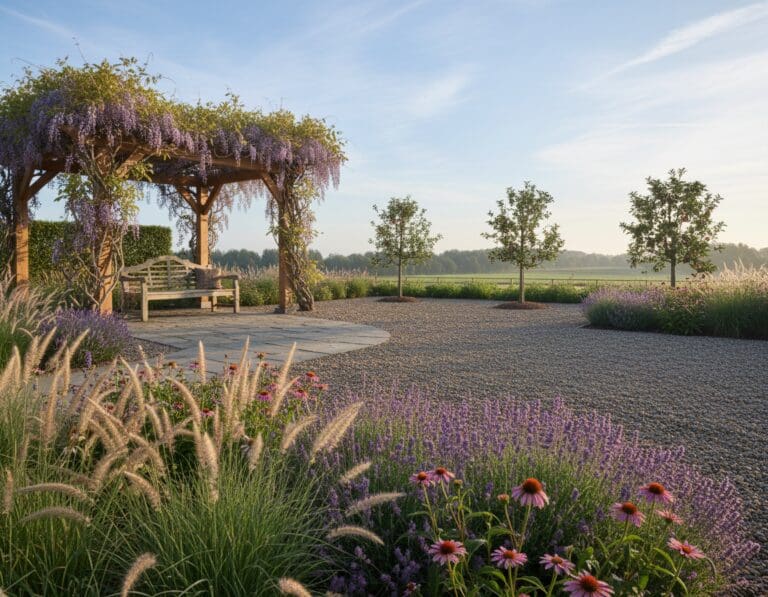
Pick hardy perennials and shrubs that flourish in British conditions. Lavender (Lavandula), Hebe, Rosa rugosa and Griselinia littoralis cope well with coastal wind and poor soils. Salvia nemorosa, hardy geraniums and ornamental grasses such as Miscanthus and Stipa give year-round structure.
Include native trees like rowan, silver birch and hawthorn to boost biodiversity. Using native plants UK reduces the need for fertiliser and extra watering. Follow guidance from the RHS and Plantlife when selecting certified native mixes.
Using wildflower meadows and pollinator-friendly borders
Create pockets of meadow with certified native seed mixes to attract bees, hoverflies and butterflies. Prepare a shallow seedbed, sow appropriate mixes for soil type and mow just once a year to encourage perennials.
Choose a range of bloom times. Echinacea, borage, foxglove and willowherb extend nectar supplies through the seasons. Offer habitat with log piles, insect hotels and native hedgerows to support a thriving pollinator-friendly garden.
Smart mulching, soil improvement and water-wise irrigation
Apply organic mulch, such as bark or leaf mould, at 5–8cm depth to conserve moisture, suppress weeds and build soil structure. Keep mulch away from plant crowns to avoid rot.
Test soils and add well-rotted compost to improve texture and fertility. Adjust pH where needed for acid- or lime-loving species. For watering, install drip lines, soaker hoses and smart timers to cut waste and water at dawn or dusk.
Composting, rainwater harvesting and sustainable materials
Home composting returns nutrients and reduces household waste. Choose a council-approved bin or a rotary tumbler to speed breakdown and keep the garden tidy.
Harvest roof water with water butts and consider raingardens and permeable paving to slow runoff. Rainwater harvesting cuts mains use and benefits newly planted beds during dry spells.
Use reclaimed stone, FSC timber and low-carbon paving to lower embodied carbon. Source materials locally when possible and favour durable finishes that reduce long-term maintenance, supporting a truly sustainable landscaping approach.
Stylistic elements and hardscape trends for modern gardens
Contemporary gardens in the UK draw together clean geometry, measured planting and durable materials to create calm, usable outdoor rooms. This short guide looks at design choices that lift small and large spaces, with notes on proportion, material selection and sensory detail.
Minimalist layouts and clean geometric lines
Minimalist garden design favours simple axes, repeated shapes and restrained planting to highlight structure. Use a clear grid, linear paths and a single strong focal plant to avoid clutter in small yards. Architectural plants such as Phormium, Buxus and pleached trees keep form while requiring little fuss.
Contemporary paving, decking and raised planters
Choose paving that works with UK winters. Porcelain slabs, sawn sandstone and frost-resistant concrete each offer different textures and slip ratings. Contemporary paving UK options can suit tight budgets or premium schemes.
For decks, consider pressure-treated timber, thermally modified wood or composite boards from brands such as Millboard and Trex. Composite decking cuts maintenance and resists rot.
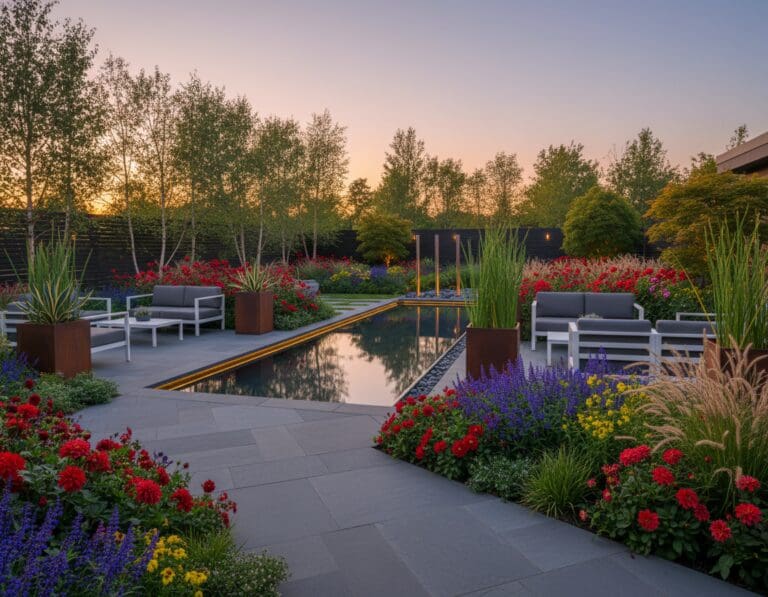
Raised planters improve soil and create clear zones. Use timber sleepers for warmth, precast concrete for solidity or a corten steel garden planter for contrast.
Accent materials: corten steel, natural stone and composite decking
Corten steel gives a warm, rusted tone that repeats through screens, edging and planters. Be mindful of staining on light paving and include appropriate underlay or drip trays. Natural British stones like Yorkstone and Welsh slate anchor schemes with local character.
Composite decking delivers a long lifespan and wide colour choices. Expect low maintenance and consistent finish in busy family gardens.
Incorporating water features, mirrors and reflective surfaces
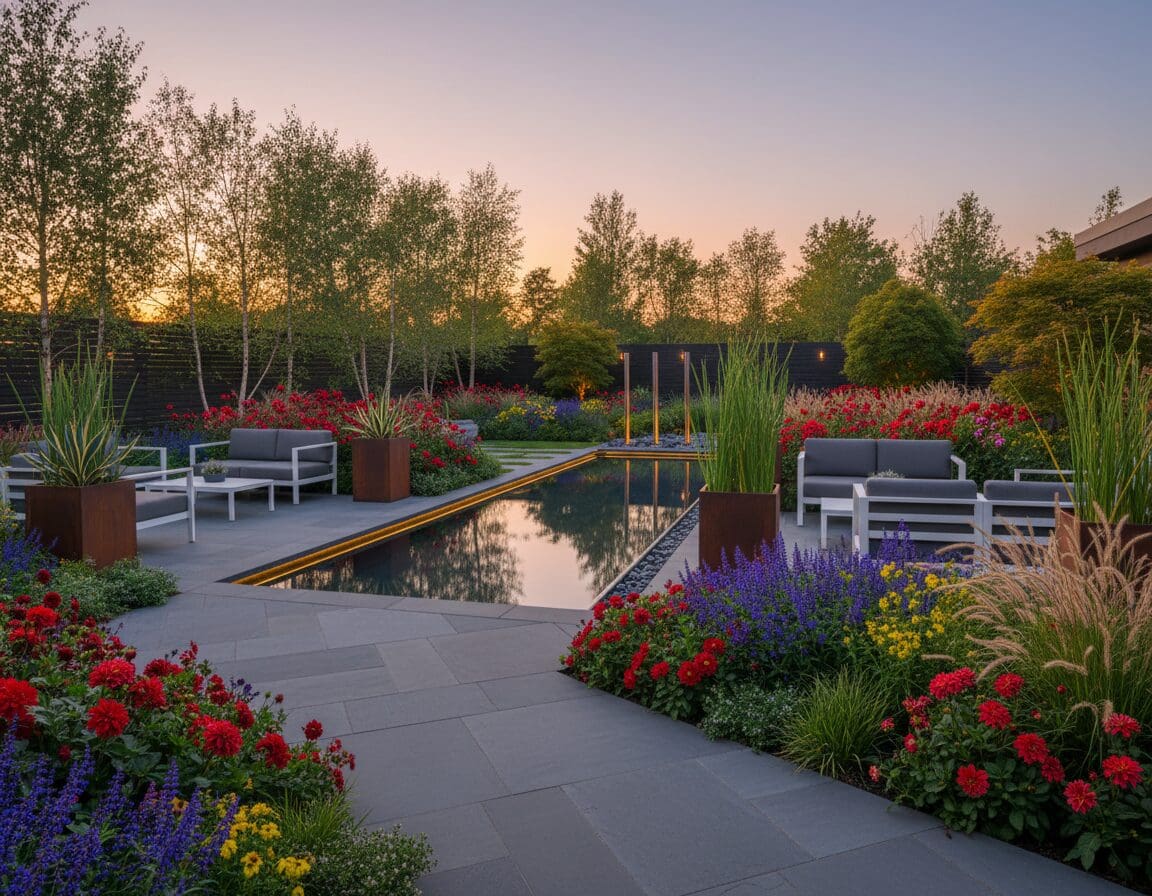
Water features for gardens range from minimalist reflecting pools to compact bubbling fountains. Small, subtle movement adds a calming soundtrack while helping mask traffic noise. Select pumps and liners rated for outdoor use and follow winter care to protect equipment.
Mirrors and polished surfaces can increase perceived space and amplify light. Place weatherproof framed mirrors to reflect key planting, avoiding positions that confuse wildlife or trap birds.
Practical matters matter. Plan drainage, frost-proof details and slip-resistant finishes. For large installations consult a landscape contractor and refer to British Standards for paving and drainage.
Lighting, privacy and seasonal interest to enhance atmosphere
Layered garden lighting ideas lift a space from functional to magical. Use ambient path and step lights for safe movement, task lighting over dining and prep areas, and accent uplighting to highlight trees or a feature wall. Choose low-voltage LED fittings with warm 2700–3000K tones and IP44 or higher ratings for reliability. Consider solar bollards for little-used routes and smart systems such as Philips Hue or Lutron integrations to set scenes and add timers or motion sensors for security.
Thoughtful privacy screens garden solutions make outdoor rooms feel intimate without closing them off. Living screens like yew or laurel, pleached trees and trellis with clematis provide green separation, while timber slatted panels or corten steel offer contemporary, durable screening. Staggered planting — tall backers, medium shrubs and low front plants — creates depth and softens edges, and noise-buffering hedges or earth berms help reduce road sound where space allows.
Seasonal planting UK should be planned as a sequence of interest. Start with spring bulbs such as tulips and crocus, follow with late-spring shrubs like Philadelphus, then summer perennials and grasses. Add autumn berries from Ilex or cotoneaster and winter structure from Betula bark and evergreen topiary. Use architectural seedheads and contrasting foliage for texture, and refresh patios with seasonal container displays.
Finishing touches complete the garden ambience lighting and overall feel. Introduce weatherproof textiles, British-made ceramics and a few sculptural pieces as focal points. Keep a simple maintenance calendar — pruning, deadheading, bulb planting and mulch renewal — or enlist an RHS-trained gardener for seasonal care. Balance aesthetics, function and ecology so the garden remains a year-round sanctuary tailored to UK life.