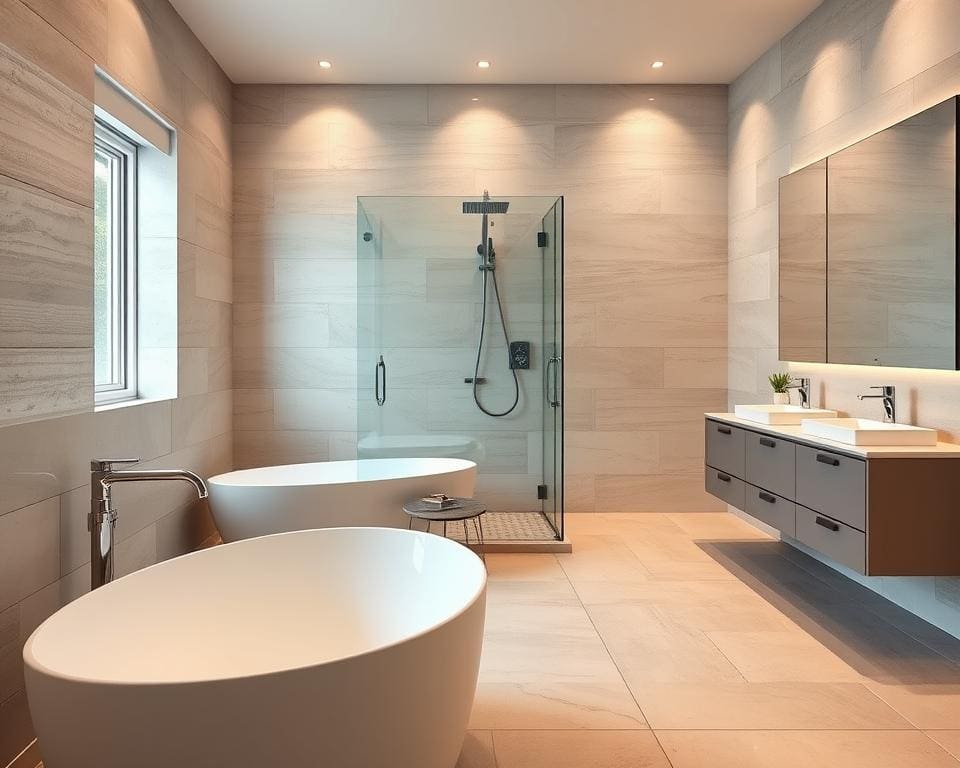
Large format bathroom tiles are reshaping bathroom design across the UK. Homeowners, interior designers and renovators increasingly ask: Why are large format tiles popular in bathrooms? This introduction explains what qualifies as a large tile and why they fit modern bathroom trends.
Typically, large format tiles exceed 60cm x 60cm (24″ x 24″). Common sizes include 60x120cm, 80x80cm and 120x60cm, while porcelain slabs can be even bigger. Materials most often come in porcelain, ceramic, natural stone-look porcelain and sintered stone, each offering different looks and performance.
Their rise in popularity is easy to see. Large tiles for bathrooms create a striking visual impact and produce fewer grout lines for a seamless, minimalist finish. They suit modern bathroom tiles trends and work well with wet-room and ensuite layouts that are now common in new builds and renovations across the UK.
Practical benefits also matter: these tiles make small spaces feel larger, simplify cleaning and pair with British suppliers such as Porcelanosa, Fired Earth and Villeroy & Boch. The rest of this article explores visual benefits (Section 2), practical and installation considerations (Section 3) and styling and buying guidance tailored to UK bathrooms (Section 4).
Why are large format tiles popular in bathrooms?
Large format tiles transform a small bathroom into a calm, hotel-style retreat. They offer a clean backdrop that supports neutral palettes, soft greys and warm beiges popular in modern bathroom aesthetics UK.
Visual impact and modern aesthetics
Big slabs create an immediate sense of space and luxury. Monolithic or bookmatched panels show dramatic veining without the upkeep of natural stone.
Retailers such as Topps Tiles and Tile Mountain showcase collections that help homeowners achieve statement wet rooms and walkthrough showers. Using large tiles visual impact in focal areas makes a room feel cohesive and high end.
Fewer grout lines for a seamless appearance
Large tiles cut down on grout area, which reduces visual clutter and makes compact bathrooms seem larger. The effect of seamless bathroom tiles is particularly effective in wet rooms and open-plan ensuites.
Choosing matching grout amplifies the smooth look. For a different mood, contrasting grout emphasises geometry. Consider how grout lines large format tiles alter sightlines before choosing a pattern.
Design versatility and finishes
Large-format options come in matt, polished and textured surfaces, giving options for floors, shower walls and vanity surrounds. Tile finishes porcelain replicate marble, slate, concrete and timber with consistent slab sizes.
Brands such as Neolith and Spanish manufacturers offer sintered and porcelain collections suited to both residential and high-spec commercial projects. This range of finishes supports confident design choices across modern bathroom aesthetics UK.
Practical benefits: maintenance, durability and installation considerations
Large format tiles bring clear practical gains for bathrooms. They cut down visible joints, offer robust surfaces and, when installed correctly, create water-resistant zones that suit contemporary UK wet-rooms. The following points explain cleaning, longevity and the care needed for installation.
Cleaning and hygiene advantages
Fewer grout lines mean less surface area for mould and grime to gather. That simplifies routine care and keeps baths and showers looking fresh with less effort.
Non-porous porcelain large-format tiles resist staining and water absorption. This reduces the need for intensive sealing that natural stone may demand.
Basic large format tiles maintenance is straightforward: sweep, mop with a pH-neutral cleaner and attend to grout periodically. Anti-bacterial or anti-slip finishes add safety and hygiene benefits for family bathrooms.
Durability and water resistance
Porcelain and sintered large tiles deliver impressive tile durability porcelain buyers expect. They resist scratches and handle heavy footfall with ease.
Low water absorption and chemical resistance make these surfaces ideal for floors, walls and wet zones. When bonded to a suitable substrate with a waterproof membrane, they help form fully water-resistant wet-room systems.
The long life of these materials means the initial investment often pays off through reduced repairs and fewer replacements.
Installation challenges and professional fitting
Large panels require careful handling because of weight and breakage risk. Levelling systems, wide-bed adhesives and back-buttering are common techniques to avoid hollow spots.
Substrates must be flat, level and structurally sound. Even small irregularities can cause flexing, cracking or debonding over time.
Narrow grout joints call for precision spacers and levelling tools. For many homeowners, the best route is to choose professional tile fitting UK specialists who understand these nuances and can offer warranties from established suppliers such as British Ceramic Tile or Topps Tiles.
- Cost is higher for very large slabs and for skilled labour.
- Careful preparation and the right fixings reduce long-term risk.
- Good installation maximises the benefits of cleaning large tiles and long-term performance.
Styling tips and practical guidance for UK bathrooms
When styling large format tiles, begin by choosing sizes that suit the room. For many UK bathrooms, 60x120cm or 120x60cm work well in medium to large spaces, while 60x60cm gives a large-tile effect in tighter rooms. Think about tile layout ideas: horizontal runs visually widen a room, vertical stacking adds height, and bookmatching or continuous veining creates a premium, seamless look on a focal wall.
Plan cuts and movement lines around bath, shower, WC and vanity so visual continuity is preserved. Use full tiles on the main sightlines and place cuts where they are least visible. For a spa-like finish, use matching grout and minimal trim; for a graphic statement, choose contrasting grout to emphasise geometry. Matching grout tips help maintain that cohesive look without drawing attention to joints.
Wet room large tiles perform especially well in wet-room schemes, as uninterrupted floors and walls aid waterproofing. Make sure a competent tiler installs liquid-applied or sheet membranes to BS 5385 standards. Large tiles are also compatible with underfloor heating if flexible adhesives and manufacturer guidance are followed, and gradual commissioning reduces thermal stress and movement.
Buy from reputable UK suppliers and check technical datasheets for PEI ratings, slip resistance and water absorption. Look for sustainability credentials from brands such as RAK Ceramics and Porcelanosa, and order a 10%–15% overage for cuts and future repairs. Finally, visit showrooms, request samples under your bathroom lighting, and collaborate with an experienced tiler or designer to bring UK bathroom design tips to life while preserving the minimalist impact of large-format tiles.