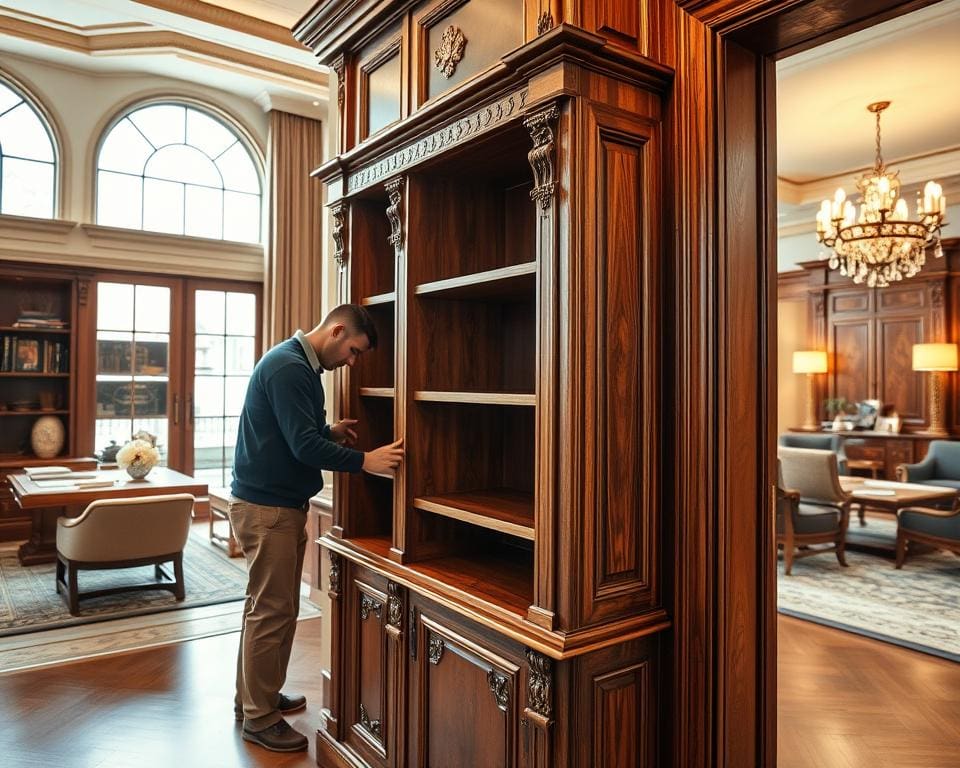
Custom joinery, often described as bespoke joinery or artisan joinery, is the craft of making purpose-built woodwork to fit a particular home. In luxury interiors UK it covers fitted kitchens, bookcases, panelling, wardrobes, doors and staircases that are designed for a client’s space and lifestyle.
The appeal of luxury joinery lies in uniqueness and superior workmanship. Bespoke furniture and high-end cabinetry are made to measure, resolving awkward architectural details and ensuring a perfect fit. That precision delivers durability, improved function and detailing that mass-produced alternatives cannot match.
In the UK market, demand for custom joinery comes from both historic properties and contemporary developments. Georgian, Victorian and Edwardian houses require sympathetic restoration, while new-build commissions in London and the Home Counties call for tailored solutions that respect planning and conservation rules.
Beyond practicalities, custom joinery adds emotional value. The warmth of real wood, quiet-closing mechanisms and refined finishes create a tactile sense of luxury. These qualities shape atmosphere and convey permanence in a way that off-the-shelf fittings rarely achieve.
Although upfront costs for bespoke joinery are higher than ready-made options, the economic case is clear. Well-executed luxury joinery can protect and increase property value, appeal to discerning buyers and reduce long-term replacement needs when paired with premium materials and techniques.
Industry practice and guidance support these conclusions. Architects, the Royal Institute of British Architects (RIBA) and trade bodies such as the Worshipful Company of Joiners & Ceilers all acknowledge the role of specialist joinery in conservation and high-end projects.
Why is custom joinery valued in luxury homes?
The appeal of custom joinery in high-end homes rests on precision, collaboration and lasting beauty. In a luxury context this means more than bespoke size; it involves designers, architects and skilled makers working from detailed drawings and on-site templates to create pieces that sit perfectly within a space.
Defining custom joinery in a luxury context
Custom joinery covers hand- or machine-crafted woodwork produced to a unique specification for one project. Typical elements include fitted kitchens, built-in wardrobes, panelling, staircases and joinery details such as skirtings and architraves. The custom cabinetry definition in this setting emphasises technical drawings, mock-ups and high standards of measurement before manufacture.
In premium schemes the brief expands to include collaboration with interior designers and architects, the use of premium timbers and veneers, and finishes that coordinate with lighting and stonework. Conservation best practice, such as guidance from RIBA, often informs work in historic homes to ensure sympathetic repairs and replacements.
How bespoke craftsmanship differs from mass-produced fittings
Bespoke craftsmanship means items made to exact tolerances and the client’s aesthetic. Skilled joiners and cabinetmakers produce refined joints like dovetail and mortice-and-tenon that deliver longevity and superior fit. Made-to-measure joinery favours solid construction, quarter-sawn boards and carefully selected veneers.
Mass-produced fittings rely on standard sizes, MDF or particleboard substrates and limited finish choices. Those products favour economies of scale over on-site adjustment and iterative client sign-off. Custom work allows for prototypes, sample finishes and close quality control at every stage.
Immediate aesthetic and long-term value benefits for homeowners
Luxury fitted furniture can transform a room at once, creating seamless sightlines and considered proportions. Bespoke millwork like panelling and built-in shelves adds depth and ties architectural details together for a coherent interior.
Functionally, tailored solutions maximise storage and serve specialist needs, such as wine racks, art displays or archive shelving. High-quality joinery wins on durability; surfaces can be re-finished and worn elements repaired rather than replaced.
Estate agents and valuers in the UK frequently note bespoke fittings as a premium feature that improves buyer appeal. For homeowners, the combination of immediate visual impact and long-term resilience makes custom joinery an investment in both lifestyle and resale value.
Craftsmanship and materials that elevate luxury interiors
Craftsmanship in high-end homes blends time-honoured skill with precise modern methods. Designers favour a hybrid approach where traditional joinery techniques meet CNC precision, producing work that reads as effortless yet engineered for life.
Traditional and modern joinery techniques admired in high-end homes
Mortice-and-tenon and dovetail joints remain prized for strength and honesty of craft. Tongue-and-groove panelling and marquetry add texture and narrative to interiors.
Contemporary projects use CNC machining, vacuum-press veneering and engineered components to ensure repeatable accuracy. Cabinetmaking techniques such as precision cutting and bedding hardware from Blum or Hettich lift performance.
Many commissions bring both worlds together. CNC-cut parts are hand-assembled and finished, giving stability without losing the tactile marks of human skill.
Premium timber choices and sustainable material options
Oak, walnut and cherry are frequent choices for statement pieces. Quarter-sawn English oak offers grain stability and visual depth that few substitutes match.
Specifiers now prioritise traceability. FSC-certified timbers, reclaimed wood and responsibly produced bamboo provide character while meeting client expectations for sustainable wood sourcing.
Engineered veneers and stable-core panels allow the look of solid timber with reduced movement. High-quality laminates, lacquered MDF and metal or stone accents are often combined with premium timber to achieve contemporary durability.
Finishes, detailing and the importance of hand-finished work
Finishes range from oil and French polish to painted eggshell and high-gloss lacquer. Each finish produces different tactile warmth and ageing qualities.
Hand-finished joinery—hand-sanding, hand-applied oils and final rubbing-in—creates depth that machine processes rarely replicate. Tight joints, mitred corners and concealed fixings signal meticulous detailing.
Well-chosen luxury finishes extend lifespan and allow repair rather than replacement. For heritage projects, traditional finishes can be refreshed by craftsmen, preserving patina and value over time.
Functionality, bespoke design and space optimisation
The way a room works matters as much as the way it looks. Bespoke joinery turns awkward corners and sloping ceilings into purposeful areas. Thoughtful planning lifts everyday use and raises luxury home usability.
Tailoring storage solutions to the architecture and lifestyle
Site-specific pieces fit bay windows, stairwells and alcoves to make the most of floorplans. This approach supports space optimisation without compromising character.
Lifestyle-led designs include walk-in wardrobes with zoned sections, dedicated wine rooms and library shelving for collectors. Tailored elements such as bespoke larders and pantry systems suit culinary habits and free up kitchen workflows.
Organisation systems bring order. Pull-out mechanisms, adjustable shelves and bespoke drawer dividers keep items accessible. Valet rails and hidden compartments add convenience to daily routines.
Integrated technology and concealed practical features
Technology sits discreetly inside joinery to preserve a refined interior. Charging stations, LED under-shelf lighting and motorised lifts blend with timber panelling. These integrations improve both form and function.
Concealed practicality includes pop-up sockets, cable management and vented cabinets for AV equipment. Access panels and service routes are planned so maintenance and safety requirements are met without visible clutter.
Working with specialist hardware from companies such as Blum and Hafele ensures smooth movement and long-term reliability. Smart-home connectivity can be added so lighting and mechanisms respond to daily habits.
How custom joinery improves flow, usability and resale appeal
Continuous panelling and aligned cabinetry create clear sightlines and guide circulation. That coherence improves spatial flow and makes rooms feel larger.
Ergonomic heights, purpose-built workspaces and decluttering storage boost daily efficiency. These fitted furniture benefits are noticeable from morning routines to entertaining.
Buyers in the UK luxury market value joinery that looks integral to the home. Well-documented pieces with provenance and maintenance details often speed up sales and support stronger offers.
Investment, heritage and personalised luxury
Choosing custom joinery is a considered joinery investment. The upfront cost is higher than off-the-shelf alternatives, but quality timber, precise joinery and hand-finished details offer sustained visual and functional appeal. When amortised over decades, bespoke interior investment often works out better on a cost-per-year basis than frequent, cheaper replacements.
Heritage joinery plays a vital role in conservation and listed building work. Skilled joiners can reproduce period profiles and mouldings to meet Historic England guidance, and like-for-like materials and reversible interventions protect historic fabric. Such sensitivity not only preserves authenticity but can enhance a property’s market desirability and long-term value bespoke work provides.
Personalised luxury is where emotion and craft meet. Commissioning a reputable British cabinetmaker or independent workshop creates provenance that appeals to connoisseurs and future buyers. Bespoke features — a fitted dressing room with hidden drawers or a hand-turned library ladder — become hallmarks that carry legacy through generations and lift perceived value.
For homeowners, take practical steps: prepare an exacting brief with lifestyle requirements, engage an interior designer or specialist joiner early, and specify sustainable materials such as FSC-certified timber. Secure warranties, document craftsmanship and gather appraisals to support valuation. These measures help protect the bespoke interior investment and ensure the long-term value bespoke joinery can deliver.