Smart heating efficiency rests on a simple idea: use sensors, automated controls, connectivity and algorithms to heat spaces only when and how they need it. In the UK this matters more than ever as energy prices rise and government net zero targets push homeowners and landlords to seek energy-efficient heating solutions.
By combining smart thermostats UK, smart radiator valves and learning software, intelligent heating systems cut unnecessary runtime and reduce overheating. Industry bodies such as the Energy Saving Trust and consumer group Which? report typical savings in the region of 10–30% when smart controls are properly installed and configured.
These gains translate into lower bills and smaller carbon footprints, but outcomes vary. System design, home fabric — insulation and draughtproofing — occupant behaviour and the quality of installation all influence results.
This article first explains what makes smart heating systems more efficient, then reviews the enabling technologies and connectivity, and finishes with practical benefits, costs and buying considerations for British homes and rental properties.
What makes smart heating systems more efficient?
Smart heating brings together software and hardware to cut waste and raise comfort. Modern systems learn how a household behaves, adapt to changing weather and run only when needed. That approach lowers bills and reduces carbon footprints while keeping rooms cosy.
Adaptive schedules and learning thermostats
Thermostats from Nest, Hive and Tado use adaptive heating schedules to pick up routines and preferred temperatures. The learning thermostat benefits include reduced manual programming, automatic setbacks and pre-warm cycles that arrive at comfort exactly when required.
Users can set holiday modes, temporary overrides and remote controls via apps to prevent heating an empty home. Small, continuous temperature adjustments outperform a constant high setting for both comfort and efficiency.
Zoning and room-by-room control
Heating zoning divides a property into independently controlled areas with smart radiator valves and zone actuators. Room-by-room control stops wasted heat in unused spaces and matches warmth to activity patterns in living rooms, bedrooms and conservatories.
In UK homes, separate living and sleeping schedules work well with wet central heating or heat pumps when hydraulic balancing is correct and TRVs are properly placed. Boilers and heat pumps must modulate to meet zone demand for best results.
Integration with weather and occupancy data
Linking systems to weather forecasts and external sensors lets boilers and heat pumps reduce output on milder days and prepare ahead of cold snaps. That reduces recovery runs and keeps systems efficient.
Occupancy-based heating uses motion sensors, geofencing and schedule-derived presence to adjust warmth dynamically. Houses with variable presence, such as home-workers or shift patterns, gain the greatest proportional savings from responsive control.
Optimised start/stop algorithms
Optimised start stop heating algorithms calculate when to begin so rooms reach target temperatures at the right time rather than running constantly. These optimised start functions factor in thermal inertia and outdoor conditions.
Smart switching and modulation cut frequent on/off cycling, improving efficiency and extending the life of condensing boilers and heat pumps. Reduced peak loads help maintain condensing performance and protect compressors.
For practical tips on pairing smart controls with insulation, renewable sources and regular maintenance, see this guide from a trusted source: how to keep your home warm and.
Smart heating technologies and connectivity for energy saving
Smart heating brings together devices and networks to cut waste and boost comfort. Choose systems that match your boiler type and property size. Good connectivity and clear controls let homeowners use schedules, zones and real-time data to lower bills and carbon emissions.
Smart thermostats and programmable controllers
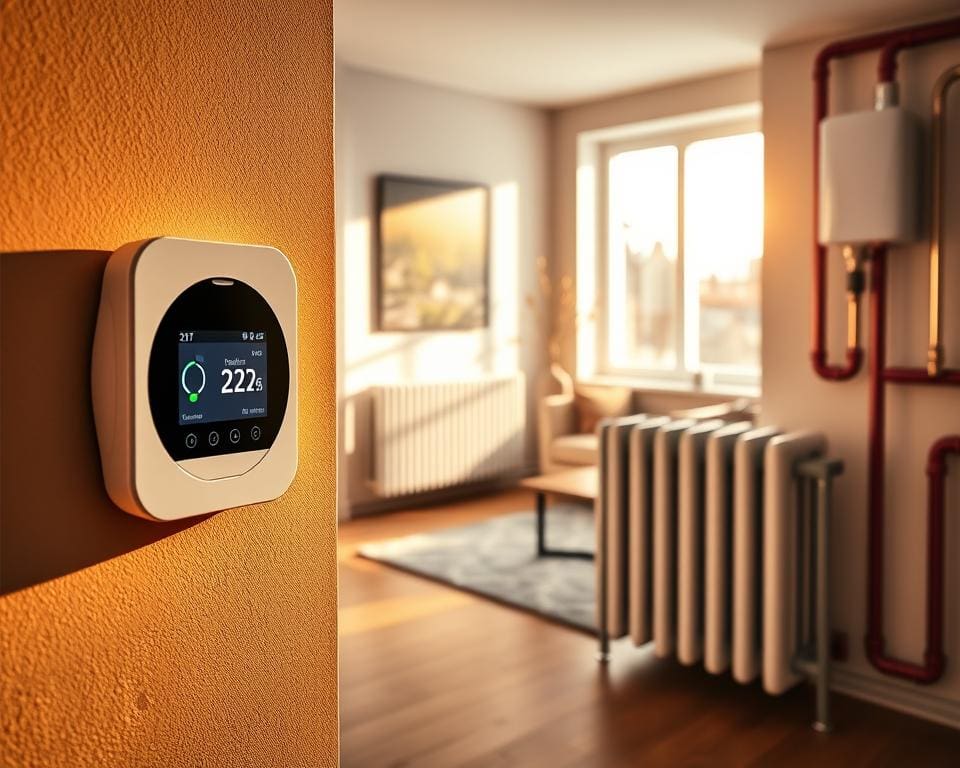
Smart thermostats act as the central control and the main user interface. In the UK look for OpenTherm or eBUS compatibility for boiler modulation, support for combi and system boilers, and heat pump compatibility. Models from Google Nest, Hive, Tado and Honeywell Home each bring strengths: learning schedules, geofencing, multi-zone capability and energy reporting.
Programmable controllers and smart hubs link heating schedules with wider automation. They let you tie heating to occupancy, lighting and scenes. Some installations need a qualified engineer to preserve boiler warranties and ensure wiring is correct.
Smart radiator valves and zone actuators
Thermostatic radiator valves let you control temperature room by room. Smart radiator valves, such as Danfoss Ally and Tado TRV, speak wirelessly to the central controller to create zones without major pipework changes. They make heating more precise and reduce wasted warmth.
Zone actuators and motorised valves manage water flow in wet systems. They are vital in larger homes where separate circuits need independent control. For retrofits check TRV battery life, valve compatibility and the need for radiator balancing, especially on older systems.
Integration with smart home ecosystems
Linking heating to platforms like Amazon Alexa, Google Assistant and Apple HomeKit unlocks voice control, routines and cross-device automation. Smart home heating integration can trigger “away” modes, reduce heating when windows open, or combine blinds and thermostats to conserve energy.
Consider local control versus cloud-only services. Strong account security and timely firmware updates protect privacy. Choose devices that use common protocols such as Zigbee, Z-Wave, Thread or Wi‑Fi to maintain interoperability and future-proof the system.
Connectivity and data-driven optimisation
Continuous connectivity and pooled sensor data enable pattern detection and clear energy-use reports. Data-driven heating optimisation offers suggestions like shifting run times, trimming setpoints and identifying poorly performing radiators.
Some services integrate with smart meters (SMETS2) to match heating use to real-time tariffs. Time-of-use optimisation can save money on Economy 7/10 or flexible tariffs by running heating when prices are lower.
Security and resilience matter. Look for strong encryption, two-factor account protection and regular updates. Systems that provide a local fallback ensure you keep basic heating control if cloud services are unavailable.
Practical benefits, cost implications and how to choose a system
Smart heating delivers clear homeowner advantages: lower bills, more stable temperatures and the convenience of remote control. Systems from Nest, Hive and Tado adapt to occupancy patterns so rooms heat only when needed, reducing wasted energy and cutting carbon emissions. For landlords and social housing providers, improved controls mean fewer complaints, simpler management of communal systems and a route to meet minimum energy efficiency standards.
There are also important non-monetary gains. Consistent warmth supports health for older or vulnerable occupants, and smart controls make it easier to pair a boiler or heat pump with solar and other renewables. The benefits of smart heating extend beyond comfort to resilience and long-term sustainability.
Understanding smart heating costs UK helps set expectations. Typical prices: smart thermostats from around £100–£250, smart TRVs £40–£100 each, plus any professional installation for wired systems or zone actuators. Smart heating ROI commonly falls between two and six years, depending on house size, insulation quality, fuel prices and how actively occupants use controls. Government incentives such as the Boiler Upgrade Scheme can change the maths for heat pumps.
When choosing, prioritise compatibility with your boiler or heat pump, support for multi-zone control and reliable communication protocols. Start with a heat-loss review and simple fabric improvements like loft insulation and draughtproofing before buying controllers. Trial one thermostat or a few smart TRVs to measure savings in situ, consult Gas Safe registered engineers for gas appliances, and check warranties and installer requirements to protect guarantees. Combining better building fabric, disciplined control strategies and modern smart heating technology can deliver comfortable homes, meaningful bill reductions and a real step towards the UK’s net zero goals.