Upgrading your home with smart technology for home use can transform daily life. This guide helps homeowners and renters across the United Kingdom choose smart home devices that deliver real value in convenience, security and energy savings.
We focus on practical choices: the best smart home gadgets that are easy to install, work with Alexa, Google Assistant or Apple HomeKit, and respect data privacy under UK law and GDPR. You’ll see how upfront cost, subscriptions and long‑term software support affect the smart home investment.
The article will cover core devices such as voice assistants, smart thermostats and lighting, followed by security cameras, locks and alarm options. It finishes with specialist additions like robot vacuums and energy monitors that boost efficiency and may lower bills.
Practical UK considerations are woven throughout. Expect notes on British Gas Hive compatibility, wiring and power standards, and potential insurance discounts for monitored systems. By the end you’ll know which smart technology for home fits your lifestyle and gives the best return on investment.
Why invest in smart home devices for modern living
Smart devices make daily life simpler and more enjoyable. They centralise control, let you use voice assistants and apps, and create home automation routines that work around your day. Small investments in hardware and setup can bring lasting smart home convenience and clear smart home lifestyle improvements.
Benefits for convenience and lifestyle
Voice control benefits shine with Amazon Echo and Google Nest handling music, timers and queries hands-free. Combine Philips Hue lighting with Sonos speakers to set scenes for movie nights or guests. Smart plugs let you switch kettles or heaters on remotely, saving time and effort.
Automated morning and bedtime routines adjust lights, thermostats and blinds without thinking. Geofencing can switch lights off when the last person leaves, while robot vacuums keep floors tidy with minimal input. Smart displays such as Google Nest Hub and Amazon Echo Show act as family hubs for calendars, recipes and video calls.
Security and peace of mind
Smart devices give real-time awareness of your home and extend smart home security beyond old alarm systems. Smart locks from Yale, Nuki and August offer keyless access, temporary digital keys and activity logs that improve front-door control. Video doorbell benefits include two-way audio, motion alerts and cloud clips for deliveries and visitors.
Indoor and outdoor cameras let you check live feeds and receive person-detection alerts. Many models include night vision and weatherproofing suited to British conditions. Visible cameras can act as a deterrent, and some insurers in the UK may offer premium reductions for monitored systems, so check your policy.
Privacy matters. Avoid recording neighbours or public spaces, use two-factor authentication, review cloud storage terms and keep firmware up to date to lower the risk of hacks. Responsible setup supports secure home monitoring UK and protects family privacy.
Energy efficiency and cost savings
Smart heating UK features deliver measurable savings when paired with smart thermostats such as Google Nest, Hive and ecobee. These devices learn patterns, use geofencing and create adaptive schedules to reduce wasted heating. Adding smart TRVs gives room-by-room temperature control for better comfort and efficiency.
LED smart bulbs and smart plugs cut standby waste. Home energy monitoring with devices like Sense or smart meter integration reveals which appliances use the most power. This data helps you make changes that lead to smart thermostats savings and long-term reductions in bills.
Energy efficient smart home upgrades help households lower carbon footprints and may qualify for local grants or retrofit schemes. Small behaviour changes, supported by automation, can deliver big benefits for both wallets and the planet.
Core smart home devices every household should consider
Start with devices that deliver clear day-to-day benefits. The right mix of hubs, heating control and security will make routines simpler, save energy and improve safety.
Smart speakers and voice assistants
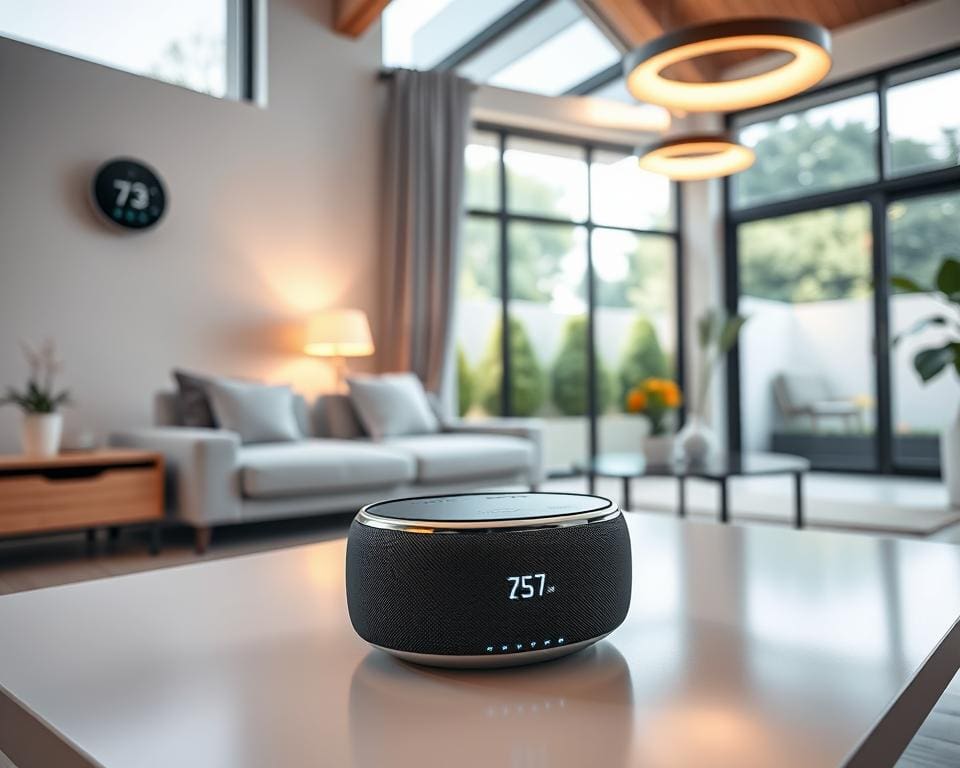
Smart speakers act as a household hub for voice control, music and basic automation. Popular choices in the UK include Amazon Echo UK and Google Nest UK devices, plus Apple HomePod mini for HomeKit users. Choose an ecosystem that matches your existing kit and privacy needs.
Place speakers where voices carry and ensure good Wi‑Fi. Entry-level Echo Dot or Nest Mini units offer low-cost access to voice assistants for home. Higher-end models provide richer sound for multi‑room audio and clearer voice recognition for personalised responses.
Smart thermostats for heating control
Smart thermostats give precise scheduling, learning algorithms and remote access. Many UK homeowners compare a smart thermostat UK options such as Nest and Hive thermostat systems when upgrading. Read a Nest thermostat review to weigh features against cost.
Check compatibility with combi boilers, conventional systems and radiator valves. Heating control smart valves or smart TRVs let you manage each radiator, avoiding wasted heat in unused rooms. Consider professional installation for complex setups and ask about eco modes and geofencing to reduce bills.
Smart lighting systems and bulbs
Smart lighting UK offers flexibility from single smart bulbs to full systems. Philips Hue UK leads with colour-changing bulbs and the Hue Bridge for advanced scenes. A smart bulbs review will help you decide between Wi‑Fi bulbs and Zigbee options.
Decide between smart bulbs and smart switches to keep manual control for guests. Pay attention to lumens, colour temperature and dimmer compatibility. Use smart home lighting scenes and motion-triggered automations for ambience and presence simulation when away.
Smart locks and video doorbells for entry security
Smart locks UK provide keypad, Bluetooth and Wi‑Fi options for remote access and activity logs. Yale smart lock models offer retrofit choices compatible with many British mortice locks. Temporary codes are handy for cleaners or guests.
Video doorbells bring live alerts and two-way audio to your front door. Ring doorbell UK and Google Nest units are common for motion alerts and cloud storage. Tune motion sensitivity to cut false alerts from passersby and respect GDPR when cameras face public areas.
- Start small with an Amazon Echo UK or Google Nest UK speaker to trial voice assistants for home.
- Combine a smart thermostat UK and heating control smart valves for targeted savings.
- Use Philips Hue UK bulbs or smart switches to create reliable smart home lighting scenes.
- Fit a Yale smart lock and a Ring doorbell UK to cover access and visitor monitoring.
smart home devices for enhanced security and monitoring
Smart security starts with the right blend of cameras, sensors and alarms. A well-planned system gives you clear views, timely alerts and practical automation that fits everyday life in the UK. Choose devices that balance reliability with privacy and that join together to form a single, manageable network.
Indoor and outdoor smart cameras
Pick cameras by purpose. Fixed models suit constant coverage of a porch or hallway. Pan-tilt-zoom units cover wider areas and let you follow motion. Wired PoE cameras offer continuous power for uninterrupted outdoor monitoring. Battery cameras give flexible placement without cabling.
Brands such as Nest, Arlo, Ring and Hikvision each bring strengths. The Nest Cam UK units offer smooth app integration and easy setup. An Arlo Pro review often highlights battery life and feature depth for garden use. Look for person and vehicle detection, custom activity zones and robust night vision. Weatherproof ratings like IP65 or IP66 matter in British weather.
Decide on storage early. Local options include microSD or NVRs, which keep footage under your control. Cloud plans cost extra but simplify off-site access. Weigh the benefits of privacy against the convenience of a smart alarm subscription when planning long-term costs.
Motion sensors and window/door sensors
Motion sensors detect movement and trigger cameras or lights. Choose pet-tolerant models if you have animals at home. Magnetic contact sensors sit on frames to track openings and closings of windows and doors.
Many wireless sensors for home security run on Zigbee, Z-Wave or proprietary low-power radios. Typical battery life ranges from one to several years depending on use. Place motion detectors in high-traffic zones and fit door sensors smart home devices so contacts align perfectly for reliable readings.
Account for environmental factors such as draughts, condensation and thermal drafts near windows. Correct placement reduces false alarms and improves responsiveness for routines like switching lights when someone enters a room.
Integrated alarm systems and monitoring services
Smart alarms can be self-monitored or professionally monitored. Self-monitored setups notify you through an app. Monitored alarm systems UK often include verified response from a security provider and may meet insurer criteria.
Providers range from DIY platforms to established names such as Verisure and Ring Protect Plus in UK markets. Professional monitoring gives verified alarm handling but usually adds monthly fees. Self-monitoring avoids ongoing charges and relies on swift homeowner action.
Integration matters. Modern systems link cameras, motion sensors UK, door sensors smart home and smart locks to launch staged responses. An alarm event can start camera recording, flash lights and sound sirens to deter intruders while notifying you and, if selected, a monitoring centre.
Follow legal and insurer guidance when installing. Place cameras to avoid filming public pavements or neighbours’ private property. Use visible signage for monitored premises when required. Check police response policies in the UK and confirm installer accreditation such as NSI Gold if you want insurer benefits.
Specialist and value-added smart devices to complement your home
Specialist smart home devices bring targeted benefits beyond basics. Smart smoke alarms such as Nest Protect combine smoke and carbon monoxide detection with smartphone alerts, self-testing and the ability to trigger lights or unlock doors in an emergency. In the UK it is important to choose units that meet fire safety guidance; consider mains-wired models for permanent power or high-quality battery-operated units where rewiring is impractical.
For floor care, robot vacuum UK options from iRobot Roomba and Roborock offer scheduled cleaning, mapping and no‑go zone features that suit mixed carpet and hard floors. Battery life and docking behaviour matter in larger homes, so weigh run time and recharge strategy when selecting a model. These smart home extras reduce daily chores and keep busy households tidier with minimal input.
Energy and garden care bring measurable savings. Smart plugs and energy monitors from TP-Link Kasa, Eve Energy, Sense and Emporia Vue let you switch appliances remotely and track consumption to spot heavy users. Smart garden irrigation systems and soil moisture sensors cut waste by adapting schedules to local weather; look for controllers that integrate forecast data to avoid watering before rain and to sustain gardens through dry British summers.
Air quality, entertainment and buying strategy round out the list. Dyson purifiers and Awair monitors report PM2.5, VOCs and humidity to help allergy sufferers and improve ventilation in airtight homes. Sonos and Yamaha MusicCast plus streaming devices such as Chromecast and Amazon Fire TV extend voice control into multi‑room audio and TV. Start with one ecosystem hub, add devices gradually with priority on security and heating, keep firmware updated and balance cloud convenience with local control for privacy. Low-cost starters like a smart speaker or bulb, medium investments such as a thermostat or smart lock, and higher-cost items like integrated alarms and whole‑home energy monitors each offer different returns on comfort, efficiency and long‑term savings.