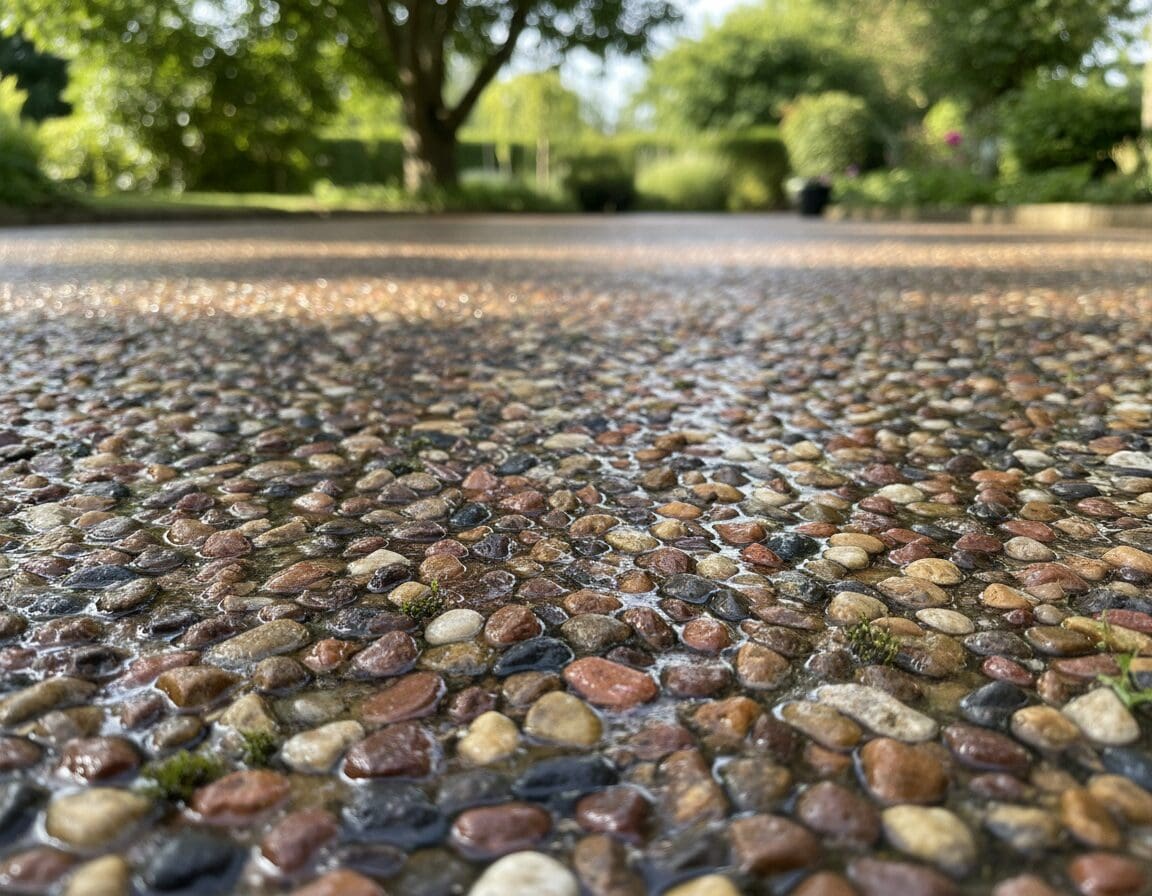
Resin bound gravel offers a compelling blend of beauty and performance for outdoor surfacing UK homeowners and professionals trust. It pairs the natural look of stone with a hard-wearing resin binder, creating durable surfaces that suit driveways, patios, pathways and commercial areas.
This finish delivers a smooth, wheel-friendly surface ideal for resin bound driveways, while remaining permeable enough to reduce puddling and meet planning guidance on drainage. Compared with tarmac or concrete, it gives a long-lasting surfacing option that looks attractive and requires little maintenance.
Specified and installed by suppliers such as Marshalls and specialist local installers, resin bound systems can meet British Standards and trade guidance, ensuring reliable performance in British weather. The result is improved kerb appeal, practical usability and increased property value.
In the next section you will learn what resin bound gravel is, how it works and why permeability matters for UK gardens.
What is resin bound gravel and how it works
Resin bound gravel is a hard-wearing surfacing system that blends natural aggregates with a specialist binder to create a smooth, porous finish. The system typically uses 2–6 mm decorative gravel, flint, granite or recycled aggregates mixed on site with a clear or pigmented polyurethane binder. This decorative gravel surfacing offers a seamless look that suits driveways, patios and pathways across UK gardens.
Definition and basic components
The core of the product is a resin and aggregate mix made by fully coating graded chippings with a UV-stable polyurethane or epoxy resin. High-quality systems use BS EN-compliant aggregates and metal oxide tints or pigments to add colour without compromising performance. Edge restraints such as aluminium or concrete kerbs, a prime coat for some bases and the correct resin-to-aggregate ratio—commonly around 7–10% by weight—ensure cohesion and longevity.
Installation process explained
Start with site assessment and remove old surfacing if required. A well-compacted sub-base, often Type 1 MOT or a concrete slab, prevents settlement. Install edge restraints and apply a porous primer where needed.
On-site crews mix the resin and aggregate mix in a forced-action mixer so every chip gets fully coated. Lay and trowel the blend to the specified depth, usually 15–25 mm depending on use. Allow curing time, typically 24–48 hours before light use, longer for heavy loads. Professional resin bound installation delivers consistent mix ratios, neat profiling and warranty-backed results; small DIY kits suit minor repairs only.
How permeability and drainage benefit UK gardens
Unlike non-porous alternatives, resin bound gravel is a permeable surfacing that allows rain to pass through the aggregate layer into the sub-base. Water then soaks away or moves into designed drainage, reducing surface run-off and puddling in rainy seasons common to the UK.
When designed to SuDS principles and laid with the right sub-base depth and fall, resin bound drainage helps meet planning guidance. The result is fewer puddles, reduced algae on paths and better garden health adjacent to beds and lawns.
Benefits of resin bound gravel for durable outdoor surfaces
The blend of stone and resin creates a surface that feels natural yet performs like a modern paving. Homeowners choose this option because it combines attractive finishes with practical strengths. Below are the main benefits to consider for gardens, driveways and public spaces.
Longevity and resistance to wear
Properly installed systems can last 10–20 years or more, depending on traffic and exposure. Polyurethane binders provide abrasion resistance and cope well with vehicular loads when laid to the correct depth on a prepared base.
The surface resists freeze–thaw cycles and UV damage when UV-stable resins are used. It also tolerates petrol and oil spills better than loose gravel. Marshalls and other reputable manufacturers supply technical data sheets and installer warranties to back performance claims.
Low maintenance and easy cleaning
Routine care is simple: lift leaves, sweep, and occasionally jet wash at moderate pressure to clear moss and debris. This low maintenance driveway solution saves time and expense over years compared with replacing loose aggregate or re-pointing block paving.
The seamless nature of the finish suppresses weed growth, giving a generally weed free surfacing. Small repairs are feasible by trowelling new mix into damaged spots, or arranging a professional patch when needed.
Slip resistance and safety in wet British weather
Choosing angular aggregates and the correct particle size produces a textured, anti-slip resin bound surface. Porosity prevents pooling, which reduces aquaplaning for vehicles and slip hazards for pedestrians in frequent rain.
The finish can meet slip resistance tests to British standards. It also allows smooth transitions for mobility scooters and pushchairs while keeping grip, provided gradients and edges are specified correctly.
Aesthetic versatility and colour options
There is a wide palette of looks, from sandstone and granite to recycled glass blends and pigmented resins. Designers can create borders, patterns and insets that integrate with porcelain paving, timber or planting schemes.
UV-stable resins and quality aggregates keep colour longer, helping to maintain kerb appeal. This decorative resin bound approach suits traditional cottages, contemporary houses and conservation areas alike.
resin bound gravel: cost, sustainability and practical considerations
Resin bound cost is often higher up front than loose gravel, but the value stands out over time. Installed resin bound gravel UK price typically ranges from £50–£120 per m², depending on aggregate choice, depth, site access and sub-base work. For accurate figures, ask local certified installers for a detailed quote that breaks down materials, labour and any preparatory excavation.
As sustainable surfacing, resin bound systems can use recycled or locally sourced aggregates to cut embodied carbon. Their permeability supports SuDS and reduces surface run‑off, easing pressure on drains during heavy rain. Choosing low‑VOC, solvent‑free or bio‑based resins further improves environmental performance; always check manufacturer datasheets for certifications and VOC ratings.
Practical considerations resin bound installers must assess include site access for plant, expected vehicle loadings that may need thicker constructions, edge restraint type and existing sub‑base condition. Planning rules and local guidance — including CIRIA SuDS recommendations and council policies — may affect driveways and alterations in conservation areas, so confirm regulatory compliance before work starts.
Choose accredited installers with BBA or equivalent product certification, a proven portfolio and clear guarantees for both product and workmanship. Arrange a site survey, request itemised quotes and plan installation for dry, mild weather to ensure correct curing. The combined benefits of durability, low maintenance and aesthetic appeal often make the initial resin bound cost a sound long‑term investment in property value and performance.