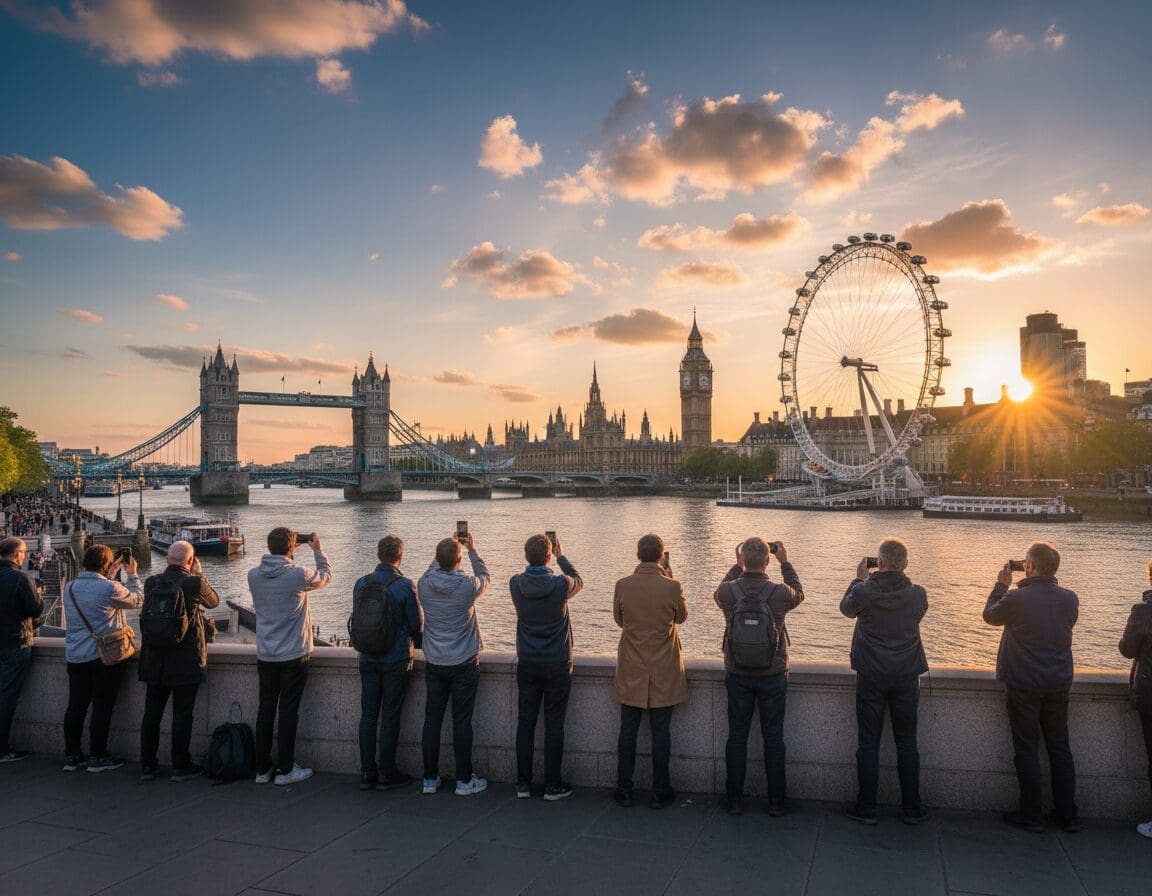
This London sightseeing guide helps you plan an unforgettable visit by blending must-see landmarks with neighbourhood discoveries and practical travel tips. Whether it’s your first trip or you’re returning for fresh perspectives, the aim is to make sightseeing London easy to follow and genuinely enjoyable.
By sightseeing London we mean a mix of historic monuments such as the Tower of London and Westminster Abbey, royal highlights like Buckingham Palace, modern viewpoints including The Shard, Sky Garden and the London Eye, and cultural quarters such as the Southbank. You’ll also find markets—Borough Market, Camden Market and Portobello Road—alongside quieter green spaces and small museums.
This London sightseeing guide is organised so you move from iconic attractions to hidden gems, finishing with practical planning: transport advice, suggested itineraries and seasonal tips. Recommendations balance accessibility, opening times and realistic daily pacing so you can visit London attractions for tourists without feeling rushed.
Content draws on official sources—Historic Royal Palaces, Westminster Abbey, The Shard, Sky Garden, the London Eye, Transport for London, VisitBritain and market websites—to keep facts current. Use this guide to identify the best sightseeing spots London and to check official sites for the latest ticketing and opening-time details before you travel.
Must-see iconic landmarks and attractions for sightseeing London
London’s skyline and streets are packed with must-see sites that reward careful planning. Use these sightseeing London tips to make the most of your time, whether you want history, royal spectacle or panoramic views.
Top historic sites: Tower of London and Westminster Abbey
The Tower of London dates from William the Conqueror and houses the Crown Jewels. Plan to spend 2–3 hours exploring the White Tower, the battlements and Yeoman Warder talks. Book Tower of London tickets in advance to avoid long queues and check for seasonal opening times.
Westminster Abbey offers centuries of royal ceremonies and notable tombs. A typical Westminster Abbey visiting tour lasts around 60–90 minutes. Security checks are routine and worship services can restrict access, so pre-book your slot and respect on-site rules.
Royal highlights: Buckingham Palace and the Changing of the Guard
Buckingham Palace remains the heart of royal London. If the State Rooms are open in summer, buy tickets early for audio tours and displays about royal life. When the rooms are closed, stroll the forecourt, Victoria Memorial and nearby parks for excellent photo opportunities.
The Buckingham Palace Changing of the Guard is a free, ceremonial display by the Household Division. It usually runs on set days and can be busier in peak season. Arrive 30–45 minutes before the ceremony for a clear view and check schedules as military duties may cause changes.
Skylines and viewpoints: The Shard, Sky Garden and London Eye
The Shard offers panoramic city scenes from its viewing platform. For the best light, reserve The Shard tickets for sunset or a clear day and allow extra time for lifts and refreshments at the top.
Sky Garden provides relaxed greenery with wide views at 20 Fenchurch Street. Sky Garden access is free with timed booking, but you must reserve in advance. Dress appropriately if you plan to dine at one of the restaurants.
The London Eye gives 30-minute capsule rides across the Thames and suits evening visits for city lights. Reduce wait time with London Eye booking that includes fast-track or combo options like river cruises.
Practical tips for visiting iconic attractions: tickets, opening times and peak hours
Always check official sites for ticket types and timed-entry rules. Pre-booking secures preferred slots, cuts queue time and lowers the risk of sell-outs, especially during summer and school holidays.
Opening times change with the seasons and some venues close for private events or public holidays. Confirm dates before you travel and aim for early or late slots to avoid peak crowds.
Most attractions run security checks that add to entry time. Look for step-free access, baby-changing rooms and cloakrooms if you need them. Respect photography rules in interiors and follow staff instructions for a smooth visit.
Neighbourhoods and hidden gems to explore beyond the main sights
London neighbourhoods offer more than landmark postcards. Walks and short detours reveal a city of local flavour, quiet parks and small museums that reward curious visitors. Plan a few focused routes rather than trying to cover everything at once.
Southbank and cultural walks along the Thames
Begin at the London Eye and stroll east along the river for one of the best Southbank walk experiences. The route runs past the Southbank Centre, Royal Festival Hall and bookstalls, with street performers and views of St Paul’s across the water.
The path is largely flat, so most walkers find it easy. Pause at Gabriel’s Wharf or the Oxo Tower for food and riverside seating. If you prefer less walking, Thames riverboat services run between piers and cut travel time while still offering riverside views.
Markets and local flavour: Borough Market, Camden and Portobello Road
Borough Market near London Bridge is a must for food lovers. Use these Borough Market tips: arrive early on mornings to avoid weekend crowds and secure popular stalls selling cheese, bread and cooked street dishes.
Camden Market London is where music culture and eclectic stalls meet canal-side eateries. Visit on a weekday morning or late afternoon for a calmer experience and to find vintage fashion and independent crafts.
Portobello Road antiques dominate on Saturdays in Notting Hill. Weekdays bring clothing and food stalls. If you travel during August, be aware the Notting Hill Carnival will make the area much busier and affect transport.
Secret green spaces and lesser-known museums
Seek out secret parks London such as Kyoto Garden in Holland Park for a peaceful Japanese-style setting, and St Dunstan in the East near the Tower for its evocative ruined-church garden. Hampstead Heath gives hilltop views and ponds for a country feel within the city.
For quieter culture, explore lesser-known museums London like the Museum of London Docklands for the river’s trade history, the Sir John Soane’s Museum for unusual architecture and the Wallace Collection on Manchester Square for fine and decorative arts. Book ahead where entry is limited.
How to plan a walking route to discover hidden gems safely
Map a loop linking two or three nearby spots, for example a Southbank walk to Borough Market and Tower Bridge. Use apps such as Citymapper, Google Maps or TfL to check walking times and transport options if you need a shortcut.
Wear comfortable shoes, check weather forecasts and carry a compact umbrella. Keep valuables safe in front pockets or a money belt in crowded markets. Stick to well-lit streets after dark and respect residents’ quiet in neighbourhoods and green spaces.
Start early to beat the crowds, schedule market visits for mornings and reserve small-museum slots when required. Give yourself time for cafés and photos; that approach turns a busy day into a relaxed discovery of hidden gems London.
Planning your visit: transport, itineraries and seasonal advice
Use a London transport guide before you travel to know fares and routes. TfL Oyster and contactless bank cards are the easiest, most cost-effective ways to pay for the Tube, bus, DLR and many river services. Pay-as-you-go balances and daily or weekly caps keep costs predictable. Note that cash is rarely accepted on the Tube, so carry a contactless card or an Oyster for convenience.
Mind peak hours on the Tube (weekday mornings 07:30–09:30 and evenings 16:30–18:30) and observe basic etiquette: stand to one side on escalators and allow others to board first. London buses are scenic and cheap for short hops, and Santander Cycle hire is handy for quick trips. River Thames services link Southbank with Greenwich and Westminster, and walking between central sites often saves time and reveals hidden details.
Plan your London itineraries by grouping nearby sights. A one-day route could run Westminster Abbey → Houses of Parliament and Big Ben (exterior) → Buckingham Palace → St James’s Park → Trafalgar Square → Covent Garden or Southbank, with 30–60 minutes at each stop and short Tube or bus hops between. For two to three days, split royal and museum districts from the City and Southbank: Day 1 royal sights and a West End show; Day 2 Tower of London, Tower Bridge, Borough Market and Tate Modern; Day 3 Southbank, Covent Garden and a market such as Camden or Portobello Road. For families, choose slower-paced options like Hyde Park, Regent’s Park and the Natural History Museum.
Seasonal sightseeing tips London: spring and summer give the best weather for riverside walks and rooftop views but bring larger crowds, so book tickets and hotels early. Autumn offers calmer parks and fewer queues; winter has festive markets and lights, with lower hotel rates but shorter daylight. Pack layers, waterproof footwear and a compact umbrella, check forecasts and TfL’s accessibility pages for step-free stations. Carry some pounds, download the TfL app or Citymapper for live updates, and remember emergency numbers: 999 for urgent help and 101 for non-emergencies. Combine must-see landmarks with neighbourhood roaming, book key tickets in advance, and leave time to enjoy discoveries at your own pace.