Transforming an outdoor living space starts with a clear purpose. Think about moments you want to enjoy: a calm spot to read, a place for family dining, or a cosy area for friends to gather. Even a small balcony or terraced garden can become a serene retreat with the right focus on accessibility and seasonal use in the UK climate.
Begin with a simple, stepwise plan. Assess existing conditions, aim for quick wins that improve outdoor space immediately, then layer considered design choices and comfort upgrades over time. This approach delivers instant satisfaction while moving towards a cohesive garden transformation.
Account for UK-specific practicalities: weatherproof furniture and fabrics, plants suited to local conditions, and any council or lease rules for patios or communal gardens. Use trusted suppliers like B&Q, Wickes or local nurseries for materials and planting to keep the outdoor makeover UK-friendly and achievable.
Set measurable goals—create a dining area for four, add privacy screening, or make the space usable after dusk. Decide what you can do in a weekend and what will be phased over a season. Take photos and measurements before you start to track progress and guide budgets.
Outdoor living space: quick wins to refresh your garden or patio
Start with a clear, practical view of your outside area. A simple outdoor space assessment or garden audit helps you note dimensions, sun and shade, drainage, and focal points like trees or boundary walls. Sketch a basic patio layout and carry out a quick site analysis to mark access points, neighbour sightlines and any noise sources that affect comfort.
Assessing your current space
Measure and photograph the area. Record where sun falls during the day and where cold winds bite in the evening. Check the condition of hard surfaces and spot trip hazards. A brief garden audit will reveal loose boards, blocked gutters and signs of subsidence that need professional attention.
Decluttering and practical maintenance
Begin with a garden declutter to remove broken pots and redundant ornaments. Store tools and toys in a shed or weatherproof box. Donate usable items via local Facebook groups or Freecycle to free space and help others.
Simple patio maintenance makes a big visual difference. Regular outdoor cleaning, pressure washing paved areas, sweeping decking and resealing where needed will revive the look. Replace mouldy cushions, check gas BBQs, and swap frayed cables for safety.
Low-cost planting ideas for instant impact
Use container planting and hanging baskets for instant garden impact. Choose peat-free compost and plants suited to your aspect: lavender and rosemary for sun, ferns and hellebores for shade. Group pots in odd numbers and layer heights for depth.
Opt for low-cost planting that performs in the UK such as perennial geraniums, sedum, achillea and carex. Bulbs like daffodils add seasonal colour UK in spring. Buy plug plants or nursery-grown perennials to save money and support local growers.
Temporary and movable solutions for flexibility
Embrace movable garden solutions to adapt with seasons and life changes. Lightweight rattan or aluminium seating, foldaway benches and portable planters on wheels let you move plants for sun or shelter. Modular furniture delivers a flexible patio layout that shifts with need.
Choose temporary outdoor ideas for privacy and wind protection such as bamboo screens, trellis panels with climbers, or freestanding screens from major retailers. Quick-install options like modular decking tiles, gravel over landscaping fabric and pop-up pergolas offer DIY-friendly updates that keep your space versatile.
Design and styling tips to create a cohesive outdoor retreat
Bring calm and cohesion to your garden by choosing a simple outdoor colour palette and pairing it with durable outdoor materials. A restrained scheme of two to three tones — neutral stone, muted greens and blue-greys — complements many UK homes and frames planting. Thoughtful garden finishes and weatherproof materials UK will help the space age gracefully while keeping maintenance low.
Choosing a colour palette and materials that endure
Start with the house exterior and surrounding landscape when selecting an outdoor colour palette. Keep contrasts soft so furniture and planting read as one composition. Opt for composite decking, pressure-treated or hardwood decking and porcelain or natural stone paving for longevity. Choose powder-coated aluminium frames for furniture to resist damp and pick FSC-certified timber or recycled options where possible.
Consider garden finishes that hide wear. Lighter paving masks salt marks in winter. Darker fabrics may fade faster in sun. Select UV-resistant, mould-resistant products and plan simple maintenance cycles such as annual oiling or resealing.
Arranging furniture for conversation and flow
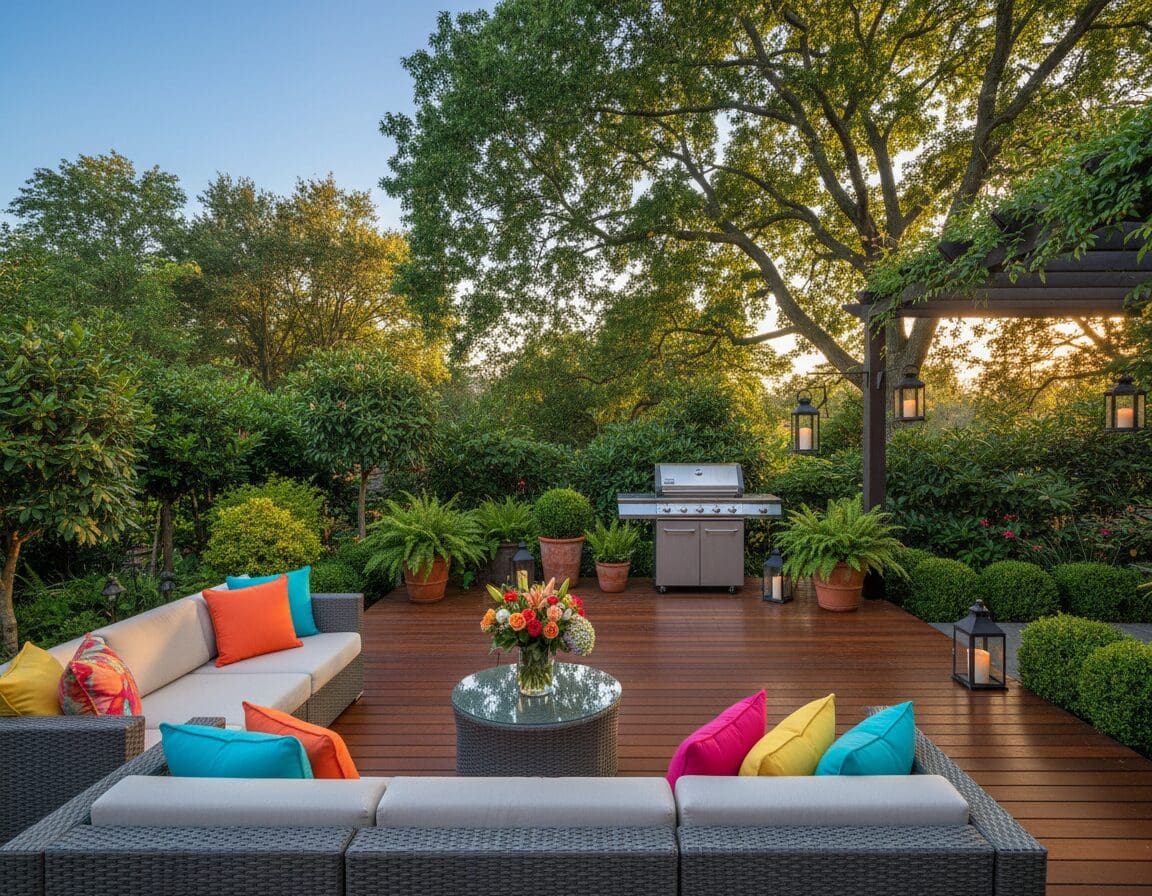
Define zones for dining, lounging and cooking to sharpen purpose. Use a clear garden furniture layout and a considered outdoor seating arrangement to maintain a good patio flow. Keep circulation paths at least 60–90cm wide so movement feels natural.
Match scale to space. Low-slung sofas and slimline tables suit small terraces. Larger sets work in roomy gardens. Arrange seating in a U-shape or around a central table to encourage conversation. In tight spots, use multifunctional pieces such as storage benches or extendable tables to save space.
Textiles, cushions and weatherproof accessories
Choose outdoor textiles made from solution-dyed acrylics or polyester blends for water-resistance and UV protection. Brands like Sunbrella and Garden Trading offer practical, stylish options in the UK. Pick weatherproof cushions with quick-dry foam and removable covers for easy cleaning.
Store cushions in a waterproof box when not in use to prolong life. Use outdoor rugs UK and pouffes to anchor seating areas and add texture. Select garden accessories that pair with the palette and are rated for outdoor use; regular brushing and spot-cleaning will keep them fresh.
Lighting to extend evenings and set the mood
Layer lighting to add depth and flexible mood control. Combine task lighting for cooking and steps, ambient wall lights for covered areas and accent uplights for trees or architectural features. This approach supports both safety and atmosphere.
Choose energy-efficient options such as LED lanterns, solar path lights and low-voltage systems with timers or smart plugs. Check IP ratings for damp conditions and use warm-coloured LEDs (2700–3000K) for a welcoming glow. For fixed work, hire a qualified electrician to comply with UK regulations and ensure safe installation of outdoor lighting UK and patio lights.
Enhancements that boost comfort and usability
Extend the season with simple outdoor comfort upgrades. Gas or electric patio heating offers instant warmth, while chimineas and wood-burning firepits create a cosy focal point when sited safely and in line with local rules. Infra-red heaters give targeted warmth without excessive energy use, and eco-friendly options such as biomass burners or responsibly sourced logs reduce environmental impact.
Improve garden usability by adding practical workspaces. A compact outdoor kitchen or grilling area with weatherproof storage and a robust prep surface makes cooking outdoors easier and cleaner. Fit a water supply and drainage for plant care and washing down surfaces, and install external power points for lighting, speakers and charging devices. Choose durable furniture with built-in storage to protect cushions and keep the space tidy.
Make the space accessible and long-lasting with considered construction. Keep level thresholds between interior and exterior and use non-slip surface finishes. Raised beds ease planting for less bending, and permanent or retractable pergolas and louvred roofs — from brands such as Somfy or similar systems — give shelter and control over sun and rain. Plan phased upgrades to match budget and weather patterns, and hire local tradespeople for structural work to ensure quality, warranty support and improved long-term garden usability.