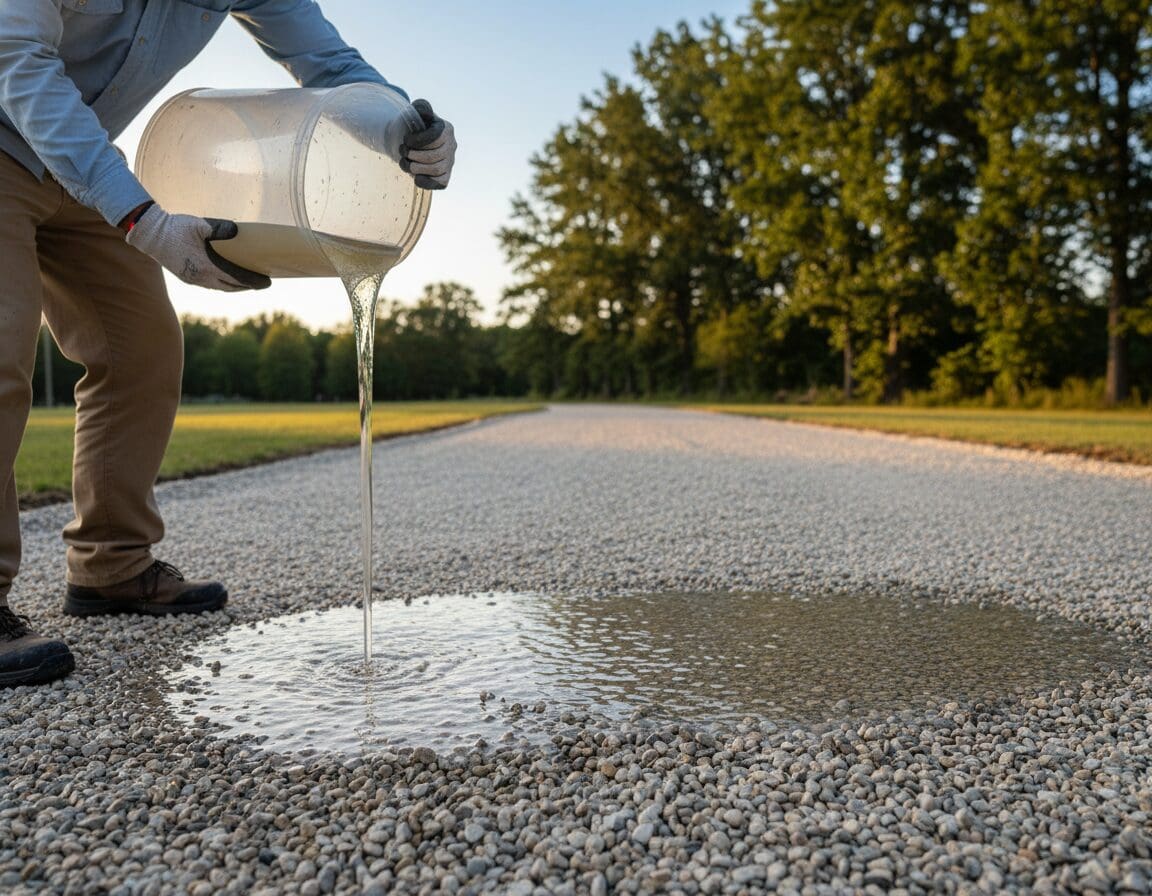
A pour on gravel binder is a liquid resin applied over loose aggregate to lock stones into a stable, permeable surface. It creates a cohesive, flexible finish that keeps the texture of natural gravel while stopping stone migration and rutting.
Most systems use polyurethane or UV-stable hybrid resins. These chemistries wet the aggregate, cure to a resilient matrix and allow a long lasting resin bound gravel finish that copes with traffic and weather.
In the UK, regular rain, freeze–thaw cycles and variable ground conditions make permeability and durability essential. A gravel binder for driveways and paths lets water drain through while protecting the surface from movement and washout.
Suitable for driveways, garden paths, patios, edging and small car parks, the pour-on technique stabilises loose surfaces without losing the look of natural stone. Suppliers such as theresinbondedslabcompany.co.uk offer options for both domestic and commercial projects.
Expect a service life commonly between 8–15+ years with correct installation and maintenance. Curing can take from a few hours up to 24–48 hours depending on temperature and resin choice. Final performance depends on aggregate quality, resin chemistry and sub-base preparation.
Benefits of a pour on gravel binder for driveways and paths
A pour on gravel binder transforms loose stone into a stable, attractive surface. It combines the natural look of aggregate with a hard-wearing, seamless finish that suits both traditional cottages and modern homes. Homeowners choose this approach for performance as much as appearance.
Durability and long-lasting finish
When correctly installed over a BS-compliant sub-base, the cured resin forms a tough, interlocked layer that resists stone loss, wheel rutting and erosion. Domestic installations commonly exceed 8–10 years of reliable service life with proper preparation and drainage.
Quality systems resist oil, petrol and many household chemicals when suitable resin formulations and sealers are used. Prompt cleaning of spills with recommended cleaners prevents staining and keeps the surface intact.
High-grade resins include UV stabilisers to reduce yellowing and brittleness from sunlight. North-facing drives see less UV stress than south-facing ones, but modern formulations perform well across exposures.
Permeability and sustainable drainage
Pour-on surfaces can be specified as a permeable gravel surface system that allows water to soak through. Permeability depends on aggregate grading and application thickness; some installations are fully porous while others permit partial infiltration.
This approach supports Sustainable Drainage Systems (SuDS) by reducing surface run-off and puddling. For many UK gardens and drives, a permeable finish can reduce reliance on formal drainage, subject to local regulations and planning guidance.
Low maintenance and cost-effectiveness
Routine care is simple: periodic sweeping, low-pressure washing and removal of leaves and debris to prevent staining and weed growth. Over time, occasional re-coating or local repairs replace full-scale refurbishment.
Lifecycle costs compare favourably with loose gravel, which needs frequent raking and topping up, and with block paving, which can require joint repairs and weed control. The initial outlay for a resin bound gravel surface often pays back through reduced upkeep and sustained appearance.
Versatility in design and aesthetics
The system accepts a wide range of aggregates—natural stone, flint, limestone, granite or recycled glass—so you can achieve smooth or textured effects and a long lasting resin bound gravel finish. Contrasting bands, decorative inlays and edging work well with contemporary and classical schemes.
It integrates with existing landscaping and edging solutions to form neat transitions to lawns, patios and planting beds. For garden paths and patios a suitable gravel binder for garden paths and patios preserves the stone look while delivering a durable, low-maintenance surface.
How pour on gravel binder compares with alternative surfacing options
Choosing the right surfacing means weighing durability, drainage and appearance. Loose gravel is cheap and easy to lay, yet it moves under traffic and wind. Stones spread into verges and can be kicked onto roads, creating hazards for cyclists and prams. Accessibility suffers for wheelchair users when the surface shifts under wheels.
Bound systems are designed to stabilise loose gravel surfaces. They lock the aggregate in place, spread load more evenly and give a smoother, safer finish. A pour on gravel binder will often sit between resin bound and resin bonded approaches in performance and look.
Gravel with no binder versus bound systems
Unbound gravel suits low-use garden paths but needs regular raking and top-ups. Potholes and ruts form where vehicles track, which raises maintenance costs and effort. Bound systems remove loose stone migration and reduce tidying time.
A pour on gravel binder is poured over pre-laid aggregate to create a durable surface while keeping the natural gravel aesthetic. It helps stabilise loose gravel surfaces and improves safety without losing texture.
Resin bound versus resin bonded and other paving
Resin bound mixes aggregate and resin before laying. It forms a continuous, permeable surface, typically 15–30mm thick, with a polished, consistent finish. It resists wear under normal domestic traffic and remains permeable for SuDS-friendly drainage.
Resin bonded uses a resin solution for binding stones by applying resin to the substrate then scattering loose stone on top. The result is textured and natural looking, yet it is more prone to stone loss where traffic or cleaning is frequent.
Block paving, tarmac and concrete offer high load-bearing capacity. They are less permeable and can require planning or drainage adjustments on some sites. These materials often last long but give a different aesthetic and may need more invasive installation.
Eco friendly gravel binder solution considerations
Sustainability should guide product choice. Seek low-VOC resin formulations and suppliers offering recycled aggregates such as crushed glass or reclaimed stone. Using a recognised resin bonded slab company with transparent data sheets helps reduce environmental risk.
- Choose low-VOC, long-life binders to lower emissions over the life cycle.
- Prefer UK manufacturers where possible to cut transport footprint.
- Ask for compliance with British Standards and WRAP guidance when sourcing installers.
Permeable pour-on systems support local SuDS aims by reducing runoff and easing pressure on drains. Synthetic resins remain petrochemical in origin, so balancing performance with recyclability and an eco friendly gravel binder solution gives the best outcome for both durability and the environment.
Practical guidance for choosing and installing a pour on gravel binder
Choosing the right system and preparing the base are the two steps that determine success. A clear plan makes it easier to stabilise loose gravel surfaces and create a durable, attractive finish. The following guidance covers product choice, sub-base work and the pros and cons of a DIY gravel binder for landscaping project.
Focus on resin chemistry first. Polyurethane resins offer flexibility and UV stability, while epoxies cure hard and resist heavy wear. Hybrid systems can balance both traits. Check technical data sheets for working temperature ranges, pot life and cure times to match your climate and schedule.
Pick aggregates that suit permeability and wear needs. Use 2–6 mm graded stone for most pour-on applications. Choose hard materials such as granite, quartz or flint for longevity and colourfastness. Avoid soft or very porous stones that may absorb resin unevenly. Trial a small patch to assess colour, texture and drainage before full application.
Preparation and sub-base requirements
Start with a well-compacted engineered base. A Type 1 MOT sub-base or equivalent gives the stability needed beneath a bound surface. Lay geotextile membrane to prevent sub-soil contamination and to encourage free drainage.
Plan falls to avoid standing water. Even a small gradient helps surface run-off. Install firm edge restraints such as concrete haunching, metal edging or treated timber to contain the aggregate. Where overlaying concrete or bitumen, clean and profile the surface thoroughly and apply the correct primer to aid adhesion.
DIY gravel binder for landscaping versus professional installation
Small patios and paths suit competent DIYers. Pour-on products are sold to homeowners who can mix resin, spread aggregate evenly and work within pot life limits. Essential kit includes stirred drums, mechanical mixers, squeegees and basic protective gear such as gloves, eye protection and a suitable respirator for fumes.
Large driveways, steep gradients or high-traffic areas are best left to accredited installers who offer guarantees and carry experience with systems similar to those on theresinbondedslabcompany.co.uk. Professionals manage complex drainage, temperature-sensitive curing and warranty requirements.
Practical DIY tips: choose warm, dry conditions; calculate coverage carefully; practice mixing and application on a test patch; follow manufacturer instructions for curing and aftercare. These steps help ensure the work will stabilise loose gravel surfaces and deliver a long-lasting result.
Performance, maintenance and long-term value of a pour on gravel binder
A properly specified pour on gravel binder gives a long lasting resin bound gravel finish that copes well with everyday household use. When installed to manufacturer guidance, these systems typically deliver excellent durability under domestic traffic, meet common slip-resistance expectations and can last many years before requiring major attention. In the UK climate, resin flexibility combined with an appropriate aggregate choice helps resist freeze–thaw stress and maintain adhesion during prolonged wet spells.
Routine care is straightforward and keeps a permeable gravel surface system performing at its best. Regular sweeping and seasonal checks in autumn and spring remove leaf litter and moss, preserving both drainage and appearance. Gentle pressure washing once a year—within the supplier’s maximum pressure guidance—clears grime; oil stains should be treated promptly with manufacturer-recommended cleaners to avoid staining and surface degradation.
Repairs are usually localised and practical. Small damaged patches are often ground out and re-filled with matching resin solution for binding stones, while larger failures tend to indicate sub-base problems that need professional assessment. For driveways, a pour on gravel binder can accept cars and light vans when the structural layers are correctly engineered; heavier commercial loads demand strengthened base specifications.
Over the long term, the initial premium for a gravel binder for garden paths and patios is offset by lower running costs. You save on topping-up loose stone, reduce repair frequency and benefit from effective surface drainage that can negate extra drainage works. A well-executed resin finish also enhances kerb appeal and resale potential. Always request technical data sheets, permeability test results and installer accreditation or warranties to protect your investment and ensure compliance with local SuDS and planning expectations.