Choosing the best patio flooring is the first question most homeowners face when remodelling an outdoor space. In the UK a good decision balances climate resilience, slip resistance and maintenance with how a surface complements the house and garden.
This short guide looks at patio flooring options and helps you weigh durability against appearance and cost. Think about freeze–thaw cycles, heavy rain and drainage rules, plus any planning consent that might affect permeable or raised surfaces.
We will cover a patio surface comparison of popular choices, review long‑term maintenance and weather resilience, and examine design and sustainability trade‑offs. Expect practical patio design ideas to help you picture alfresco dining zones, barbecues and calm seating areas that suit your garden flow.
Later sections reference British Standards such as BS 7533, manufacturers including Marshalls and Bradstone, and guidance from TrustMark and the Chartered Institute of Building, along with Environment Agency advice on permeability.
patio flooring options: overview of materials and styles
Choosing the right patio surface sets the mood for your outdoor room. Below is a concise guide to common materials and styles used across UK gardens, with practical notes on look, performance and typical uses.
Hardscape materials: paving slabs, natural stone and concrete
Concrete paving gives a versatile, cost-effective canvas. It can be colour-stained, patterned or cut to size for crisp, modern layouts.
For a natural stone patio, sandstone and limestone offer warm tones and textured surfaces suited to traditional cottages. Granite and slate provide a premium, hard-wearing finish for high-traffic areas.
Natural stone varies in porosity and may need sealing in exposed locations. Suppliers such as Marshalls and Bradstone follow British Standard guidance on sub-base preparation, typically using Type 1 aggregate for stability.
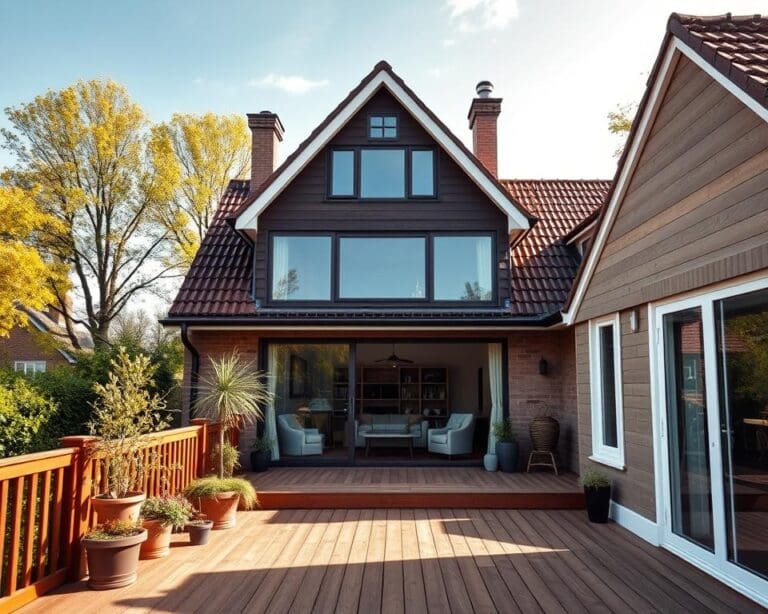
Timber and composite decking for elevated patio areas
Timber decking brings authentic warmth. Pressure-treated softwoods are budget-friendly while hardwoods like European oak and Iroko give greater longevity and attractive grain.
Composite decking from brands such as Trex and Millboard offers low maintenance and long warranties, resisting mould and fading. Composite can run hotter in summer and tends to cost more upfront.
Raised decks need strong joist systems, correct ventilation underneath and compliance with building regulations for safety and access.
Gravel, pea shingle and permeable surfaces for rustic charm
Loose aggregates such as crushed granite and a classic pea shingle patio create a relaxed, informal look. They are inexpensive and simple to lay for casual seating areas and paths.
Resin-bound and resin-bonded gravel give a more stable finish; resin-bound is smooth and wheelchair-friendly while resin-bonded remains looser underfoot. Permeable paving options help control runoff when installed with the right sub-base and edging.
Edging in timber, metal or stone keeps gravel neat. Expect occasional topping up and weed control on loose surfaces.
Outdoor tiles and porcelain for contemporary finishes
Porcelain outdoor tiles are low-porosity and stain-resistant. Large-format porcelain planks can mimic stone or timber for seamless indoor–outdoor flow.
Fixing methods include external-grade adhesive and grout or pedestal systems for raised terraces that conceal services and aid drainage. Choose tiles with suitable slip-resistant ratings and check freeze–thaw performance for UK conditions.
Durability, maintenance and weather resilience of patio surfaces
Choosing the right patio surface for a UK garden means thinking about durability, upkeep and how materials respond to local weather. Frequent rain, frost–thaw cycles and shaded, damp spots encourage moss and algae. Coastal sites add salt and corrosion risks. A clear plan for drainage, material selection and routine care keeps a paved space looking great year after year.
How UK weather affects different materials
Porous stones such as sandstone tend to absorb water and may suffer frost damage unless properly sealed. Concrete and granite normally resist freeze–thaw paving stresses when laid on a stable base with correct jointing. Timber decks can warp or rot if ventilation is poor or water pools on boards.
North-facing patios and shaded corners need materials and finishes that resist algal growth. Coastal properties benefit from stainless-steel fixings and salt-tolerant finishes. Design measures like a minimum fall for drainage (commonly 1:80 to 1:100) and permeable surfacing reduce water build-up and help extend life.
Cleaning and long-term maintenance requirements
Routine care starts with sweeping and rinsing to remove leaves and detritus. Periodic power-washing restores appearance, provided pressure settings suit the surface to avoid damage. Use specialist cleaners for algae or oil stains and follow product guidance for safe use.
Sealed natural stone often needs resealing every few years. Timber typically requires annual cleaning and re-oiling or staining. Composite decking asks for less work — an occasional detergent wash and brush usually suffice. Keep manufacturer guides and product data sheets for warranty support and tailored care instructions.
Slip resistance and safety considerations
Choose finishes with proven grip for wet conditions to achieve a reliable slip resistant patio. Textured surfaces, anti-slip aggregates and tiles with suitable R ratings cut the hazard of slips in rain. For steps and level changes, ensure smooth transitions or gentle ramps to prevent trips.
Accessibility calls for firm, even surfaces such as large-format stone, porcelain on pedestal systems or resin-bound finishes on a compact sub-base. For families, pick cool-touch decking options and non-toxic sealants to keep surfaces comfortable and safe for children and pets.
- Design for drainage and proper falls.
- Match material care to climate: reseal stone, maintain timber, wash composites.
- Specify textured or rated finishes for wet-weather safety.
Design, cost and sustainability considerations for patios
Choose a patio that balances look, budget and environmental sense. This short guide brings together practical choices, a simple patio cost guide and ideas for using sustainable patio materials without losing style. Read on for clear options and creative patio design ideas UK homeowners favour.
Budget patios can start with gravel, loose pea shingle or standard concrete slabs. These materials are cheap to buy and simple to lay if you do the work yourself. Factor in labour if you use professionals and allow for regular maintenance on softer finishes.
For a mid-range finish, consider sandstone, higher-grade concrete pavers, resin-bound surfaces or composite decking. These choices offer a good mix of durability and style and sit in the middle of most patio cost guide estimates.
Premium options include large-format porcelain, granite or tropical hardwoods such as Iroko and Cumaru. Expect higher material and labour costs for bespoke patterns and intricate laying. These choices repay the outlay through longevity and high-end appearance.
Environmental impact and sustainable material choices
Seek eco-friendly paving and sustainable patio materials to lower embodied carbon and reduce run-off. Responsibly sourced timber with FSC certification and recycled plastic composites give long life with a lighter footprint.
Reclaimed setts and salvaged stone bring character and cut emissions from quarrying. Permeable systems like resin-bound gravel, porous blocks and grass-crete support SuDS and can help planning applications in some areas.
Choose low-VOC sealants and plant-friendly cleaners to protect soil and wildlife. Look for CE marking and TrustMark-registered installers to ensure quality and compliance with UK regulations.
How design choices influence garden flow and usability
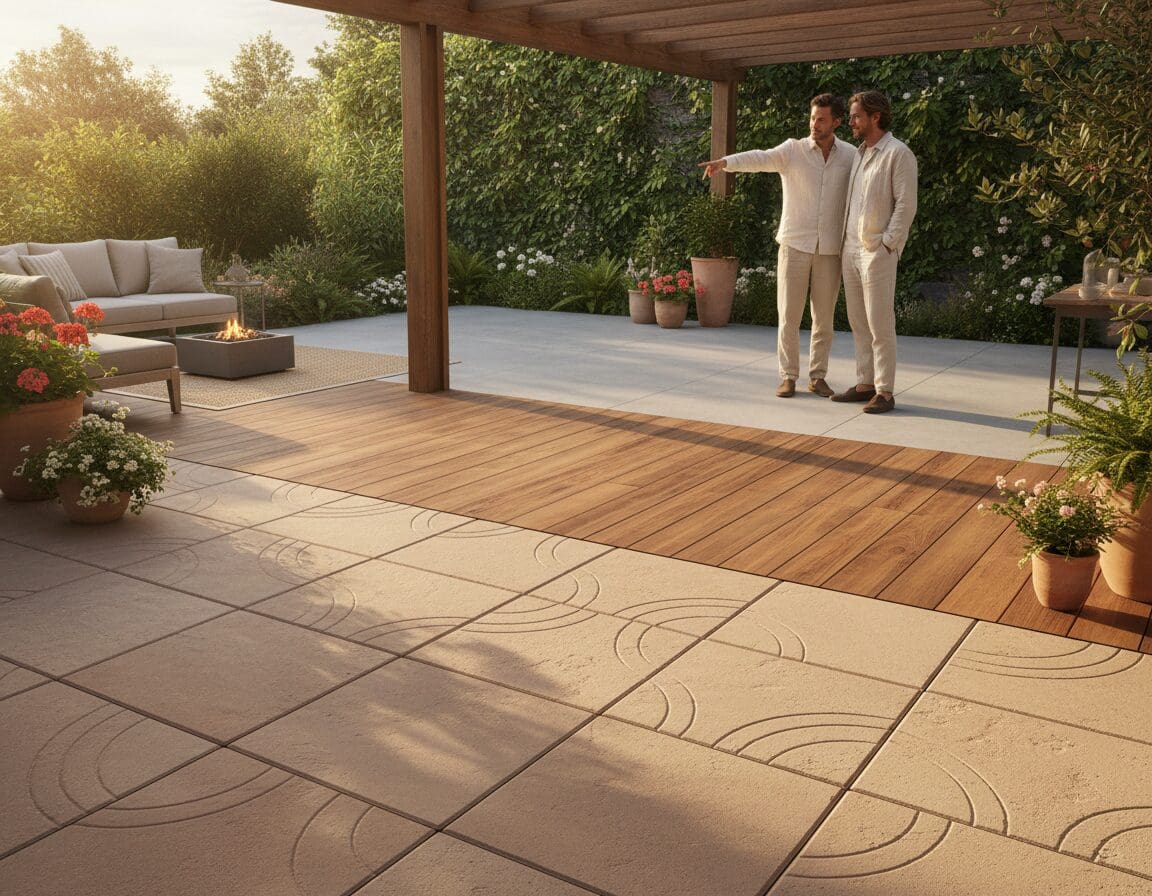
Zoning with different surfaces or levels creates clear dining, cooking and quiet areas. Use material changes to guide movement from house to garden without heavy barriers.
Match indoor tones to outdoor tiles for visual continuity, or pick contrasting textures to define distinct spaces. Large slabs suit modern minimal gardens; smaller pavers and setts suit cottage styles.
Plan for furniture, planting pockets and structures like pergolas or benches. Allow for load-bearing needs if you add features such as firepits or heavy planters.
Design for future changes: pedestal tile systems and modular decking let you access services and replace sections with minimal disruption.
- Cost drivers: site access, sub-base work, drainage, edging and waste removal shape final quotes in any patio cost guide.
- Get multiple local quotes and check materials against sustainable patio materials and eco-friendly paving options.
- Use the information here to match your budget, from low-cost budget patios to premium long-term investments.
Installation, planning and practical tips for choosing patio flooring
Begin with a thorough site survey. Check soil type, slope, drainage and any tree roots, and locate buried services and boundaries before arranging patio installation UK work. Early checks reduce delays and avoid costly surprises when laying patio slabs or installing decking.
Understand permissions and water management. Most patios do not need patio planning permission in the UK, but impermeable surfaces at the front or over 5m² can trigger rules and SuDS requirements. Plan falls of about 1:80–1:100, consider soakaways or a permeable patio installation and seek Building Regulations advice if roof run-off or structures are affected.
Prepare a durable sub-base and follow best practice for bedding and jointing. Use MOT Type 1 compacted in layers, then apply the correct bedding material—sharp sand or mortar for paving, flexible adhesive for porcelain, and the right fixings for decking. Stagger joints, fit expansion gaps on large areas, and choose polymeric sand or suitable grout to lock paving in place.
Hire accredited tradespeople and finish thoughtfully. Engage TrustMark-registered or Constructionline-selected contractors, get several quotes, check references and insurance, and request manufacturer data sheets and guarantees. Plan edge treatments, discreet drainage and lighting, allow phased installation where needed, and keep records of materials and aftercare to protect longevity and resale value.