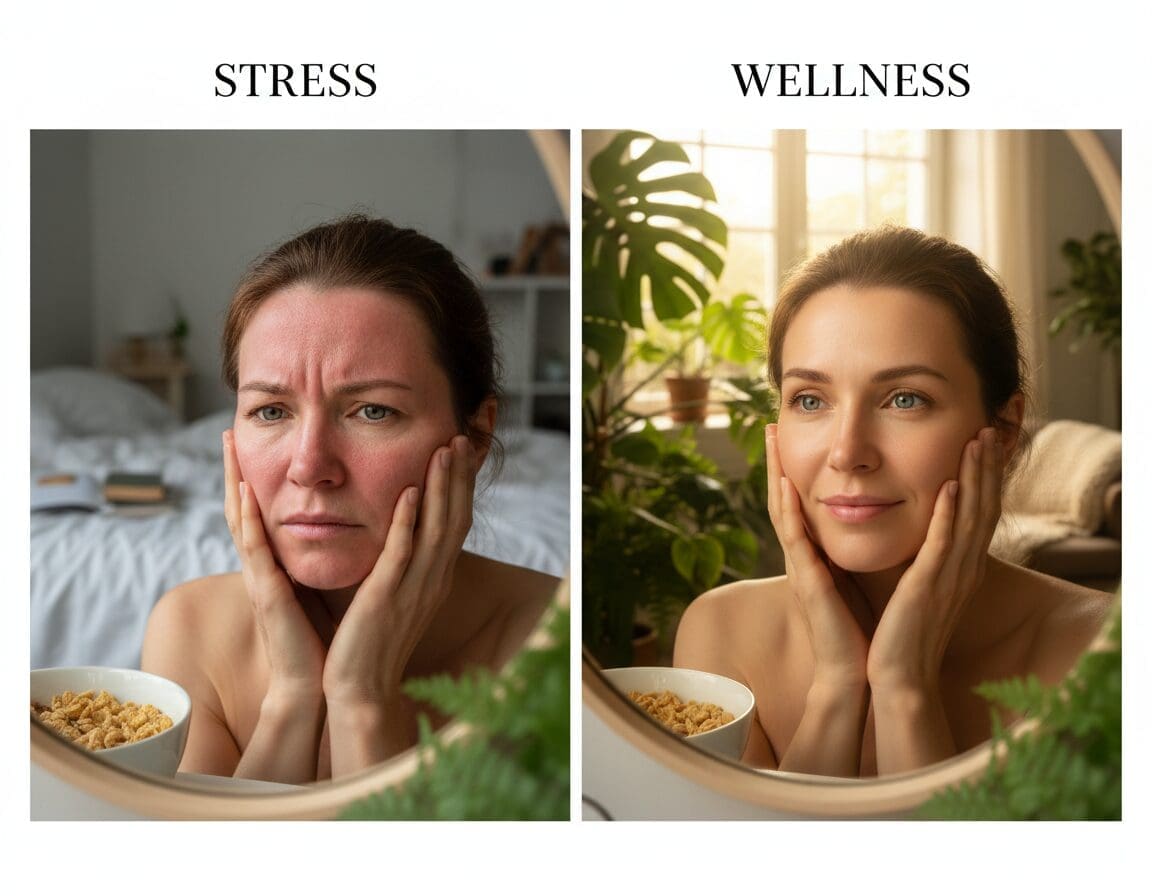
Stress touches every part of your life, and your skin is one of the first places you will notice its effects. Whether you face a short-lived deadline or the long haul of caregiving, the link between stress and skin health matters for your wellbeing in Ireland.
Acute stress — a sudden exam or tight work deadline — and chronic stress such as financial strain or long-term illness trigger the hypothalamic–pituitary–adrenal (HPA) axis and the sympathetic nervous system. Those responses raise cortisol and adrenaline. Cortisol skin effects include changes to oil production and barrier function, while the sympathetic response can alter blood flow and sensation.
These hormonal and nerve signals change immune activity, raising inflammation and shifting how the skin heals. Skin inflammation and stress often show as flare-ups of eczema, rosacea or acne, but the effects also include slower repair and altered pigmentation.
The relationship goes both ways. Persistent itch, pain or visible lesions can deepen anxiety and lower mood, creating a cycle where skin problems worsen stress and stress worsens skin problems. Understanding how stress affects skin and the broader stress impact on health helps you break that loop.
For people in Ireland, local factors matter: access to public and private dermatology services, commuting stress, housing pressures and shorter winter daylight can all shape your skin habits and mood. In the sections ahead you will read about the physiological links, visible skin effects and common conditions, wider health consequences, and practical strategies to reduce stress and protect your skin.
Understanding the link between stress and skin health
Stress triggers a cascade of bodily reactions that reach your skin. Scientists describe this through stress physiology, a framework that links the brain, hormones and immune signals. When you feel threatened, the hypothalamic–pituitary–adrenal axis (HPA axis) and the sympathetic nervous system activate in seconds. That activation sets the scene for many visible skin changes.
How the stress response works in your body
When the HPA axis engages, the hypothalamus releases corticotropin-releasing hormone (CRH). The pituitary then secretes adrenocorticotropic hormone (ACTH), which prompts the adrenal glands to release cortisol. At the same time, the sympathetic system floods your bloodstream with adrenaline and noradrenaline.
These hormones change immune cell trafficking and energy use. Short-lived activation sharpens alertness and can boost some immune defences. This is the classic example of acute versus chronic stress: a brief response helps you cope, persistent activation harms tissues and regulation.
Why your skin reacts to emotional and physical stressors
Your skin is not just a passive barrier. Keratinocytes, fibroblasts and resident immune cells express receptors for CRH and glucocorticoids, so they respond directly to circulating hormones. This skin neuroendocrine function lets the organ mirror systemic stress rapidly.
Cortisol and skin interact in several ways. Cortisol alters keratinocyte proliferation and can reduce collagen synthesis, which affects healing and firmness. Dysregulated cortisol and skin signalling can shift immune balance from controlled suppression to low-grade inflammation.
Adrenaline skin reaction is important for immediate effects. Catecholamines change blood flow, stimulate sebaceous glands and can activate mast cells, which drives redness, oiliness and itch. Over time, repeated sympathetic surges keep the skin in a heightened state of reactivity.
Chronic stress raises pro-inflammatory cytokines such as IL-6 and TNF-α. These mediators feed local inflammation and can worsen conditions like eczema and psoriasis. Stress also impairs barrier lipids and tight junctions in the stratum corneum, raising transepidermal water loss and sensitivity.
- Cutaneous nerves release neuropeptides such as substance P and calcitonin gene-related peptide. These peptides cause vasodilation, itch and immune cell recruitment.
- Skin acts as an immune organ with Langerhans cells and T cells that maintain surveillance. Stress alters their activity and the microbial balance on your skin.
- Genetic factors such as filaggrin mutations or HLA associations modify how stress impacts your skin. Environmental factors—pollution, UV exposure, climate and work conditions—further shape outcomes.
Visible skin effects of stress and common skin conditions
Stress shows up on your skin in ways you can spot and in ways you might miss. Short bursts of tension can cause temporary breakouts. Long-term pressure tends to worsen inflammation, slow repair and change how your skin looks and feels.
Acne, breakouts and oily skin
When you are stressed, hormones signal sebaceous glands to produce more oil. Increased androgen activity and stress-related hormones change keratinisation, so pores block and comedones form. A shift in your skin microbiome, with more Cutibacterium acnes or Staphylococcus aureus, raises the chance of inflammatory breakouts.
Watch for triggers such as late nights, a diet high in sugar or processed foods, alcohol, smoking, poor cleansing and overuse of cosmetics. Perimenstrual flares and work-related outbreaks are common patterns. First-line topical options you can try include benzoyl peroxide and salicylic acid; topical retinoids are used for persistent cases. See a clinician when lesions are painful, widespread or leaving marks.
Exacerbation of eczema, psoriasis and rosacea
Chronic stress raises systemic inflammatory mediators that often precipitate flares. With eczema you may notice an itch-scratch cycle that worsens barrier loss. Psoriasis can present as immune-driven plaques that become thicker and more frequent during prolonged stress.
Rosacea tends to respond to vasomotor and immune changes, producing redness, flushing and pustules in episodes known as stress rosacea flare. GPs and dermatologists manage these with emollients, topical corticosteroids or calcineurin inhibitors for eczema, and specific agents or biologics for severe psoriasis. Seek professional advice rather than self-treating with strong steroids.
Premature ageing, dullness and pigmentation changes
Excess cortisol harms fibroblast function and reduces collagen production. The cortisol collagen effect means skin loses elasticity, fine lines appear sooner and wounds heal more slowly. Oxidative stress and disrupted repair also lead to uneven tone and dull skin.
Poor sleep compounds the problem. Disrupted rest increases inflammation and limits nocturnal repair, so sleep and skin renewal suffer. Daily sunscreen, topical antioxidants such as vitamin C and retinoids help protect and restore skin. For deeper concerns, consult a dermatologist about professional treatments that suit your skin type.
To manage symptoms during stressful periods, opt for gentler cleansing, non-comedogenic moisturisers and targeted OTC treatments. Avoid aggressive scrubbing and steroid misuse. If flares are frequent or severe, make an appointment with your GP or a dermatology clinic to review tailored therapies and a realistic plan.
How stress affects your overall health and wellbeing
Stress does more than flare a spot or trigger redness. Over time it reshapes how your body manages inflammation, immunity, sleep and metabolism. That shift affects your skin and your wider health, so it helps to understand the links and where to get support in Ireland.
Immune function and inflammation
Chronic stress raises markers such as C-reactive protein, IL-6 and TNF-α, which point to low-grade inflammation across the body. This stress systemic inflammation links to many long-term illnesses.
When you face persistent pressure your innate and adaptive responses change. You may get more colds, have weaker vaccine responses and notice slower wound healing. These shifts in stress and immune function matter for infection risk and for how your skin repairs after damage.
Mental health, sleep and lifestyle consequences
Long bouts of stress increase the chance of anxiety and depression. Those conditions loop back to worsen sleep, appetite and energy. Poor sleep reduces melatonin and growth hormone release at night, limiting skin repair and recovery.
Stress may change what and how much you eat. Appetite swings can cause nutrient gaps or weight gain, each affecting skin quality and metabolic health. The combined effect of stress sleep appetite disruption plus mood changes can speed up skin ageing and slow recovery.
Long-term risks to cardiovascular and metabolic health
Sustained sympathetic activation and high cortisol can raise blood pressure and disturb glucose control. Over years this increases stress cardiovascular risk and the chance of insulin resistance or type 2 diabetes.
Stress often drives coping behaviours that harm health, such as increased alcohol use, smoking and less activity. These choices add to oxidative damage, dehydration and vascular changes that affect both skin and heart health.
For practical help in Ireland, speak with your GP or use HSE mental health supports if symptoms persist or worsen. Simple steps—better sleep habits, balanced nutrition, gentle exercise and quitting smoking—reduce chronic stress health risks and support recovery.
Practical strategies to reduce stress and protect your skin
Start with short, evidence-based practices you can use at work and home. Try mindfulness-based stress reduction for 10 minutes a day, diaphragmatic breathing or progressive muscle relaxation to lower tension. Simple exercises such as box breathing (inhale 4, hold 4, exhale 4, hold 4) or 4-7-8 breathing are easy to learn and reduce heart rate. These stress management for skin techniques help calm nerves and lower the hormones that trigger flare-ups.
Adopt quick lifestyle steps to support skin barrier repair and daily wellbeing. Take micro-breaks, walk for five to ten minutes, limit screen time before bed and get morning sunlight to set your circadian rhythm. Use structured to-do lists and time-blocking to cut overwhelm. Regular moderate exercise (about 150 minutes per week) and good sleep hygiene — consistent bedtimes, a dark cool room and reduced evening screens — improve recovery and reduce systemic inflammation.
Use gentle skincare routines Ireland residents can follow to protect hydration and the barrier. Cleanse twice daily with a pH-balanced, fragrance-free cleanser and apply emollients that contain ceramides, glycerin or niacinamide. Avoid over‑exfoliation and harsh drying actives during high-stress periods. Wear a daily SPF 30+ broad-spectrum sunscreen, and review products to favour barrier-supporting ingredients. These measures, combined with topical treatments when needed, can reduce flares.
Know when to seek medical help and plan next steps. See your GP if symptoms are severe, rapidly worse, affecting function or accompanied by systemic signs; GPs can prescribe treatments or arrange a dermatologist referral Ireland. For persistent inflammation, options include topical corticosteroids, calcineurin inhibitors, metronidazole or azelaic acid for rosacea, and retinoids or antibiotics for acne. Consider nutrition and supplements—omega‑3s, vitamin D testing in winter and certain probiotics—but consult your GP or pharmacist first. Track triggers and flares in a simple diary, pick two or three stress-reduction practices to try for four weeks, and update your skincare to focus on barrier repair.