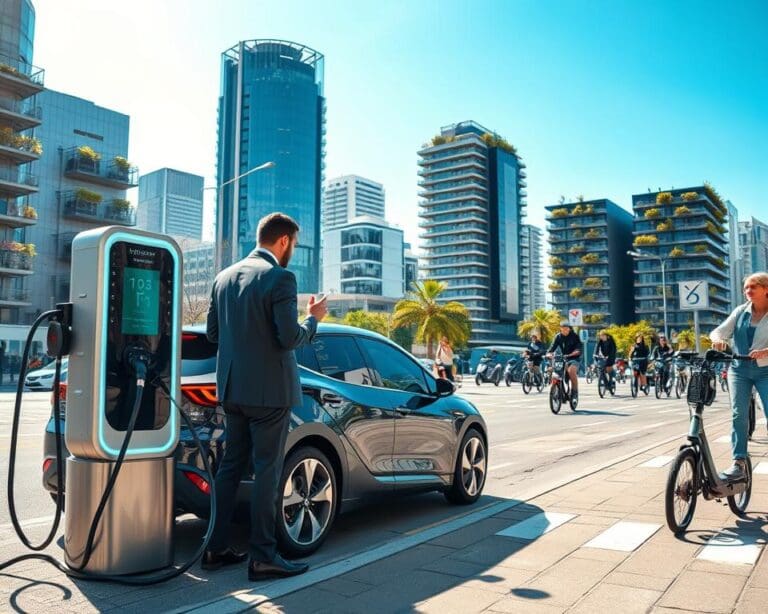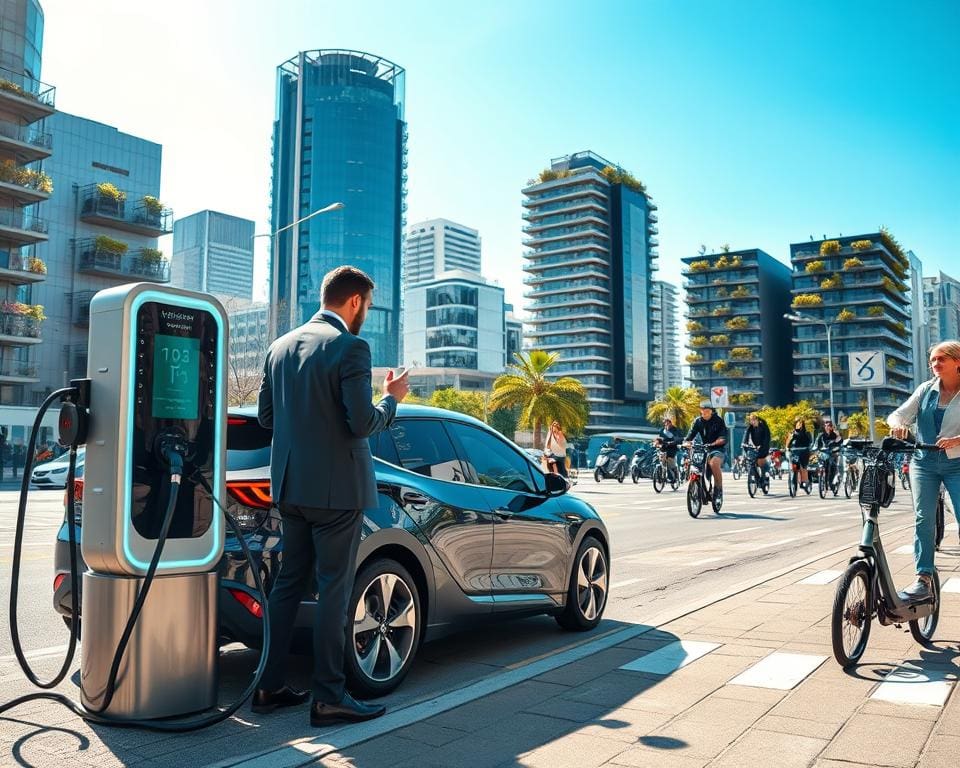
Electric mobility is reshaping how you travel in the United Kingdom. It covers battery electric vehicles, plug-in hybrids, e-bikes, e-scooters and other micromobility options, plus the charging technology and energy systems that support them.
Sales of EVs are rising rapidly in the UK as Nissan, Jaguar Land Rover, Tesla, BMW and Renault expand their line-ups. Government phase-out timelines for new petrol and diesel cars and Net Zero commitments make the EV future UK a pressing policy and commercial priority.
What this means for you is practical and immediate: lower running costs, fewer tailpipe emissions, quieter journeys and easier access to low-emission zones and parking incentives. You will likely still worry about purchase cost, range anxiety, charge times, residual values and home-charging availability — these are covered later in the article.
Next, the piece examines trends shaping personal and public transport, then explores advances in charging technology and infrastructure, and finally offers practical guidance for drivers and businesses to act on sustainable transport UK opportunities.
electric mobility: trends shaping personal and public transport
This chapter guides you through the shifts that are reshaping travel in towns and cities across the UK. You will see how the UK EV market has moved from niche adoption to mainstream choice, how micromobility UK options plug gaps in journeys, and how policy and planning steer change.
Evolution of electric vehicles in the UK market
You can trace BEV adoption UK from early city cars to family hatchbacks and large SUVs. Year-on-year growth in EV sales UK shows a clear trajectory as manufacturers expand line-ups. Nissan’s Leaf proved mass-market viability, Tesla set new range expectations, and brands such as BMW and Mercedes have launched wide EV ranges to meet demand.
Battery costs have fallen and warranties have improved, which reduces total cost of ownership and strengthens residual values for the used market. Businesses benefit from lower running costs and favourable company car tax rules, while grants for chargepoints and other support lower upfront barriers.
Integration of e-bikes, scooters and micromobility solutions
Micromobility UK is growing beyond leisure use into commuting and deliveries. E-bike adoption has risen with strong retail support from Halfords and specialist makers such as Brompton Electric and VanMoof. Electric cargo bikes now address urban deliveries and last-mile solutions for retailers and couriers.
Rental e-scooter trials run in many towns and cities, with operators like Lime and Dott taking part. Private e-scooters remain restricted by regulation, which shapes how trials scale and how rider training and safe parking are introduced.
Impact on urban planning and public transport networks
Urban planning EV interventions change streetscapes to prioritise people over cars. Councils create more cycle lanes, curbside charging hubs and reallocated road space to ease congestion and support multimodal journeys. You will encounter multimodal pilots that link micromobility and rail or bus travel through integrated ticketing and mobility-as-a-service trials.
Public transport electrification is accelerating as operators such as Transport for London, Stagecoach and National Express electrify fleets to meet low-emission zones UK requirements. Freight operators including Royal Mail, DPD and UPS trial electric vans and depot charging to improve last-mile solutions.
Policy drivers and incentives encouraging adoption
Government action underpins market confidence. Announced ban dates for new petrol and diesel cars, historical plug-in car grant schemes and current EV incentives UK help buyers and fleets switch to electric. Workplace charging schemes, the Homecharge grant history and grants for chargepoints have targeted homes, businesses and councils.
Low-emission zones UK and the Ultra Low Emission Zone in London push taxis, buses and freight towards electrification. Public procurement and fleet electrification by local authorities create steady demand that supports manufacturers and infrastructure firms as they scale.
Advances in charging technology and infrastructure
You will find rapid charging technology and EV battery improvements reshaping how you plan journeys. Battery energy density has risen thanks to advances from CATL, Panasonic and UK suppliers, so many EVs now achieve 200–300 miles WLTP or more. Improved chemistry and battery management systems smooth the charging curve to protect longevity while giving usable rapid-charge capability.
Rapid charging and battery improvements
High-power networks now offer everything from 50 kW fast chargers UK to 150–350 kW ultra-rapid options at motorway services and public charging hubs. Providers such as Ionity, bp pulse, Shell Recharge and Tesla reduce downtime on long trips, provided your vehicle supports the necessary thermal management and charging protocol.
Smart charging, vehicle-to-grid and bi-directional systems
Smart charging UK features scheduling, load management and time-of-use optimisation so you can lower bills and help the grid. Vehicle-to-grid (V2G) and bi-directional charging pilots show how cars can export power back to homes or networks, offering resilience and possible income from demand response EV programmes.
Charging network expansion: home, workplace and public hubs
Home EV charging remains the most convenient option for most drivers, with installers such as Pod Point, EO Charging and Zappi supplying 7–22 kW wallboxes for overnight top-ups. Workplace chargers UK schemes boost adoption and can be supported by tax incentives for employers.
Public charging hubs at supermarkets, car parks and service stations extend range confidence. Gridserve, bp pulse and Ecotricity have led motorway rollouts, while on-street chargepoints help residents without driveways. Local authorities and energy networks must coordinate to overcome pavement space and supply constraints.
Interoperability, payment systems and roaming between providers
You need interoperable charging to move between networks without friction. Standards and protocols such as OCPP and OCPI underpin EV charging roaming and help clearing-house arrangements that simplify cross-network access. Contactless EV charging, app authorisation and RFID reduce barriers to use.
You should expect clearer payment systems EV and pricing transparency as more third-party apps, navigation tools and roaming services make it easier to locate, reserve and pay for charging. Practical protections around billing and fair tariffs remain important as the market matures.
Regenerative braking and lightweight design from established vehicle efficiency techniques also support longer electric range and lower energy demand, complementing these charging and battery advances.
Practical considerations for drivers and businesses
When choosing an EV, match range and battery size to your daily mileage and typical journeys. Check WLTP figures but expect real-world range to be lower in cold weather or at motorway speeds. Look for clear battery warranties from manufacturers such as Nissan and Volkswagen, and consider vehicle type and onboard charging speed for your usual charging opportunities. These steps help manage EV ownership UK expectations and maximise EV cost savings over time.
For home installation, arrange a reputable installer and obtain a written quote that covers cable runs, consumer-unit upgrades and any necessary planning. Typical costs vary by property, and historic schemes such as OZEV have supported homecharge for eligible drivers, so check current eligibility before booking. Consider time-of-use tariffs or export/import metering if you plan vehicle-to-grid use, as these electricity choices affect running costs and charging considerations.
Planning longer trips needs route planning apps and awareness of connector types like Type 2 AC, CCS and CHAdeMO. Book chargers where possible, observe charging etiquette at public hubs and allow margin for detours. For businesses, fleet electrification demands a total cost of ownership review, depot charging plans and engagement with chargepoint operators and energy suppliers. Public-sector and logistics fleet case studies show savings when operators combine smart charging, telematics and maintenance planning.
Operational readiness means training drivers on EV behaviour, health-and-safety at depot chargers and different maintenance routines from petrol or diesel vehicles. Design installations to be scalable, include smart charging capability and avoid vendor lock-in in supplier contracts to support future V2G participation. These practical steps will improve reliability, deliver EV cost savings and ease the transition to wider fleet electrification.