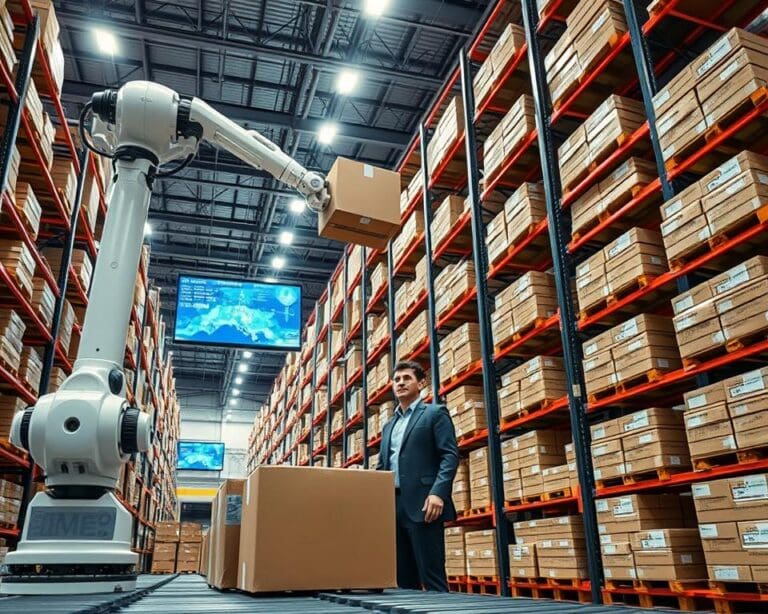
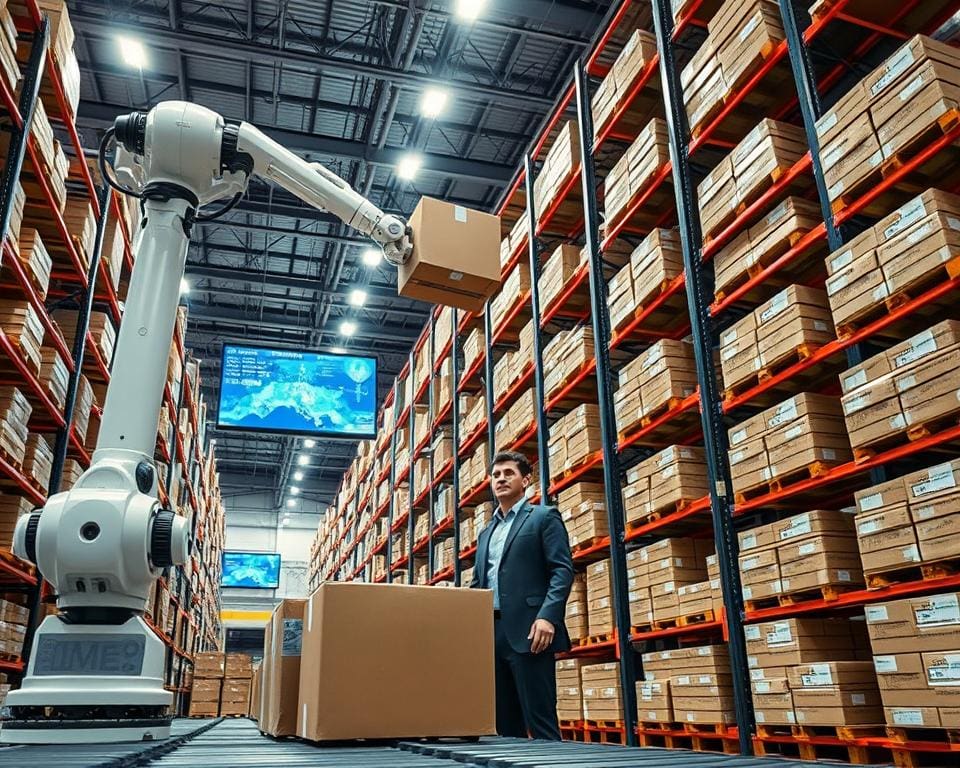
You are likely hearing more about automated warehouse solutions because they answer clear business pressures. An automated warehouse uses robotics in logistics, conveyors, AS/RS, sortation systems and autonomous mobile robots, all overseen by software, to handle storage, picking, packing and dispatch with minimal human input.
Growth in e-commerce, driven by high-throughput fulfilment from companies such as Amazon, ASOS and Ocado, has raised customer expectations for next-day and same-day delivery. That trend, combined with labour shortages and rising wage costs in the UK, makes automated warehousing UK a practical route to faster, more reliable fulfilment.
Technology has matured and become cheaper. Advances in sensors, machine vision and warehouse management systems mean smaller and mid-sized retailers can now access warehouse automation benefits once limited to multinationals.
Automation also strengthens supply chain resilience. By reducing reliance on variable manual labour you can maintain throughput through peak seasons and labour disruptions, improving predictability and risk management.
For your business, the strategic gains are clear: higher throughput, consistent service levels, better inventory visibility and long-term cost reduction potential. These advantages make automated fulfilment centres an attractive investment for firms aiming to sharpen their competitive edge.
When planning a move to automation you must weigh regulatory and planning considerations in the UK, including planning permission for large facilities and Health and Safety Executive requirements, as well as any regional incentives for logistics investment.
The next section explains how specific technologies drive operational efficiency and the tangible gains you can expect from adopting automation.
How automated warehouse technology improves operational efficiency
You will see efficiency gains when you introduce automation that choreographs machines, software and people. This short guide explains the main levers that cut lead times, boost storage density and keep stock records accurate. Practical examples and vendor approaches show how to translate those gains into measurable KPIs.
Faster order fulfilment and reduced lead times
Automated picking systems, from goods‑to‑person pods to robotic pick‑and‑place cells, eliminate much of the walking and searching that slows manual pickers. Many operations report multiple‑fold increases in picks per hour after investing in order fulfilment automation and sortation gear.
Conveyor networks and inline scanning speed order consolidation for same‑day and next‑day deliveries. Retailers and 3PLs benefit where rapid parcel processing is essential to customer promises.
Optimised space utilisation and storage density
High‑density solutions such as vertical lift modules, AutoStore and narrow‑aisle AS/RS systems deliver strong AS/RS benefits by stacking inventory vertically and using smaller footprints. That lets you store more SKUs per square metre and defer expensive real estate expansion.
Compact layouts also shorten travel distances for mobile robots and reduce energy per pick. Multi‑level mezzanines and pallet flow lanes can be combined with automation to squeeze further capacity from existing sites.
Real-time inventory tracking and accuracy
Barcode scanners, RFID gates, weight verification and machine vision, when embedded into automated flows, create near real‑time stock records. These checkpoints raise inventory accuracy and lower the need for large safety stock buffers.
Automated cycle counting and reconciliation cut labour on stocktakes and reduce returns caused by incorrect shipments, improving customer satisfaction and lowering operating costs.
Integration with warehouse management systems (WMS) and ERP
Tight WMS integration is essential for orchestration. Your WMS controls order prioritisation, pick paths and resource allocation while ERP links orders, billing and procurement data so everyone works from the same record.
System integrators and middleware from firms such as Honeywell Intelligrated, Dematic and SSI Schaefer bridge hardware and enterprise software. Real‑time telemetry, dashboards and analytics let you monitor AMR efficiency, equipment health and throughput for continuous improvement.
Combined, these elements translate into shorter lead times, higher picks per hour, improved storage density and greater inventory accuracy. For practical examples of how automation is applied across warehouse types, see this overview on industrial implementations: how automation is applied in warehouses.
Key benefits driving adoption among UK businesses
The shift to automation brings clear, measurable advantages for British warehouses. You gain lower operating costs and better consistency in output. These outcomes explain why the benefits of automated warehousing attract retailers, third‑party logistics firms and manufacturers across the UK.
Lower labour costs and reduced human error
Automation reduces reliance on large seasonal or permanent workforces, cutting agency spend and recruitment pressure. You can lower payroll outlay through targeted mechanisation while keeping a lean supervisory team.
Automated verification — barcode, RFID and vision systems — drives down picking and packing errors. That lowers returns, rework and customer complaints and improves customer lifetime value.
Capital expenditure may be significant. Total cost of ownership often balances out because operating costs fall and throughput rises, producing a solid return on investment.
Improved health and safety for warehouse staff
Machines can take on repetitive, heavy or hazardous tasks such as pallet handling and continuous picking. That reduces musculoskeletal injuries and manual handling incidents reported to the HSE.
Mechanisation aligns with HSE guidance on manual handling risk and helps reduce slips, trips and absence. You can redeploy staff into roles like quality control, exception management and system supervision.
Scalability to meet seasonal and e-commerce demand
Modular systems such as AMRs and conveyor modules let you scale capacity rapidly for peaks like Black Friday or Christmas. Scalable fulfilment solutions permit fast reconfiguration without hiring large numbers of temporary staff.
Predictive software and flexible automation maintain service levels during spikes. Major retailers and logistics providers use these approaches to absorb rapid online growth and keep delivery promises.
Sustainability gains and energy-efficient operations
Automation trims energy per unit handled through optimised travel paths, regenerative braking on conveyors and efficient motors. LED lighting integration and smart scheduling further reduce consumption.
Faster, more accurate fulfilment lowers returns and redeliveries, cutting vehicle miles and shrinking your carbon footprint. Sustainable logistics appeal to customers and investors as companies work towards net zero and manage Scope 3 risks.
Together these effects — from warehouse labour reduction to warehouse safety automation, scalable fulfilment solutions and sustainable logistics — strengthen competitive advantage by delivering faster fulfilment, fewer errors and safer, greener operations.
Challenges, costs and considerations when moving to an automated warehouse
Moving to automation means weighing capital outlay against long‑term gain. Automated warehouse costs typically include hardware such as AMRs, conveyors and AS/RS cranes, software licences for WMS and control systems, systems integration and civil work for racking and mezzanines. Commissioning, staff training and contingency funds should also be in your budget. Expect ROI automation timelines to vary by throughput, facility size and local labour rates; payback often takes several years and depends on utilisation and uplift in productivity.
Implementation brings practical disruption and technical risk. Retrofitting automation into an existing building is usually harder than designing a new automated site and often needs phased installation to keep service levels. WMS migration and integration with your ERP must be rigorously tested to avoid data inconsistencies. Poor master data for SKUs, dimensions or weights can cause bottlenecks and AMR implementation risks, so you must validate real‑time data and run end‑to‑end trials before full deployment.
Ongoing lifecycle costs and supplier choice matter. Maintenance, spare parts, software updates and vendor support contracts add to operating expense. Predictive maintenance can reduce downtime but needs investment in sensors and analytics. Work with experienced integrators such as Dematic, KION Group, Honeywell Intelligrated or SSI Schaefer to manage project risk and to secure reliable support arrangements.
Organisational and regulatory factors are key to success. Automation may shift roles rather than simply cut jobs, creating demand for technicians and supervisors and requiring reskilling and careful change management. You must also consider planning permission, HSE compliance, electrical and fire‑safety rules and insurance implications. To protect flexibility, favour modular, software‑driven systems and open standards, and validate assumptions with pilots or phased roll‑outs. Perform a full cost–benefit analysis including TCO, map projected throughput and labour costs, engage suppliers early and prepare robust training plans so automation becomes a strategic, manageable investment for your UK business.