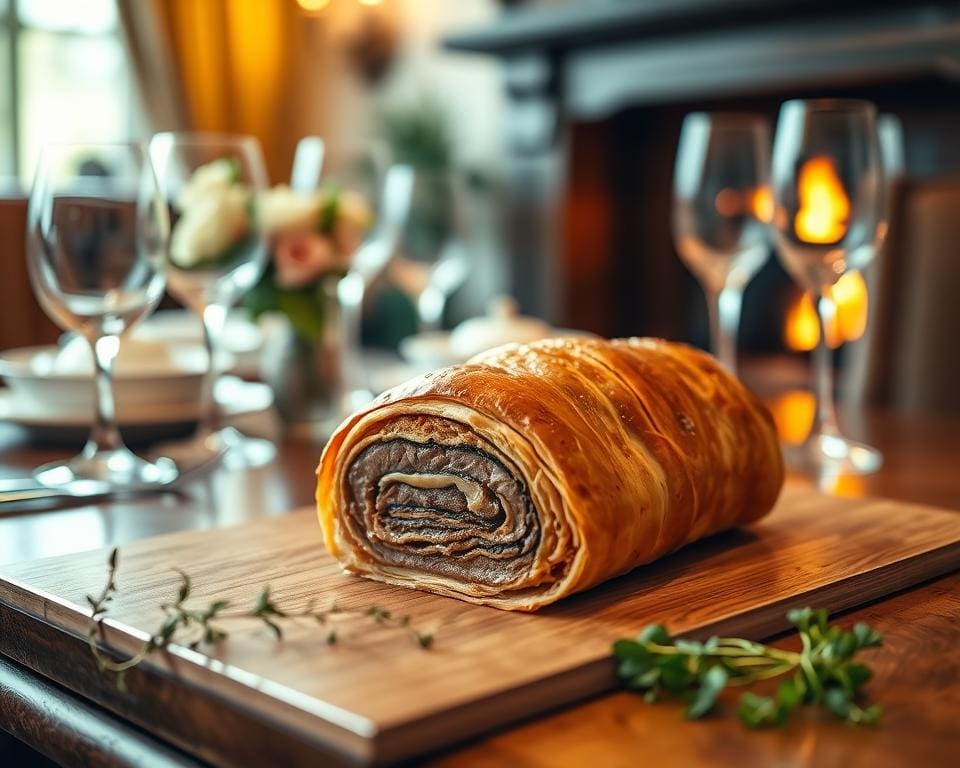
You know beef Wellington at first sight: a centre-cut beef fillet en croûte wrapped in golden puff pastry. The fillet is usually seared, then layered with duxelles and often pâté before baking, producing a crisp exterior and a tender, pink centre.
As a British dining classic it combines luxury ingredients such as prime beef and butter-rich pastry with a theatrical presentation. That mix of flavour, texture and culinary precision makes it a prized festive centrepiece for Christmas, New Year’s, weddings and anniversary dinners.
This article will chart the Wellington history, explain the essential components and techniques, and show how the dish evolved from continental influences into one of the best-known classic British dishes. You will also discover regional variations and where chefs serve beef Wellington today in fine-dining tasting menus and special-occasion restaurants.
Origins and history of beef Wellington in British cuisine
You will find the origin of beef Wellington wrapped in a mix of fact, marketing and culinary cross‑pollination. Early references are sparse, yet the recipe entered cookbooks and menus in the late 19th and early 20th centuries. That rise reflects changes in historical British cuisine as chefs sought dramatic centrepieces for banquets and family celebrations.
Start by weighing the most common Wellington naming theories. One links the dish to Arthur Wellesley, 1st Duke of Wellington, who looms large in public memory. Direct documentary proof tying the Duke to a specific recipe is limited, but the association persisted in patriotic menu naming and popular lore.
Other explanations point to continental precedents. You will notice clear echoes of filet de boeuf en croûte, pâtés and duxelles that French chefs brought to Britain. Early English recipes that wrapped meat in pastry, seen in medieval pies and roast‑en‑croûte traditions, may have fed into the idea that a wrapped beef dish suited British tastes and theatre.
The continental culinary influence on elite British cookery deepened from the 18th century. Professional chefs trained in French technique helped absorb methods such as making duxelles, preparing pâté and executing en croûte preparations. Victorian and Edwardian cookery books then standardised many layered, rich meat dishes for formal dining.
Through the 20th century, mid‑century guides and restaurant menus consolidated the dish as a show‑stopping main. You will see how a dish named after the Duke of Wellington or simply called “Wellington” became shorthand for celebratory fare. Commercial kitchens and domestic cooks adopted the format when they needed a dramatic, indulgent centrepiece.
Beef Wellington acquired a social cachet tied to historic occasions. It became common at wedding receptions, state banquets, society dinners and charity balls where an impressive centrepiece mattered. The use of expensive cuts, pâté often made from foie gras or chicken liver, and the labour‑intensive assembly gave the dish a luxurious, formal image.
Popularity has waxed and waned. The recipe enjoyed revivals in the 1970s and 1980s when retro British classics returned to favour, then reappeared as chefs in recent decades reinterpreted heritage dishes for modern palates. These cycles keep questions about the origin of beef Wellington alive while confirming its place in historical British cuisine.
What makes beef Wellington beloved: ingredients, technique and flavour
You want to know why a dish of tender meat wrapped in pastry wins over so many diners. The answer lies in how careful selection of beef Wellington ingredients meets precise technique to create a memorable mix of textures and tastes.
Key components: fillet, duxelles, pâté and pastry
Begin with a centre-cut fillet steak, prized for its even shape and tenderness. Choose a well-marbled grade and a weight that gives you useful portions while ensuring even cooking.
Duxelles is a finely chopped blend of mushrooms, shallots, butter and herbs cooked down to a concentrated paste. A good duxelles recipe reduces moisture while packing umami. That concentrated mushroom layer helps stop a soggy base beneath the pastry.
Pâté for Wellington usually means a thin smear of pâté de foie gras or chicken-liver pâté. It adds richness and depth. For budget or vegetarian diets you can swap to mushroom purée or a nut-based pâté without losing the savoury backbone.
Classic puff pastry Wellington brings crisp, buttery layers that brown attractively. Some cooks use rough puff or shortcrust variants for a different mouthfeel. The pastry choice affects both appearance and the contrast with the tender fillet.
Cooking technique and the balance of textures
Sear the fillet briefly to develop a brown crust and flavour, then chill it so the pastry stays crisp during baking. Spread the duxelles and a thin layer of pâté, and in many recipes wrap the meat in Parma ham or prosciutto to add a salty barrier.
When cooking beef Wellington, temperature control is crucial. Sear long enough for flavour but not so long that the centre overcooks. Chill the wrapped fillet, then encase in pastry, brush with egg wash and bake to a golden finish.
The reward is a balance of textures: flaky pastry, concentrated mushroom and pâté, and a tender, juicy centre. Use a probe thermometer for accuracy, rest the Wellington before slicing, and drain duxelles well to avoid damp pastry.
Regional variations and modern adaptations
Across the UK chefs put local spins on the classic. Scottish kitchens may offer venison or salmon Wellingtons; plant-forward restaurants create vegetarian Wellingtons with whole roasted vegetables or nut pâtés.
- Individual mini-Wellingtons serve as sharable plates in casual venues.
- Deconstructed versions capture the core flavours without the full en croûte presentation.
- Sous-vide fillet followed by a quick bake gives precise doneness before final browning.
From traditional British pubs to Michelin-starred dining rooms, puff pastry Wellington remains a showpiece. These modern Wellington variations let you keep the essence of the dish while adapting to seasonality, diet and presentation style.
Beef Wellington on the British dining table today: culture, celebrations and restaurants
Beef Wellington today still stands as a celebratory centrepiece in the UK. You will spot a Christmas Wellington or a New Year’s Eve version on festive menus, and it’s a go-to for anniversaries and other special occasions. As one of the classic British festive dishes, it signals formality and theatre at the table, even when served in smaller, more relaxed gatherings.
In home kitchens and for catering, the dish endures despite its preparation time. Many home cooks choose to make it from scratch, while others buy ready-made options from specialist butchers and delis. You can also find restaurants serving Wellington across the spectrum, from gastropubs with seasonal twists to high-end restaurants that polish technique and presentation.
Televised chefs and national food pages keep beef Wellington in the public eye, inspiring reinterpretations and seasonal returns. In London and regional centres you will find signature Wellingtons on menus at reputable hotels, classic British restaurants and food halls. Supermarkets and artisan caterers now offer ready-to-bake versions, making the dish accessible to more diners.
Modern British dining trends shape how you experience Wellington today: shared plates, individual mini Wellingtons and vegetarian alternatives reflect changing tastes. Practical shortcuts — pre-seared meat, sous-vide fillet, shop-bought puff pastry — help reduce effort while preserving the essential mix of tender protein, a flavourful filling and crisp pastry. If you plan to host, consider a modern adaptation or buy from specialist suppliers to keep the dish striking yet manageable.