This guide shows you how to recreate an authentic fish and chips experience in your own kitchen. Fish and chips is a much-loved British dish and getting it right means a light, crisp batter and fluffy, well-cooked chips.
You will learn practical steps for an authentic fish and chips recipe: how to choose the right white fish, which potatoes work best, and how to par-boil and double-fry for perfect texture. The article covers batter options — including beer and alcohol-free mixes — correct oil temperatures, and simple plating with traditional accompaniments like mushy peas, tartare and malt vinegar.
The content is written for home cooks across the United Kingdom who want a reliable, approachable method for homemade fish and chips. Safety and timing are explained clearly, with tips for kitchen equipment and small adaptations for gluten-free or lower-fat diets. Expect to allow time for par-boiling and a two-stage frying process to achieve true British fish and chips at home.
Essential ingredients and equipment for authentic fish and chips
Your results start with the right produce and the proper tools. Choose the best fish for fish and chips by weighing flavour, texture and sustainability. Fillets around 2–3 cm cook evenly; plan on 150–200 g per person. Check Marine Stewardship Council labels and favour line-caught or responsibly managed stocks.
Choosing the right fish for flavour and texture
Pick from cod, haddock, pollock or plaice for classic results. Cod is mild and flaky, the traditional favourite. Haddock has a firmer, slightly stronger taste and works well smoked. Pollock gives good texture at a lower price. Plaice offers a delicate, firmer flesh for a different mouthfeel.
When deciding between cod vs haddock consider whether you want subtle sweetness or more pronounced fish flavour. Fresh is ideal, but sustainably frozen, flash-frozen at sea, can deliver consistent quality year-round. Smell the fish; it should be briny, not fishy. Store fresh fish on ice in the coldest part of the fridge for no more than 1–2 days, or freeze vacuum-sealed for up to three months.
Potato varieties and prepping your chips
Use floury spuds such as Maris Piper chips or King Edward for fluffy interiors. Avoid waxy salad varieties. Cut chips to about 1–1.5 cm for chunky, steak-chip style pieces and keep sizes uniform for even cooking.
Par-boil in salted water for 5–7 minutes until just tender at the edges. Drain and let steam-dry. Rough the surface by shaking in a colander or scoring with a fork to create texture that crisps. Dry chips thoroughly and, if you like, toss lightly in semolina or plain flour to boost crunch.
Batter, seasonings and oil selection
Choose a batter to suit your taste. Classic beer batter lifts with lager or pale ale. For non-alcoholic cooking use sparkling water. Start with plain wheat flour; add a touch of cornflour or a pinch of baking powder for extra crispness. Season with fine sea salt and a light pinch of cayenne or white pepper for subtle warmth.
For frying oil for fish and chips pick a neutral oil with a high smoke point. Vegetable, groundnut or sunflower oil work well at home. Historically some outlets used beef dripping, but for safety and cost you will prefer plant oils. Keep an oil thermometer handy to hold steady heat for even cooking.
Kitchen equipment that matters
Good fish and chips equipment keeps you safe and consistent. You will need a deep-fryer or heavy-based saucepan, a probe or frying thermometer, and a spider skimmer or slotted spoon for lifting food. A wire rack on a baking tray helps drain without sogginess while oven-warming at low heat keeps portions crisp.
Other essentials include sharp chef’s knife, fish spatula, reliable kitchen scales, microplane and small salt cellars for finishing. Take safety precautions: do not overfill pans, dry surfaces to reduce splatter, keep a lid nearby for flare-ups and position hot equipment away from children and pets.
For a primer on why simple approaches often taste best, consult this short read: simple recipe guide.
fish and chips: step-by-step cooking method for authentic results
Start with a clear plan so each component finishes hot and crisp. Prepare your work station, chill the batter, and have a thermometer ready for oil and fish. Timing keeps the fish and chips method efficient when you cook for a few people.
Preparing and frying the chips
Cut potatoes into even, thick chips. Rinse them to remove surface starch, then par-boil in salted water for 5–7 minutes until the edges are just tender. Drain and let them steam-dry briefly.
Rough up the surface by shaking in a colander or tossing gently on a tray; this helps create bite and texture. For how to fry chips, use the double fry chips approach.
First fry (blanch) at about 140–150°C for 6–8 minutes until pale and soft. Remove and drain on a wire rack. When ready, heat oil to 180–190°C and finish for 3–5 minutes until golden and crisp.
Season immediately with fine sea salt and keep warm on a wire rack in a low oven if you need to stage batches. A quick re-fry just before serving restores peak crispness.
Making and using the batter correctly
Mix plain flour with a small proportion of cornflour or a pinch of baking powder. Season with salt and a little white pepper or cayenne if you like a touch of heat.
For a classic beer batter recipe, use a cold lager or pale ale. If you prefer non-alcoholic, very cold sparkling water gives lift. Aim for a batter that coats the back of a spoon and runs off in a thick but fluid ribbon.
Rest the batter in the fridge for 10–30 minutes to relax the gluten; this helps a lighter finish. Keep the batter and fish cold while the oil is hot, which promotes a better rise and crisping when fried.
Frying the fish for a light, crispy coating
Pat fillets dry and dust lightly with flour so the batter will cling. Dip each piece into the batter and lower gently into oil preheated to 180°C. Fry until the coating is crisp and golden, typically 6–8 minutes depending on thickness.
Check doneness by confirming the fish flakes easily and is opaque throughout. Aim for an internal temperature around 60–63°C if you use a thermometer. For crispy battered fish, do not overcrowd the fryer; that cools the oil and gives greasy results.
Drain on a wire rack rather than paper to keep the base crisp. Season the fish with a little salt the moment it leaves the oil. If frying in batches, keep items warm on the rack in a low oven and give chips a brief re-fry to restore crunch before serving.
Serving, accompaniments and tips to recreate the takeaway experience
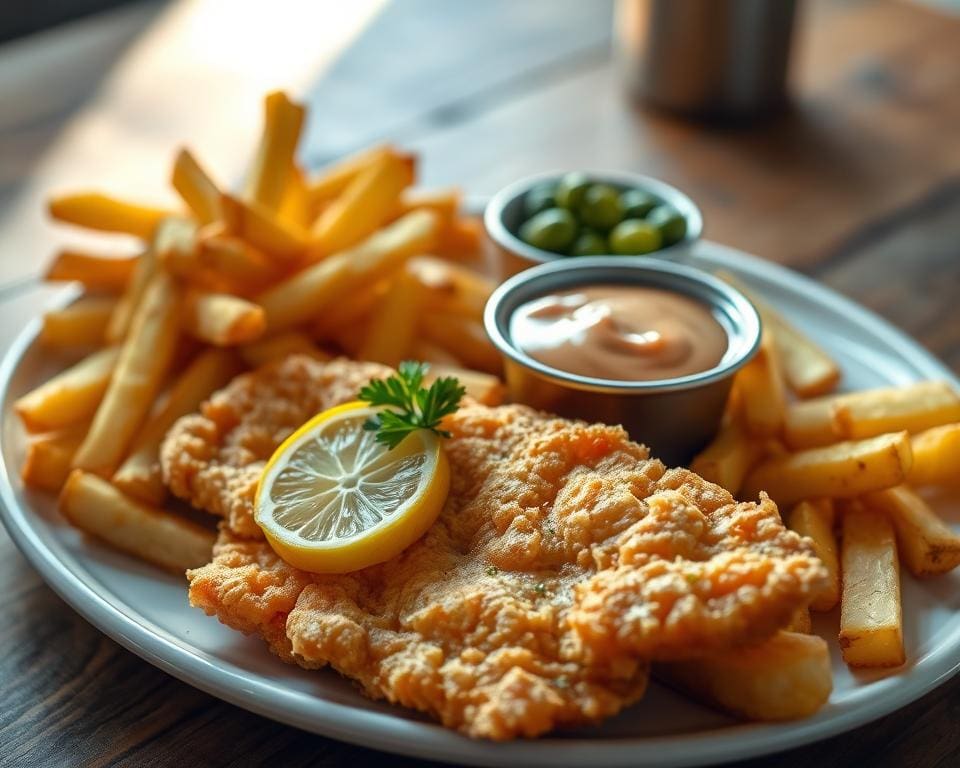
To serve fish and chips takeaway style, start with the classics. Offer a portion of mushy peas made from soaked marrowfat peas simmered until soft, then mashed with a knob of butter and a little seasoning; for a quick option, mash frozen garden peas with mint and butter. Put tartare sauce in a small ramekin — mayonnaise with chopped capers, gherkins, lemon and parsley — and include a wedge of lemon and a bottle of malt vinegar fish and chips fans can splash on as they wish.
Presentation matters for both sit-down meals and nostalgic takeaway. For a plated meal, place the fish on a wire rack over a plate to keep the batter crisp. For authenticity, serve in brown paper in a cone or on greaseproof paper. If you must hold food, keep it on a wire rack in a very low oven (80–100°C) and re-crisp chips with a short 2–3 minute blast at higher heat just before serving.
Quick troubleshooting and adaptations help when things go wrong. If batter turns soggy, briefly re-fry at a higher temperature or dry it in a hot oven. Limp chips will respond to a 190–200°C re-fry. For dietary needs, use rice flour or a gluten-free plain blend with sparkling water for a gluten-free batter, or try panko-coated fish and air-fryer chips for a lower-fat route. Refrigerate leftovers for up to two days and reheat on a wire rack in a hot oven (200°C) for 8–12 minutes or in an air fryer at 180°C for 5–8 minutes; reheated fish won’t exactly match fresh frying but these methods improve texture.
Finish with the small touches that sell the experience. Salt chips immediately with fine sea salt and offer malt vinegar fish and chips lovers a separate bottle so they control the tang. Add chopped parsley to the fish for colour and place a neat spoon of mushy peas and a ramekin of tartare sauce alongside. These simple steps will help you recreate the aroma, taste and feel of a proper fish and chips takeaway in your own kitchen.