
This short guide explains what you’ll learn about preparing a classic roast dinner at home. It outlines a clear, step-by-step approach so you can plan a memorable family roast recipe with less stress.
You will find practical advice on choosing a cut of beef, lamb, pork or chicken, plus vegetarian alternatives, and on timing so everything finishes together. The article covers portion sizes, essential equipment and oven management for a reliable perfect Sunday roast.
There are focused sections on roast potato technique, vegetable preparation and making glossy pan gravy, along with simple condiments such as horseradish, mint sauce and apple sauce. Guidance references mainstream UK sources like BBC Good Food and Waitrose to reflect accepted temperatures and resting times.
Read on to gain confidence in how to make a Sunday roast, reduce last‑minute panic and serve a roast dinner at home that looks and tastes like it came from a restaurant.
Planning your Sunday roast: choosing meat, timings and sides
Start by choosing the right joint for the occasion. Think about cuts for Sunday roast that balance flavour, tenderness and cost. For beef you might pick the best roast beef cut for a special meal, such as rib or sirloin, or choose topside or silverside as budget roast options for larger gatherings. A roast lamb leg gives a classic result, while a pork joint for roasting can deliver crisp crackling when you score and dry the skin.
Work out roast portion sizes before you shop. Aim for 225–300 g per adult for bone-in joints and 175–225 g for boneless cuts. These roast portion sizes help you plan leftovers and plate sizes. If children are included, reduce portions accordingly. Keep your Sunday roast shopping list focused so you buy the right weight joint and accompaniments.
Use cooking times per kg to build a realistic timetable. Typical meat cooking times include guidance for beef, lamb and pork, but a probe thermometer is the most reliable check. Learn how long to roast per kg for each joint and factor in resting time. For longer, slower joints start early; quicker items go in later so everything finishes together.
Balance classic roast sides with modern vegetable sides to please every guest. Traditional options include roast potatoes, parsnips and Yorkshire puddings. For modern touches try herb-roasted root veg, cavolo nero or miso-glazed carrots. Offer roast potato alternatives such as dauphinoise or creamed potatoes if you want a change.
Plan roast dinner prep the day before to cut stress. Make-ahead roast tasks include dry-brining the joint, par-boiling and chilling potatoes for crispiness, prepping root vegetables and making a gravy base. Prepping roast ahead saves time on the day and helps your timings stay on track.
Put together a clear Sunday roast shopping list. Essentials include your chosen joint with weight, potatoes suited to roasting, carrots, parsnips, greens, stock, butter and cooking fats, flour for gravy and condiments like horseradish, mint sauce or apple sauce. Add fresh herbs, salt and pepper and any special items for vegetarian guests.
Check storage and safety notes before you cook. Fresh joints are best used within 1–2 days of purchase or frozen for longer storage. When thawing, plan time in the fridge. Keep cross-contamination in mind if you have guests with strict dietary needs and label any make-ahead dishes clearly.
Sunday roast cooking techniques and step-by-step guide
Start by bringing your joint to room temperature for more even cooking. For preparing meat for roasting, remove from the fridge 30–60 minutes ahead, longer for very large joints. This simple step helps the roast brown evenly and shortens overall cooking time.
Preparing and seasoning the joint
Use a dry brine roast method for deeper flavour: rub sea or kosher salt and cracked pepper into the surface, add crushed garlic and chopped rosemary or thyme if you like. For pork, pat the skin dry and score carefully to build crackling. For poultry, truss legs and tuck wings; for beef and lamb, massage in oil and herbs.
Roasting temperatures, resting time and how to check doneness
Begin hot to set a crust: 220°C (200°C fan) for 15–20 minutes, then lower to 160–180°C (140–160°C fan) for the rest. Use meat thermometer roast guidelines to remove the joint slightly below your target to allow for carryover. For reference, beef rare 50–52°C, medium 60–63°C, lamb 60–65°C, pork commonly taken to 63–71°C and poultry to 75°C.
If you need to know how to check meat is cooked without a probe, try the finger test for beef or cut to inspect juices. A thermometer remains the most reliable tool.
Making perfect roast potatoes: tips for crispiness
Choose the best potatoes for roasting such as Maris Piper, King Edward or Desiree. Peel and cut evenly, then par-boil for 8–10 minutes until edges roughen. Drain, steam briefly and shake the pan to roughen surfaces; this is key to how to get crispy roast potatoes.
Preheat fat in the roasting tin so potatoes sizzle on contact. Use goose or duck fat for traditional flavour or rapeseed oil for a lighter option. Roast at 200–220°C (180–200°C fan) for 45–60 minutes, turning occasionally. These roast potato tips help create a golden, crunchy exterior and fluffy interior.
Preparing vegetables so everything finishes together
Plan cooking times and space in the oven. Root vegetables like parsnips and carrots need longer and can roast alongside potatoes, added earlier if larger. Brussels sprouts roast in 20–30 minutes. Quick vegetables such as tenderstem broccoli or peas benefit from steaming or quick pan-frying close to service.
Use vegetable timings roast to stagger starts so everything arrives hot. Consider preparing gratins or cauliflower cheese ahead and baking in the last 20–30 minutes, covering then uncovering to finish.
Making pan gravy and optional condiments (horseradish, mint sauce, apple sauce)
Make pan gravy from roast by pouring off excess fat, leaving 1–2 tablespoons and the fond. Sauté shallot or onion, deglaze with wine or stock, then whisk in flour and add hot stock to taste. Simmer to thicken and finish with a knob of butter for gloss. Strain for a silky texture and season with salt, pepper and a dash of Worcestershire sauce if needed.
Match condiments to your meat: horseradish for beef, mint sauce for lamb and apple sauce for pork. Good-quality shop options exist, but homemade versions give the best flavour. For more on how cooking techniques affect taste and nutrition, read this guide to techniques and nutrition.
Resting roast meat is vital: tent loosely with foil and leave undisturbed so juices redistribute. Slice only after the suggested rest time to keep the joint moist and tender.
Presentation, troubleshooting and variations to delight your guests
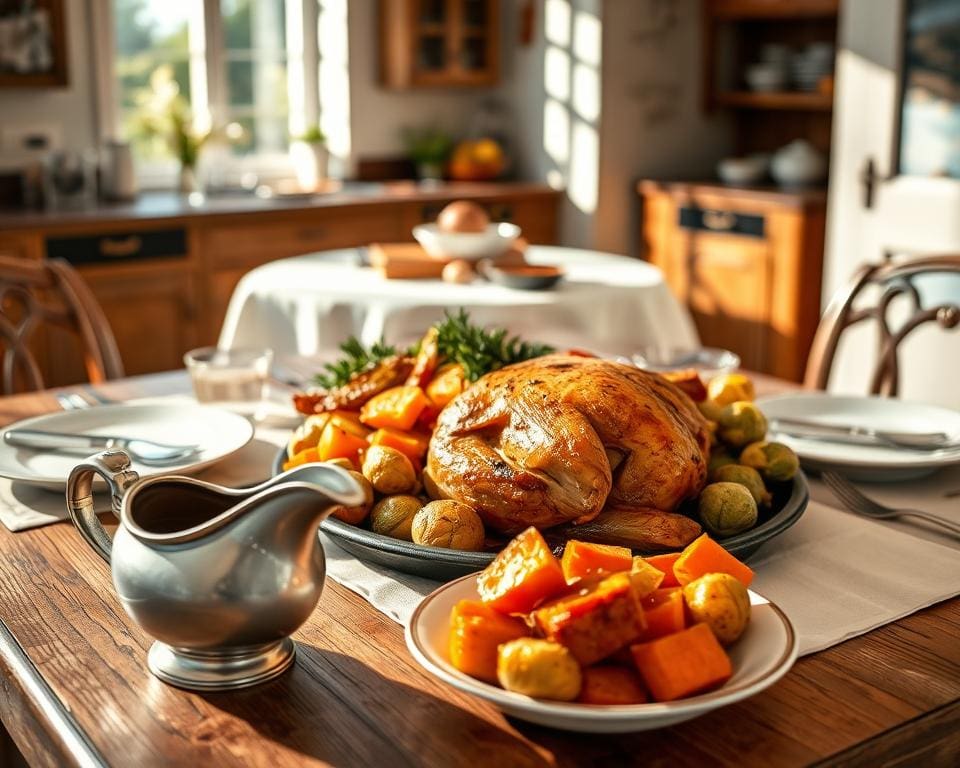
For polished roast dinner presentation, carve meat thinly against the grain and fan slices on a warmed platter. Cluster roast potatoes and parsnips to add height, scatter green veg for colour contrast and serve glossy gravy in a warmed jug so guests pour at the table. Decide whether you will serve family-style for a relaxed feel or plate individually for a formal touch, and offer condiments in small dishes while keeping plates and cutlery warm where possible.
If you need to troubleshoot roast dinner issues, start by diagnosing the problem. Dry meat is usually overcooked or under-rested; slice thinly and serve with extra gravy or a carved meat sauce, and next time lower the oven temperature or shorten cooking time and use a thermometer. For an undercooked centre, return the joint to the oven and cover the ends with foil to prevent over-browning, then re-check core temperature.
Fix soggy roast potatoes by re-roasting them on a very hot tray with a little extra fat and avoid overcrowding. If the exterior is too pale or burning, adjust the oven rack or tent with foil and reduce the initial blast heat on future roasts. These simple steps will help you troubleshoot roast dinner problems without losing momentum on the day.
Explore roast dinner variations to suit every occasion: a beef rib or crown roast for celebrations, spatchcock chicken for a casual midweek meal, whole roasted cauliflower with tahini for a modern vegetarian option, or slow-braised lamb shoulder with minted yoghurt for a relaxed, fork-tender dish. Use leftovers creatively in sandwiches, shepherd’s pie or bubble-and-squeak, cool food within two hours, refrigerate for 2–3 days or freeze for longer storage, and pace your serving so you can enjoy serving roast dinner and the company. Experiment with seasoning and sides, note your oven quirks, and delegate small tasks to keep hosting calm and enjoyable.