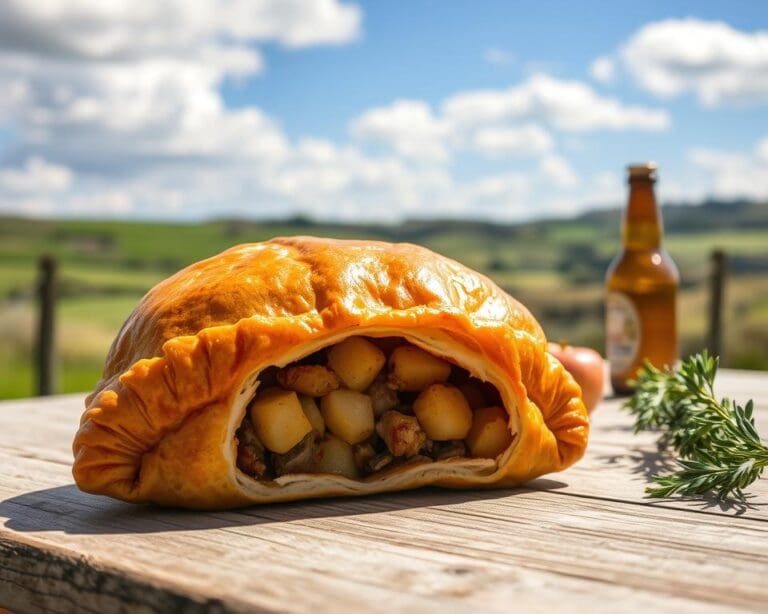
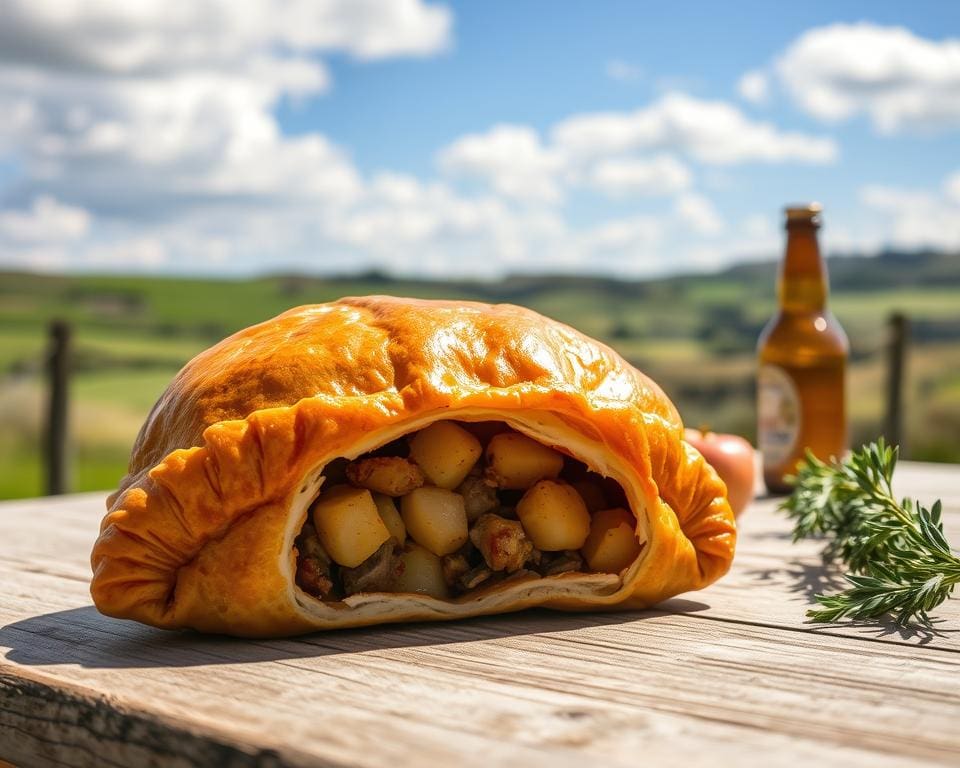
You already know the Cornish pasty as a savoury baked pastry from Cornwall, but what is a Cornish pasty at its core? It is a portable, half-moon pie with a firm crimp, designed to be eaten by hand and to sustain a working day.
At a glance, the pasty characteristics are clear: the half-moon shape, a robust shortcrust or sturdy pastry, and a crimp usually sealed along one side. The traditional Cornish pasty filling centres on beef, potato, swede (rutabaga) and onion, making the traditional Cornish pasty both simple and hearty.
Beyond its ingredients and form, the Cornish pasty is a cultural emblem of Cornwall. Its Protected Designation of Origin (PDO) status means only pasties made to the recognised standard in Cornwall may be called a Cornish pasty, which helps you spot authentic Cornish pastry in shops and cafés.
This article will guide you through the origins and cultural significance of the pasty, the core ingredients and how they shape flavour and texture, the importance of shape and crimping, and practical baking and serving ideas so you can evaluate, buy or bake an authentic pasty yourself.
The information here draws on historical records from Cornwall, culinary references, the EU/UK PDO documentation for the Cornish pasty, and advice from British bakers and recipe archives to give you a reliable, practical overview.
Cornish pasty: origins and cultural significance
You will find the history of Cornish pasty in records from the 17th and 18th centuries where filled pastries appear in household and regional recipe books. These accounts show how miners and farm workers commonly took baked parcels of meat and vegetables to work. The pasty provenance traces to Cornwall’s rural kitchens and fishing ports, where local produce shaped a portable meal that suited hard labour and changeable weather.
History and provenance in Cornwall
When you read early references, the form now known as the Cornish pasty becomes linked to Cornwall’s communities. Agricultural families and fishing households adapted simple fillings to what was available. Over time the pasty developed a recognisable identity tied to place and practice, not merely to a method of wrapping food.
You should note trade and migration carried the recipe overseas. Cornish miners who went to work in Michigan, Mexico and Australia took their pasty traditions with them. That movement spread the pasty and cemented its reputation as a practical, satisfying meal beyond Cornwall.
The pasty in Cornish mining and working-class life
Think of the pasty as a tool as much as a meal. For miners the sealed parcel kept food warm and clean. You could hold the crimp and discard it after eating, so a dirty hand never touched the filling. That design made the pasty ideal for long shifts underground, where convenience and calories mattered.
Your sense of Cornish identity will be richer when you consider how pasties appear at family tables, fairs and festivals. Recipes used cheaper cuts of meat with potato, swede and onion to fill hungry workers. Folklore, songs and miners’ customs reinforce a strong bond between pasty and mining communities.
Protected status and PDO/PGI recognition
Campaigns by Cornish producers led to legal protection for the name. The Cornish pasty PDO clarifies production rules so consumers can identify authentic pasties. The Protected Designation of Origin pasty must meet strict criteria: made in Cornwall, using the traditional filling of beef, potato, swede and onion, encased in shortcrust pastry with the side crimp and baked within the county.
You will see the effect of protection on pasty provenance. The status supports local bakers and preserves culinary heritage. Other regions continue to make similar pasties, but they cannot label them as Cornish, which helps maintain a clear link between product and place.
Distinctive ingredients and traditional filling
You will find the heart of a pasty in its filling. The classic list of Cornish pasty ingredients is simple: diced or minced beef, potato, swede and onion. The beef is often skirt, flank or brisket. Vegetables are cut into coarse, even cubes so they cook at the same rate. You assemble these uncooked, seal them in pastry and let the juices create a natural gravy as the pasty bakes.
The pastry is as important as the contents. Use a sturdy shortcrust or a rough puff to protect the filling while keeping a flaky bite. Traditional fat choices include lard, beef dripping or butter. A splash of milk or cold water will bind the dough without making it fragile.
Seasoning stays restrained. Salt and black pepper allow the meat and root vegetables to shine. You should avoid adding stock or excess liquid; a classic pasty recipe relies on the filling’s own moisture to form a rich interior.
Core ingredients that define a traditional pasty
In practical terms, the canonical traditional pasty filling is: beef, potato, swede and onion. Use coarsely chopped ingredients so each element keeps texture after baking. The meat’s marbling matters; it supplies flavour and keeps the interior moist. If you use very lean cuts, the result may be drier.
Fat in the pastry affects mouthfeel. Butter gives a pleasing taste. Lard or dripping offers authenticity and a crisper shell. Handle the dough with care to avoid overheating the fat, which keeps the pastry tender and flaky.
Regional variations versus the traditional recipe
Across Britain and beyond, bakers adapt the format. You will see meatless options, such as cheese and onion, and vegetable pasties for a lighter choice. Coastal towns favour seafood fillings. Some makers in Cornwall stick strictly to the PDO definition, which limits labelling to products made within Cornwall using the recognised filling style.
Outside Cornwall, you will find many pasty variations. In Michigan’s Upper Peninsula, for example, the pasty is a local staple with small twists in seasoning and pastry type. These adaptations reveal how the basic pasty template accepts regional tastes while the Cornish style remains defined by its core ingredients.
How ingredient quality affects flavour and texture
Freshness and cut size determine the eating experience. Well-marbled beef produces a richer gravy. Uniform, coarser cubes of potato and swede ensure a consistent texture and avoid undercooked centres. Overly fine mincing risks a pasty with a pasty filling that feels mushy.
Good-quality fat transforms the pastry. Use butter for aroma and lard or beef dripping when you want traditional crunch. Season carefully during assembly; under-seasoning cannot be rescued by quality ingredients alone. With the right balance, the simple Cornish pasty filling beef potato swede onion delivers depth from minimal components.
Shape, crimp and cooking technique
The pasty shape is a semi-circular, D-like form made by folding a round of pastry over the filling. This broad-bodied design gives you a secure seal and a generous handhold, so miners could eat without contaminating their meal. The form is a clear visual identifier of the Cornish pasty and part of the legal PDO definition.
The importance of the characteristic form
Your pasty shape affects how heat reaches the filling and the ratio of pastry to meat and veg. A rounded belly means more filling cooks in its own juices while the edge stays firm for handling. Keep the dough thickness even to avoid thin spots that cause sogginess or split seams during baking Cornish pasty sessions.
Crimping methods and their purpose
The pasty crimp seals in juices and makes the pasty easy to hold. Traditionally, miners gripped the crimped rim and left it until last to avoid ingesting dirt. You can use a thumb-and-forefinger pinch crimp or a pleated crimp; both work, but the classic Cornish pasty technique places the crimp down one side rather than across the top.
If you want to learn how to crimp a pasty, practise with small rounds of dough. Don’t overwork pastry when you practise; handling it too much makes it tough. A well-executed pasty crimp also becomes a family or regional signature while still meeting PDO criteria.
Baking techniques and timing for the perfect pastry
Start with a preheated oven to encourage a dry, hot surface that favours Maillard browning and a crisp crust. Aim for around 200–220°C to set the pastry, then adjust slightly if your pasty size needs longer cooking. Typical pasty cooking time is 45–60 minutes depending on diameter and filling weight.
Chill assembled pasties before baking so the pastry holds shape. Brush with milk or beaten egg for a glossy finish. Check internal doneness by ensuring meat reaches a safe temperature and root vegetables are tender; you can test one pasty first if unsure.
- Avoid over-stretching pastry; thin dough can rupture under steam.
- Do not over-stuff; excess filling makes sealing difficult and lengthens pasty cooking time.
- Remember that conduction, convection and radiation all affect crust formation, so oven type may change how you approach baking Cornish pasty.
For a technical overview of how heat and surface conditions alter browning and crust development, see dry-heat and browning principles. Apply those ideas to control crust colour and aroma while preserving a juicy interior with sound Cornish pasty technique.
Serving, pairing and modern adaptations
You can serve a Cornish pasty straight from the oven; historically it was a complete, portable meal eaten hot or warm and needs no extras. If you do choose accompaniments, classic condiments such as HP sauce, brown sauce or pickled red cabbage bring out the meat and potato filling. For café-style service, offer chips or a simple side salad to make the pasty a fuller plate.
Think about pasty pairings when planning drinks or sides. Robust, malty ales, a crisp bitter or a dry West Country cider complement the richness, while a strong English breakfast tea or sparkling apple juice work well for non-alcoholic options. Typical sauces — ketchup, mustard, chutney — and pickles or relishes add contrast and texture to each bite.
Modern pasty variations have expanded far beyond the traditional recipe. You will find gourmet fillings such as steak and stilton or chorizo and potato, vegetarian and vegan pasties using plant-based proteins, seafood versions with local fish, and even sweet dessert pasties with fruit fillings. Bakers also offer health-conscious choices: lower-fat pastry, wholemeal dough and specialist gluten-free Cornish pasty recipes.
The pasty’s role in food culture endures: national chains and artisan bakers sell both classic and inventive options, while specialist Cornish producers maintain PDO-certified products. As you travel in Cornwall or visit festivals and markets, sampling an authentic pasty is part of the experience. Whether eaten as street food or enjoyed at a table, the pasty remains a flexible, iconic dish with contemporary appeal.