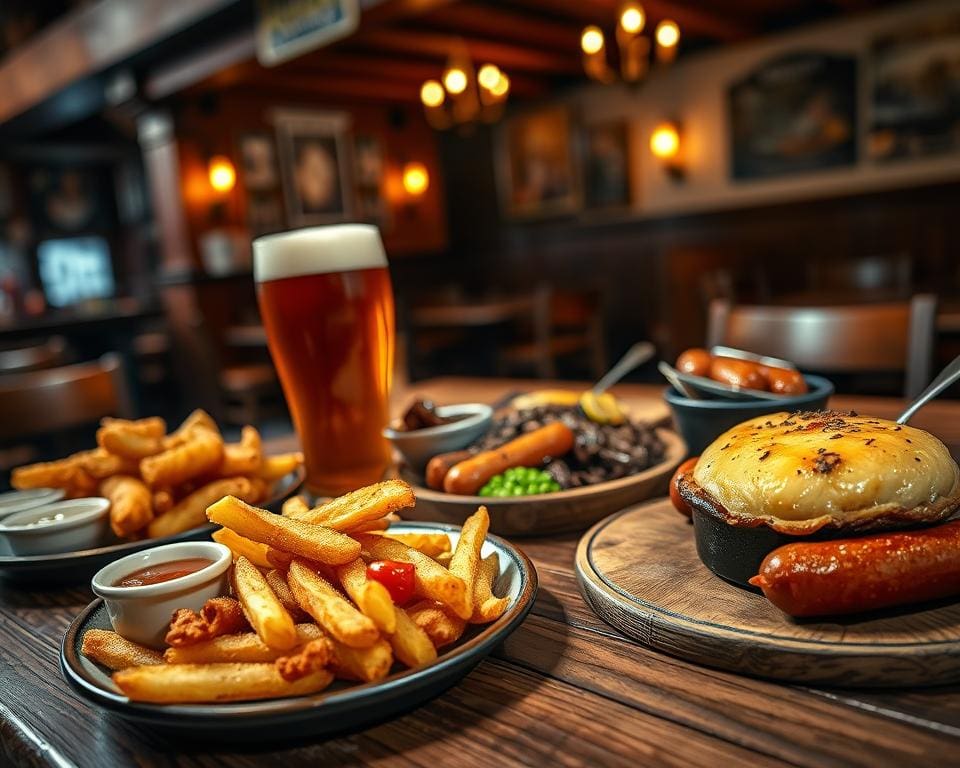
When you step into a pub in the United Kingdom, you enter a long culinary tradition. British pub food grew from simple, hearty British food designed to fill the bellies of workers and travellers.
Many classic pub dishes are now central to traditional British cuisine. Pubs began serving cooked meals widely in the Victorian era, and menus were shaped by local produce, seasonal availability and the needs of the working class.
Industrialisation, the railways and brewing customs all helped form the pub meals you recognise today. More recently, gastropubs have refined those recipes while many inns keep time-honoured methods alive.
This article will guide you through essential classics, regional variations across England, Scotland and Wales, and practical tips for ordering. You will find clear descriptions of ingredients, textures and typical accompaniments, plus advice on portion sizes and pairings with ales or soft drinks.
Use this guide to choose pub meals with confidence and discover which classic pub dishes are worth trying on your next outing.
Essential British pub food classics to order
When you step into a pub or chip shop, you want dishes that feel familiar and satisfying. This guide helps you choose from staples such as fish and chips, pie and mash, bangers and mash, a Ploughman’s lunch and steak and ale pie. Each entry notes what to expect and tips for ordering so you make the most of your meal.
Fish and chips: what to expect
Order fish and chips for a classic pairing of battered cod and thick-cut chips. Look for a crisp batter, flaky fish and chips served hot with a wedge of lemon. Many places offer mushy peas and a splash of malt vinegar to lift the richness.
Ask whether the fish is sustainably sourced or MSC certified. If the chips are twice-cooked they will be crisper on the outside and soft inside. Share portions if you want to try other dishes from the pub platter.
Pie and mash: traditional fillings and gravy
Pie and mash is a London-born comfort plate often served with liquor gravy or a thicker onion gravy. Traditional pies use minced beef, steak and kidney or even eels, wrapped in a suet crust or suet pastry for authentic texture.
Check if the pie uses suet crust made by a local baker or a shop supply. Modern pubs may offer variations such as chicken and mushroom or vegetarian options while keeping the familiar mash and parsley-based liquor.
Bangers and mash: sausages, mash and onion gravy
Bangers and mash pairs British sausages with creamy mash and a glossy onion gravy. Classic sausage varieties include Cumberland and Lincolnshire, which give distinct regional flavours.
Ask whether the sausages are made in-house or from a local butcher. A robust ale makes a fine match for the rich meat and gravy. Vegetarian and vegan sausage options are increasingly common on pub menus.
Ploughman’s lunch: cheese, pickles and bread
Your Ploughman’s lunch will centre on mature cheddar, Branston pickle and crusty bread. Expect a pub platter that may include salad, apple, pickled onions and a hard-boiled egg for variety.
Choose this dish when you want a lighter shareable option. Seek out well-aged cheddar and artisan bread to raise the experience. Pairing suggestions appear in a helpful beverage guide at how drinks complement meals.
Steak and ale pie: slow-cooked flavours
Steak and ale pie showcases slow-cooked beef in a rich ale gravy, encased in suet pastry or shortcrust. Slow cooking produces tender meat and a deep, savoury sauce that suits seasonal veg or creamy mash.
Ask which ale is used; a porter or brown ale will influence the pie’s sweetness and depth. For the fullest taste, order with a pint of the same ale to echo the pie’s notes and complete the pub meal.
Regional variations and seasonal pub dishes
British pub menus change as you travel the nations and as the seasons turn. You will spot dishes that speak of place and time, from coastal specialities to hearty inland fare. A seasonal pub menu often highlights local produce and seasonal ingredients, so ask about weekly specials when you visit.
Scottish pub favourites: haggis and tattie scones
In Scotland you can expect robust plates rooted in tradition. Haggis appears on many menus, served with neeps and tatties or as a starter in modern forms such as haggis bon bons. A full Scottish breakfast at some pubs pairs tattie scones with black pudding and smoked salmon for a filling start to the day.
Welsh specialities: rarebit and lamb dishes
Wales brings cheesey comfort with Welsh rarebit, a melted-cheddar sauce spiced with ale and mustard, piled on toast. Welsh lamb features on pub roasts and slow-cooked plates, while coastal venues may add laverbread for an authentic taste. In winter you might order cawl, then choose lighter lamb salads when the weather warms.
English regional twists: Cornish pasties and Norfolk hotpot
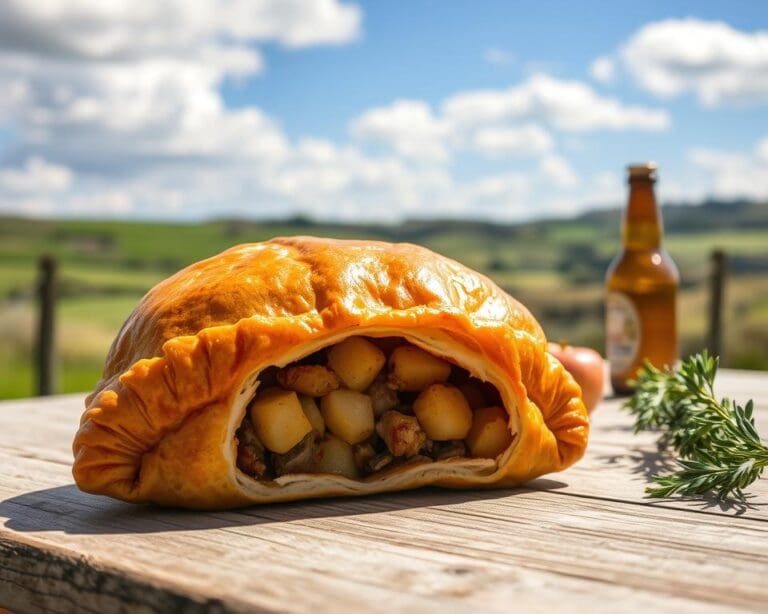
Regional English food shows strong local identity. A Cornish pasty remains a classic, its original pasty fillings of beef, potato, swede and onion still common in pubs across Cornwall and beyond. Norfolk hotpot offers slow-cooked comfort with layered potatoes and lamb or mutton for a rustic plate. Many pubs advertise where their Cornish beef or local vegetables come from to underline provenance.
Seasonal offerings: winter stews and summer salads
Look for winter stews and braised dishes when temperatures drop; these are built for warmth and long cooking. Pies, casseroles and game dishes often sit alongside sticky toffee or bread-and-butter pudding for dessert. In summer you will find summer salads and grilled fish on many menus, leaning on fresh seasonal ingredients and lighter preparations.
- Ask the landlord about local suppliers to learn about provenance.
- Try small plates to sample regional tastes without committing to one main course.
- Select dishes from the seasonal pub menu to enjoy the freshest flavours.
How to choose and enjoy British pub food
When choosing pub food, look for signals of quality on the menu. Phrases such as local lamb from a named farm, daily specials, or notes about suppliers usually mean dishes are made from scratch rather than pre-packaged. Gastropubs tend to show provenance, while traditional pubs often excel at time-honoured recipes—use those clues to judge authenticity and freshness.
Use practical pub food tips when you order. Many pubs serve generous portion sizes, so ask the staff about typical servings and whether sides are included. If you want to try several dishes, share starters or pick a starter and a main. When ordering in pubs, tell the server about allergies and ask what can be substituted; many venues now offer vegetarian, vegan and gluten-free options.
Think about pub food pairings and pace. Rich dishes such as steak and ale pie or bangers and mash work well with a full-bodied ale or a cider, while fish and chips suit a crisp lager, a bitter or a light white wine. For cheese-led plates like a Ploughman’s, try a real ale or a dry cider. Start with a lighter starter or share plates so you have room for a classic pudding.
Finally, embrace the social side and simple etiquette. Order at the bar where required, ask staff for local recommendations, and sample regional specialities to get a taste of place and seasonality. Savour the textures—crisp batter, creamy mash, robust gravies—and enjoy how pub food reflects local produce and tradition.