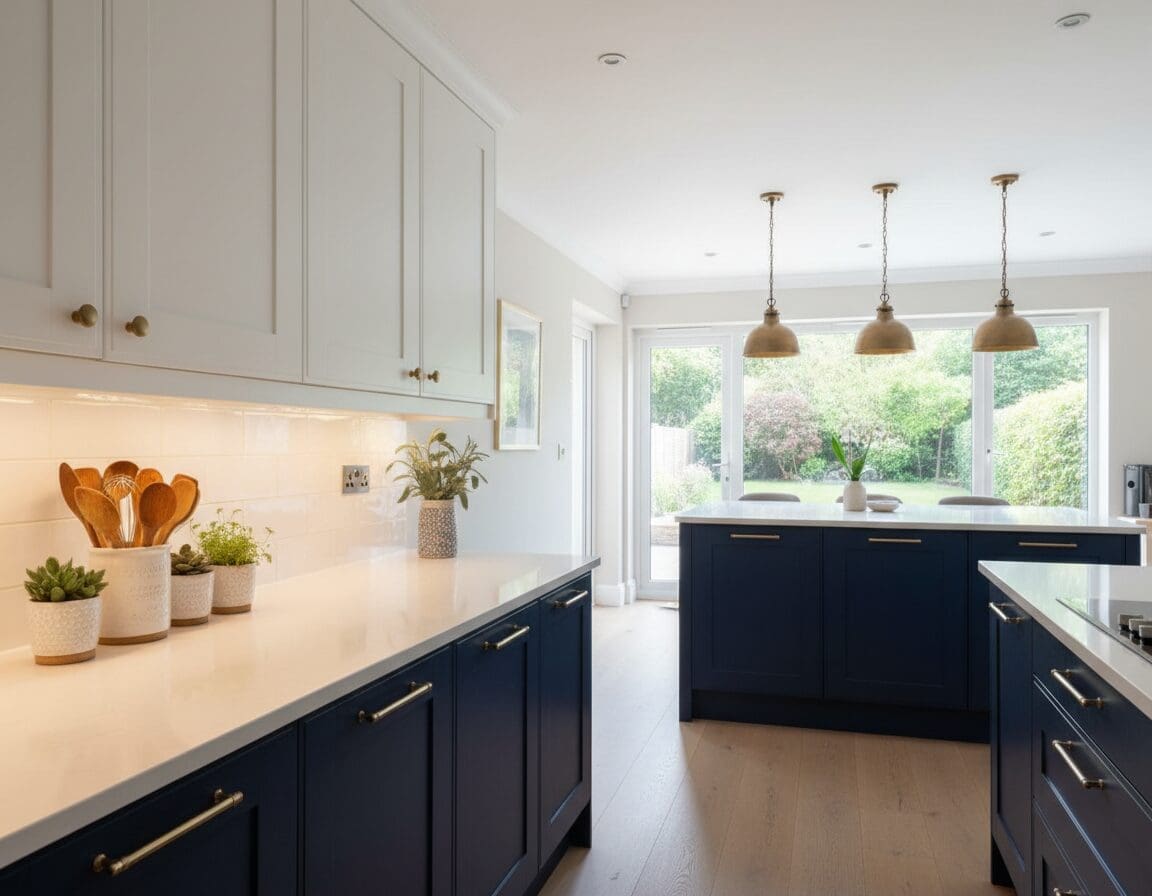
Designing a functional kitchen with modern cabinets starts with a clear aim: balance looks, storage and everyday usability. You want kitchen cabinets design that supports the way you cook, entertain and live while fitting your home’s footprint and budget.
By the end of this article you will know how to plan a functional kitchen layout, select modern kitchen design styles and materials suited to UK homes, and apply kitchen cabinet ideas that optimise storage with base, wall and tall units. You will also learn about interior fittings and how lighting and technology finish a kitchen makeover UK.
UK homes often present constraints: smaller Victorian terraces, open-plan conversions and listed-building rules can limit structural changes. Moving a load-bearing wall or altering external doors may need planning permission or building regulations approval, so check requirements before you commit.
Budget is a practical starting point. For planning, an economical cabinet refit using supply-only flat-packed units might begin around £3,000–£6,000. Mid-range fitted kitchens commonly cost £8,000–£18,000, while high-end bespoke cabinetry can exceed £20,000. Allow for installation, plumbing, electrical work and possible VAT.
Key terms you will see across the guide include carcass (the cabinet body), face-frame versus frameless construction, inset versus slab doors, end panels, plinths and carcass depth. UK standard unit widths typically come in 300mm increments: 300, 400, 500, 600mm, etc.
For reliable products and advice, consult established UK suppliers and resources such as Magnet, Howdens and IKEA UK. Refer to British Standards for safety and compliance, and hire professional designers or certified fitters from the British Institute of Kitchen, Bedroom & Bathroom Installation (BiKBBI) for complex projects.
Planning a functional kitchen layout with modern workflow principles
Start by thinking about how you move and work in the space. Good kitchen layout planning begins with measuring, mapping traffic and defining task areas so the design supports a smooth kitchen workflow.
Understanding the kitchen work triangle and modern adaptations
The classic work triangle links sink, hob and fridge to cut walking distance. Aim for each leg to be between 1.2m and 2.7m and a perimeter close to 4m–7.9m for efficient flow. This rule still helps, but you should adapt it for open-plan living and islands.
In a work triangle modern kitchen you may replace strict triangle thinking with task-based zones. For example, place a prep area near the fridge and sink, cluster cooking around the hob and oven, and group cleaning with the dishwasher and waste sorting. Islands can create hubs with prep sinks, seating and storage, transforming the triangle into a more flexible polygon.
Assessing your space: measuring, traffic flow and access points
Measure room dimensions, ceiling height, window and door positions, plumbing and gas locations, sockets, radiators, vents and any structural columns. Record measurements to the nearest millimetre for bespoke cabinets.
Keep walkways clear: 900mm minimum between worktops for one cook, 1,200–1,500mm to allow two people to pass and for island seating. Check that doors and drawers do not obstruct circulation when open.
Position major access points so the fridge is easy to reach from the entrance and from prep areas. In open-plan layouts, preserve sightlines to living areas so you can talk to guests while you cook.
Prioritising zones: prep, cooking, cleanup, storage and social areas
Define kitchen zoning early. Place food storage near the entrance, the prep zone between fridge and hob with quick access to the sink, and the cooking zone around hob and ovens with cookware close by. Keep the cleanup zone with sink, dishwasher and pull-out waste close together.
Arrange storage by frequency of use: everyday items at waist-to-eye level, heavy pots in lower pull-outs and seldom-used goods in high cupboards. A prep sink on an island keeps wet tasks separate from cooking and an adjacent baking drawer simplifies tray and scale storage.
Incorporating universal design and accessibility for long-term functionality
Design for everyone by including adjustable worktop heights between 720mm and 910mm, split-level worktops and easy-open hardware. Use lever taps, hands-free fittings, pull-down shelving and soft-close drawers for daily ease.
Follow UK guidance such as Building Regulations Part M when relevant, and consider consulting an occupational therapist for specific mobility needs. Plan for ageing in place with low thresholds, anti-slip floors and under-cabinet lighting to support safe, lasting use.
kitchen cabinets design: styles, materials and layout choices
Choosing the right kitchen cabinet styles sets the tone for your space and affects daily use. In period homes you may favour shaker or beaded doors to respect character. For modern flats, handleless lacquered or matt slab fronts give a clean look that pairs well with minimalist appliances. Think about finish durability: textured woodgrain hides scratches better than high-gloss in busy family kitchens.
When you weigh door construction, MDF with veneer or lacquer gives consistent colour and affordable stability. Solid oak or ash doors bring warmth and a premium feel, though they will react to humidity. If you prefer bespoke kitchen cabinets, choose carcasses and seals designed for longevity in UK conditions.
Cabinet materials UK choices for carcasses range from melamine-faced chipboard for cost-effective options to plywood or moisture-resistant MDF where strength matters. For bespoke kitchen cabinets, solid timber carcasses can be specified with FSC certification to meet sustainability goals and reduce VOC exposure.
Worktop pairings influence maintenance and style. Quartz, granite and laminate are common in UK kitchens. Oak worktops add softness, stainless steel suits utility rooms. Natural stone needs sealing. Consider heat and scratch resistance when you decide.
Plan your layout using standard module widths in 300mm increments to simplify future changes. Base units at a 600mm depth suit most tasks. Wall units are typically 300–360mm deep; leave a 400–600mm gap above the worktop depending on splashback and appliance clearance.
Tall units are vital for practical kitchen storage solutions. Use pantry pull-outs and integrated appliance columns for ovens and fridges. Place tall storage near the entrance for easy unloading of groceries. Ensure installers fix units to studs and allow service voids for pipework.
Interior fittings transform usability. Soft-close, full-extension runners from brands such as Blum, Hafele and Grass provide reliability. Pull-out storage systems and LeMans-style carousels make corner spaces accessible. Magic corners and pull-out trays reduce bending and wasted reaches.
Drawers work best when organised. Fit cutlery inserts, spice organisers and adjustable dividers to keep items visible. Deep pan drawers with pot racks prevent stooping. For waste management, integrated pull-out bins with separate recycling compartments and odour-control features suit family households.
Accessibility and durability matter. Choose hardware rated for high cycles and corrosion-resistant finishes for UK humidity. Consider pull-down shelves and lower drawers for seated use, and check electrical safety if you opt for motorised pull-outs.
Integrating modern technology, lighting and finishing touches
When you fit integrated kitchen technology, plan for ventilation, service access and clearance so smart ovens, induction hobs with extractors and Wi‑Fi refrigerators work smoothly with cabinetry. Arrange dedicated circuits for major appliances in line with UK wiring regulations, and place everyday sockets above worktops at regular intervals. Include charging points in drawers or on end panels to keep devices tidy and usable.
Think about motorised and soft‑close systems for everyday ease. Push‑to‑open doors, electrically assisted lift units and height‑adjustable worktops add convenience, but you must consider serviceability and power source choices. Choose systems that offer mains power options or easily replaceable batteries and ensure access for future repairs to avoid disruptive removal of units.
Layer your kitchen lighting design to balance function and atmosphere. Use recessed LEDs or central pendants for general light, under‑cabinet lighting for tasks, and accent lighting inside glass units or at the toe‑kick for ambience. Specify warm white (2700–3000K) for ambient fittings and neutral white (3000–4000K) for task areas, and aim for a CRI of 90+ so food and surfaces appear true to life. LED fittings meet energy‑efficiency targets and are suitable for low‑voltage schemes when installed with compliant transformers.
Complete the scheme with considered kitchen finishing touches UK shoppers value. Select handles and hardware that suit your style, from bar handles for contemporary kitchens to brass options for period character, and weigh hygiene and feel. Pick splashback materials—glass, stainless steel or continuous quartz—that resist steam and staining. Finish with durable, water‑resistant flooring and washable paints, register appliances and keep records of hardware brands like Blum and Häfele to simplify aftercare and spare‑part sourcing.