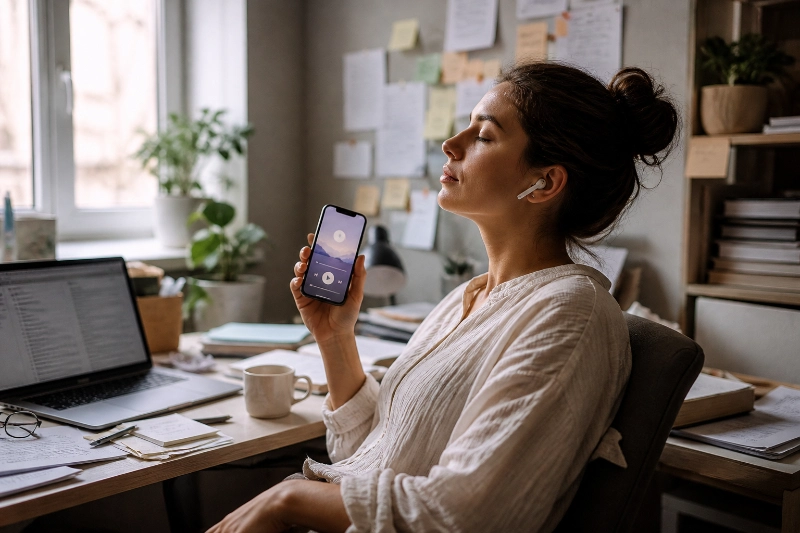
Understanding what makes a free nervous system regulation app effective starts with one simple question: does it actually help in real moments of stress or overwhelm? The best apps focus on practical tools you can use quickly, without friction or complexity, while still supporting longer-term habits.
A free nervous system regulation app is designed to offer accessible techniques such as breathwork, grounding and simple tracking. These tools are widely used to support emotional balance, improve focus and help you respond more calmly to everyday triggers.
What should a free nervous system regulation app actually do?
In practice, an effective app should offer both immediate support and long-term value. In the moment, you need quick tools to reduce feelings of stress or overwhelm. Over time, consistent use can help you build awareness, improve focus and develop more stable routines around stress management and recovery.
Rather than promising instant results, well-designed apps provide simple, repeatable techniques that fit into daily life. Short breathing exercises, grounding prompts and quick mood check-ins are examples of tools that can be used during a busy day, at work or at home.
When you evaluate an app, look for practical usability, low barriers such as free access or no-login options, and clear privacy practices. A strong free nervous system regulation app will also keep the experience simple and accessible, especially for people dealing with ADHD or burnout.
Key features of a free nervous system regulation app
Choose an app that gives clear, short tools for immediate relief and longer sessions for training. The best free nervous system regulation apps combine brief practices, simple prompts and accessible data so you can build a daily habit that fits your life.
Guided breathing exercises and grounding tools
Look for widely used breathwork patterns such as box breathing, 4-6-8 and coherent breathing. Short practices of 30–120 seconds can help reduce feelings of stress and calm your breathing, while longer sessions of 5–20 minutes support relaxation over time.
Sensory anchors like the 5-4-3-2-1 exercise, progressive muscle relaxation, tactile prompts and simple imagery help you reorient during anxiety, panic or burnout episodes. Visual pacers, haptics, audio guidance and optional nature sounds support adherence in a breathwork app for stress and anxiety.
Offline nervous system regulation app capabilities
You need tools that work without a signal. An offline nervous system regulation app lets you access exercises on trains, overseas or in low-coverage areas when crises occur.
Expect saved guided sessions, local journaling, offline timers and breath pacers with the option to export or sync later. Local-only storage reduces exposure, yet clear backup and export options are vital for long-term safety.
Private journal and no login app experience
Many people prefer a private journal and no login app experience to avoid account friction and protect anonymity. Free-text reflections, mood tags and encrypted local storage lower barriers for users who avoid creating accounts.
Best practice includes optional passcode or biometric locks, local encryption, export to PDF or CSV and clear deletion controls. Short prompts and micro-journals help people with ADHD or burnout finish entries more often.
Mood and energy check-in tracking for personalised insights
Daily micro-surveys for mood, stress, energy, sleep and focus make small data actionable. Choose frequency options that suit you: once a day, multiple times or ad-hoc check-ins.
Simple trend views and weekly summaries help you see correlations, for example that a breathing session often precedes lower evening stress. A dopamine menu with tiny, rewarding micro-tasks supports focus and reorientation for users of a mindfulness app for burnout and ADHD.
User experience and accessibility to support daily use
The right user experience makes nervous system regulation tools for daily use feel simple and inviting. Good apps cut friction so you can calm quickly, whether you have a minute between meetings or a longer evening practice. You should find core actions up front, large buttons for one-handed use and clear, readable text.
Intuitive design for nervous system regulation tools for daily use
Design should mean one-tap starts, consistent iconography and minimal steps to begin a session. Offer home-screen widgets and shortcut gestures for fast access. Include voice-over support, adjustable text sizes and high contrast modes so the app works for more people.
Think of a simple workflow: open the Low Tide Calm app, tap a single 60‑second breath, feel a gentle haptic confirmation. Clear primary actions reduce hesitation and raise the chance you use the tool when you need it.
Low cognitive load for people with ADHD and burnout
The interface must lower mental effort for users with ADHD and burnout. Use simplified navigation, reduced choices and progressive disclosure so beginners see only what they need. Offer templates and pre-made routines to cut decision fatigue.
Provide short, plain instructions and optional hands-off modes such as audio-only guidance. A dopamine menu of quick micro-activities helps with habit building by giving immediate, satisfying completion cues.
Customisable sessions: length, intensity and reminders
You should be able to tailor session duration from 15 seconds to 20+ minutes, adjust breathing pace and pick audio layers like voice, music or nature sounds. Let visual intensity shift between calming and energising modes.
Reminders must be flexible: scheduled prompts, context-aware nudges after long phone inactivity and geofenced cues. Include snooze and skip options to avoid notification fatigue. Personalisation increases relevance and helps you stick with practice.
Cross-device continuity and minimal permissions
Seamless cross-device continuity keeps your progress across phone, tablet and web while protecting privacy. Offer lightweight, opt-in sync that is encrypted, and a local-only option for users who prefer no cloud copy. Request minimal permissions and explain why each is needed.
Only ask for access essential to features, for example microphone for breath detection or local storage for offline sessions. For UK users, present clear GDPR-style consent screens and a choice to keep data local to your device.
Evidence, safety and outcomes that build trust
Before you choose a free mindfulness app for burnout and ADHD, check the evidence and safety details. Good apps cite peer-reviewed studies and list a clinical advisory board with psychologists or respiratory therapists. Look for references to systematic reviews or meta-analyses that back breathwork, grounding and brief mindfulness practices.
Breathwork and paced breathing are commonly used to support relaxation and reduce feelings of stress. Grounding and sensory tasks can help bring attention back to the present moment and support emotional stability for some people. Short, regular mindfulness practices are often used to improve focus and reduce repetitive thinking patterns.
Seek apps that make clinical signposting clear. They should flag contraindications like hyperventilation risk for those with cardiac or respiratory conditions. Trauma-informed options must avoid retraumatising prompts and advise users to seek professional help for severe symptoms.
Data privacy security and transparency in free apps
You should expect plain explanations of what an app collects, whether data is stored locally or in the cloud, and if third parties see any information. GDPR compliance is essential in the UK, with contact details for a Data Protection Officer available.
Technical security measures to look for include encryption at rest and in transit, secure authentication for account features and routine security audits. The app should state its business model openly, whether that means ads, paid upgrades or anonymised research data, and let you opt out of data sharing.
Measuring outcomes: mood, stress, sleep and focus metrics
Valid, easy measures help you track progress. Single-item mood sliders, short validated scales for screening and simple sleep metrics such as latency and duration are useful. Focus metrics might include cumulative focus time or Pomodoro-style session counts.
Good apps show trends and session-effect graphs, and let you export reports to share with clinicians. Day-to-day ecological tracking gives more reliable signals than one-off claims. Apps must be honest about the limits of self-reported data and avoid overstating clinical efficacy when measuring outcomes mood stress sleep focus metrics.
Value-added elements that increase engagement and retention
You want features that help you return without feeling pressured. Gentle gamification—streaks with forgiving resets, small badges and clear progress visuals—gives quick wins while avoiding competition or shame. For ADHD users, a dopamine menu for ADHD and focus support offers micro-rewards and short, gratifying tasks that boost habit formation and encourage repeat use.
Personalisation makes the app feel relevant. Adaptive session suggestions use mood and energy check-in tracking, time of day and recent engagement to recommend practices such as morning energisers, bedtime wind-downs or ADHD focus sprints. Curated pathways and adaptive learning keep content fresh and aligned to your changing needs.
Free nervous system regulation app by Low Tide Calm and similar services extend value with curated articles, short videos and optional moderated forums or low-cost coaching. Moderated anonymous community spaces balance support and privacy, while signposting to reputable UK resources such as NHS mental health pages builds trust. A clear free tier should still include core tools like guided breathing exercises and grounding tools and mood and energy check-in tracking.
Practical integrations strengthen daily use: home screen widgets, smartwatch complications and calendar-friendly short sessions turn regulation into a habit. Offline-first content and quick-access tools ensure the app helps when you most need it. Ethical nudges, transparent premium tiers and outcome-focused feedback—exportable progress summaries and measurable improvements—reinforce continued use without exploitation, mirroring principles you’d expect from a well-designed mindfulness app for burnout and ADHD.
How do you choose the right free nervous system regulation app for your needs?
Choosing the right app comes down to finding tools that fit your daily life and feel easy to use in real moments of stress or overwhelm. A well-designed free nervous system regulation app should offer simple, accessible techniques that support both immediate calm and longer-term habit building.
Look for an app that balances usability, privacy and flexibility. Features such as offline access, short guided exercises and low-friction design make it easier to return to the app when you need it most. Personalisation options and clear feedback can also help you stay consistent over time.
Rather than relying on one solution, these apps work best as part of a broader approach to wellbeing. By combining small daily practices with professional support when needed, you create a sustainable way to manage stress, improve focus and build resilience in everyday life.