Creating a cohesive master bedroom layout begins with clear priorities: comfort, circulation and a look that suits your home. In the UK many homeowners and renters balance limited space with a desire for style, so practical king size bedroom ideas matter as much as aesthetics.
This guide will take you step by step through measuring your room, choosing a king size bed and mattress, and selecting nightstands that work for sleep and storage. You will learn bedside styling tips that lift the room and discover bedroom furniture UK options from retailers such as IKEA, John Lewis and Habitat to help you match quality with budget.
Expect clear, practical advice on trade-offs you often face: how a large upholstered headboard changes circulation, where extra bedside drawers make sense, and which lighting choices improve ambience without crowding the space. By the end you will have the confidence to plan a master bedroom layout that looks intentional and functions well for your daily life.
Planning your layout for a bedroom king size bed nightstand
Start by mapping your room so you can see how furniture will sit and how people will move. Good planning makes sure your bedroom layout king bed feels balanced and easy to use. Use simple room measurement tips to avoid surprises before you buy a frame or bedside table.
Measuring your room and circulation space
Measure length, width and ceiling height, then mark windows, doors, radiators and sockets. Note the door swing and wardrobe openings so nothing blocks access. These room measurement tips help you plan clear paths.
Fit a UK king size (150 cm x 200 cm) on your floor plan and allow at least 60–75 cm of circulation space bedroom around the sides and foot. Aim for 90 cm or more in a master suite, especially if you have a dressing chest or drawers.
Positioning the king size bed for balance and focal point
Place the bed centred on the longest wall or opposite the door to create a clear focal point. If you centre it between windows or alcoves you make nightstand selection and lighting simpler.
In narrow or irregular rooms you may need to use a short wall to free up floor space. Keep both sides accessible so each sleeper has equal access to nightstands and switches.
Choosing nightstand size and placement for functionality
Choose a nightstand height within about 10 cm of your mattress top so lamps and phones are easy to reach. Typical cabinet heights run from 50–70 cm depending on bed frame and mattress thickness.
Depth should be at least 35 cm to hold a lamp and book. Widths vary from compact 40 cm to 60 cm plus for more storage. Consider floating shelves or slimline consoles where space is tight.
Follow bedside spacing guidelines by keeping around 25–30 cm clear between the bed edge and doors or high-traffic routes. For symmetry, use dual nightstands where possible; if one side must be empty, add a wall shelf or sconce to balance the layout and improve nightstand placement.
Choosing a bed frame and mattress to match your style
Before you pick a frame or mattress, think about how each choice will sit in your room. The right combination of materials, height and colour helps you match bed to decor and makes daily life easier.
Comparing upholstered, wooden and metal frames
Upholstered bed benefits include a soft, cosy headboard for reading and a luxe look that suits many modern bedrooms. Brands such as Habitat and John Lewis stock linen, velvet and faux-leather options that conceal bases and sometimes include lift-up storage.
Wooden bed frames bring natural warmth and long-term durability. Oak, pine and painted finishes work well in Scandi and classic schemes. Look for FSC-certified timber from makers like OakFurnitureLand or Furniture Village if you want a lasting piece you can refinish.
Metal bed frames offer clean lines and a lighter visual weight. Iron, brass or powder-coated steel suit industrial and contemporary styles. Check weld quality and slat systems to avoid creaks and ensure good support.
Selecting the right mattress firmness for comfort and support
Use a simple mattress firmness guide to match feel to sleeping position. Side sleepers often prefer medium-soft to medium for shoulder relief. Back sleepers usually choose medium-firm to support the spine. Stomach sleepers benefit from firmer options for hip alignment.
Compare mattress types common in the UK: pocket-sprung for edge support, memory foam for contouring pressure relief, hybrid for combined spring and foam benefits, and latex for resilience and breathability. Try trial periods from Emma, Simba or Silentnight to test how a mattress performs over weeks.
Remember mattress height when you plan bedside tables. A thicker mattress raises the sleeping surface and can change the ideal nightstand height for reach and proportion.
Coordinating finish with your room colour scheme
Choose finishes that complement walls and floors. Light wood or pale upholstery suits Scandi and coastal palettes. Dark woods or black metal anchor traditional and industrial looks. Test swatches in your room light to see undertones before you buy.
Mix textures for interest: a velvet headboard against matte painted walls, or natural timber paired with cool linens. Match metal finishes in lamps and handles with bed frame accents to create a coherent scheme that helps you match bed to decor.
Styling nightstands and bedside essentials
Start by thinking about how your bedside should look and work. Choose pieces that suit your bed’s scale and the room’s layout. A cohesive approach keeps the space calm and functional while letting your personality show.
Selecting nightstand styles: matching vs complementary pieces
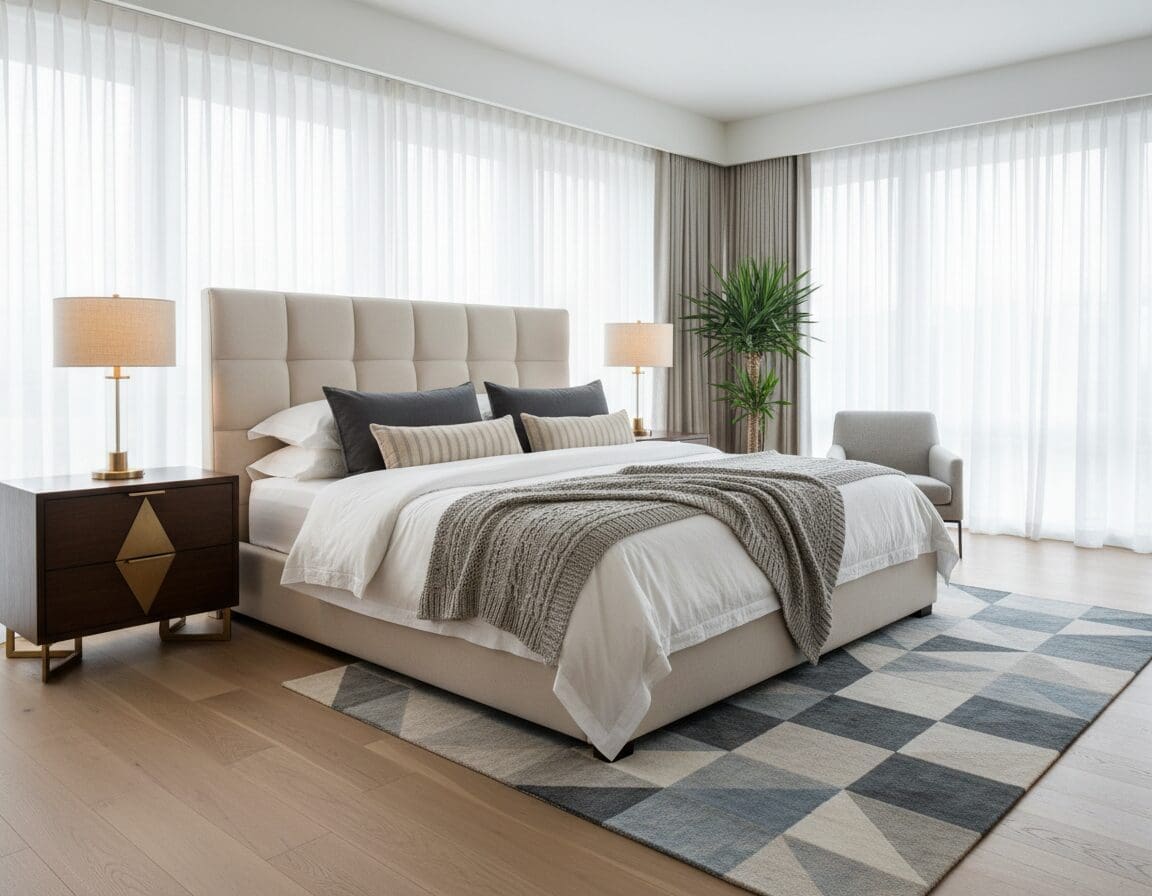
If you prefer a formal, hotel-like feel, use matching pairs to create symmetry. Matching nightstands work well with a large king bed and a substantial headboard.
You can pick complementary pieces for an eclectic look. One side could feature drawers for concealed items while the other offers open shelving for books. Mix materials, such as a wooden table with a metal lamp, to add depth without clutter.
Practical storage solutions and cable management
Opt for a mix of drawers, open shelves and baskets to cover different needs. Drawers hide clutter, shelves keep current reads visible and baskets store textiles neatly.
Resolve cable issues with simple fixes. Use cable grommets, adhesive clips or in-table cut-outs to route leads. A slim surge-protected extension with USB ports keeps chargers tidy. Retailers such as John Lewis and Argos sell bedside furniture with built-in charging options you can consider.
Keep essentials close to hand. A water carafe, glasses, phone and medication should each have a dedicated spot so the surface remains organised.
Lighting choices: bedside lamps, wall sconces and dimmers
Choose table lamps that place the bulb at eye level when you sit up. Shades that direct light downwards create a soft pool for reading. Use LED bulbs at 2700–3000K for warm, cosy light.
Wall-mounted sconces free up surface space. Pick hardwired or plug-in versions and choose swing-arm styles for precise task lighting. Add a dimmer switch or smart bulbs like Philips Hue or IKEA TRÅDFRI to control ambience for reading and winding down.
Layer lighting by combining ceiling ambient light, bedside task lamps and accent LEDs behind the headboard for depth and flexibility.
Decor accessories that elevate the bedside vignette
Keep styling restrained. Aim for the rule of three: a lamp, a practical item and a decorative piece. This helps achieve a balanced vignette without overcrowding.
- Art or a mirror above the bed to complete the focal wall and reflect light.
- A small tray, ceramic vase with seasonal foliage and a stack of books for textural interest.
- Practical accents such as a minimalist alarm clock, coasters and a decorative box for jewellery or remotes.
When you assemble bedside items, think of both look and use. This makes styling nightstands satisfying and practical, while supporting tidy bedside storage ideas and effective cable management bedroom solutions. Choose bedside lighting ideas that suit your routine and finish with curated bedroom accessories UK to personalise the space.
Textiles, colour and finishing touches for a cohesive look
Textiles are the glue that binds a bedroom together. For bedroom textiles UK, choose breathable cotton percale, linen or cotton blends for sheets and duvet covers, and add a wool throw for winter warmth. Layering is key: two sleeping pillows, two euro shams and one or two decorative cushions or a bolster creates depth and allows you to introduce accent colours without overwhelming the room.
Adopt a simple colour strategy to achieve cohesive bedroom design. Start with a neutral base—warm whites, greys or taupes—and apply the 60-30-10 rule: 60% dominant (walls and floor), 30% secondary (furniture and bedding) and 10% accent (cushions, throws and bedside accessories). Match paint sheens to purpose: matte emulsion on walls and satin on woodwork for easy cleaning.
Rugs and curtains finish the scheme and improve comfort. For a king bed, aim for a rug around 240 x 300 cm so it extends beyond the sides and foot of the bed. Use floor-length curtains in heavier fabrics with thermal or blackout linings to aid insulation and block light. These choices tie into bed linen styling and help maintain consistent bedroom colour schemes throughout the year.
Small finishing touches bedroom-wise make a big difference. Add a low-maintenance plant such as a sansevieria, maintain textiles by laundering bedding weekly and spot-cleaning upholstered headboards, and rotate the mattress as advised. Before you finish, check circulation space, nightstand reachability and that mattress and bedside heights harmonise to complete a stylish, practical and cohesive bedroom design.