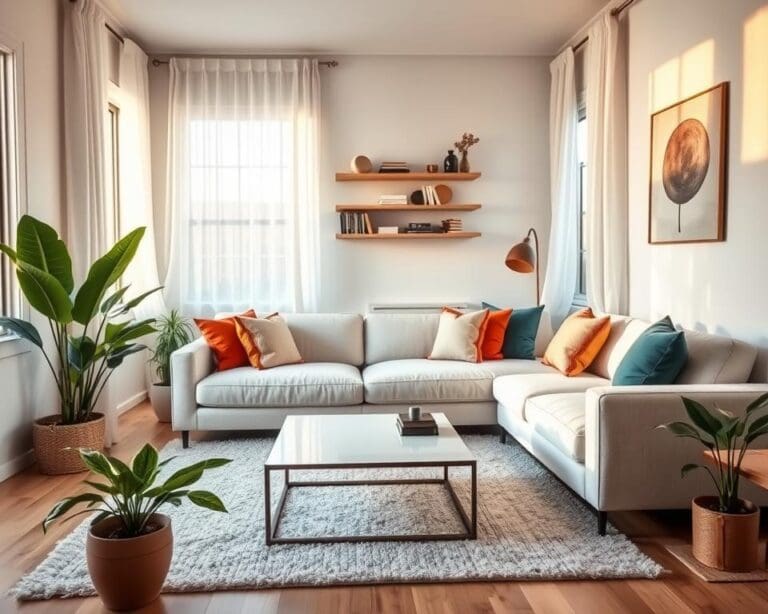
You live in a compact Victorian terrace, a city flat or a modern apartment and want to make small rooms feel larger without losing character. This guide gives practical, evidence‑based small room design advice you can use straight away. It covers affordable styling swaps and modest renovations that suit UK small flat ideas and rental constraints.
You will learn core principles: how maximising natural light, choosing a cohesive palette and getting furniture scale right all change perception. The article also explains lighting and colour strategies, space‑saving decor and storage solutions from retailers such as IKEA, John Lewis and Habitat, plus build‑friendly options for landlords and owners.
These tips matter because better small room design improves liveability, reduces clutter stress and can boost appeal when you sell or let. Recommendations draw on proven design ideas—Gestalt perception, scale and layered lighting—and consider British conditions like low light, damp and listed‑building rules, so you can adapt them to your home.
small room design: fundamentals to make your space feel bigger
Start by treating the room as a set of simple choices. Focus on the fundamentals of small room design so each decision helps the space breathe. A few deliberate changes to how you use light, colour and furniture will make the room feel more generous without structural work.
Maximising natural light
Keep windows free from bulky treatments and choose slimline roller blinds, sheer voile curtains or Venetian blinds to maximise natural light while controlling glare. Clean panes and remove opaque film so light passes through unimpeded.
Where thermal performance matters, consider secondary glazing on period windows to retain daylight. Create internal glazed screens or clear-panel doors to let light travel between rooms and brighten interior spaces.
Outside, use light-coloured paving and trim shrubs that block sun. Small changes to the exterior can help you maximise natural light inside ground-floor rooms.
Choosing a cohesive colour palette
A restrained palette reduces visual fragmentation and helps the eye travel from corner to corner. Use pale warm neutrals and soft pastels like off-white, warm grey or duck-egg blue to reflect light and enlarge the visual field.
Paint ceilings one shade lighter than walls or in pure white to lift perceived height. Keep skirting and doorframes in similar tones to avoid harsh contrasts that shorten space.
Extend a single floor tone or a complementary runner through adjoining rooms to support continuity. These small moves help tie together UK interior fundamentals and create cohesion.
Scale and proportion of furniture
Choose pieces that match the room’s proportions. Lower-back sofas, narrow-profile armchairs and slimline console tables reduce visual weight. Measure doorways and circulation paths before you buy to avoid oversized items.
Pick furniture with visible legs to create breathing space underneath. Leggy designs lessen the visual footprint and improve flow. Arrange smaller items in purposeful groupings with a single focal point, such as a window or fireplace.
Open sightlines and uncluttered layouts
Plan furniture to preserve clear routes through the room. A central or diagonal pathway makes movement easier and gives the impression of more floor area.
Adopt minimalist storage to reduce visual clutter. Hide cables, use closed cabinetry and limit surface displays so the room reads as calm and orderly. Draw the eye upward with tall slim storage to increase perceived height without taking up much floor space.
Leave intentional negative space so the eye can rest. An uncluttered layout emphasises openness and completes the fundamentals of small room design.
Lighting and colour strategies to visually expand rooms
Careful light and colour choices make a small room feel larger and calmer. Start with a plan that blends practical illumination with subtle decorative touches. Use a mix of fittings and finishes to lift walls, open sightlines and guide the eye around the space so it feels less confined.
Layered lighting for depth and dimension
Layered lighting creates depth so a room reads as bigger. Combine ambient ceiling lights such as recessed downlights or a modest pendant, with task lamps for reading and kitchen worktops. Add accent sources like picture lights or a floor uplighter to highlight architectural features.
Choose warm-white LED lamps in the 2700–3000K range to keep living spaces cosy yet open. Fit dimmer switches and split lighting circuits so you can light zones independently and avoid flat, uniform illumination.
Place uplighters behind sofas or low cabinets to wash walls and increase perceived height. Recessed downlights near walls reduce harsh shadows that make corners feel tight.
How to use paint finishes and tones
Paint finish matters. Eggshell or satin finishes reflect a modest amount of light while hiding bumps and brush marks. Avoid high-gloss on large wall areas as it can create glare and visual distraction.
Pick light, warm tones to open a room. Use three related shades for tonal layering to add depth without breaking the room into separate zones. For a north-facing room in the UK, favour warmer neutrals to counter cool daylight. For south-facing rooms, cooler neutrals keep brightness without feeling overheated.
Keep feature walls subtle. Choose low-contrast, small-scale wallpaper or a slightly darker tonal paint to add interest without making the space feel boxed in.
Mirrors and reflective surfaces to amplify light
The strategic use of mirrors and reflective surfaces boosts daylight and creates the illusion of depth. Position a large horizontal or full-length mirror opposite or next to a window to push natural light deeper into the room and widen sightlines.
Use glass-top tables, polished brass or chrome accents, and glossy tiles sparingly to bounce light. Mirrored wardrobe doors work well in bedrooms and hallways when fitted securely to current UK standards.
Balance reflective materials with matt textures so the room reads as calm rather than glittery. Thoughtful use of reflective surfaces supports your visual expansion techniques without overwhelming the scheme.
Furniture and storage solutions that save space
Smart furniture choices shape how roomy your small space feels. Select pieces that pull double duty and keep sightlines clear. Match finishes to walls when possible to blend storage into the room and make the overall layout feel less crowded.
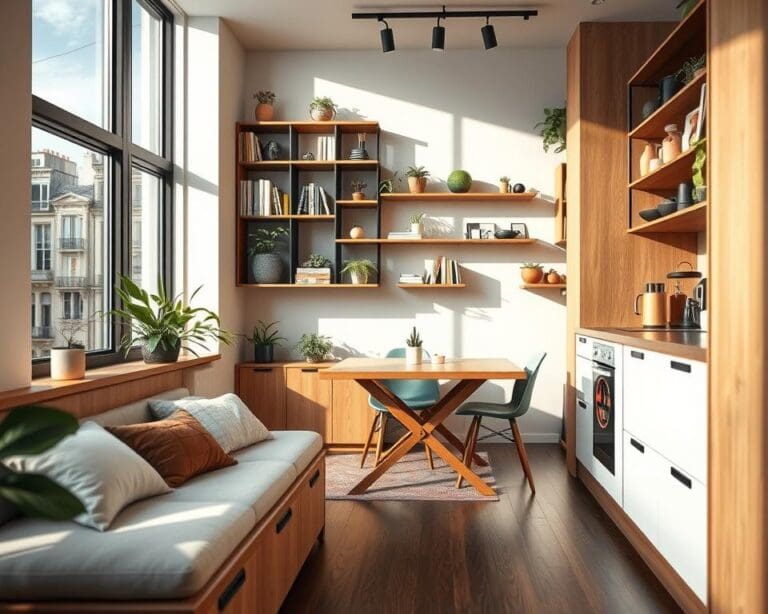
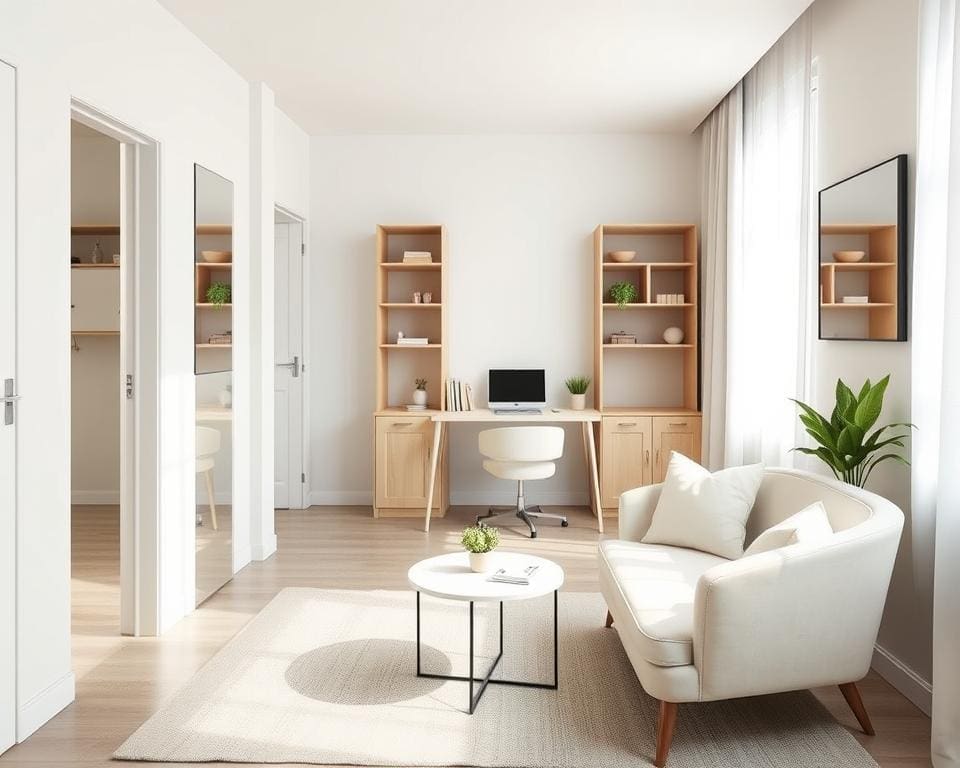
Multi-functional pieces let you do more with less floor area. Think sofa beds, extendable dining tables, nesting tables and ottomans with concealed compartments. Wall-mounted drop-leaf desks free up floor space when not in use, while compact study units offer a tidy work spot in a living room or bedroom.
Modular systems give you flexibility as needs change. Brands such as Habitat, Made.com and IKEA offer modular storage and seating you can reconfigure. For tenants in the UK, freestanding modules and fold-away options avoid permanent fixes and respect tenancy agreements.
Multi-functional and modular furniture ideas
- Choose sofa beds with high-quality mechanisms and durable fabrics for everyday use.
- Pick modular storage like IKEA PLATSA or BESTÅ to build around alcoves or chimneys.
- Use nesting tables and extendable dining tops to scale the footprint to the number of guests.
Built-in storage to reduce visual clutter
Built-in cupboards, recessed shelves and fitted wardrobes tuck items out of sight and create calm sightlines. When budget is tight, fitted units from Wickes or simple DIY shelves can maximise awkward corners and make an awkward alcove feel purposeful.
Integrate storage into window seats, under-stairs voids and chimney breasts. Use handleless doors or recessed pulls to cut visual fuss. Sliding doors save clearance in narrow rooms and keep movement smooth.
Using legs and clearance to create a sense of airiness
Furniture with exposed legs creates a legged furniture airy feel by letting you see more floor. A small gap beneath sofas and chairs, around 10–15 cm, increases perceived space and keeps the room feeling light.
Store belongings under raised beds and sofas in neat boxes to keep clutter hidden while keeping the airy effect. Match leg finishes to your floor tone to make transitions feel seamless, or use contrasting legs to anchor a key piece without overwhelming the room.
Layout, accessories and styling tricks for openness
Begin with a measured plan. Sketch your room and note key functions—seating, sleeping, dining and working—so you can apply small room layout tips that preserve a 60–80 cm circulation path where possible. In narrow rooms, push larger pieces to one side to form a clear corridor; in slightly larger spaces, try floating a sofa to create layered depth and better sightlines.
Define zones with rugs, lighting and low shelving rather than solid partitions. Use rugs sized to anchor furniture groups and keep their tones close to the floor colour to visually expand the plane. Hang curtains high and long, and place artwork in vertical arrangements to emphasise ceiling height when styling small rooms.
Choose accessories for openness with restraint. A few taller plants such as Ficus lyrata or Sansevieria draw the eye upward while light, simple textiles avoid visual heaviness. Repeat small-scale patterns or motifs instead of large busy prints to maintain rhythm and calm.
Adopt simple styling workflows: declutter surfaces regularly, use trays and shallow bowls to corral everyday items, and rotate cushions and throws seasonally for an instant lift. For larger changes, consult interior stylists or use virtual room-planning tools offered by UK retailers to test arranging furniture small spaces solutions before committing.