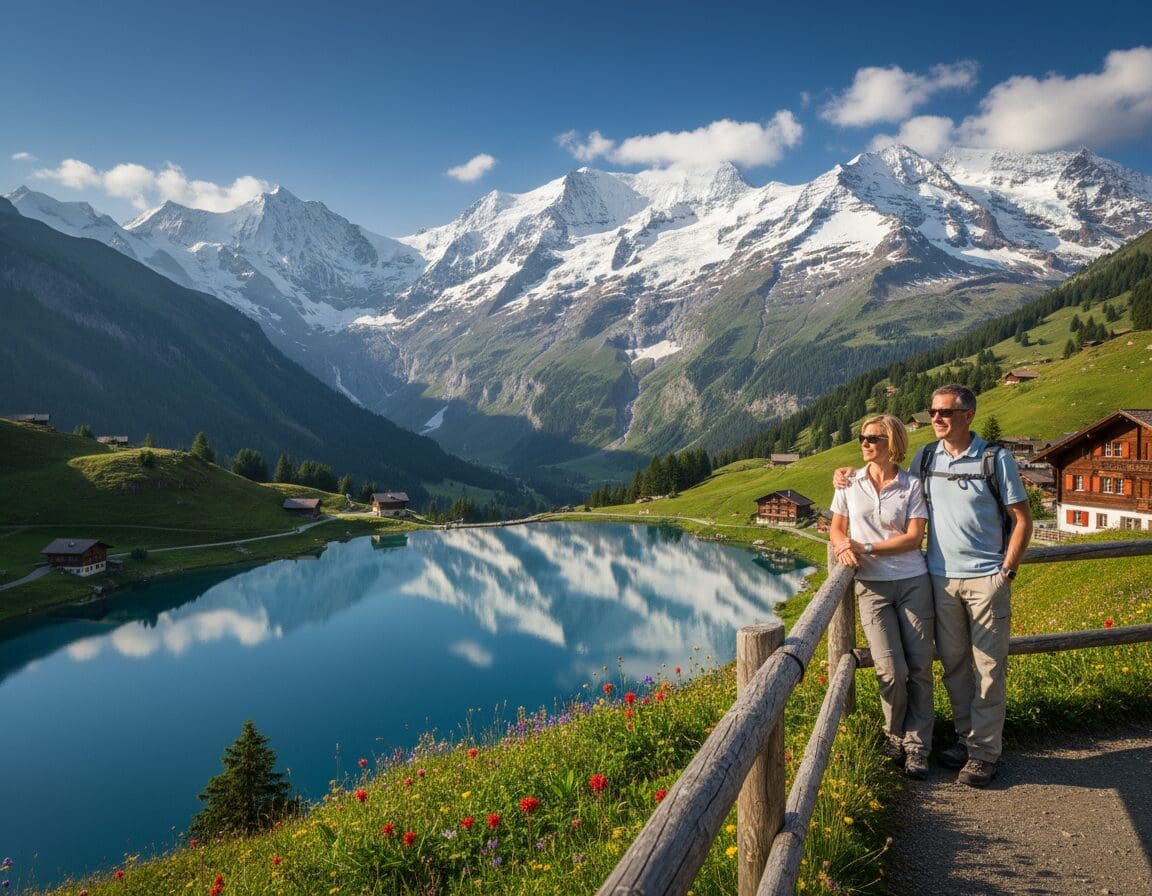
When you plan a trip to Switzerland, you choose a country that pairs dramatic scenery with very practical travel options. You can move from Alpine peaks like the Matterhorn and Jungfrau to lakeside towns such as Zermatt, Interlaken and Lucerne within hours, thanks to punctual services from Swiss Federal Railways (SBB) and regional mountain railways.
This short Switzerland travel guide shows why visit Switzerland is a question with plenty of answers: iconic rail journeys like the Glacier Express and Bernina Express, major lakes including Lake Geneva (Lac Léman), Lake Lucerne and Lake Zurich, and compact distances that let you mix mountain adventure, city culture and lakeside relaxation in one trip.
You will also find that Swiss holidays are supported by excellent infrastructure — international airports at Zurich, Geneva and Basel‑Mulhouse, high standards of safety, cleanliness and healthcare, and a multilingual society in German, French, Italian and Romansh. These traits make Switzerland easy and rewarding for travellers from the UK.
Although Switzerland can be pricier than many destinations, the quality of services and memorable experiences often justify the cost. This article will guide your planning with practical tips, highlights of outdoor activities, cultural attractions and money‑saving advice to help you make the most of your reasons to visit Switzerland.
Why a trip to Switzerland promises unforgettable scenery and outdoor experiences
Switzerland rewards you with dramatic panoramas and endless options for outdoor adventure. You can stand beneath jagged peaks in the Swiss Alps, watch cable cars climb to glacier viewpoints and find peaceful mountain villages that seem unchanged by time.
The scale and variety of the mountains change as you move between cantons. In Valais you will find the Matterhorn near Zermatt and excellent Matterhorn views from Gornergrat and Klein Matterhorn. The Bernese Oberland hosts the Eiger and Jungfrau, with Jungfraujoch known as the “Top of Europe.” In Graubünden Piz Bernina rises above high valleys and remote trails.
Accessible viewpoints and cableways put high alpine scenery within reach. Gornergrat and Klein Matterhorn offer clear sightlines to the Matterhorn. Jungfraujoch gives high‑altitude vistas and glacier access. Schilthorn features a rotating restaurant and panoramic outlooks that began attracting visitors after a famous film scene was shot there.
You will notice a mix of snow‑capped summits, green meadows and wooden chalets. Photographers favour scenes around Zermatt and Grindelwald for classic Swiss imagery. Small mountain villages add human scale to the grand landscape.
Hiking, skiing and year‑round mountain activities
Summer opens thousands of marked hiking routes, from the Haute Route and Via Alpina to local circular walks. Mountain huts run by the Swiss Alpine Club provide simple overnight options on long routes. You can try via ferrata, mountain biking and paragliding from Interlaken or Grindelwald for a different perspective.
Winter turns slopes into world‑class ski terrain. Verbier, St Moritz, Zermatt and Davos host extensive piste networks, off‑piste options and professional ski schools. Families find nursery slopes, toboggan runs and gentle winter trails for snowshoeing and winter walking.
Some resorts offer glacier skiing and year‑round ice experiences. Guided glacier walks, ice caves and high‑altitude slopes are available with qualified mountain guides. Alpine rescue services and mountain guide associations keep activities safer, while clear signposting and hut networks help you plan responsibly.
Crystal‑clear lakes, valleys and scenic train routes
Swiss lakes invite summer activities such as swimming, paddleboarding and leisurely boat cruises. Lake Geneva, Lake Lucerne and Lakes Thun and Brienz provide varied water experiences and shoreline promenades.
Valleys like Lauterbrunnen reveal towering waterfalls and act as gateways to higher trails. The Rhône valley in Valais showcases vineyard terraces that contrast with nearby glaciers and peaks.
Rail journeys showcase engineering and views in equal measure. The Glacier Express links Zermatt and St Moritz, while the Bernina Express crosses UNESCO landscapes between Chur and Tirano. Regional panoramic lines, cogwheel railways to Rigi and Pilatus, and the option of a Swiss Travel Pass make scenic train Switzerland routes easy to combine with drives over the Furka, Grimsel and Susten passes.
- Plan routes that blend rail and road to make the most of alpine scenery.
- Check seasonal road and pass closures before you travel.
- Use local guides and services for glacier and high‑altitude activities.
Practical planning tips for your trip to Switzerland
Planning a trip to Switzerland begins with timing, transport and a realistic view of costs. Pick the right Swiss travel season for your aims and pack for quick changes in mountain weather. Decide how you will move between towns and how you will keep spending under control.
Best times to visit for weather and festivals
Summer (June–August) suits hiking, lake days and lively events such as the Montreux Jazz Festival. Shoulder months in May–June and September–October offer milder weather, fewer crowds and lower prices. Winter (December–March) attracts skiers and those seeking Christmas markets in Zurich and Lucerne. Spring and autumn are quieter and good for lower rates and peaceful scenery.
Mountain weather varies with altitude; snow can linger on high passes into summer. Pack layered clothing, waterproof outerwear and sturdy footwear. Check festival dates for Locarno Film Festival, Zermatt Unplugged and regional Alpabzug cattle descents if cultural timing matters.
Transport options: trains, cars and local public transport
Switzerland transport is famous for punctual trains and well‑timed connections. Swiss Federal Railways (SBB) links cities and regions. Scenic routes such as the Glacier Express and Bernina Express require seat reservations on top of travel tickets.
The Swiss Travel Pass offers unlimited rail, bus and boat travel for set days and can save money if you plan several journeys. Use point‑to‑point tickets for single journeys or when travelling light. Local trams and buses in Zurich, Basel and Geneva make city travel easy.
Rent a car for remote valleys or scenic drives that trains do not serve. In cities and many mountain resorts you will not need a car. Remember the motorway vignette for travelling on Swiss motorways and possible tunnel charges on certain routes.
Many stations, cablecars and tourist venues offer accessible services for travellers with reduced mobility. Check individual routes and mountain links in advance; some trails and high‑alpine sections remain challenging.
Budgeting, accommodation types and saving tips
Switzerland budgeting requires realistic expectations; food, hotels and services are often pricier than elsewhere in Europe. Value is available with planning and the right choices.
Accommodation ranges from luxury wellness resorts in St Moritz and Gstaad to mid‑range hotels, family guesthouses, self‑catering apartments, mountain huts and hostels. Look for unique stays such as lakeside B&Bs or agritourism for local character and savings.
Save by booking early for peak periods, using the Swiss Travel Pass or regional cards, and choosing supermarket meals from Migros or Coop. Try set‑price mountain platters and bakeries for affordable dining. Free activities include marked hikes, public beaches and self‑guided city walks. Many cantons issue tourist cards that include local transport and attraction discounts.
Carry Swiss francs (CHF), though cards are widely accepted. Tipping is modest; service is usually included but rounding up is common. Check plug types (Type J) and arrange travel insurance and health cover before travel. UK travellers should confirm GHIC/EHIC status and top up with private insurance where needed.
Cultural highlights, cuisine and unique Swiss experiences
Switzerland’s federal, multilingual structure shapes everyday life and festivals. You can visit German‑speaking Zurich and then travel to French‑speaking Geneva to compare architecture, music and market culture in one trip. The Italian‑speaking canton of Ticino adds Mediterranean flair, while Romansh areas offer quieter alpine traditions. Sampling two linguistic regions gives you a clearer sense of Swiss culture and local rhythms.
Food is central to times shared with friends and family. Classic dishes such as cheese fondue, raclette and rösti feature in mountain huts and city bistros alike, while Swiss chocolate is a must‑try in both famous makers and small artisan shops. Seek out Maison Cailler or Lindt for a polished tour, then visit local dairies or markets in Zurich and Geneva to taste regional specialities like Valais raclette or Ticinese polenta.
Museums and historic sites show another side of the country. Swiss museums such as the Kunsthaus Zürich, the Paul Klee Centre in Bern and the Musée d’art et d’histoire in Geneva offer strong collections and English guides. UNESCO sites — the Old City of Bern, the Jungfrau‑Aletsch region and the Rhaetian Railway — reveal both natural wonder and engineering heritage. Explore Lucerne’s medieval lanes or Montreux’s lakeside promenades to see varied architecture up close.
Finally, plan for a few hands‑on cultural experiences. Attend an Alpabzug in autumn, join a chocolate or cheese tasting, try a watchmaking workshop in the Jura or relax in thermal baths at Leukerbad. Respect local customs by using a greeting in the local language, observing quiet hours and following mountain etiquette. Many venues provide English information, so you can enjoy authentic cultural experiences in Switzerland even if your language skills are basic.