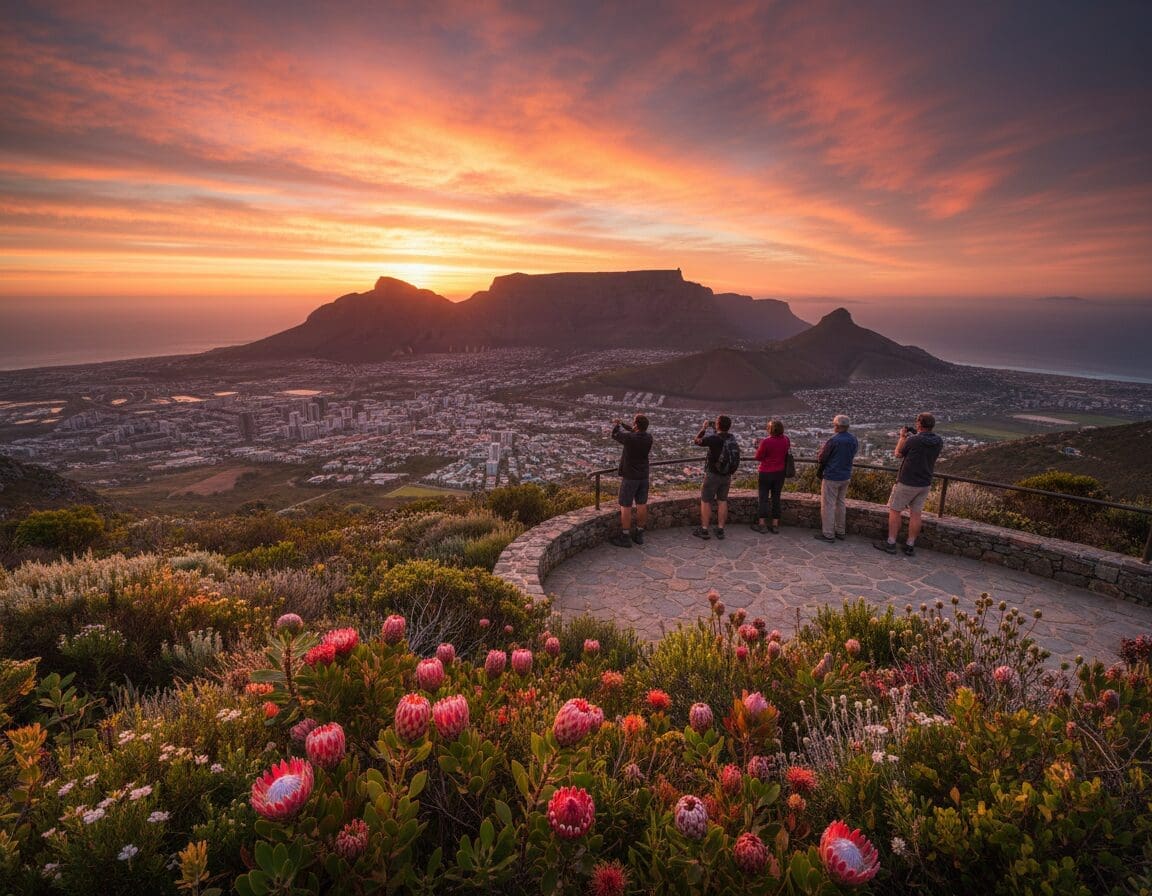
Cape Town blends dramatic landscapes, a rich cultural mix and world‑class food and wine. This Cape Town travel guide highlights the travel experiences Cape Town is famous for and helps you choose the best things to do Cape Town whether you have a weekend or two weeks to explore.
The city sits on South Africa’s south‑west coast beneath Table Mountain Cape Town, and the local currency is the South African rand (ZAR). English is widely spoken, plug type is typically Type M, and direct flights from the UK take roughly 11–12 hours non‑stop. Expect warm, busy summers from December to February and cooler, wetter winters from June to August, when whale watching is at its best.
Wind can shape your plans: the strong southeaster known as the “Cape Doctor” often affects outdoor activities. Many top attractions lie within protected areas such as Table Mountain National Park and Cape Point, so follow conservation guidance, respect wildlife and support local businesses as you travel.
This guide is organised to help you build a sensible Cape Town itinerary. Section two covers iconic natural sites and active outdoor pursuits. Section three explores food, wine and local culture. Section four offers practical travel planning and safety tips. Section five suggests unique, off‑the‑beaten‑track experiences to round out your trip.
travel experiences Cape Town
Cape Town gifts you a mix of dramatic scenery and energetic outdoor life. Plan a morning on Table Mountain to catch soft light and cooler air. You can choose a brisk walk or ride the Table Mountain cable car when winds allow, but always check operating hours and weather before you set out.
Iconic natural attractions to prioritise
Drive the Cape Peninsula for coastal drama and wide sea views. The Cape Point scenic drive takes you past cliffs, hidden bays and classic lookouts such as Chapman’s Peak. Aim to arrive early to avoid coach crowds and to spot wildlife like ostriches and baboons safely from a distance.
Clifton and Camps Bay score high for beach time. For beach users, Clifton beach safety matters: the coves are sheltered but conditions can change. Use lifeguarded areas in summer, keep valuables out of sight and be cautious with children near the water.
For marine life, consider a whale watching Hermanus day trip in winter and spring when southern right whales frequent Walker Bay. Hermanus gives superb shore-based viewing and shorter boat trips leave from Simon’s Town and Hout Bay for a closer look.
Active adventures and outdoor pursuits
If you like to hike, Cape Town offers routes for all levels. Short seaside strolls suit families while routes such as Platteklip Gorge challenge fit walkers. For varied terrain try Skeleton Gorge via Kirstenbosch or the Lion’s Head sunrise circuit. Always carry water, sturdy shoes and a map or GPS.
For adrenalin-seekers there are tandem flights and coastal launches for paragliding Cape Town, usually from Signal Hill or Lion’s Head. Book with licensed operators, check pilot qualifications and pick morning slots for calmer wind.
Water-based trips range from guided sea-kayaking in Hout Bay to longer boat safaris. If you plan to kayak or swim off rocky shores, book reputable operators who supply wetsuits and safety briefings. When you schedule activities, factor in weather, daylight and how you will travel between spots.
Food, wine and local culture experiences
Cape Town’s culinary and cultural scene invites you to taste, learn and explore. You can pair vineyard visits with market strolls, savour street food, and spend time in colourful neighbourhoods that reveal the city’s history and creativity.
Stellenbosch and Constantia offer contrasting wine days that suit different tastes. For fuller estate experiences, look for cellar tours that include tastings, pairings and vineyard walks. If you prefer a short trip from the city, Constantia winery tours are ideal for cool‑climate whites and historic estates such as Groot Constantia. For bolder reds and centuries‑old Cape Dutch houses, book one of the many Stellenbosch wine tours.
Choose how you travel carefully. Full‑day organised tours often include transport and several estates. Private drivers let you linger for lunch or a photo. If you drive yourself, plan ahead and avoid drinking and driving by using spittoons or asking for non‑alcoholic alternatives between tastings.
The city’s markets present a lively way to sample local flavours. Visit the V&A Waterfront Market and the Old Biscuit Mill on a Saturday for artisanal stalls and street food. When you browse Cape Town food markets, look for dishes such as bobotie, gatsby sandwiches and fresh seafood. Pick busy stalls for fresher food and ask vendors about ingredients if you have allergies.
Vegetarian dining is widely available across the city. Many cafés and fine‑dining restaurants list Cape Town vegetarian options on their menus. Seek out plant‑based cafés in Woodstock, the City Bowl and Gardens, and book ahead for popular venues to secure a table.
Heritage neighbourhoods offer vivid cultural experiences and photo opportunities. Bo‑Kaap is famed for its colourful houses and Cape Malay history; practise respectful Bo‑Kaap photography by shooting in soft morning light and asking permission before photographing people. Kalk Bay is a working fishing village with a lively harbour and seafood scene—explore local galleries and choose from the harbourfront Kalk Bay restaurants for fresh catches.
Live music and cultural nights add another layer to your visit. Catch a jazz set in Green Point or a folk night in a small Long Street venue. Check schedules and book tickets in advance for special events and theatre performances at venues such as the Artscape Theatre, so you do not miss headline acts or seasonal festivals.
- Book tastings ahead at popular estates
- Combine a Constantia morning with Kirstenbosch Botanical Gardens
- Pair Stellenbosch with a seaside stop or a town‑centre cultural visit
- Choose high‑turnover stalls at markets for food safety
Practical travel planning and safety tips for visitors
Plan ahead to make the most of your trip. This short guide covers seasonality, transport choices, budgeting and health precautions so you can enjoy Cape Town with confidence. Use these Cape Town travel tips to shape an itinerary that fits your interests and pace.
Best times to travel and weather considerations
Dec–Feb brings warm, sunny days that are ideal for beaches and outdoor dining. Pack sun protection, lightweight clothing and a windproof layer. Be aware that peak season means higher prices and busier attractions. Mar–May offers mild weather and fewer crowds; it is a good window for hiking and wine tours. Jun–Aug is cooler and wetter, but it is prime for whale watching—bring waterproof layers and warmer clothing. Sep–Nov brings spring blooms on the West Coast and variable weather; layer up and include a light jacket in your Cape Town packing list.
Transport, accommodation and budgeting
Renting a car gives freedom to explore the Cape Peninsula and Stellenbosch. Ensure you have a valid driving licence and read local parking rules. Use the MyCiTi bus for reliable, budget‑friendly travel between the city and the airport.
Uber and Bolt are practical for short trips at night. Choose licensed tour operators for day trips and compare reviews before booking. Think about where you stay: the City Bowl places you near museums and Table Mountain; the V&A Waterfront suits families but costs more; Sea Point offers sea views with good mid‑range value; Camps Bay and Constantia are scenic and pricier.
Typical costs vary, so budget for guided experiences and reserve fees. Save by booking tickets and tours in advance, using MyCiTi where possible, visiting free attractions and opting for lunch tasting menus rather than full dinners. These steps improve value without missing key experiences.
Health, safety and responsible travel
Use practical Cape Town safety advice while you explore. Keep valuables out of sight, use a hotel safe, and prefer licensed taxis or recognised rideshares after dark. Ask hosts about neighbourhood safety and follow local guidance when walking at night.
Respect wildlife and the environment. Stay on marked paths in Table Mountain National Park and Cape Point, keep distance from animals and never feed baboons or birds. Pick ethical operators for shark‑watching and whale excursions.
Tap water in central Cape Town is generally safe, though bottled water is available if you have a sensitive stomach. Carry prescribed medications and copies of prescriptions. Make sure travel insurance covers medical care and evacuation if needed.
Unique and off-the-beaten-track experiences in Cape Town
Seek out hidden gems Cape Town offers by exploring lesser‑known coves and secret beaches Cape Town locals favour, such as Kogelbaai near Noordhoek and the scenic Llandudno cove. Visit outside peak holiday weekends and walk coastal paths from main beaches to quieter spots. Check wind and tide conditions before swimming and always respect private property when you follow informal trails.
Take the quieter coastal routes for dramatic viewpoints: the less‑trafficked stretches of Ou Kaapse Weg and the coastal road past Scarborough deliver expansive sea views and few coach tours. For photography, plan around golden hour, carry a polarising filter to tame sea glare and scout safe pull‑off points so you can compose unobstructed vistas without blocking traffic.
Book photography tours Cape Town guides run to reach sunrise locations like Lion’s Head, Kalk Bay and the City Bowl with practical tips on camera settings and composition. Pair shoots with visits to art studios and galleries in Woodstock, the Woodstock Exchange and the Old Biscuit Mill, where you can take small workshops in printmaking, beadwork or pottery and meet the makers behind the craft.
Consider volunteer opportunities Cape Town residents value, such as conservation work in nature reserves, community education programmes and support for local NGOs. Contact reputable organisations in advance, understand the time commitment and favour skill‑sharing projects that prioritise sustainable impact. Time your stay for Cape Town festivals like the International Jazz Festival or Kirstenbosch summer concerts to combine cultural insight with community events, and when attending township tours or Cape Malay cooking demonstrations, support operators who reinvest in their neighbourhoods and respect host guidance.