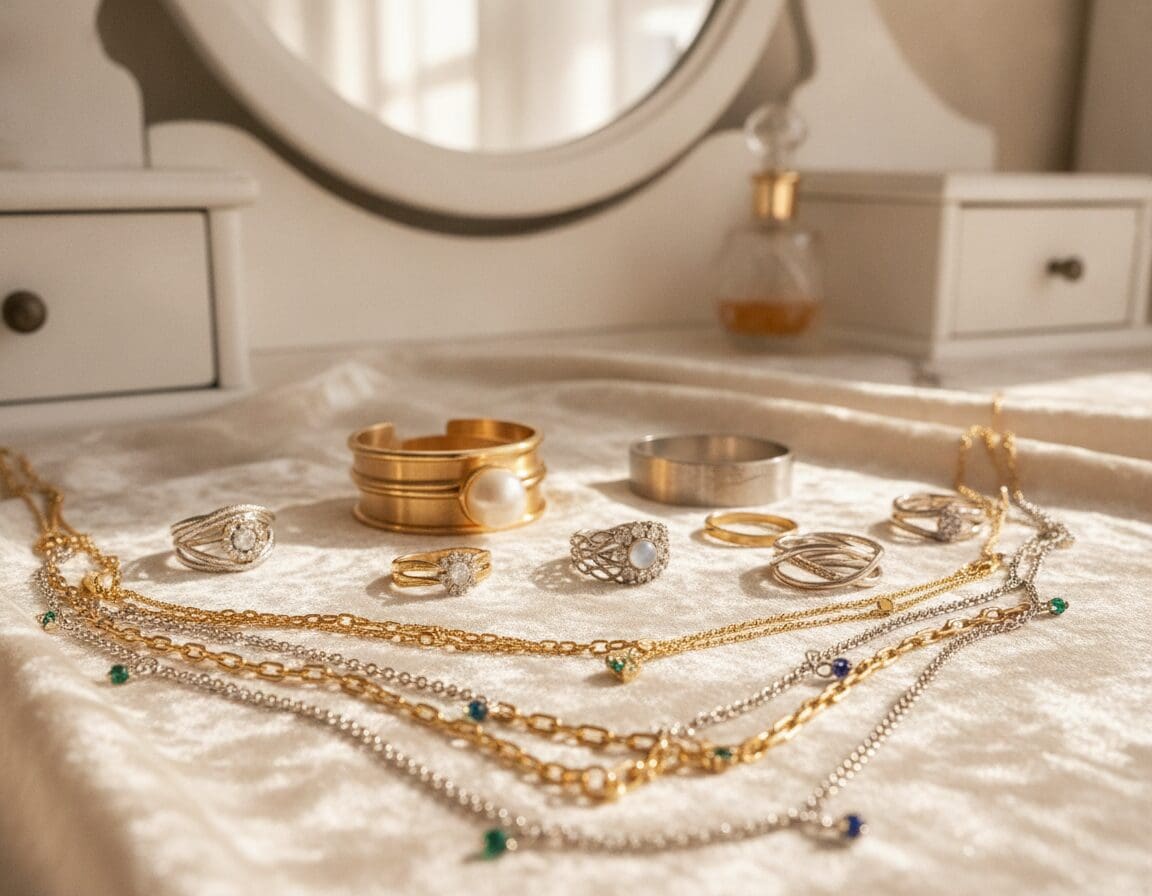
You’ll learn straightforward, contemporary ways to style gold and silver jewelry together so your looks feel cohesive and modern. This opening section defines what we mean by gold and silver jewellery — pieces in yellow gold (including gold‑plated and vermeil), white gold, sterling silver and silver‑plated items — and notes that mixed‑metal styling also embraces rose gold and rhodium‑plated pieces when relevant.
Mixing metals matters in the UK because it stretches your wardrobe across seasons and price points. Whether you favour high‑street brands like Marks & Spencer and John Lewis or designer labels such as Daisy London and Monica Vinader, mixed metals styling removes the pressure to buy matching sets and makes your existing collection more versatile.
Throughout this guide you’ll first discover why mixing metals is fashionable and forgiving, then practical pairing strategies, followed by tips on coordinating jewellery with your outfits and skin tone, and finally care and purchasing advice so your mixed‑metal looks last. You’ll receive actionable guidance and examples, written so you can experiment confidently.
There are no rigid rules — modern styling favours creativity and personal expression — but you’ll also get simple guidelines to create balanced, polished looks. Keep these jewellery tips UK readers find useful when exploring how to style gold and silver and embrace mixed‑metal jewellery with confidence.
Why mixing metals works: modern jewellery styling tips and trends
Mixing metals has moved from a fashion faux pas to a creative tool you can use every day. Runway shows and street style across London, Paris and Milan helped shift modern jewellery rules, making layered, eclectic looks feel intentional rather than accidental. That change gives you styling freedom to refresh heirlooms and contemporary pieces without starting from scratch.
The shift from strict rules to creative freedom
Until recently, advice urged you to match every metal. British Vogue and Harper’s Bazaar UK now spotlight mixed-metal outfits, showing that blending silver with gold can be a deliberate aesthetic choice. This trend ties into sustainability, since mixing older silver heirlooms with current gold pieces reduces waste and stretches your wardrobe.
Styling benefits of combining gold and silver
One key reason to consider why mix metals is versatility. Mixed-metal sets work with a broader wardrobe, because silver pairs well with cool tones and gold complements warm tones. Together they bridge both palettes so your accessories suit more outfits.
Mixed metals also add visual interest. A sterling silver chain with a yellow-gold pendant creates contrast and depth that a single-metal look often lacks. You can repurpose affordable silver bracelets or gold-plated chains to achieve a high-fashion vibe without buying full matching sets.
Trends that influence how you wear mixed-metal jewellery
Layering remains strong, with thin chains and stacked rings allowing you to alternate metals for rhythm and balance. Minimalist pieces sit beside chunkier chains, a mix you can see in collections from Monica Vinader, Missoma and Mejuri.
Gender-neutral styling also supports mixing metals. Menswear and womenswear labels such as Paul Smith and COS show how unisex designs use mixed finishes for a modern edge. Vintage sourcing is another influence, with platforms like Vestiaire Collective encouraging you to pair silver finds with gold vermeil for a considered, sustainable look that reflects current jewellery trends UK.
gold and silver jewelry: practical pairing strategies
Start by experimenting gently. Pairing gold and silver works best when you test one small accent first. Try a thin sterling silver pendant with two yellow-gold chains to see how contrast reads on you.
Layered necklaces give you instant control over rhythm. Use three lengths — choker, mid-length and long pendant — and alternate metal colour. Keep chain thickness balanced so no single link overpowers the rest.
Stacking rings let you refine scale on your hands. Alternate slim bands in silver and gold, mix plain rings with textured or gemstone-set pieces, and anchor the stack with a thicker band or signet to stabilise the look.
Choose a dominant metal for clarity in your overall outfit. The dominant metal technique means letting one tone cover roughly 60–70% of visible jewellery, with the other acting as an accent. If your wardrobe favours warm tones, make gold the anchor and use silver sparingly to punctuate.
Carry dominance across body zones. If your necklace is mostly gold, favour gold-accented bracelets and introduce silver through a single ring or ear cuff. This keeps contrast intentional rather than chaotic.
Mix finishes to add dimension without complicating colour choices. Pair high-polish chains with brushed or satin bangles to create subtle contrast through surface rather than shade.
Use varied jewellery textures to catch the eye. Combine hammered cuffs, rope chains and pavé-set pieces so each element reflects light differently. This prevents a mixed-metal ensemble from looking cluttered while enhancing depth.
- Match proportions: balance chunky items with finer pieces so the mix reads curated.
- Use texture as a focal point: a textured silver cuff pairs well with smooth gold rings.
- Bridge metals with gems: white diamonds and pearls work across both tones.
By starting small with layered necklaces and stacking rings, applying the dominant metal technique and exploring jewellery textures, you build a coherent mixed-metal wardrobe that feels intentional and modern.
How to coordinate mixed-metal jewellery with outfits and skin tone
Mixing gold and silver gives you freedom to lift an outfit and personalise your look. Start by thinking about the colours you wear most. That makes it easy to coordinate mixed-metal jewellery with the rest of your wardrobe.
Choosing pieces to suit your wardrobe colour palette
If your wardrobe leans to navy, charcoal, black or jewel tones, silver and white gold will sit naturally. If you favour camel, beige, olive or warm browns, yellow and rose gold bring out warmth.
Use mixed metals to bridge outfits when you wear both warm and cool colours, for example a navy blazer with a camel scarf. Match at least one metal to your bag or shoe hardware for a polished finish. For seasonal tweaks, pick brighter polished silver and white gold in spring and summer, and warmer yellow or rose gold for autumn and winter fabrics.
Considering skin tone without strict rules
Traditional advice links warm skin tones to gold and cool tones to silver. Treat that as a guide rather than a rule. Test pieces in natural daylight to see which metals brighten your face.
If both metals flatter you, mix them. Jewellery worn close to the face, such as earrings and pendants, benefits from two-tone designs. A two-tone hoop or a pendant with a gold bail on a silver chain is a reliable option when you are unsure which metal to choose.
Styling for day versus evening looks
For daytime, keep things light and subtle. Thin layered chains, small hoops, delicate mixed-metal bracelets and simple stacked rings work well for office and casual wear. These pieces make it easy to coordinate mixed-metal jewellery without overpowering your outfit.
In the evening you can be bolder. Combine chunkier chains, statement cuffs, layered chokers or larger mixed-metal earrings to create contrast and drama. For formal events, pick a dominant metal that echoes major accessories, such as a watch or clutch hardware, and add metallic accents sparingly for sophistication.
Care, maintenance and purchasing tips for mixed-metal looks
Keep your mixed-metal pieces looking their best with simple jewellery care. Clean sterling silver with a silver cleaner or a soft polishing cloth to remove tarnish. Use mild soapy water and a soft brush for gold and gold-plated items, then dry thoroughly to avoid watermarks. These small steps help with mixed-metal maintenance and prolong the life of plated finishes.
Avoid chemical exposure by removing jewellery before swimming in chlorinated pools or using household cleaners. Store items separately in soft pouches or lined jewellery boxes to prevent scratches and reduce contact that accelerates wear. Anti-tarnish strips are useful for silver, and professional servicing at reputable jewellers such as Beaverbrooks or Steven Stone will address re-plating, tightening settings and polishing for high-value pieces.
When buying, learn the difference between solid gold (9k, 14k, 18k), gold vermeil, gold-plated and sterling silver (925). Look for hallmarks like 925, 375, 585 or 750 and check warranties. High-street retailers such as John Lewis and H. Samuel, along with online specialists like Not On The High Street and Wolf & Badger, clearly state metal content and repair options—use these details in your buying mixed-metal jewellery decisions.
Choose an anchor piece in a metal that suits most outfits—such as a 9k gold chain or a sterling silver cuff—and add accent items in the opposite metal. Consider two-tone designs if you prefer a ready-made mixed-metal look. For jewellery purchasing tips UK shoppers should factor in sustainability and provenance by favouring brands like Monica Vinader and Missoma that publish information on recycled metals and traceability. Test pieces in natural light, budget for at least one quality anchor item, and check return policies and repair services to protect your investment.