This short guide helps you turn a spare room or master bedroom into a restful sanctuary. It focuses on practical, evidence‑based choices you can use in flats, terraced houses and semi‑detached homes across the United Kingdom.
You’ll find clear advice on bedroom interiors, relaxing bedroom design and restful bedroom ideas that aim to make it easier to fall asleep and wake up feeling restored. The tips also reduce visual clutter and create calm, so daily routines feel simpler.
The article is split into five parts: calming colour schemes; furniture, layout and space planning; lighting and atmosphere; textiles, scents and décor. Each section blends design principles, product suggestions and hands‑on steps you can apply on any budget.
Recommendations draw on interior design practice, colour psychology studies, UK lighting guidance (including warm‑light preferences for bedrooms), ergonomic advice on beds and mattresses, and real examples from retailers such as John Lewis & Partners, Heal’s, Dunelm and Habitat, and mattress makers like Simba, Eve and Tempur.
As you read, keep your personal sleep needs in mind and consult mattress retailers or sleep specialists where necessary. The article is written to match what people search for when looking for a calm bedroom makeover or serene bedroom tips, so you can act on ideas straight away.
Designing calming colour schemes for a restful room
Choosing the right colours sets the tone for sleep and rest. A calm scheme helps your mind unwind by lowering visual stimulation. Use paint samples and view them at different times to see how daylight and artificial light change each hue.
Understanding colour psychology and its effect on sleep
Colours influence mood and bodily arousal. Cool hues such as soft blues and gentle greens tend to slow heart rate and reduce agitation. Bright reds and saturated oranges raise alertness, making them less suited to a bedroom.
Research shows blue and green tones often link with calm and better sleep quality. Low‑saturation hues cut down on visual stimulation. Remember that individual responses vary because of culture and personal taste. Test swatches in both natural and artificial light before you commit.
Practical tip: use small tester pots on different walls and observe them at dawn, midday and after dark to judge true impact.
Selecting a primary palette: neutrals, pastels and muted tones
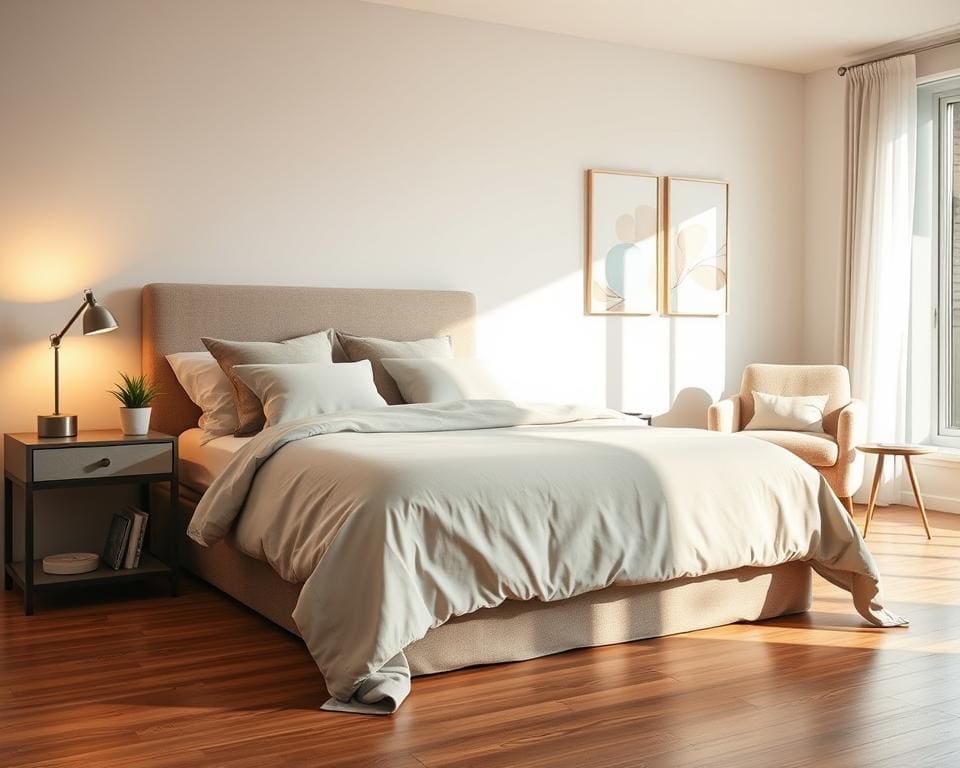
Start with a neutral bedroom palette as your base. Warm neutrals such as soft beige or warm grey create a versatile backdrop. Cool neutrals like stone or greige offer a cooler, airy feel.
Pastel blues, muted sage greens and dusty rose provide gentle colour without excess stimulation. These restful colours for bedroom walls allow texture and furniture to stand out without cluttering the eye.
If you need brand guidance, explore Farrow & Ball’s muted ranges or Dulux’s pastel and neutral collections to find dependable tones. Begin with a dominant neutral on the walls and bring in a secondary shade for bedding or a feature wall. Keep contrast low to maintain tranquillity.
Accent colours and how to use them without disrupting tranquillity
Limit accents to one or two low‑saturation options and apply them sparingly. Small doses on cushions, a throw or framed artwork are effective. Avoid neon shades and high‑contrast patterns that pull attention.
Examples that work: a deep teal cushion on a pale grey bed, a muted terracotta throw on warm beige linens, or a soft mustard in small accessories to add warmth. Use analogous or monochromatic schemes for harmony and calm continuity.
Finishes and textures that enhance a calming colour scheme
Choose matt or eggshell paint to absorb light and reduce glare. High‑gloss finishes on walls can create unwanted reflection and energy. Add tactile interest with natural fabrics such as linen, cotton and wool, and with brushed wood or rattan furniture.
Layered textures—woven throws, velvet cushions and a soft rug—add depth while keeping colour saturation low. Balance texture so the room feels cosy without appearing cluttered. Consider washability and durability for UK climates and invest in breathable linen bedding for better overnight comfort.
Bedroom interiors: furniture, layout and space planning
Start by thinking about scale and calm. The right bedroom furniture layout helps you move freely and keeps the room restful. A considered plan saves time and prevents buying pieces that crowd the space.
Choosing the right bed and mattress for comfort and scale
Pick a bed and mattress UK shoppers trust for comfort and support. In compact rooms favour a 4’6″ double or, if space allows, a 5’0″ king. Avoid oversized frames that dominate circulation space.
Compare pocket sprung, memory foam and hybrid mattresses from Simba, Eve, Tempur and Emma. Look for spinal alignment, firmness that suits your weight and sleeping position, and features that limit partner disturbance and regulate temperature.
Measure floor to bedside and check mattress trial periods before you commit. Aim for a combined bed base and mattress height that makes getting in and out easy—about mid-thigh when seated. Choose simple headboards such as upholstered panels in muted fabrics or low wooden slats to anchor the bed without overpowering the palette.
Storage solutions to reduce clutter and promote calm
Decluttering is the first step to a serene room. Use bedroom storage ideas to hide what you do not need and display what you love.
Consider built-in wardrobes for period homes, or freestanding units if you rent. Under-bed drawers, bedside tables with drawers and floating shelves keep surfaces tidy. In small flats opt for floor‑to‑ceiling wardrobes to maximise vertical space.
Choose soft‑close drawers and modular systems from IKEA or fitted-wardrobe specialists in the UK. Use breathable boxes for seasonal clothing and adopt a simple routine: declutter every three months and separate items into clothes, bedding and paperwork to reduce visual distraction.
Optimising layout for flow, natural light and movement
Keep circulation paths clear. Try to leave 60–75cm around the bed where possible so you can move without obstruction.
Place the bed against the longest wall or opposite the door for balance. Position it to benefit from morning light while avoiding glare on reading areas. Avoid blocking radiators and windows to preserve warmth and daylight.
In small UK rooms use mirrors to reflect light and choose low‑profile furniture to keep sightlines open. Sketch a plan to scale or use a room‑planning app to test layouts before you buy.
Multi‑functional pieces that maintain a serene aesthetic
Choose multi‑functional bedroom furniture that blends utility with calm design. Examples include ottomans with storage, beds with integrated drawers and bedside tables with charging ports.
Brands such as Habitat, Wayfair UK and Made.com offer dual‑purpose pieces that suit British homes. Pick clean lines and neutral finishes so multifunctional items do not clutter the visual field.
Keep technology out of sight when not in use and limit visible accessories. A consistent material palette and minimal hardware will help maintain a serene aesthetic while giving your room practical flexibility.
Lighting and atmosphere to encourage relaxation
Good lighting sets the mood for rest. A thoughtful approach helps you move from wakeful hours to a calm, sleep‑ready state. Use a mix of fixtures and controls to tailor your space through the evening and night.
Layering light: ambient, task and accent options
Start with ambient light to give even, comfortable illumination. Choose ceiling fixtures, recessed downlights or pendants with diffusers. Pick warm colour temperatures and dimming capability to keep the room soft.
Task lighting supports activities such as reading or dressing. Add bedside lamps, adjustable wall lights and vanity lighting that offer clear but gentle illumination. Place lamps so they do not glare into your eyes or reflect off screens.
Accent lighting creates pockets of mood and depth. Consider LED strips under the bed frame, behind a headboard or along shelving. Small table lamps and picture lights make pools of glow that lower perceived brightness while adding interest.
Using dimmers, warmer bulbs and smart controls
Choose warm white bulbs between 2700–3000 K to support melatonin and create a cosy vibe. Avoid cool daylight lamps in the evening; they can suppress sleep hormones and feel harsh.
Dimmers for bedroom fixtures let you reduce light gradually. Install wall dimmer switches or simple plug‑in dimmers to retrofit existing lamps. That way you can lower intensity before bed without changing fittings.
Smart controls add automation and convenience. Brands like Philips Hue, LIFX and Hive work with UK sockets and voice assistants to create scenes, timers and slow dim routines. Program a wind‑down that fades lights 30–60 minutes before sleep.
Use cooler, brighter light in the morning to help you wake. Shift to warm, low light in the evening so your circadian rhythm stays on track.
Window treatments for light control and privacy
Block early morning glare and street light with blackout roller blinds or lined curtains. Silent Gliss and Made.com supply suitable options for UK homes. Blackout linings improve sleep when summer sun rises early.
Layer curtains and blinds to balance insulation and daylight. Heavy, lined curtains stop stray light and add warmth. Pair them with a light sheer to diffuse daylight and maintain privacy during the day.
For city properties, consider thermal linings or secondary glazing to reduce noise as well as light. Hang curtain poles high above the window to make ceilings feel taller and to allow curtains to cover the full frame, preventing gaps of light.
Textiles, scents and décor to soothe the senses
Start with bedroom textiles that breathe. Choose linen or cotton for sheets; cotton percale suits hot sleepers, while cotton sateen or flannel adds welcome warmth in winter. Focus on fibre quality and weave rather than chasing high thread counts. Brands such as The White Company, John Lewis & Partners and Dusk offer reliable bedding for sleep that balances comfort and durability.
Layer simply and consistently: fitted sheet, top sheet, a duvet with a season‑appropriate tog and a lightweight throw. Add a soft rug underfoot to warm the space and absorb sound, and limit cushions and throws to a few complementary muted tones to keep visual calm. This approach reduces clutter and creates a repeatable, soothing routine.
Introduce calming scents for bedroom use sparingly. Lavender, chamomile and bergamot have research‑backed relaxing properties; use a diffuser, reed diffuser or a light linen spray from trusted UK brands like Neom Organics or Aromatherapy Associates. Choose subtle blends, ensure good ventilation and avoid strong fragrances if you have allergies. For sound, consider a white noise machine or a sleep playlist via a smart speaker to mask urban noise.
Keep décor for relaxation minimal and meaningful. Select one or two pieces of art in muted palettes, and add low‑maintenance plants such as a snake plant or peace lily for a sense of wellbeing and better air quality. Manage technology and visual clutter by placing screens out of direct sight and using simple cable organisation. Finally, test swatches, measure storage, rotate and launder linens regularly, and reassess every six months to preserve a calm bedroom environment.